Coquina shell wheelchair accessibility: what Florida buyers should know
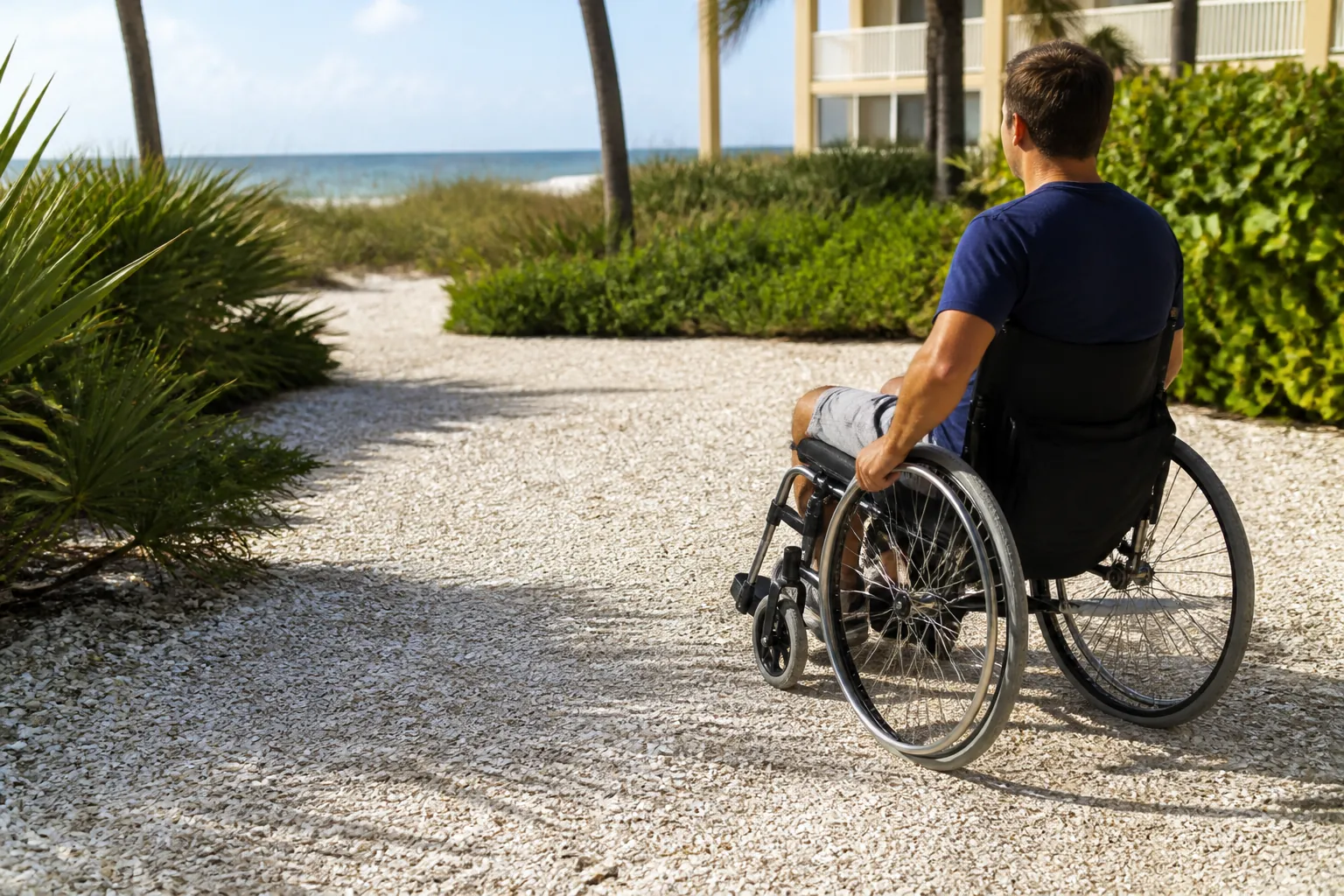
Coquina shell can bring a natural coastal look to a Florida yard, but a surface that looks smooth is not necessarily easy to cross in a wheelchair. Loose shell can shift beneath tires, catch small front casters, and increase the effort required to move. Wet conditions, uneven grading, and shell scattered onto adjoining pavement can create additional problems.
If you are researching coquina shell wheelchair accessibility, start with the person using the route rather than the appearance of the material. Consider their chair, travel habits, available assistance, and access needs. Then decide whether shell belongs on the travel surface or beside a separate, more predictable route.
Tropical Yards supplies coquina shell and tropical plants, with dump trailer delivery from St. Augustine to Daytona Beach. This guide helps buyers evaluate shell and plan their own projects. Tropical Yards does not design or install accessible routes, and buying shell is not a substitute for reviewing applicable accessibility requirements.
Why Loose Coquina Shell Can Be Difficult For Wheelchairs
Wheelchairs need a surface that supports wheels without excessive sinking, sliding, or rolling resistance. Accessibility standards commonly describe suitable ground surfaces as firm, stable, and slip resistant. Those characteristics involve the finished surface and its performance, not simply the name of the material.
Loose coquina shell may move under load. Larger pieces can create an irregular surface, while softer areas can let wheels sink. A rear wheel may roll across a patch that stops a smaller front caster, making an apparently manageable path difficult to navigate.
Manual wheelchair users may need more frequent pushes to maintain momentum on a yielding surface. Turning can also require extra effort because wheels displace material instead of pivoting over a solid plane. Powered chairs have different wheel configurations and ground clearances, but additional power does not make loose shell reliably accessible.
The material's condition matters, too. A recently spread shell layer can behave differently from an older, settled layer. Rain, pedestrian traffic, delivery activity, and repeated wheel turns can alter the surface. A route that works during one dry afternoon may behave differently after a storm.
- Inspect whether the front casters roll freely without digging into loose pockets.
- Check whether the driving wheels leave ruts during straight travel and turns.
- Look for sharp, protruding, or unusually large pieces along the intended route.
- Evaluate the whole trip, including entrances, gates, curves, and connections to pavement.
These observations can identify problems, but they do not certify compliance. For a required accessible route, get qualified guidance before treating a shell surface as an acceptable solution.

Decide Whether Shell Should Be On Or Beside The Route
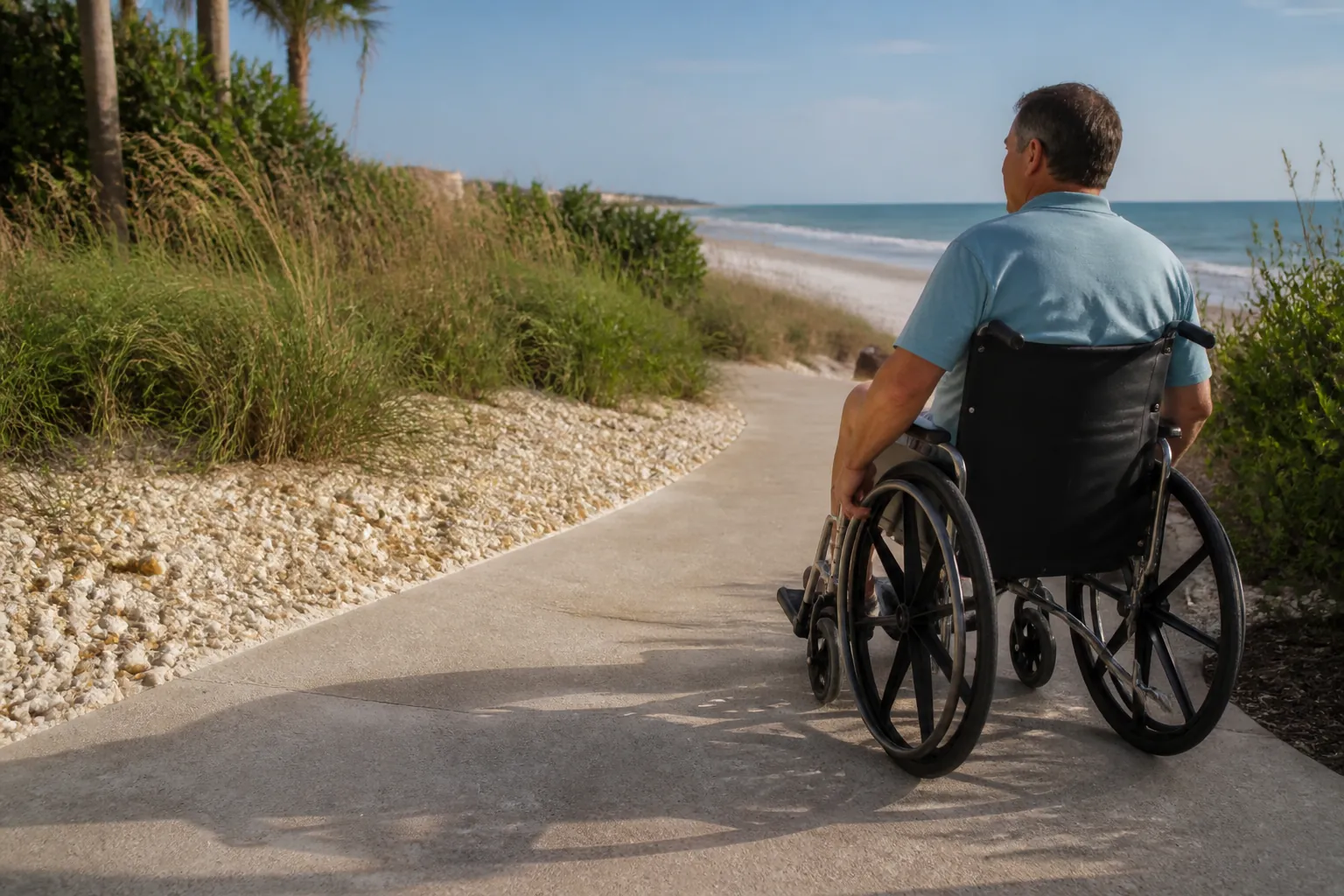
The most useful purchasing decision may be to keep shell out of the wheelchair travel lane. Coquina shell can provide a coastal finish around planting beds or other landscape areas while a separate firm surface handles essential movement between destinations.
Think about the actual journey: from a parking area to the front door, from a patio to a garden seat, or from a gate to an outdoor gathering space. Each connection matters. A dependable path is less useful if its last few feet cross deep shell or an abrupt threshold.
For Florida homes, a practical arrangement is often a continuous firm route bordered by shell. This preserves the visual effect without asking loose material to perform as the primary access surface. Keep shell from spilling onto that route, especially at turns and doorways.
Do not assume stepping stones solve the problem. Gaps, uneven heights, narrow stones, and loose shell between them may interrupt wheelchair travel. The usable surface needs to support the complete wheel footprint throughout the journey, not just provide places for someone walking to step.
For businesses, shared properties, and public-facing spaces, accessibility obligations can differ from those of a private residential garden. Required routes, slopes, widths, maneuvering spaces, and surface transitions should be reviewed under the standards that apply to the site.
Use the coquina shell page as the starting point for material information. This accessibility guide addresses suitability for wheelchair travel rather than repeating general decorative uses or broad shell-buying advice.
Evaluate The Shell Before Ordering A Full Load
Coquina shell is a natural material, so buyers should ask about the product currently available rather than relying only on photographs. Particle size, broken pieces, fines, and the balance of coarse and smaller material can influence how a surface feels and behaves.
Ask whether the shell is sold primarily for decorative coverage or whether there is information about its use in trafficked areas. A description such as crushed, screened, or compactable does not by itself establish wheelchair accessibility. The base, grading, drainage, and finished condition remain important.
If possible, examine a sample before committing to a route application. Spread it over a representative prepared area and observe how it shifts. A handful of material can show color and texture, but it cannot demonstrate the performance of a complete path.
A small trial area can help a buyer reject an unsuitable idea before purchasing material for a larger project. It should reproduce the proposed base and surface depth as closely as practical. Testing shell spread over concrete will not reveal how the same shell behaves over a soft soil base.
- Ask what size range and texture to expect in the current shell supply.
- Ask whether a sample or an opportunity to inspect the material is available.
- Explain whether the shell is intended for decorative borders or a traveled surface.
- Confirm the ordering unit and how the supplier determines the delivered quantity.
- Keep any accessibility evaluation separate from the supplier's material description.
A supplier can discuss the material being sold. Whether a finished route meets a particular user's needs or applicable standards requires a separate assessment of the complete project.
Understand The Base, Surface Depth, And Compaction Limits
Surface material cannot compensate for an unstable foundation. If underlying soil yields or holds water, wheel loads can create depressions even when the top layer initially looks level. Florida sites vary, so do not assume that every sandy yard drains well or provides dependable support.
Before starting a DIY project, identify low spots, soft areas, irrigation lines, tree roots, and existing runoff patterns. Avoid making changes that send water toward a building or neighboring property. Check utility locations before excavation or driving stakes.
Landscape fabric may separate materials or help with certain site conditions, but it does not turn loose shell into a firm wheelchair surface. Similarly, edging contains material but does not prevent wheels from sinking into it. Each component has a role, and none should be treated as an accessibility shortcut.
A deep loose top layer can increase wheel resistance. However, simply using less shell is not a universal fix. The appropriate section depends on the material, base, site conditions, and intended use. Avoid choosing a path depth from decorative bed guidance alone.
Compaction may reduce movement in some aggregate mixtures, but shell composition and grading affect the result. Do not assume that watering and tamping any coquina shell product will produce a permanent, accessible surface. Loose pieces can remain, and use or weather can change the finish.
If someone proposes adding a binder, review the system's documented suitability, drainage behavior, and accessibility performance. Adding an improvised adhesive is not a dependable way to create a compliant route. For an essential travel path, obtain project-specific advice rather than experimenting with the user's only access.
Check Drainage And Wet-Weather Performance In Florida
Florida rain can expose weaknesses that are not visible during dry weather. Water may collect beneath a shell layer, soften the base, or move smaller particles toward a low point. Shell can also migrate onto nearby paving when runoff crosses a border.
Observe the proposed route during and after rain before ordering. Look for standing water, concentrated flow, and soil that remains soft. A route beside a roof drip line or downspout may need a different approach from a sheltered area.
Do not describe a shell surface as accessible merely because water can pass through it. Permeability and wheelchair usability are separate issues. A surface may drain while still being too loose, rough, or uneven for dependable travel.
Slopes also deserve attention. A surface that is manageable on level ground may be harder to use on an incline. Side-to-side slope can require continuous steering corrections, and loose material can make braking and turning less predictable.
- Observe whether rain carries shell toward doors, sidewalks, or driveway crossings.
- Check for saturated areas beneath the surface rather than judging only the visible shell.
- Review both the direction of travel and side-to-side slope.
- Keep drainage features from creating gaps, abrupt edges, or wheel traps in the route.
If drainage corrections or substantial grading are needed, address them before evaluating the finished surface. Tropical Yards supplies materials; site drainage work and route construction are not services it provides.
Plan Edges, Transitions, And Turning Areas
A wheelchair route can fail at its edges even when the central section feels usable. Shell piled against a concrete walkway may create a soft lip. Recessed shell can leave a drop at the pavement edge. Raised edging can become an obstacle when it crosses the direction of travel.
Plan every transition as part of the route, including patio connections, gate openings, and driveway edges. Avoid assuming that a wheelchair can roll over a border simply because a person walking can step across it.
Containment is especially useful when shell is beside a separate firm path. Select and position edging so it limits migration without narrowing the usable travel area or introducing a protruding hazard. Check how the border behaves after rain and repeated foot traffic.
Turning spaces need particular care because rotating wheels can push shell sideways. A straight test pass may miss problems that appear when someone reverses, turns toward a door, or changes direction near a bench.
Furniture and planting can also reduce clear space. Leave room for the intended wheelchair movement rather than measuring only the empty path before placing pots, chairs, or garden ornaments. Bougainvillea's thorns and spreading growth warrant separation from the travel corridor.
Tropical Yards sells palm trees, hibiscus, bougainvillea, ferns, and other tropical plants. If buying plants for a shell-bordered route, consider their mature spread and your own ongoing care responsibilities so foliage does not obstruct the path.
Test The Complete Route With The Intended User
When a shell route is optional and a trial is appropriate, involve the intended user in the decision. Different wheelchairs and mobility needs produce different experiences. A demonstration with a garden cart, bicycle, or empty wheelchair does not represent actual use.
Ask permission before arranging a test, and keep a dependable alternative route available. Do not ask someone to risk becoming stuck to prove whether a material works. Stop if the surface requires excessive effort, causes loss of control, or makes the user uncomfortable.
A useful evaluation includes starting, stopping, reversing, and turning, not just moving straight ahead. Check whether the user can reach doors, operate gates, and pause without drifting or sinking. Where safe, compare dry conditions with conditions after ordinary rain.
- Ask the user whether the surface feels predictable and manageable.
- Watch for caster snagging, wheel spin, rutting, and repeated steering corrections.
- Check whether shell accumulates at thresholds or gets carried indoors on tires.
- Revisit the trial after weather and normal use have changed the surface.
User feedback is valuable, but a successful personal trial does not establish legal compliance for a required accessible route. Where compliance is necessary, use applicable standards and qualified review alongside real-world usability checks.
Order And Receive Shell Without Blocking Access
Once you decide where shell belongs, measure only the areas intended to receive it. Separating decorative shell coverage from the wheelchair route helps avoid purchasing material for a surface that should remain firm and clear.
Record the area dimensions and intended depth, then confirm the supplier's ordering units. Irregular beds may need to be divided into simpler shapes for measurement. Keep quantity calculations separate from accessibility decisions: enough material to cover an area does not make that area suitable for wheelchairs.
Tropical Yards offers coquina shell sales and dump trailer delivery from St. Augustine to Daytona Beach. Discuss the delivery address, site access, and proposed unloading location before scheduling. A dump trailer needs suitable access and an appropriate place to unload.
The drop location should not block the user's existing route, entrance, or parking transfer area. Plan how you will move the shell yourself from the pile to its final location. Delivery does not include spreading, grading, compacting, cleanup, or installation.
- Choose an unloading spot that keeps essential wheelchair access available.
- Tell the supplier about gates, overhead obstacles, narrow approaches, and other access restrictions.
- Keep the pile away from drainage paths and locations where shell could scatter onto a walkway.
- Have your own tools, assistance, and material-moving plan ready before delivery.
For delivery-specific preparation, consult the coquina shell delivery page. Confirm site details directly rather than assuming a trailer can reach every part of the property.
Choose Dependable Access Before Decorative Coverage
The central question is not whether coquina shell looks appropriate in a Florida landscape. It is whether the complete route gives the intended user dependable movement. Loose shell often introduces uncertainty, especially at turns, transitions, slopes, and wet areas.
When that uncertainty matters, place shell beside a separate firm route instead of making it the essential travel surface. You can retain the coastal appearance while making a clearer distinction between decorative coverage and access.
For coquina shell availability, tropical plant purchases, or dump trailer delivery from St. Augustine to Daytona Beach, call Tropical Yards at 772-267-1611. Explain where you plan to use the material and how you will receive it. For route design, construction, or accessibility compliance, consult an appropriately qualified professional separately.
Call 772-267-1611 to talk through next steps.