A practical plan for refreshing your Florida yard with coquina shell
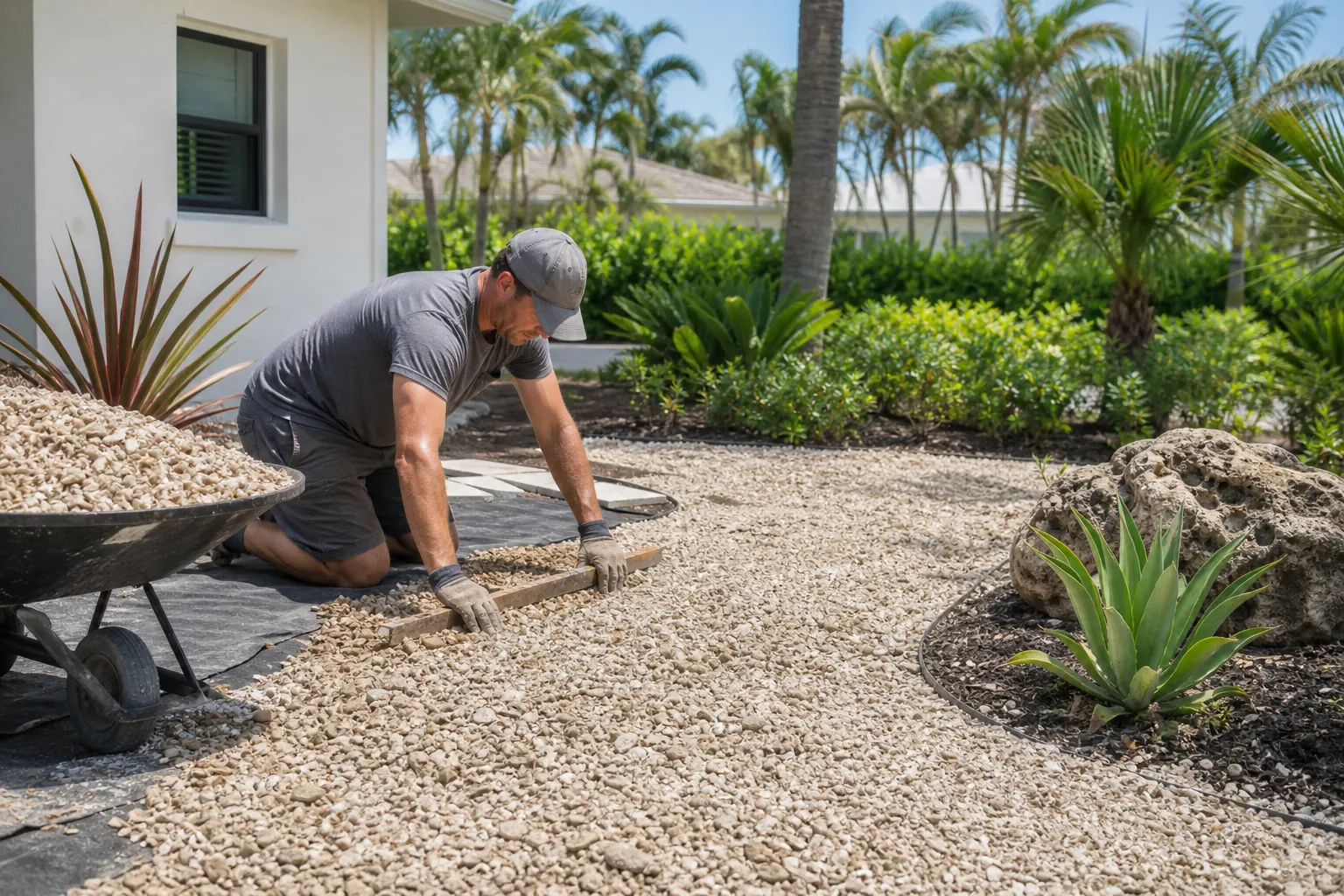
A successful coquina shell yard refresh starts before you order material. You need to know where the shell will go, what the ground underneath is doing, how much material the project requires, and where a delivery can safely unload. Sorting out those details first makes the buying process more straightforward and helps you avoid moving the same pile twice.
For Florida homeowners, coquina shell yard renovation planning also means accounting for heavy rain, sandy soil, irrigation, nearby plants, and local property requirements. Shell can create a distinctive surface, but it should be chosen for a specific purpose rather than treated as a universal solution.
Tropical Yards supplies coquina shell and tropical plants, with dump trailer delivery from St. Augustine to Daytona Beach. This guide covers the decisions buyers and DIY homeowners can make before ordering. Site preparation, spreading, planting, and ongoing care remain your responsibility or the responsibility of a contractor you arrange separately.
Start With A Clear Purpose And Project Boundary
Decide what you want the renovated area to do. A decorative bed, a lightly used garden path, and an open seating area have different requirements. Foot traffic, furniture, accessibility, drainage, and plant roots all affect whether loose shell is appropriate.
Sketch the space and separate it into defined zones. Mark existing plants, irrigation heads, downspouts, utility equipment, gates, and the route between the delivery location and the project. A simple drawing with measurements is more useful for ordering than a photograph alone.
Consider comfort as well as appearance. Shell fragments can be uncomfortable under bare feet, and loose material may shift beneath narrow furniture legs or small wheels. For wheelchair routes or other accessibility needs, evaluate a suitable firm, stable surface rather than assuming loose shell will work.
- Identify whether each section is decorative, walked on occasionally, or used regularly.
- Keep shell out of lawn-mowing routes where loose pieces could become projectiles.
- Leave access to irrigation valves, cleanouts, meters, and other equipment.
- Check HOA rules and applicable local requirements before changing ground cover or drainage.
Once the boundaries are clear, choose a manageable first phase. Completing one well-defined area is often easier than opening several unfinished sections across the yard.
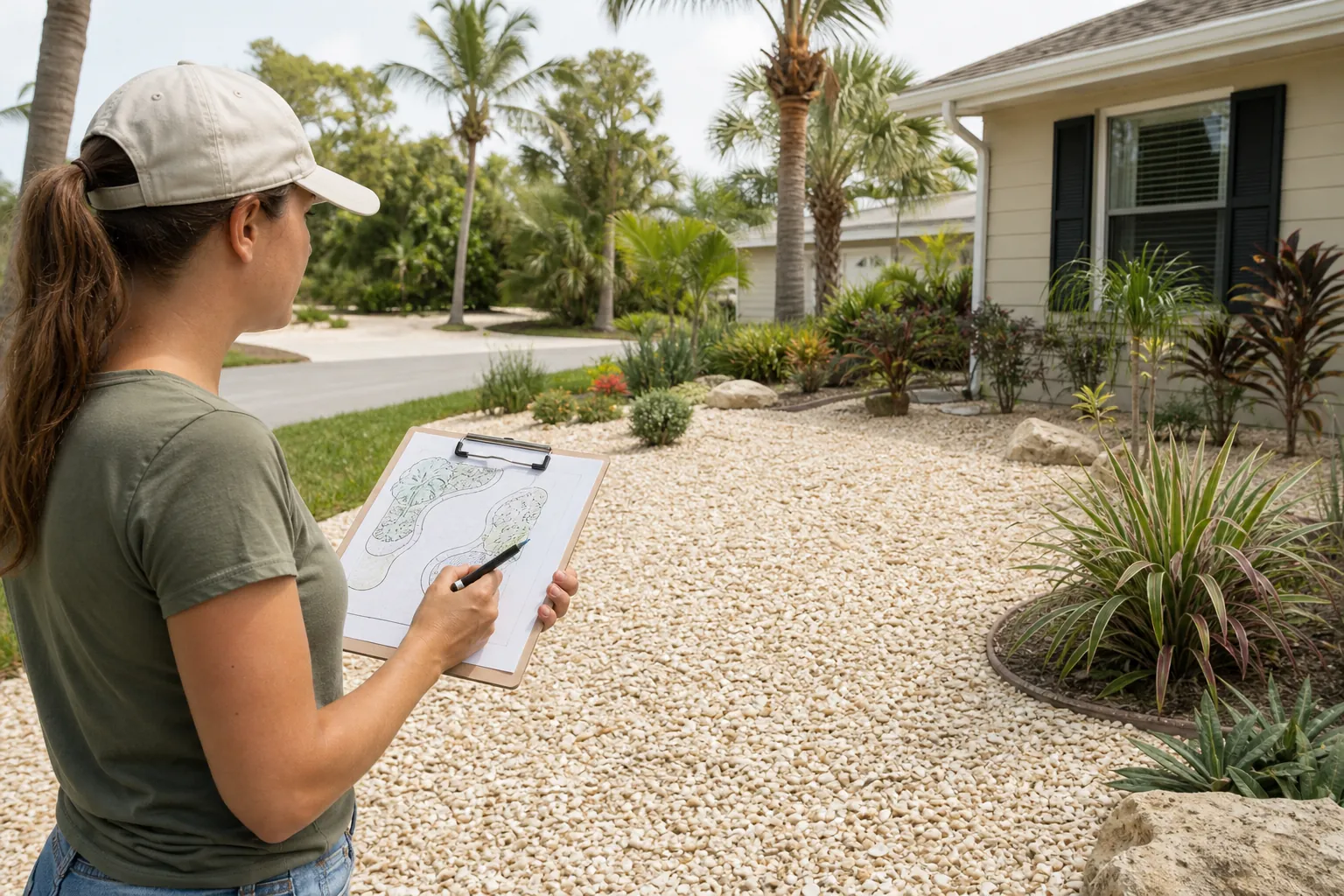
Check Drainage, Soil, And Existing Conditions
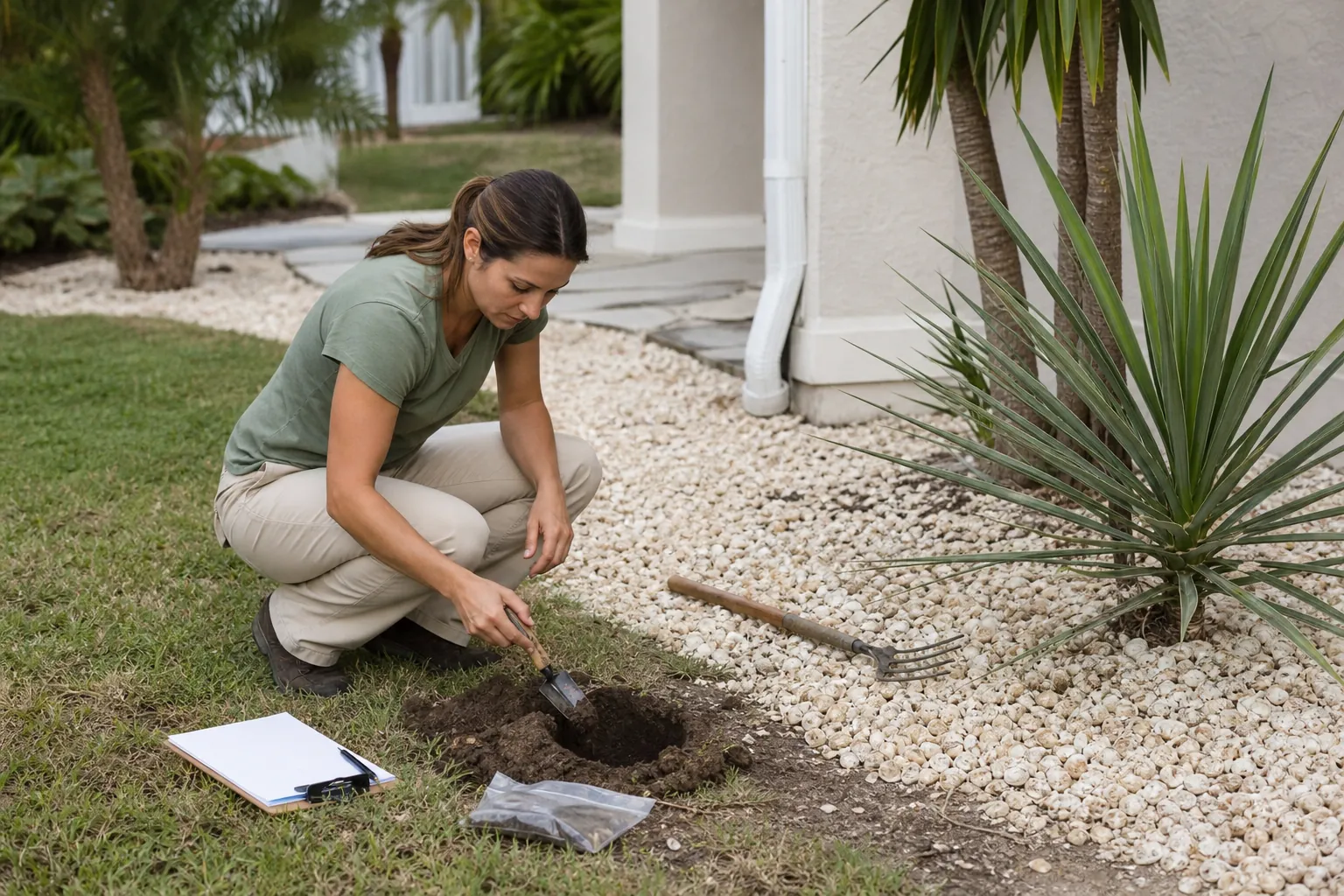
Walk the proposed area after rainfall, if possible. Look for standing water, washed-out soil, sediment trails, and water moving toward the house. These observations help distinguish a surface-cover project from a drainage problem that needs separate attention.
Coquina shell does not correct an unsuitable slope or provide a guaranteed drainage solution. Water movement depends on the underlying soil, compaction, grade, and surrounding surfaces. A loose top layer may still sit over saturated ground.
Keep existing drainage paths open. Do not raise material against siding, cover foundation clearance, bury drain openings, or create a ridge that redirects runoff onto neighboring property. If the project requires grading near structures or drainage alterations, seek qualified advice before proceeding.
Inspect what is currently on the ground. Existing mulch, weeds, turf, rubble, and exposed roots each require a different preparation approach. Decide how you will handle those materials yourself or through a separately hired contractor. Tropical Yards supplies materials and plants, not removal or cleanup labor.
Before digging, installing edging stakes, or disturbing soil, arrange utility locating through the appropriate process. Public utility marking may not identify private irrigation, lighting cables, or other homeowner-installed lines, so locate those separately.
Choose Coquina Shell With The Actual Use In Mind
Do not choose shell solely from a close-up photograph. Ask what the currently available material looks like, including its general fragment size, color variation, and amount of finer material. Natural shell is not perfectly uniform, and appearance can differ between loads.
Larger fragments may suit a decorative area but feel different underfoot than material containing smaller pieces. Fines can influence how the surface settles and how water passes through it. Discuss the intended use when asking about the product, without assuming a particular shell blend is suitable for every application.
Use the coquina shell information page as the product-focused companion to this planning guide. Keep your project notes handy so you can connect material details with your intended location and use.
- Ask whether the available shell is appropriate for a decorative bed, a garden path, or your other intended use.
- Confirm the ordering unit before calculating a final purchase quantity.
- Ask about typical variation rather than expecting every fragment to match a sample.
- Discuss any concern about fine material, dust, or shell texture before placing the order.
Consider surrounding finishes, too. Shell should work visually with paving, exterior colors, and planting beds. A small sample, when available, can help you assess the material outdoors in your yard's actual light.
Measure The Area And Estimate Material Volume
Calculate coverage from measured area and a planned finished depth. Avoid ordering from a rough impression of yard size. Even a modest depth change can noticeably change the volume needed across a broad space.
For a rectangle, multiply length by width in feet to obtain square feet. For a triangle, multiply the base by the perpendicular height and divide by two. Divide an irregular bed into simpler shapes, calculate each area, and add them together.
Subtract areas that will remain uncovered, such as paving, open planting pockets, and equipment access spaces. For curves, take several measurements rather than relying on a single maximum width.
When ordering by cubic yard, use this calculation: square feet multiplied by depth in inches, divided by 324. For example, a 300-square-foot area at a planned depth of 2 inches requires approximately 1.85 cubic yards geometrically, before adjustments for uneven ground or settling.
That example illustrates the calculation, not a universal depth recommendation. Choose depth according to the intended use, preparation method, edging height, and material characteristics. Confirm suitability before buying.
- Measure each section separately and keep a written total.
- Use the planned shell thickness, not the total excavation depth, in the volume calculation.
- Account for low spots only after deciding whether they should be corrected first.
- Ask how the supplier's sales unit relates to your calculated requirement.
If shell is sold by weight rather than volume, do not apply a generic conversion without confirmation. Moisture, fragment composition, and bulk density can affect the relationship between those measurements.
Plan Edging And Ground Preparation Before Delivery
Edging helps define the project and limit migration into grass, paving, or adjacent beds. Select an edge that suits the site and can contain the intended shell depth without becoming an awkward obstruction.
Pay particular attention to corners, curves, and slopes. These are common places for loose material to escape. Where shell meets a walkway, plan a transition that does not create a trip hazard or funnel fragments onto the walking surface.
Ground preparation should match the existing conditions. For a DIY project, establish the boundaries, address unwanted vegetation appropriately, and prepare the underlying surface before the delivery arrives. Avoid damaging established tree roots or piling shell over exposed roots to force a level appearance.
Landscape fabric is a site-dependent choice, not an automatic requirement. It may help separate shell from underlying soil in some applications, but it does not eliminate weeds. Seeds can germinate in debris that accumulates above it, and fabric can complicate future planting.
If you use a separation layer, select it for the intended application and follow its instructions. Plan overlaps, fastening, and planting openings before spreading shell. Do not assume plastic sheeting is an equivalent option, especially where water infiltration matters.
Set up your tools and work route in advance. Wheelbarrows, shovels, rakes, gloves, eye protection, and sturdy footwear are useful for handling shell. Keep children and pets away from active unloading and spreading areas.
Coordinate Dump Trailer Delivery And A Safe Drop Location
The delivery plan should be part of the order, not an afterthought. Tropical Yards offers dump trailer delivery of plants and coquina shell from St. Augustine to Daytona Beach. Confirm arrangements for your address and describe the property access clearly.
A usable unloading location needs more than enough space for the material pile. The vehicle and trailer need a suitable approach, maneuvering room, and clearance for unloading. Ground conditions, slopes, overhead branches, wires, and nearby structures can all affect the plan.
Do not assume a delivery vehicle can enter a backyard, cross a lawn, or travel over a septic system. Identify septic components, underground utilities, irrigation lines, weak pavement edges, and recently disturbed soil before discussing access.
- Provide the delivery address and describe gates, narrow turns, and other access restrictions.
- Ask what access and overhead clearance the delivery equipment requires.
- Choose a drop area that does not block sidewalks, roads, drainage routes, or essential entrances.
- Keep parked vehicles and movable obstacles away from the agreed unloading area.
- Discuss an alternative drop location in case the preferred spot is unsuitable.
Think through the distance between the pile and the project. A convenient drop point can reduce wheelbarrow trips, but safety and equipment access come first. Ask whether a protective ground covering is appropriate for the unloading location and how it should be positioned.
Rain can change site conditions quickly in Florida. Discuss how wet or soft ground could affect access, and avoid treating an initial delivery plan as permission to unload anywhere on the property.
Pair Shell With Plants That Fit The Site
Plants should be selected for light, moisture, mature size, and soil conditions rather than chosen only to match shell color. Tropical Yards sells palm trees, hibiscus, bougainvillea, ferns, and other tropical plants. Suitability varies by species and cultivar, so evaluate the particular plant you intend to buy.
Florida is not one uniform growing environment. Winter exposure, salt spray, inland heat, and local soil conditions vary. Ask about the plant's needs and check whether your site can provide them before including it in the renovation.
Shell is calcium-rich and may influence nearby soil chemistry over time. That matters around plants that prefer acidic conditions. A soil test can help establish a baseline; shell should not be treated as a precisely controlled soil amendment.
Leave workable planting pockets and keep shell away from trunks, stems, and plant crowns. Do not bury root flares or raise the surrounding grade against established plants. Plan enough room for watering and inspection, not just the plant's current nursery size.
- Match each plant to its actual sun exposure throughout the day.
- Allow for mature spread so foliage does not quickly crowd paths.
- Consider bougainvillea's thorns when choosing locations near frequently used routes.
- Check the moisture needs of the specific fern rather than assuming all ferns prefer the same conditions.
- Evaluate a palm's mature dimensions and cold suitability before purchasing it.
If planting yourself, follow species-appropriate guidance for planting depth, watering, and establishment. Plan the planting sequence before spreading shell so you are not excavating through a finished surface unnecessarily.
Spread Shell In Manageable Sections And Check The Result
After delivery, work in sections rather than emptying material into one deep mound inside the bed. Distribute manageable amounts, rake them across the prepared area, and check thickness at several points.
Use a marked measuring stick or another simple depth reference. Visual judgment alone can leave thin spots near edges and overly deep areas in the center. Keep planting pockets and equipment access points visible as you work.
Choose any settling or compaction method according to the material and intended use. Decorative beds and frequently walked surfaces may need different approaches. Avoid assuming heavy compaction is appropriate near roots, irrigation components, or drainage features.
Once the area is covered, check transitions and drainage openings. Walk the route in suitable footwear and look for unstable spots, migrating fragments, and awkward edges. Reinspect after the first substantial rain to see how the surface and runoff behave.
For your own ongoing care, remove fallen leaves and unwanted seedlings before they build up into an organic layer. Occasionally check edging and redistribute displaced shell where appropriate. These homeowner tasks help preserve the intended use; shell does not make a yard maintenance-free.
Bring A Clear Checklist To Your Coquina Shell Order
Your final buying notes should connect the material, site preparation, plants, and delivery logistics. Keep a copy of your measurements and sketch so you can explain the project without relying on memory.
- Record the measured area, planned depth, and calculated quantity.
- Confirm the shell characteristics and sales unit before ordering.
- Identify the preferred unloading location and an acceptable alternative.
- List access restrictions, overhead obstacles, and sensitive underground features.
- Confirm that preparation and material handling will be arranged separately.
- Note any tropical plants you want to purchase and their site requirements.
For coquina shell sales, tropical plant availability, and dump trailer delivery arrangements from St. Augustine to Daytona Beach, call Tropical Yards at 772-267-1611. Bring your measurements and access details to the conversation. A clear plan helps you order materials for the project you actually intend to complete, with the DIY work or separately arranged labor understood from the start.
Call 772-267-1611 to talk through next steps.