Create a welcoming courtyard for your St. Augustine home
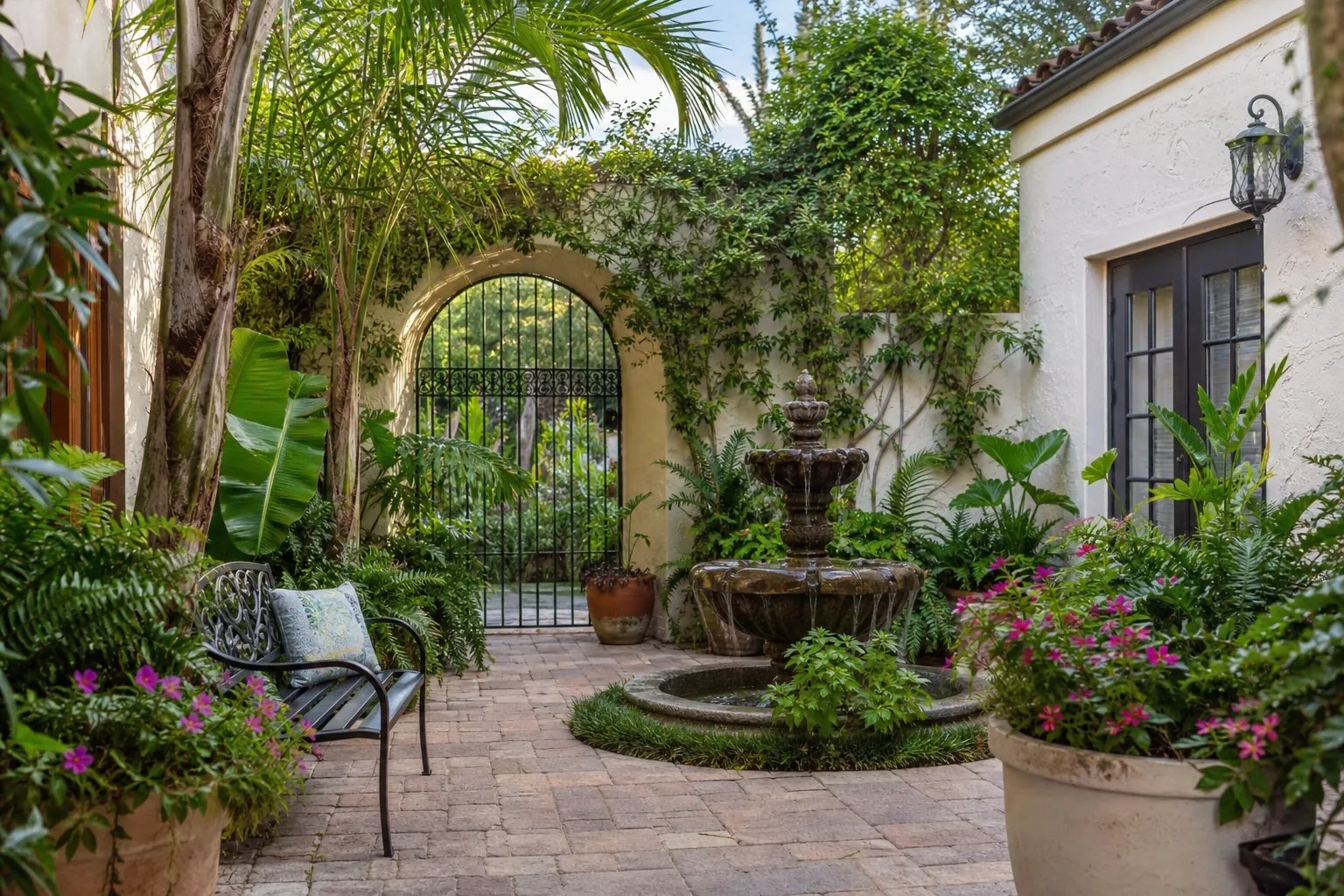
A courtyard can become one of the most inviting parts of a St. Augustine home. Even a compact space can provide a quiet place for morning coffee, casual dining, or a shaded break from the Florida sun. The right design brings together tropical plants, comfortable circulation, drainage, and architectural details without making the area feel crowded.
Successful courtyard landscaping in St. Augustine starts with the conditions inside the space. Walls, fences, rooflines, and nearby trees can create patterns of sun, shade, heat, and moisture that differ from the rest of the property. Tropical Yards designs around those conditions to create outdoor spaces that look polished and remain practical throughout the seasons.
Start With Sun, Shade, And Airflow
Courtyards often have their own microclimate. A south-facing wall may reflect intense afternoon heat, while a narrow corner can remain shaded and damp for much of the day. Before selecting plants, observe where direct sunlight falls in the morning and afternoon. It is also helpful to note areas affected by roof runoff or limited airflow.
These details influence more than plant health. A sunny seating area may need an umbrella, pergola, or small ornamental tree. A shaded pathway may benefit from lighter paving materials that make the space feel brighter. In an enclosed courtyard, leaving room between mature plants can improve airflow and reduce the dense, overgrown appearance that develops when plants are installed too closely.
St. Augustine's coastal setting also matters. Properties near salt air or exposed to strong wind need durable plants and materials. A thoughtful site review helps match the landscape to the home rather than relying on a generic tropical planting plan.
Choose Florida-Friendly Tropical Plants
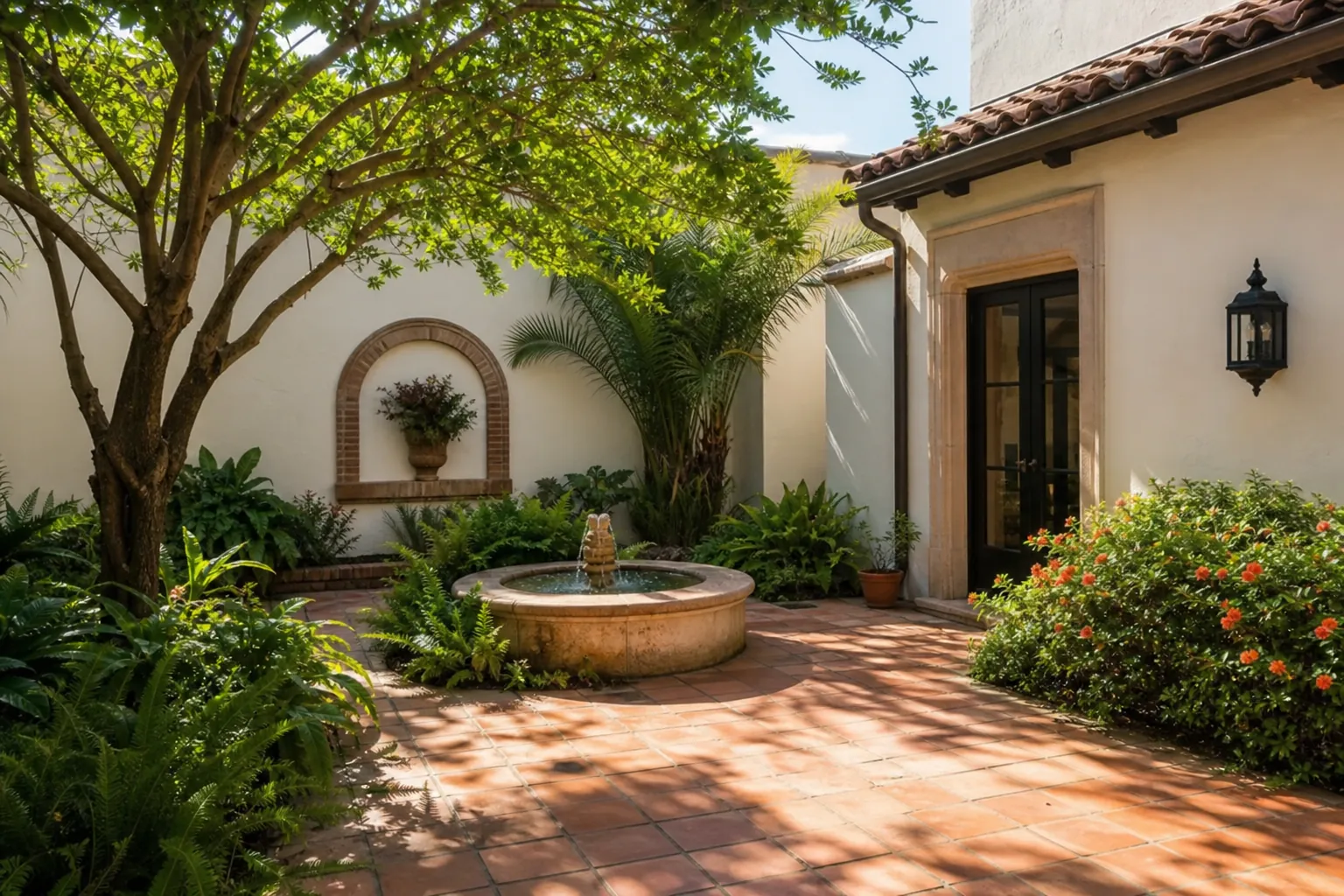
A tropical courtyard should feel layered and vibrant, but it does not need to be filled with high-maintenance plants. The most effective designs combine a limited number of structural plants with softer foliage and seasonal color. Repeating several varieties around the space creates unity and keeps a small courtyard from feeling visually busy.
Plant selection should reflect available light, mature size, cold tolerance, irrigation needs, and salt exposure. Depending on the property, useful options may include dwarf palmettos, coontie, bird of paradise, philodendrons, gingers, bromeliads, flax lilies, and shade-tolerant ferns. Some tropical species may require protection during unusual cold weather, so they should be chosen with realistic expectations.
A balanced courtyard planting plan may include:
- A focal plant: Use one sculptural palm, specimen shrub, or small tree to establish a clear visual anchor.
- Evergreen structure: Select dependable foliage plants that maintain form when seasonal flowers are not blooming.
- Layered heights: Arrange taller plants behind medium shrubs and low groundcovers without blocking windows or walkways.
- Controlled color: Repeat two or three foliage or flower colors to create a calm, coordinated appearance.
- Container accents: Add movable pots near doors and seating areas where irrigation and maintenance are convenient.
- Open space: Preserve breathing room around paths, walls, and furniture so the courtyard remains easy to use.
Planting for mature size is especially important. A plant that looks appropriately small at installation may overwhelm a walkway or hide an architectural feature within a few years. Proper spacing reduces repeated pruning and supports healthier growth.
Manage Drainage Before Adding Decorative Features
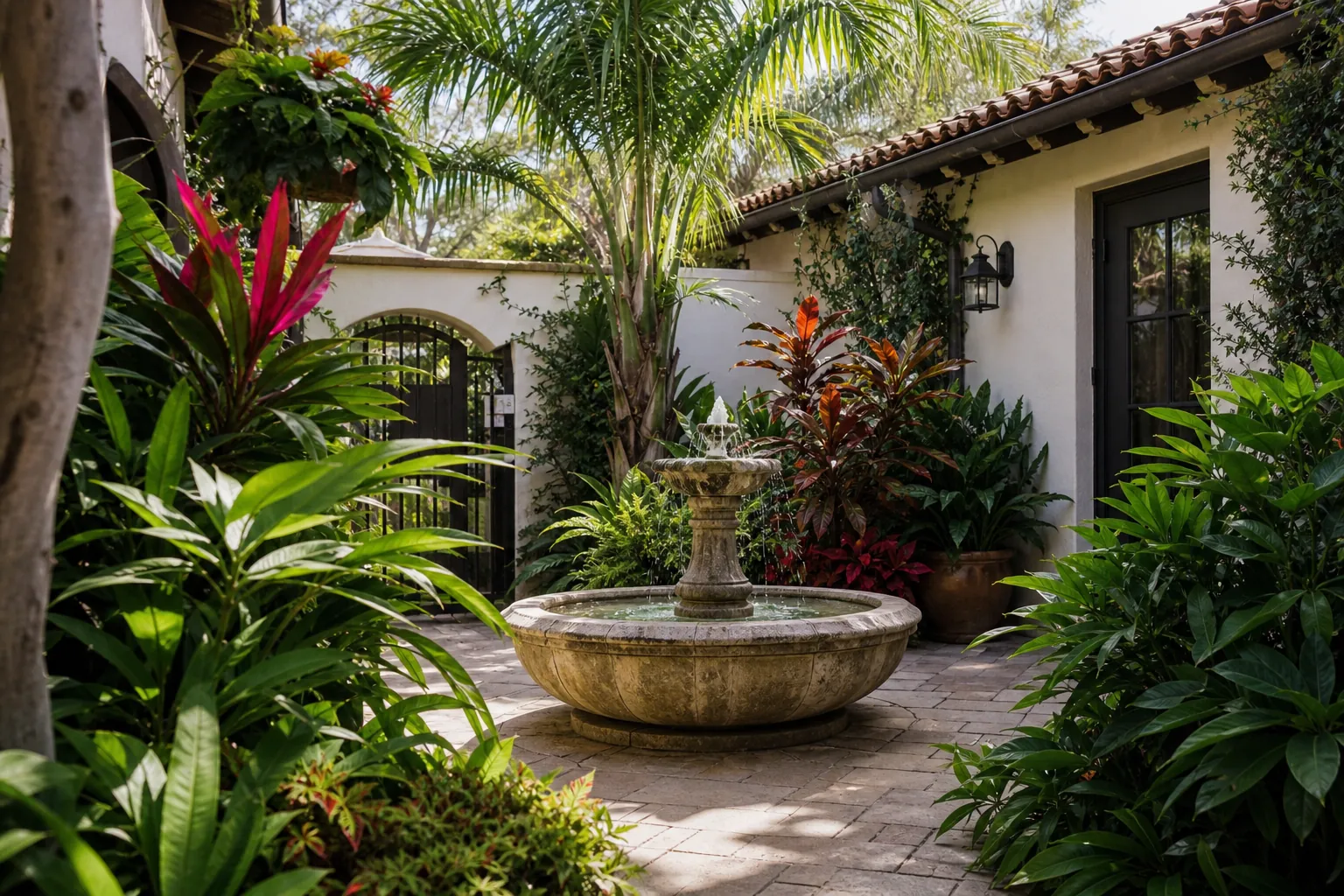
Florida rain can reveal courtyard drainage problems quickly. Water may collect when walls restrict runoff, downspouts empty into planting beds, or paving directs water toward the foundation. Addressing these issues before installing new plants or hardscape helps protect the landscape and makes the courtyard more comfortable after a storm.
Solutions vary by site. They may include adjusting the grade, extending downspouts, installing a drain, selecting permeable paving, or creating planted areas that temporarily receive runoff. Soil preparation can also improve root health, particularly where construction has left compacted fill. Any changes near foundations, thresholds, or utilities should be planned carefully.
Irrigation deserves the same attention. Drip lines or targeted micro-irrigation can supply water to planting beds and containers without regularly soaking walls and furniture. Plants with similar moisture needs should be grouped together. Mulch helps conserve moisture, but it should be kept away from trunks, stems, and the home's exterior surfaces.
Make A Small Courtyard Feel More Spacious
A clear layout can make a modest courtyard feel larger. Begin by defining the primary purpose of the space. A dining courtyard needs enough room to move around chairs, while a garden retreat may prioritize a bench, a view from inside, and a winding path. Trying to include every feature can leave little functional space.
Simple geometry often works well with St. Augustine architecture. Pavers laid in an orderly pattern can support a formal home, while natural stone and softly curved beds suit a relaxed garden. Using one primary paving material creates continuity. Contrasting borders can add definition without making the floor look fragmented.
Vertical elements provide interest while preserving usable ground area. Trellises, narrow planters, wall-mounted features, and upright foliage can draw the eye upward. However, vines should be selected and placed cautiously because some can damage surfaces or require frequent control. Mirrors may create an illusion of depth, but they must be positioned to avoid glare and risks to birds.
Add Comfort With Lighting And Water Features
Courtyard lighting should support safe movement and a relaxed atmosphere. Low-voltage path lights, subtle uplighting on a specimen plant, and warm illumination near seating areas are usually more effective than overly bright fixtures. Directing light downward can reduce glare and limit spill into neighboring properties.
A small fountain can soften street noise and create a cooling visual effect. The feature should fit the scale of the courtyard and remain accessible for cleaning and pump maintenance. In Florida, standing water must be managed carefully. A recirculating system with consistent movement is generally more practical than an open basin that is allowed to become stagnant.
Furniture, cushions, planters, and metal accents should be chosen for humidity, rain, and coastal exposure. Outdoor-rated materials will usually age more gracefully and require less upkeep. Shade, ventilation, and comfortable seating can add more everyday value than an abundance of decorative objects.
Plan For Straightforward Seasonal Care
A well-designed courtyard should be manageable. Routine care typically includes removing fallen leaves, checking irrigation, refreshing mulch, cleaning paving, and pruning plants selectively. Aggressive shearing can weaken tropical plants and erase their natural form, so pruning should focus on damaged, crowded, or obstructive growth.
Containers may dry faster than in-ground beds during warm weather and can require occasional soil renewal. After heavy rain or coastal storms, check drains, downspouts, lighting, and newly planted material. Periodic attention prevents small issues from affecting the entire courtyard.
If you are considering courtyard landscaping in St. Augustine, Tropical Yards can help develop a plan suited to your space, home, and preferred level of maintenance. To discuss ideas for a functional tropical retreat, call 772-267-1611.
Call 772-267-1611 to talk through next steps.