Designing a welcoming driveway entrance for a Florida home
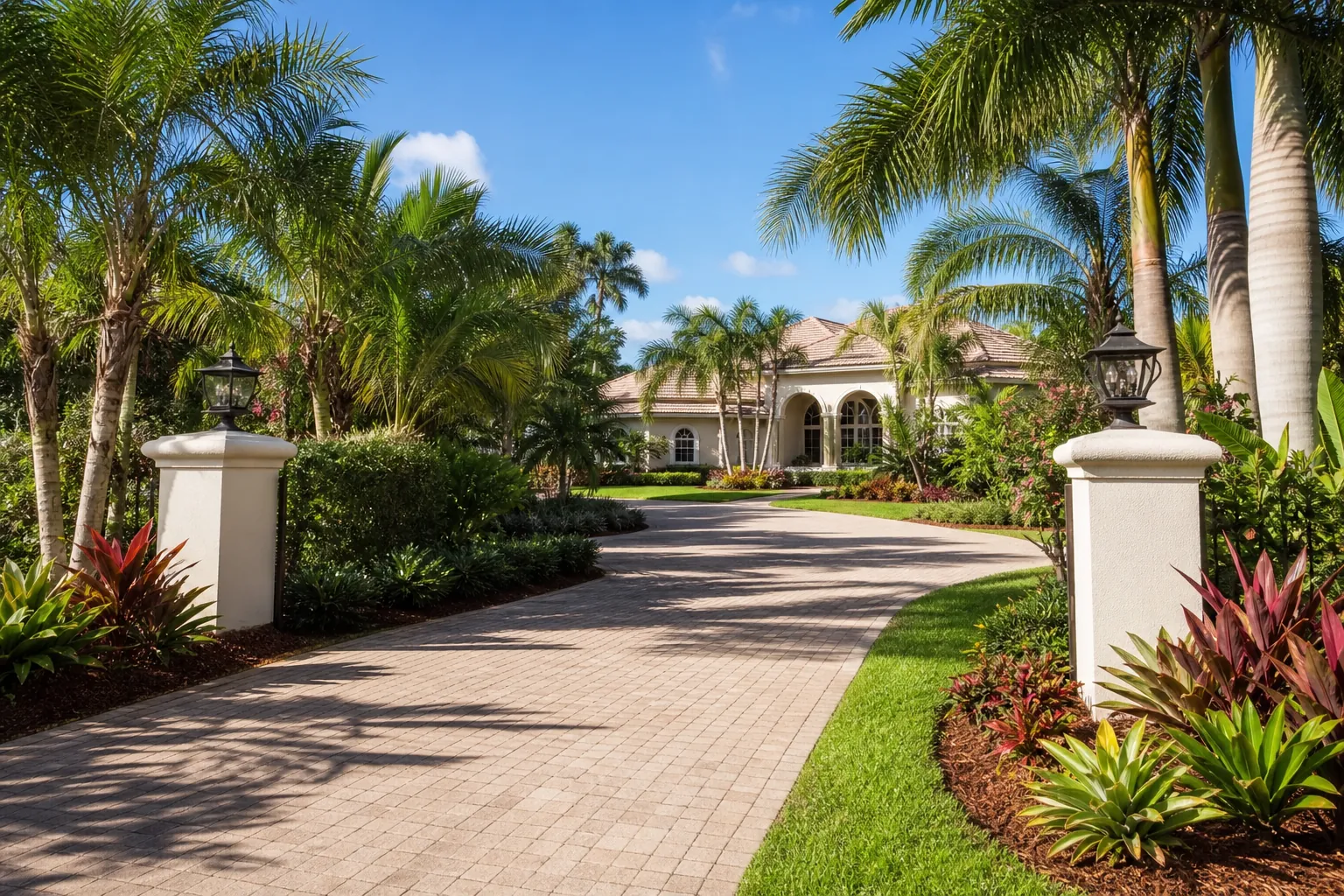
Your driveway entrance creates the first impression of your home. In Florida, it also needs to handle intense sun, heavy rain, sandy soils, salt exposure in coastal areas, and year-round plant growth. A successful design should look inviting without blocking visibility, creating constant maintenance, or interfering with vehicles.
Thoughtful driveway entrance landscaping in Florida combines tropical character with practical planning. The right mix of plants, hardscape, drainage, lighting, and spacing can make the entrance feel polished while supporting safe daily use.
Start With Safety, Scale, And Clear Sightlines
Before choosing palms or colorful shrubs, study how vehicles enter and leave the property. Drivers need an unobstructed view of approaching cars, cyclists, and pedestrians. Plants near the road should remain low enough to preserve sightlines, even after several seasons of growth.
Scale matters too. A narrow residential driveway can feel crowded when framed by oversized palms, broad hedges, or bulky masonry columns. A long, wide driveway may need larger plant groupings to avoid looking sparse. Match each feature to the dimensions of the driveway, the architecture of the home, and the surrounding landscape.
Plan adequate clearance around gates, mailboxes, utility boxes, culverts, sidewalks, and drainage swales. Keep thorny plants and stiff foliage away from areas where passengers may step out. At curves, allow extra space for delivery trucks, trailers, and landscape equipment.
Choose Florida-Friendly Plants For Lasting Appeal
Plants at a driveway entrance experience reflected heat from pavement and may receive less irrigation than beds near the house. Select species for the site's actual sun, soil, moisture, and salt conditions rather than choosing only by appearance.
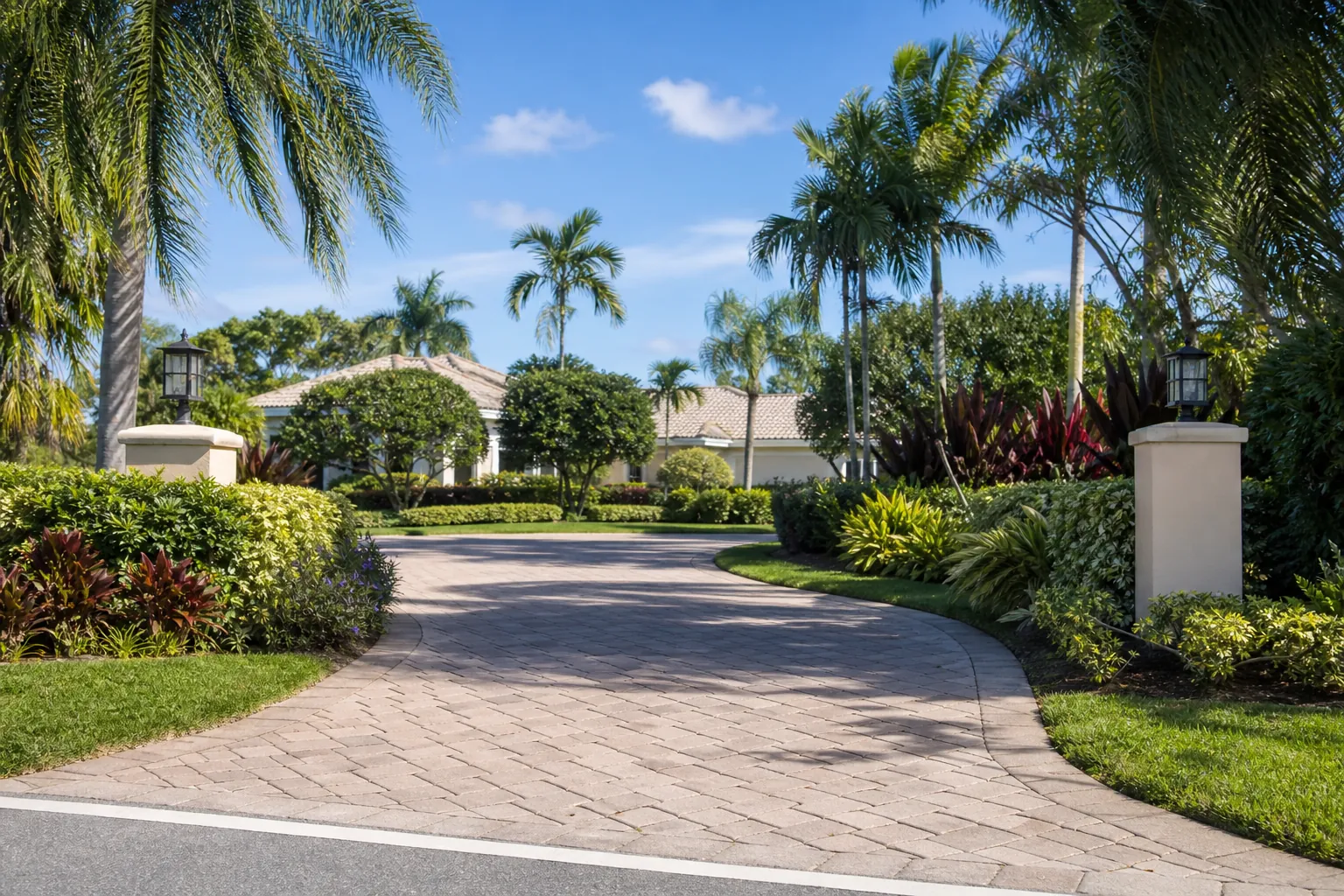
Layering creates a full tropical look without relying on a single hedge. Use a limited number of structural plants, repeat medium-height shrubs, and add lower groundcovers or seasonal color along the front. Repetition makes the design feel intentional and keeps a small entrance from becoming visually busy.
Depending on the location and available room, useful options may include:
- Accent palms: Smaller or moderately sized palms can provide vertical interest without overwhelming the driveway. Choose varieties with mature canopies that fit safely within the site.
- Low shrubs: Dwarf clusia, cocoplum cultivars, ixora, and similar Florida-friendly choices can define beds while maintaining visibility when properly placed and pruned.
- Ornamental grasses: Muhly grass and other suitable grasses add movement, texture, and seasonal interest with a soft edge near hardscape.
- Tropical foliage: Crotons, cordylines, and bromeliads can introduce color in protected locations suited to their light and cold tolerance.
- Groundcovers: Dense, low-growing plants help cover bare soil, reduce mulch movement, and visually connect larger specimens.
- Native plants: Site-appropriate natives can support local wildlife and reduce inputs once established, especially when matched carefully to drainage and exposure.
Always confirm mature height and width before planting. A small nursery specimen can quickly become a visibility problem or require frequent trimming when installed too close to pavement.
Build A Strong Structure With Hardscape
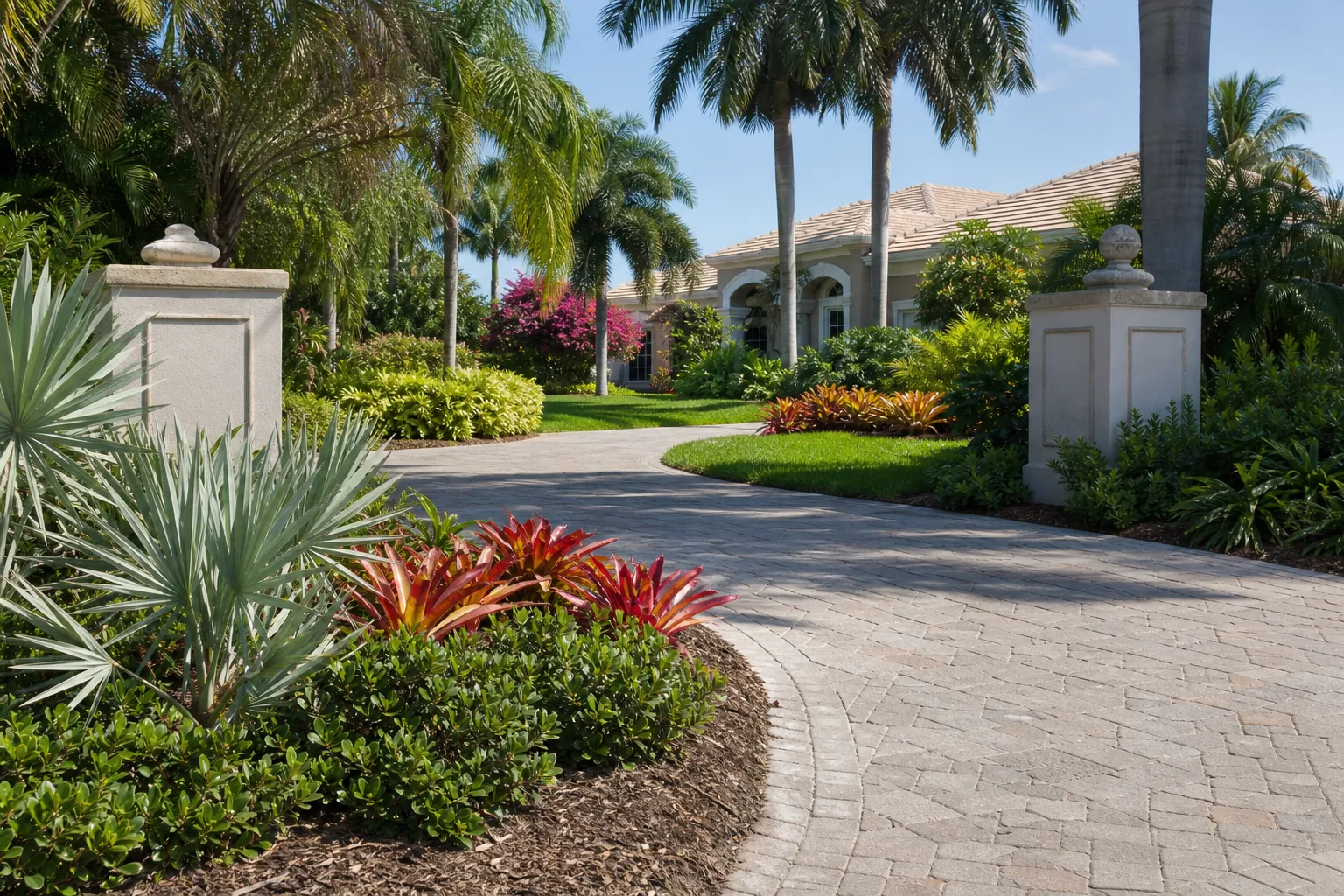
Hardscape gives an entrance definition throughout the year. Stone borders, paver bands, columns, address markers, and carefully shaped planting beds can complement the home's materials without making the entry feel formal or heavy.
Use one or two finishes already present on the home to create continuity. For example, driveway pavers might coordinate with the walkway, while column stone echoes an exterior accent. Too many competing colors and textures can distract from the house and landscape.
Bed lines should guide the eye inward. Gentle curves often suit tropical landscapes, but they need enough depth to look deliberate. Very narrow strips are difficult to irrigate, mulch, and maintain. They can also leave plants exposed to tire traffic and pavement heat.
If an entrance includes gates or columns, verify property setbacks, easements, local codes, and utility locations before construction. Address numbers should remain easy to read from the road during the day and at night.
Manage Florida Rain And Irrigation
Drainage is essential near any driveway. Water should not collect on the pavement, wash mulch into the street, or erode soil around new plants. Preserve the function of roadside swales and culverts, and avoid adding soil or structures that redirect stormwater toward neighboring properties.
Shape beds so water can soak into the soil without settling against columns or paved edges. In low areas, plants that tolerate periodic moisture may perform better than drought-focused varieties. On raised, sandy sites, select plants that can withstand faster drying.
Efficient irrigation helps new landscaping establish while limiting overspray onto pavement. Dripline or targeted micro-irrigation may work well in defined beds when designed for the chosen plants. Group species with similar water needs, inspect coverage regularly, and adjust watering for rainfall and seasonal conditions. Mulch can conserve moisture, but it should be kept away from trunks and installed at a practical depth.
Add Lighting Without Creating Glare
Landscape lighting can improve navigation and highlight the entrance after sunset. The goal is gentle guidance, not excessive brightness. Low-voltage fixtures can illuminate address numbers, specimen plants, columns, or the driveway edge while preserving a comfortable residential atmosphere.
Aim fixtures away from drivers and neighboring windows. Shielded lights reduce glare and focus illumination where it is needed. Place fixtures beyond tire paths and routine maintenance zones, and account for future plant growth so foliage does not quickly cover the beam.
Warm light often complements tropical foliage and masonry. Consistent fixture styles and restrained spacing usually produce a more polished result than a large number of highly visible lights.
Plan Maintenance Before Installation
A driveway entrance is exposed to everyone who visits the property, so neglected growth becomes noticeable quickly. A maintainable design begins with proper spacing and realistic expectations. Fast-growing hedges may need frequent pruning, while palms can require periodic removal of old fronds, flowers, or fruit.
Choose plants based on the amount of care you want to provide. Include access for trimming, irrigation repairs, and weed control. Durable edging can help contain mulch, but it should not create a tripping hazard or interfere with drainage.
Review the entrance several times a year. Check sightlines, prune selectively, clear debris from drainage paths, refresh thin mulch, and replace poorly performing plants with options better suited to the site. This steady care protects the design and keeps the arrival experience welcoming.
Create An Entrance That Fits Your Property
The best Florida driveway entrance feels connected to the home and comfortable within its surroundings. It balances tropical color with open views, durable materials, responsible water management, and plant choices that can thrive in local conditions.
Tropical Yards can help you evaluate the site and develop an entrance suited to your property's style, exposure, and maintenance goals. For a calm, practical conversation about your landscape, call 772-267-1611.
Call 772-267-1611 to talk through next steps.