Which Drought-Tolerant Tropical-Looking Plants Handle Florida Afternoon Sun?
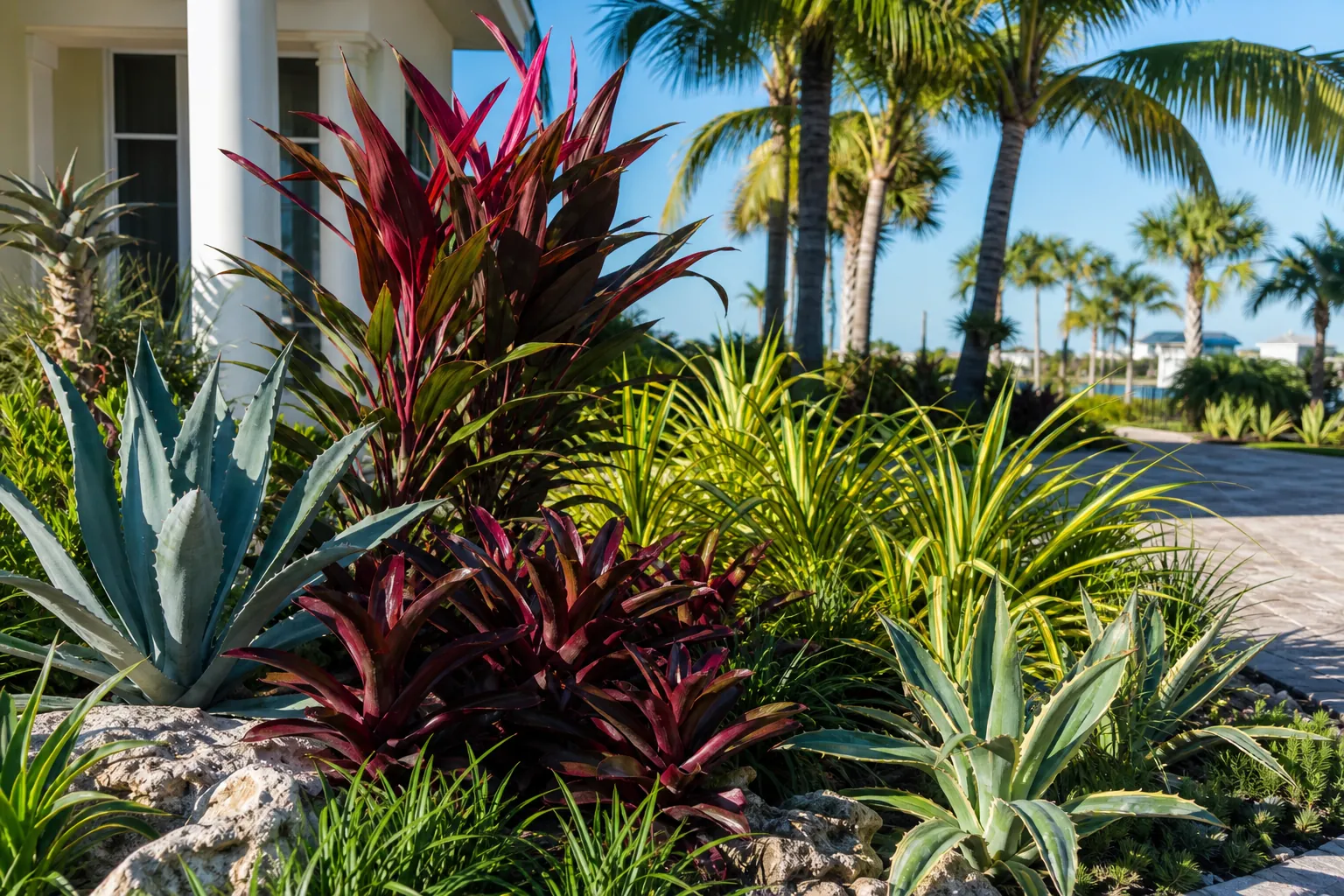
Florida afternoon sun can expose weak plant choices quickly. Heat, reflected warmth, sandy or fast-drying soil, and periods without rain can stress plants that look tropical but prefer shelter. A better approach is to evaluate the site first, then choose plants with foliage, form, and mature size suited to the conditions. Use the steps below to compare candidates without relying on appearance alone.
Start With the Actual Afternoon-Sun Conditions
Before selecting plants, watch the planting area from midday through sunset. Record when direct sun reaches it, how long it remains, and whether nearby walls, pavement, fences, or stone reflect additional heat. A bed beside a west-facing wall can be harsher than an open area receiving the same number of sunny hours.
Check moisture after rainfall or irrigation. Dig several inches down rather than judging by the surface. Soil that stays wet presents a different challenge from soil that drains and dries quickly. Drought tolerance does not mean a plant will perform well in constantly saturated ground.
Also note wind exposure and competition from established roots. Both can increase water demand. If shade from buildings or trees moves across the area, map that pattern as well. These observations create a practical site profile. Use that profile when reading plant labels or asking questions, focusing on sun exposure, drainage, mature dimensions, and water needs after establishment.
Define the Tropical Look You Want
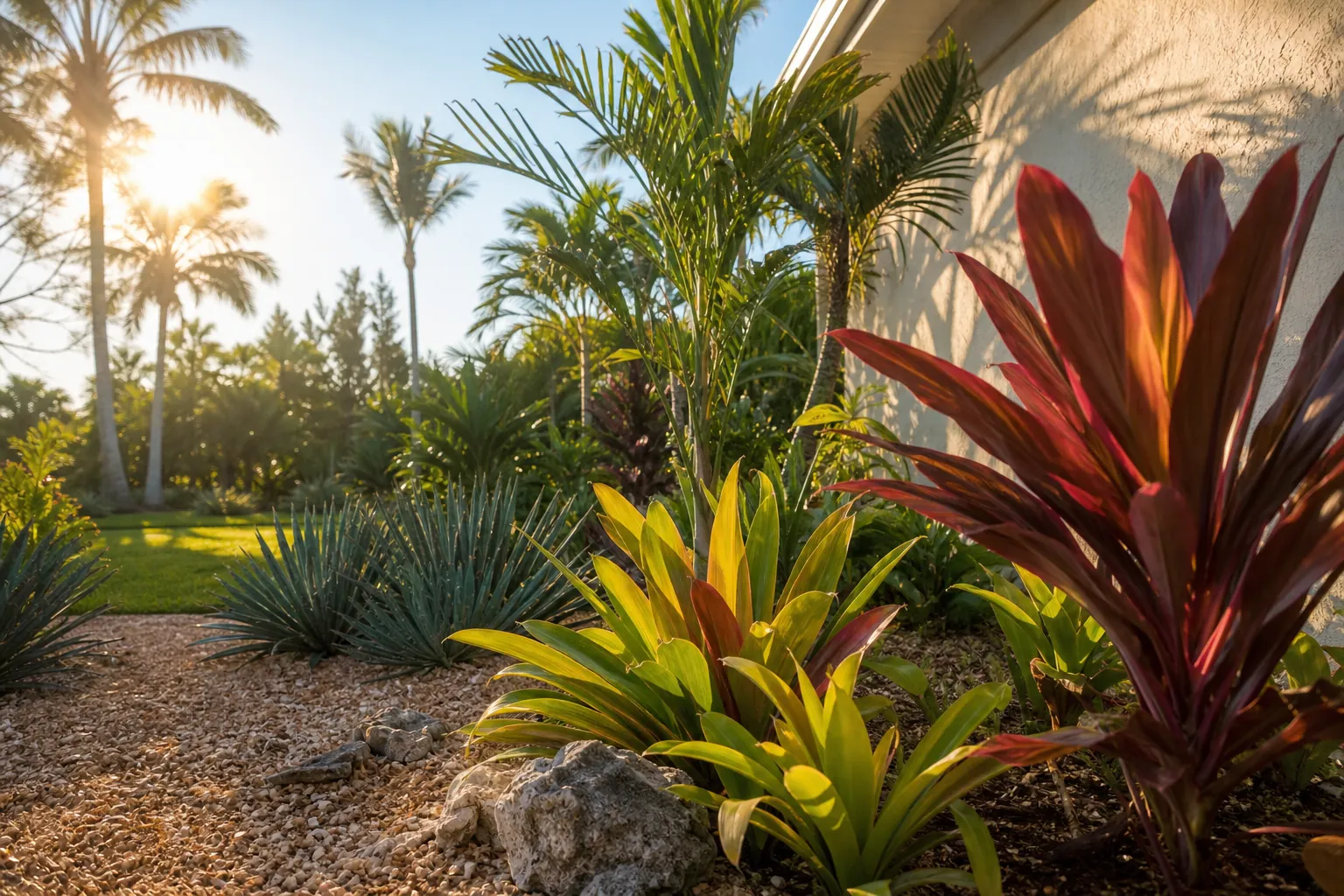
“Tropical-looking” can describe several different design effects. Some readers want large, bold leaves. Others prefer upright, architectural forms, arching foliage, colorful leaves, or dense layers that make a bed feel lush. Define the visual goal before shopping so that each plant has a clear role.
For a drought-conscious planting, avoid assuming that the broadest or softest foliage will tolerate the driest, hottest location. Instead, compare plants with strong forms and foliage textures that create a tropical impression while matching the site. A layered composition can combine an upright focal plant, medium-height foliage, and lower plants that visually cover open soil.
Consider how the planting will look outside its peak season. Evergreen structure, leaf durability, and a balanced silhouette may matter more than temporary flowers. Repeating a limited group of compatible plants often looks more intentional than placing many unrelated specimens together. The goal is not to imitate a rainforest. It is to create a convincing tropical character using plants appropriate for Florida sun and the bed’s moisture pattern.
Compare Plant Candidates With a Practical Checklist
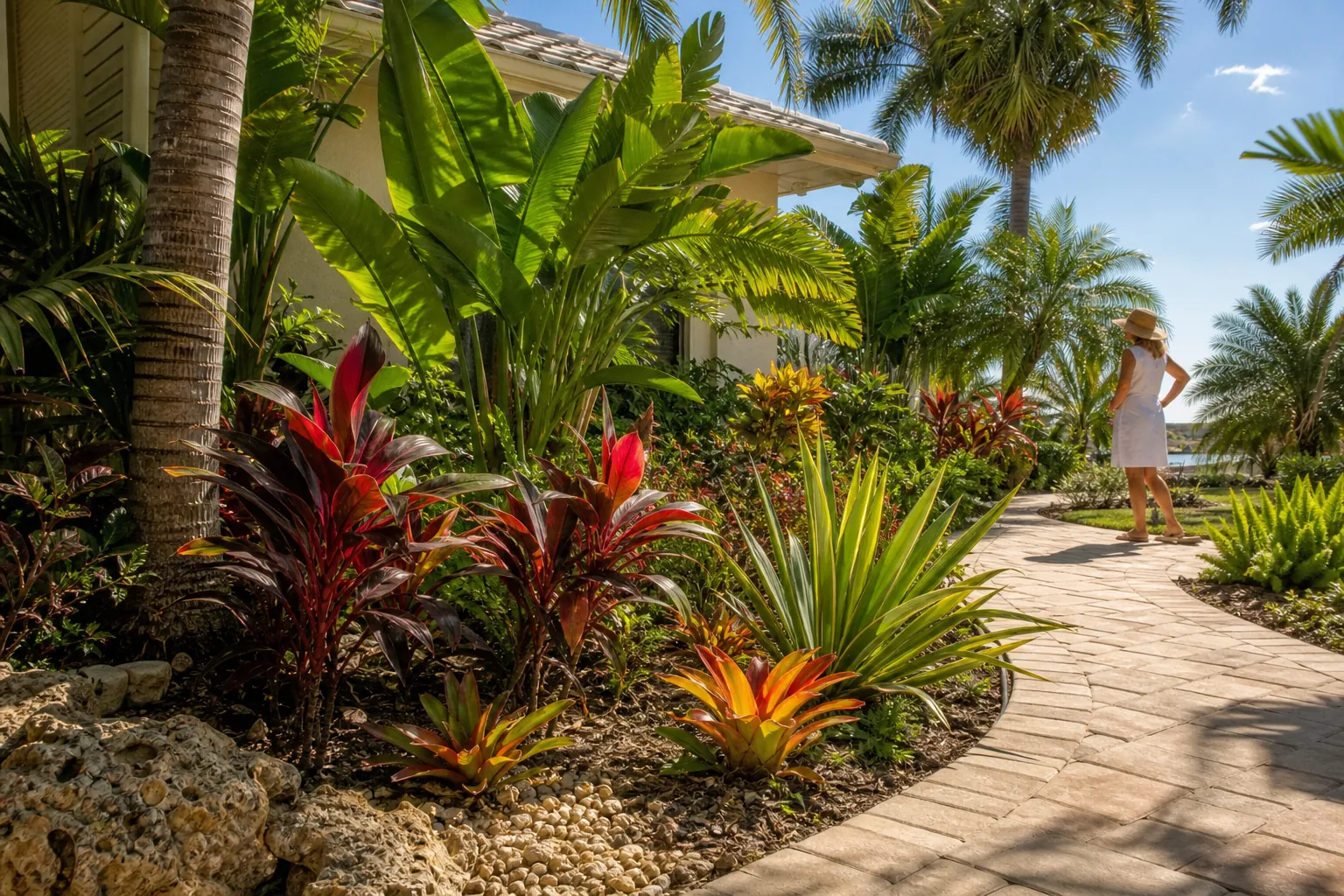
Once you know the site and desired style, evaluate every candidate consistently. Common names and tropical appearance are not enough. Confirm the plant’s specific growing requirements and expected dimensions before purchasing. A plant that survives strong sun may still scorch, become sparse, or require more water than you want in that particular location.
- Confirm that the plant accepts direct afternoon sun, not only bright shade or morning sun.
- Check whether its preferred drainage matches the bed.
- Compare established water needs with your maintenance plan.
- Measure mature height and width against available space.
- Allow clearance from walls, walks, utilities, and neighboring plants.
- Ask how the plant responds to seasonal cold and wind exposure.
- Inspect foliage, stems, and roots for visible stress before buying.
Keep notes for the strongest candidates and reject those that need conditions you cannot provide. This decision process is more reliable than choosing from a display labeled simply “full sun.” It also helps prevent crowding, repeated transplanting, and a bed that depends on frequent corrective pruning.
Plan for Establishment Before Expecting Drought Tolerance
Drought tolerance usually describes an established plant, not a newly installed one. New roots occupy a limited volume of soil and can dry quickly in Florida heat. Plan how you will monitor moisture during establishment before placing plants in an exposed afternoon-sun bed.
Water based on soil moisture and plant response rather than a rigid assumption. Check below the surface near the root zone, because a dry crust can hide moisture and a damp surface can hide dry soil underneath. Encourage roots to move into surrounding soil, while avoiding conditions that remain continually waterlogged.
A suitable mulch layer can moderate soil temperature and slow moisture loss, but keep it from piling against stems or trunks. Remove weeds that compete for moisture, especially while plants are establishing. Watch for curling, bleaching, dropping leaves, or persistent wilting, then verify the cause before adding more water. Heat stress, poor drainage, root disturbance, and wind can produce similar symptoms. Careful observation helps you respond to the actual problem instead of creating a second one.
Place, Space, and Test Before Filling the Bed
Good placement can reduce stress and maintenance. Put the most sun-tolerant choices where exposure is strongest. Use any available late-day shade for candidates that tolerate sun but benefit from relief. Keep plants with similar drainage and moisture preferences together so that one irrigation approach does not overwater some while underwatering others.
Set containers in the bed before planting and view the arrangement from windows, walks, and outdoor seating areas. Use mature widths, not current container sizes, to establish spacing. Temporary gaps are preferable to long-term crowding that blocks airflow and forces repeated cutting.
If you are uncertain about a plant’s performance, test a small number through the site’s demanding season before repeating it across the landscape. Note foliage quality, water demand, growth, and how well the plant maintains the intended tropical effect. For palm-related planning during colder weather, read how to protect young palms from frost. Sun tolerance is only one part of a durable Florida planting decision.
Make a More Confident Planting Decision
Bring your site observations, measurements, and preferred tropical style together before choosing plants. For a calm conversation with Tropical Yards, call 772-267-1611.
Call 772-267-1611 to talk through next steps.