Choosing heliconia plants for Northeast Florida gardens
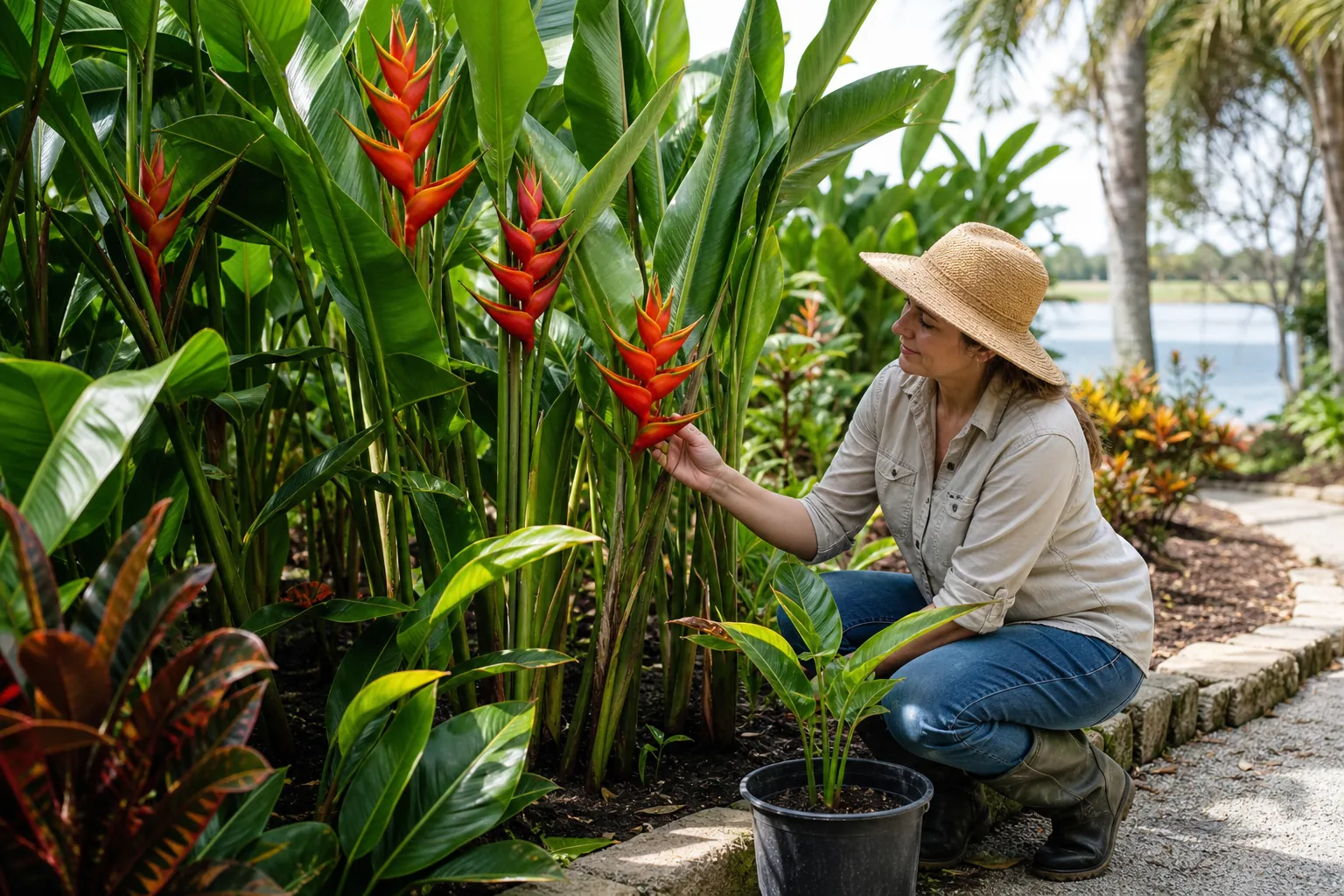
Heliconias bring broad leaves and striking, colorful flower bracts to a tropical garden. In Northeast Florida, however, choosing one takes more thought than simply picking the brightest plant. Winter cold, wind exposure, soil drainage, and the length of the warm growing season all influence whether a heliconia becomes a dependable feature or a seasonal experiment.
The best approach is to match the plant to a protected location and accept that foliage or stems may suffer during cold weather. Some gardeners will have better results growing heliconias in movable containers than planting them permanently in the ground.
Tropical Yards supplies tropical plants and coquina shell, with dump trailer delivery from St. Augustine to Daytona Beach. This guide explains what to ask before buying, how to prepare a planting area yourself, and how to plan a delivery without assuming that every heliconia suits every Florida yard.
Understand What Northeast Florida Winters Mean For Heliconias
Heliconias are tropical, rhizome-forming plants. Their colorful displays come largely from modified leaves called bracts, which surround the smaller true flowers. Many kinds grow well where warmth and moisture persist, but Northeast Florida introduces a significant seasonal limitation: cold weather can interrupt growth or kill exposed stems.
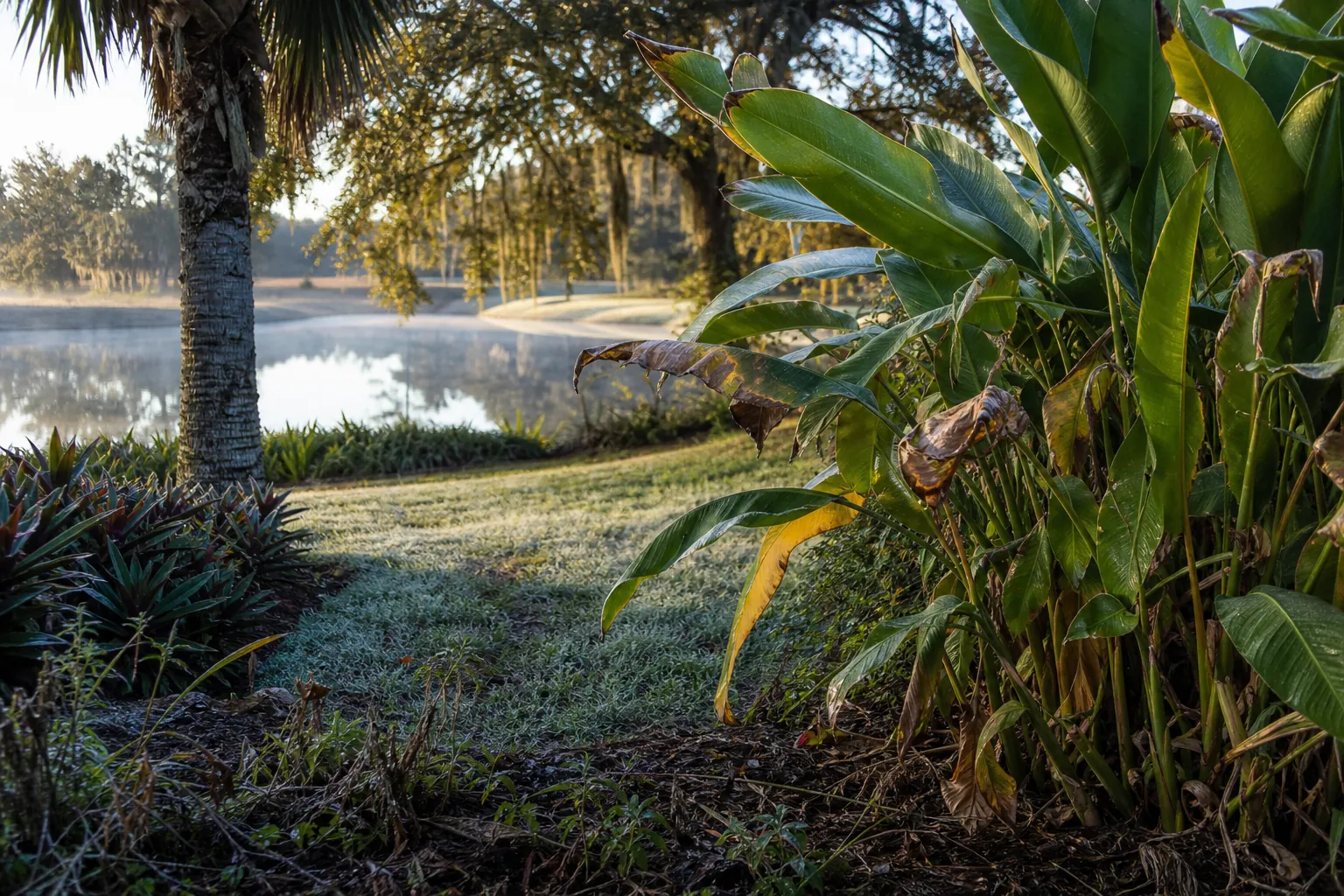
A plant that survives underground is not necessarily a plant that flowers reliably. Some heliconias need stems to remain intact long enough to mature and bloom. If those stems freeze back each winter, the plant may repeatedly produce attractive leaves without developing the flower display you expected.
Conditions also vary within the region. A sheltered coastal courtyard may behave differently from an open inland property. Low spots can collect cold air, while exposed sites receive drying wind. Even within one yard, the space beside a building may offer better protection than an open lawn.
Use your address-specific hardiness information as a starting point, then consider actual winter conditions at the planting site. Avoid treating a regional label or a nursery tag as a promise. Ask about cold sensitivity, likely stem damage, and flowering requirements before deciding whether an in-ground planting makes sense.
Choose A Heliconia By Identity, Size, And Flowering Habit
When shopping for heliconia plants for northeast florida gardens, start with the botanical name and cultivar, if one is available. The word heliconia covers plants with very different mature sizes, growth habits, and tolerances. A small container specimen can eventually become a substantial clump.
Heliconia psittacorum and its hybrids are often encountered in tropical plant sales. Their generally smaller scale can make some selections easier to accommodate in containers, but they are still cold-sensitive. Heliconia rostrata, known for its hanging bracts, can be impressive in warm conditions but is not a dependable outdoor flowering choice for every Northeast Florida site.
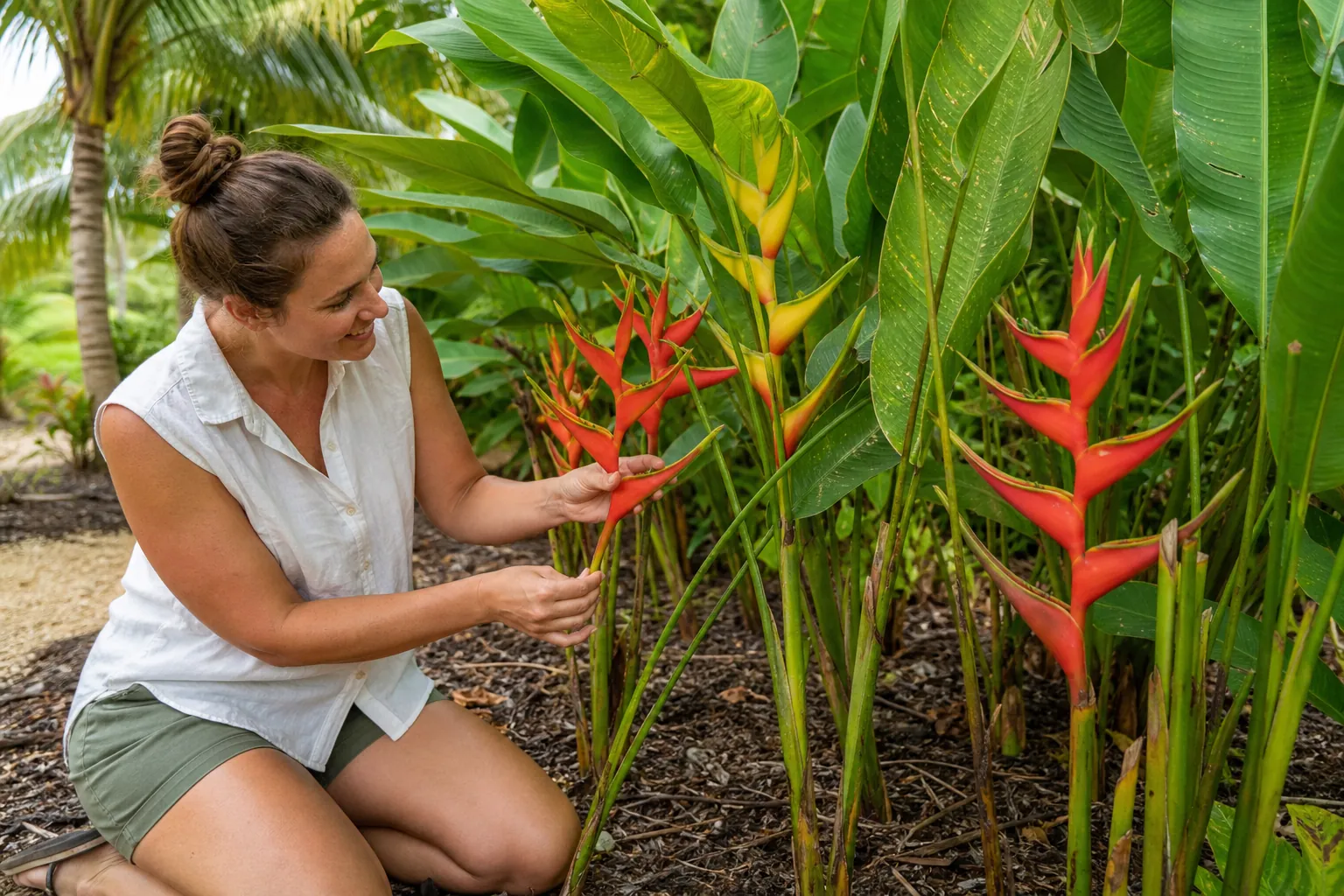
Do not select solely from a photograph of blooms. A plant pictured in a frost-free climate may perform differently in your garden. Ask whether flowering occurs on new growth or requires older stems, and how local cold exposure could affect that cycle.
- Ask for the plant's botanical name so you can research that specific selection rather than heliconias in general.
- Confirm its expected height and clump width before placing it beside a path, window, or fence.
- Ask whether the available plant is established in its container or is a recently potted division.
- Discuss your site's winter exposure and ask whether container growing would be the more practical option.
Contact Tropical Yards to ask about current tropical plant availability and whether heliconias are available. Inventory should be confirmed before you plan a trip or arrange delivery.
Find A Protected Site With Room For Growth
A suitable planting location balances light, shelter, and drainage. Many heliconias appreciate bright conditions, but sun tolerance depends on the selection and how the plant was grown before purchase. Leaves accustomed to nursery shade may scorch if suddenly exposed to intense afternoon sun.
Observe the proposed area at different times of day. Morning sun with some afternoon protection can be a useful starting point for sensitive selections, provided there is enough light for healthy growth. Deep shade may produce foliage while reducing flowering.
Wind matters because broad leaves can split and become ragged. A sheltered position can improve their appearance, although naturally torn leaves do not automatically mean the plant is unhealthy. Keep plants out of direct salt spray when possible, and do not assume that a tropical appearance indicates salt tolerance.
Allow space for the clump to expand without obstructing access. Leave room to inspect stems, water the root zone, and apply mulch. Do not plant against siding or crowd drainage outlets. If you are using shelter from a building, account for roof runoff and the possibility that the area under the eaves stays unusually dry.
A protected location can reduce exposure, but it cannot make a cold-sensitive plant freeze-proof.
Decide Between Containers And In-Ground Planting
Containers offer flexibility when winter protection is important. A manageable pot can be moved to a sheltered, frost-free location during cold events. This is particularly useful when you are trying an unfamiliar selection or cannot identify a consistently protected outdoor bed.
Choose a container with unobstructed drainage holes and a potting mix intended for container plants. Garden soil can compact in a pot and interfere with drainage. Match container size to the plant and its root system, leaving room for growth without using an unnecessarily large volume of persistently wet mix.
Consider the weight before buying. A mature heliconia, moist potting mix, and a substantial container may be difficult to move. A sturdy plant dolly can help on suitable surfaces, but steps, narrow gates, and uneven paving may still prevent easy relocation.
In-ground planting gives roots more space and may simplify watering once plants are established. The tradeoff is that you cannot move the plant when cold weather arrives. For that reason, an in-ground heliconia should be chosen with realistic expectations about winter dieback and possible loss.
If flowering is your main goal, a container is not an automatic solution. The plant still needs sufficient warmth, light, root space, and time to mature.
Prepare The Soil And Plant Your Heliconia Yourself
Heliconias generally benefit from fertile soil that retains some moisture without staying waterlogged. Northeast Florida properties can contain loose sand, compacted fill, or poorly drained pockets. Check the actual planting spot rather than assuming that all nearby soil drains the same way.
Observe the area after substantial rain. If water remains around the intended root zone, reconsider the location or address drainage before planting. Adding compost does not correct a site that regularly floods, and filling a planting hole with rich material does not guarantee that water can escape.
For sandy soil, incorporate suitable organic matter across the planting area rather than creating a small, heavily amended pocket. A soil test can help identify pH or nutrient issues before you add products the plant may not need.
- Plant during warm weather after the local risk of frost has passed, allowing time for establishment before the next winter.
- Dig a hole wide enough to position the root ball without crowding or bending it.
- Set an established container plant at approximately the same soil level at which it was growing, avoiding deeply buried stem bases.
- Backfill carefully and water the root zone to settle soil around the roots.
- Apply organic mulch around the planting area while keeping it away from the stems.
For bare rhizomes or divisions, follow instructions specific to that plant material rather than copying container-plant depth. Tropical Yards is a supplier; site preparation and planting are handled by the buyer or a separately arranged provider.
Water And Feed For Steady Growth
Newly planted heliconias need attention while their roots establish. Check moisture beneath the surface instead of watering only because the top layer looks dry. Sandy beds and exposed containers can dry quickly, while shaded areas or poorly drained soil may remain wet much longer.
Water thoroughly enough to moisten the root zone, then allow conditions to guide the next application. Avoid keeping the soil constantly saturated. Wilting can result from dry soil, but damaged roots in wet soil can also cause leaves to droop, so inspect moisture before adding more water.
Containers need especially regular checks during hot weather. Make sure drainage holes stay open and that pots do not sit in water-filled saucers. Direct water toward the growing medium rather than repeatedly soaking the foliage.
Use fertilizer according to the product label and the needs of the specific plant. More fertilizer does not compensate for cold damage, inadequate light, or unhealthy roots. Avoid concentrated applications against stems and do not apply fertilizer to severely stressed plants simply to force growth.
Organic mulch helps moderate soil moisture and temperature. Check it periodically, especially after heavy rain, and keep stem bases clear. A consistent routine based on observation is more useful than a rigid watering calendar.
Prepare For Cold Weather Without Promising Survival
Plan winter protection before a cold forecast arrives. For container plants, identify a bright, frost-free holding area and confirm that you can move the pots safely. During their stay under cover, continue checking moisture, but expect water needs to decrease when temperatures and growth slow.
For manageable in-ground plants, frost cloth may reduce exposure during some cold events. Support it as needed and extend it to the ground to help retain warmth from the soil. Avoid placing plastic directly against leaves, and follow the covering manufacturer's directions.
A cover is not a guarantee against damage, particularly during prolonged or severe freezes. Large clumps may also be difficult to protect effectively. Decide in advance whether you are comfortable treating an outdoor heliconia as an experimental planting.
After cold damage, wait until the weather settles before making major cuts. Remove soft, rotting material when necessary, but distinguish damaged foliage from healthy stem tissue. Cutting away every imperfect stem may remove growth that could otherwise continue developing.
If the plant resprouts from its rhizomes, reassess its role in the garden. A foliage-focused planting may still be worthwhile, even if blooms are inconsistent. If reliable flowers are essential, repeated winter setbacks may indicate that the site or selection is unsuitable.
Use Coquina Shell Beside Beds With Care
Coquina shell can provide a contrasting surface for paths, borders, and other landscape areas near tropical plants. Tropical Yards sells coquina shell and offers dump trailer delivery. Before ordering, decide exactly where the material will go and how you will keep it separate from the heliconia root zone.
Shell contains calcium carbonate and can influence nearby soil chemistry over time. Heliconias generally benefit from organic-rich growing conditions, so avoid mixing shell into their planting soil or assuming it works like compost. Where pH is a concern, use soil testing to guide decisions.
Organic mulch is usually a more suitable choice immediately around heliconias. A separate shell path can still complement the foliage, provided edging or another clear boundary helps limit migration into the bed. Leave enough room for watering and access.
- Measure the length and width of the intended shell area before asking about material quantities.
- Decide on an appropriate finished depth based on the intended use and existing surface.
- Check how water moves through the area so the finished surface does not redirect runoff into a planting bed.
- Plan how you will spread the delivered material yourself or through separately arranged help.
Do not assume shell alone creates a stable, accessible walking surface. Base preparation, grading, compaction, and the characteristics of the supplied material all matter.
Plan Your Purchase And Dump Trailer Delivery
A delivery works best when the plants, access route, and unloading location have been discussed beforehand. Tropical Yards offers dump trailer delivery of plants and coquina shell from St. Augustine to Daytona Beach. Confirm service to your specific address and explain any access restrictions when arranging an order.
For plants, ask about container size and approximate handling needs. Prepare a shaded or otherwise appropriate temporary holding area if you will not plant immediately. Keep plants watered as needed, and avoid leaving them on hot paving or in an exposed location simply because that is where unloading was easiest.
For coquina shell, identify a suitable unloading spot and discuss whether the trailer can reach it safely. Gates, overhead branches, soft ground, tight turns, and nearby structures may affect access. The driver should confirm whether the proposed location is workable.
Keep the unloading area clear of vehicles and obstacles. Do not assume material can be dropped directly into every garden area. Delivery is not installation, spreading, grading, planting, or cleanup, so arrange the tools and help you need before the order arrives.
If underground utilities could be affected by your own digging or site preparation, contact the appropriate utility-location service beforehand.
Build A Tropical Planting Around Realistic Expectations
Heliconias are most rewarding when purchased with a clear understanding of their needs. Choose an identified selection, give it a sheltered location, and decide whether you value tropical foliage, potential flowers, or the flexibility of a movable container.
You can also explore other tropical plants for the surrounding garden. Tropical Yards sells palm trees, hibiscus, bougainvillea, ferns, and other tropical plants. Each has its own cold tolerance, light needs, and mature size, so evaluate individual selections rather than treating them as interchangeable.
To discuss current plant availability, coquina shell, or dump trailer delivery from St. Augustine to Daytona Beach, call Tropical Yards at 772-267-1611. Bring your site measurements, sun observations, and access details so you can plan a purchase that fits your DIY project.
Call 772-267-1611 to talk through next steps.