How Long Should You Water Newly Planted Tropical Plants in Northeast Florida?
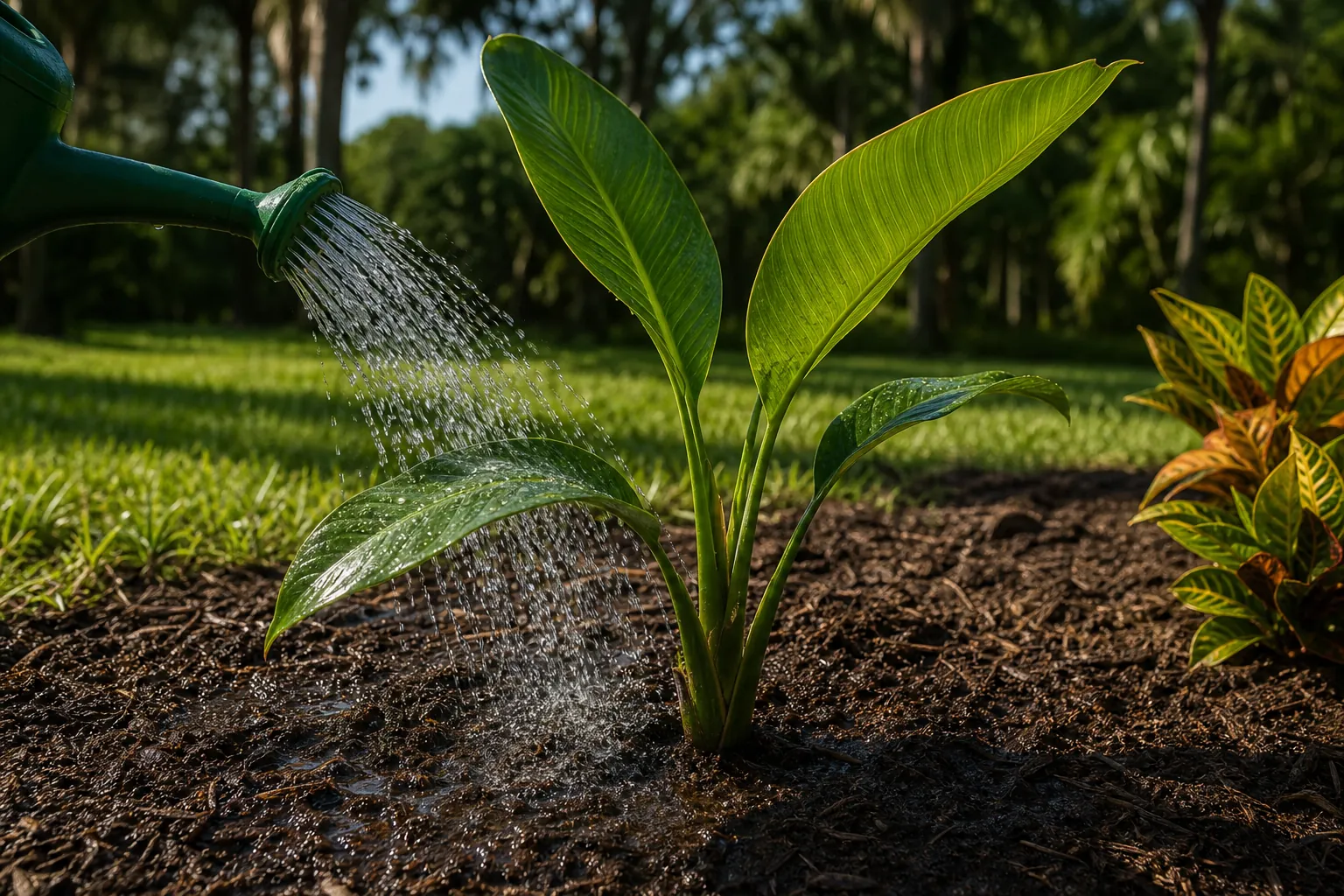
New tropical plants need consistent moisture while their roots begin spreading into the surrounding soil, but they should not remain waterlogged. In Northeast Florida, the right watering time depends on the plant, root ball, soil, drainage, rainfall, wind, temperature, and watering method. Instead of relying on one fixed number of minutes, water deeply enough to moisten the entire root ball and nearby soil, then check conditions before watering again.
Measure Watering by Soil Moisture, Not Minutes
A watering schedule based only on minutes can be misleading. A hose with a strong flow delivers much more water than a drip emitter, while compacted soil absorbs water differently from loose soil. Start by applying water slowly around the root ball so it can soak in rather than run across the surface. The goal is moisture throughout the root zone, not simply a wet top layer.
After watering, check the soil several inches below the surface near the edge of the root ball. It should feel evenly moist, not dry and dusty or saturated and muddy. If only the surface is damp, the watering session was too brief or too fast. If water remains pooled or the soil stays soggy for an extended period, reduce the amount or improve the interval between sessions. Repeat this check in multiple spots because irrigation coverage may be uneven. This hands-on test gives you more useful information than a universal time recommendation and helps you adjust as conditions change.
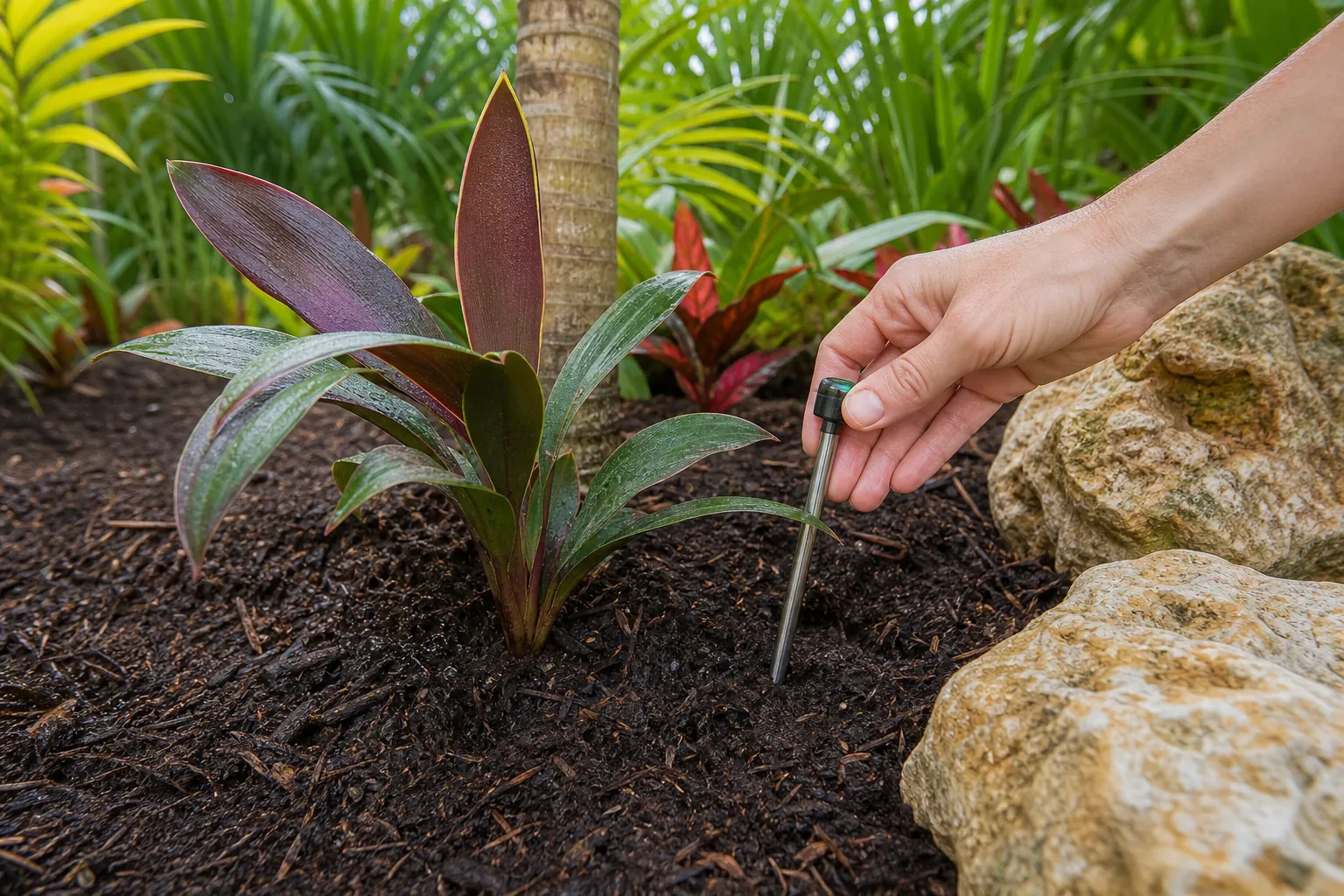
Water the Root Ball and Surrounding Soil
Newly installed plants initially depend on the soil held within their root balls. If water lands only outside that area, the original root mass may stay dry. If water is directed only against the stem, surrounding soil may not encourage roots to spread. Apply water across the root ball and slightly beyond its edge, using a gentle flow that does not wash soil away.
Before watering, confirm that the root ball has not pulled away from the surrounding ground. Gaps can direct water downward without thoroughly moistening the roots. Also check whether mulch or dense foliage is redirecting water. Keep mulch from pressing against stems or trunks, and make sure irrigation reaches the soil instead of being caught by leaves.
- Apply water slowly enough for the soil to absorb it.
- Cover the full root-ball area and nearby soil.
- Stop if water begins running away from the planting area.
- Recheck moisture below the surface after watering.
- Adjust the next session based on rainfall and drainage.
Change Frequency as the Plant Establishes
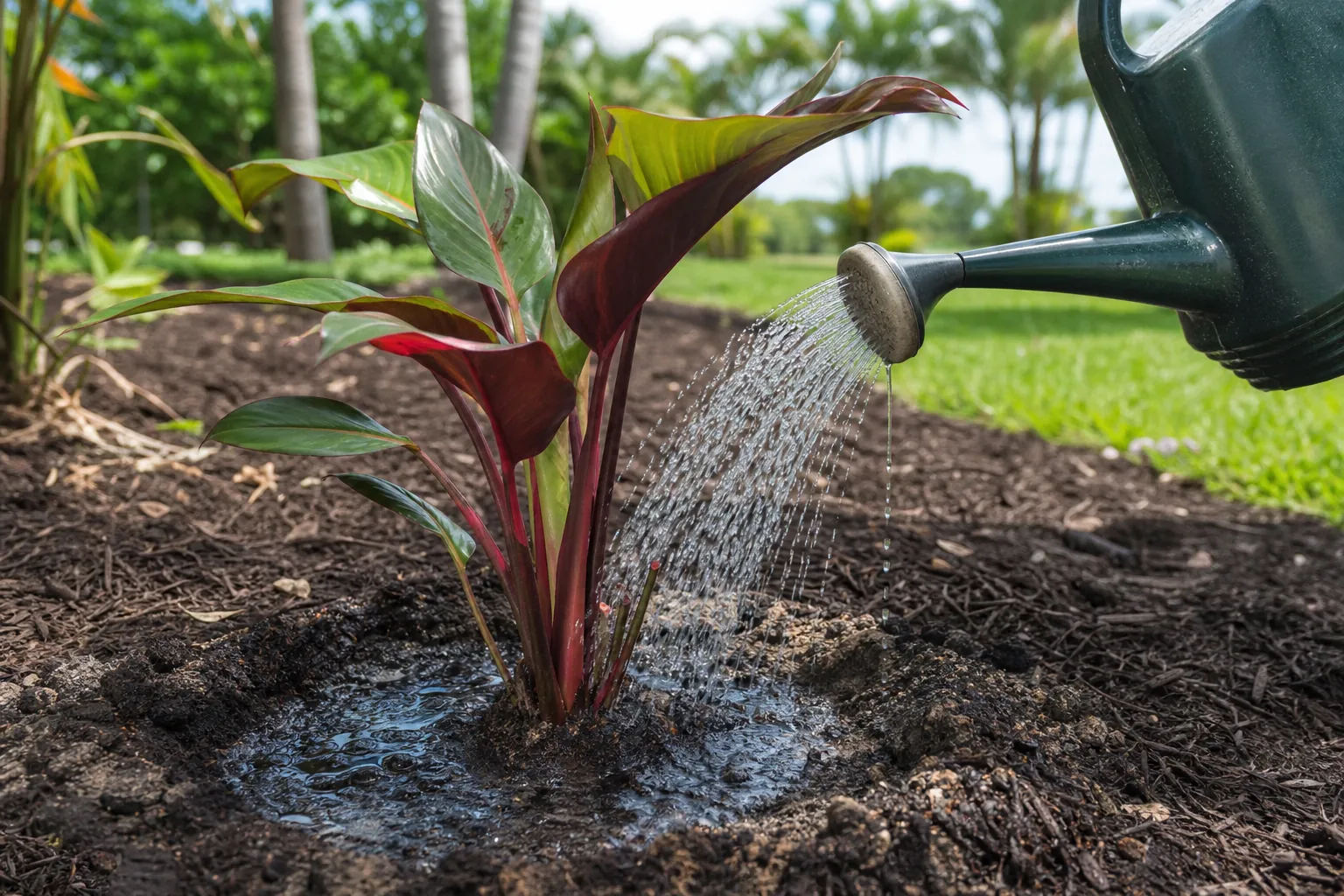
A newly planted tropical plant generally needs closer monitoring than an established one because its roots occupy a limited area. Check moisture frequently during the early establishment period. Water when the root zone is beginning to dry, rather than waiting until foliage wilts or watering automatically while the ground is still wet.
As roots move into the surrounding soil, shift toward less frequent, deeper watering when conditions allow. This encourages the plant to use a broader root area instead of depending on constant surface moisture. Do not make the change according to the calendar alone. A larger root ball may dry differently from a small one, and sun exposure, wind, soil texture, and drainage all affect moisture loss.
Watch the plant and the soil together. Wilting can indicate dryness, but it can also occur when roots are stressed by excessive moisture. Yellowing, soft growth, persistent sogginess, or an unpleasant soil odor are reasons to inspect drainage before adding more water. A soil check is more reliable than reacting to one symptom in isolation.
Account for Northeast Florida Weather
Northeast Florida conditions can change quickly, so irrigation should respond to actual weather rather than continue unchanged. Hot, sunny, or windy periods can dry exposed root balls faster. Cloudy stretches and cooler weather may slow moisture loss. A brief shower may wet leaves and the soil surface without reaching the full root zone, while substantial rain may make a scheduled watering unnecessary.
Check soil after rain instead of assuming the planting received enough water. Probe below the surface near the root ball and compare more than one location. Plants beneath roof overhangs, dense canopies, or other obstructions may receive less rainfall than nearby open areas. Low spots may remain wet longer, while raised or sandy areas can drain more rapidly.
Seasonal cold also changes plant care. Growth and water use may slow during cooler periods, making overwatering easier. If you are planning for winter conditions, review this guide on protecting young palms from frost in St. Augustine. Watering and cold preparation should both reflect current soil and weather conditions.
Build a Practical Watering Decision Routine
Use a repeatable routine instead of searching for a single watering duration. First, inspect the planting area for standing water, runoff paths, exposed roots, or soil gaps. Next, feel the soil below the surface. If the root zone is drying, apply water slowly over the root ball and surrounding area. Pause if necessary to let the water soak in, then continue until moisture reaches the root zone without creating prolonged saturation.
Check again later to learn how quickly that location drains and dries. Make brief notes about rainfall, watering, and soil moisture for the first several weeks. This can reveal whether one plant needs attention sooner than another, even when they were installed at the same time. Recheck after unusually hot, windy, rainy, or cool weather.
The best decision is based on what is happening underground: enough moisture to support new roots, enough drainage to maintain air in the soil, and gradual adjustments as the root system expands. That approach is more dependable than watering every tropical plant for an identical number of minutes.
Discuss Your Tropical Plant Questions
If you want to discuss watering considerations for newly planted tropical plants, call Tropical Yards at 772-267-1611. A calm review of the plant, soil moisture, drainage, and recent weather can help you decide what to check next.
Call 772-267-1611 to talk through next steps.