How Can You Improve Water Retention in Sandy Florida Soil Without Creating Drainage Problems?
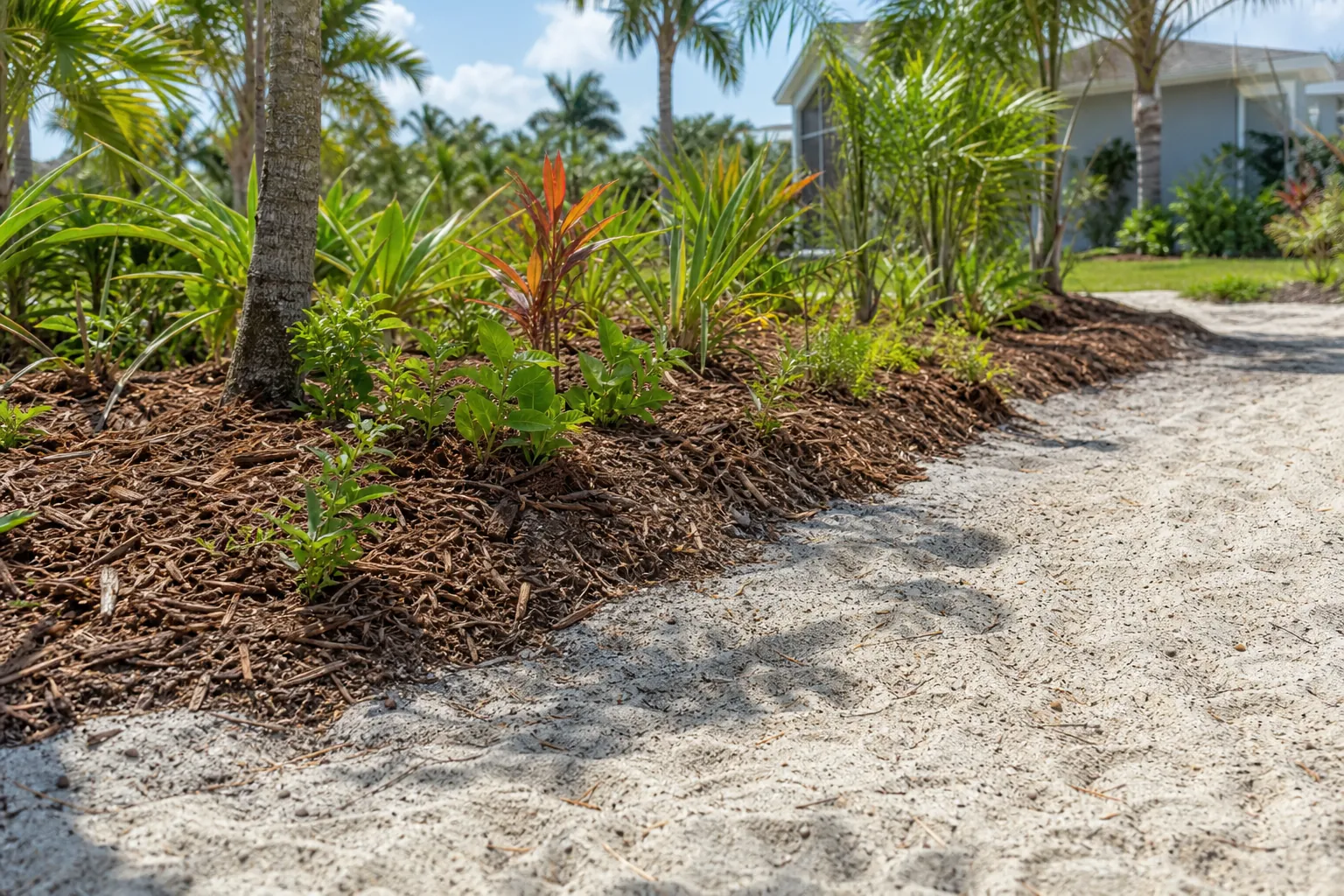
Sandy Florida soil often drains quickly, leaving plant roots with limited time to absorb moisture. Improving it does not mean stopping drainage. The practical goal is to help the root zone hold water longer while allowing excess water to move away. Start with small changes, observe how the soil responds after irrigation and rain, and adjust rather than applying several major changes at once.
Start by Checking How Water Moves Through the Soil
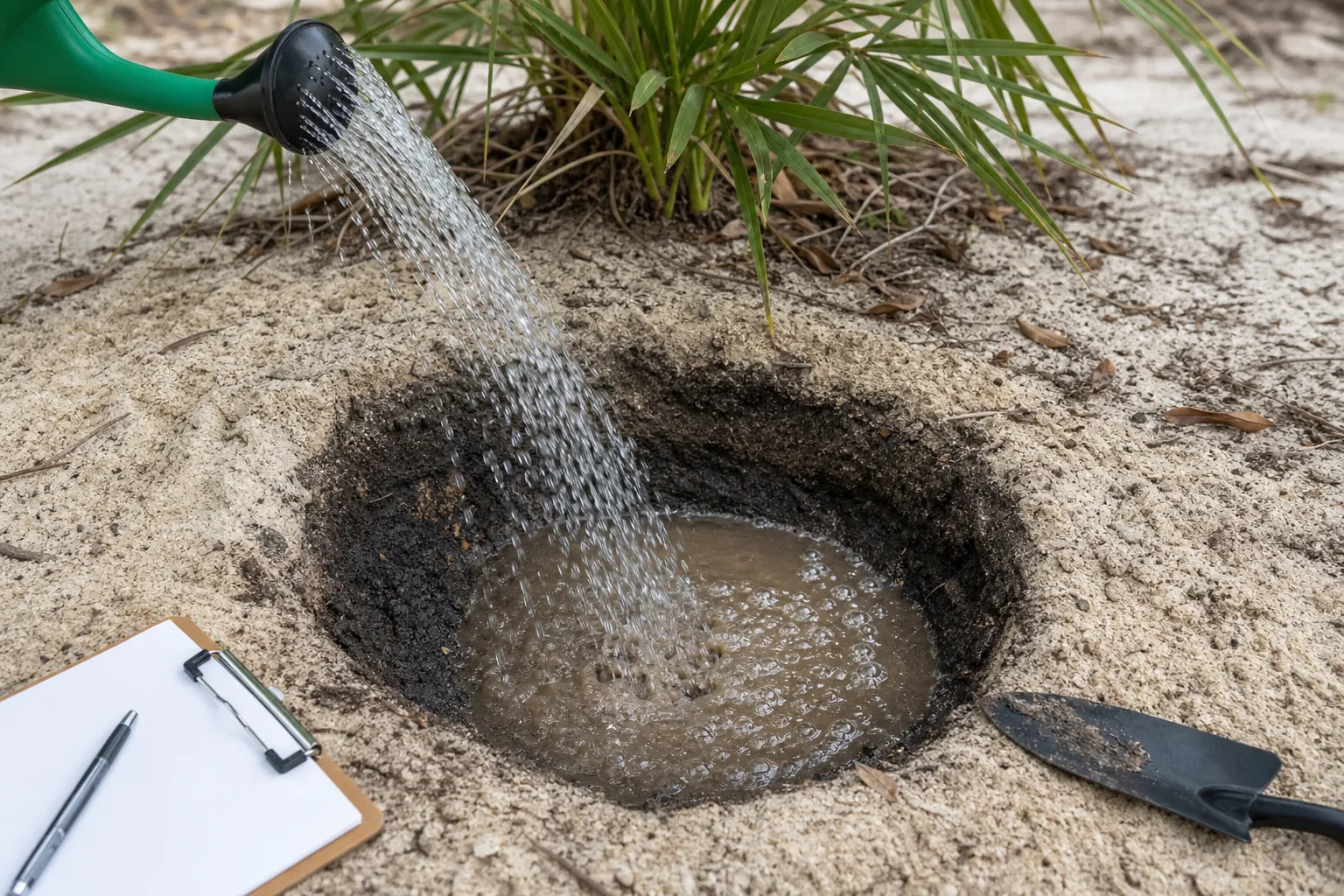
Before adding anything, determine where the water is going. Water a representative area, wait several minutes, and dig a small inspection hole outside the immediate stem or trunk zone. Check how deeply the moisture traveled and whether the surface is wet while the soil below remains dry. Repeat the check later to learn how quickly the area dries.
Also look for runoff, low spots, compacted paths, roof discharge, and irrigation that misses the intended root zone. These conditions can create uneven moisture even when the underlying soil is sandy. Test more than one location because a yard may contain fill, disturbed soil, or pockets with different textures.
This simple inspection provides a baseline. If water disappears quickly at every depth, the soil may benefit from more organic matter and surface protection. If water stands in particular areas, correct the local water pattern before trying to increase retention there. The objective is consistent moisture around active roots, not permanently wet ground.
Add Organic Matter Gradually to the Root Zone
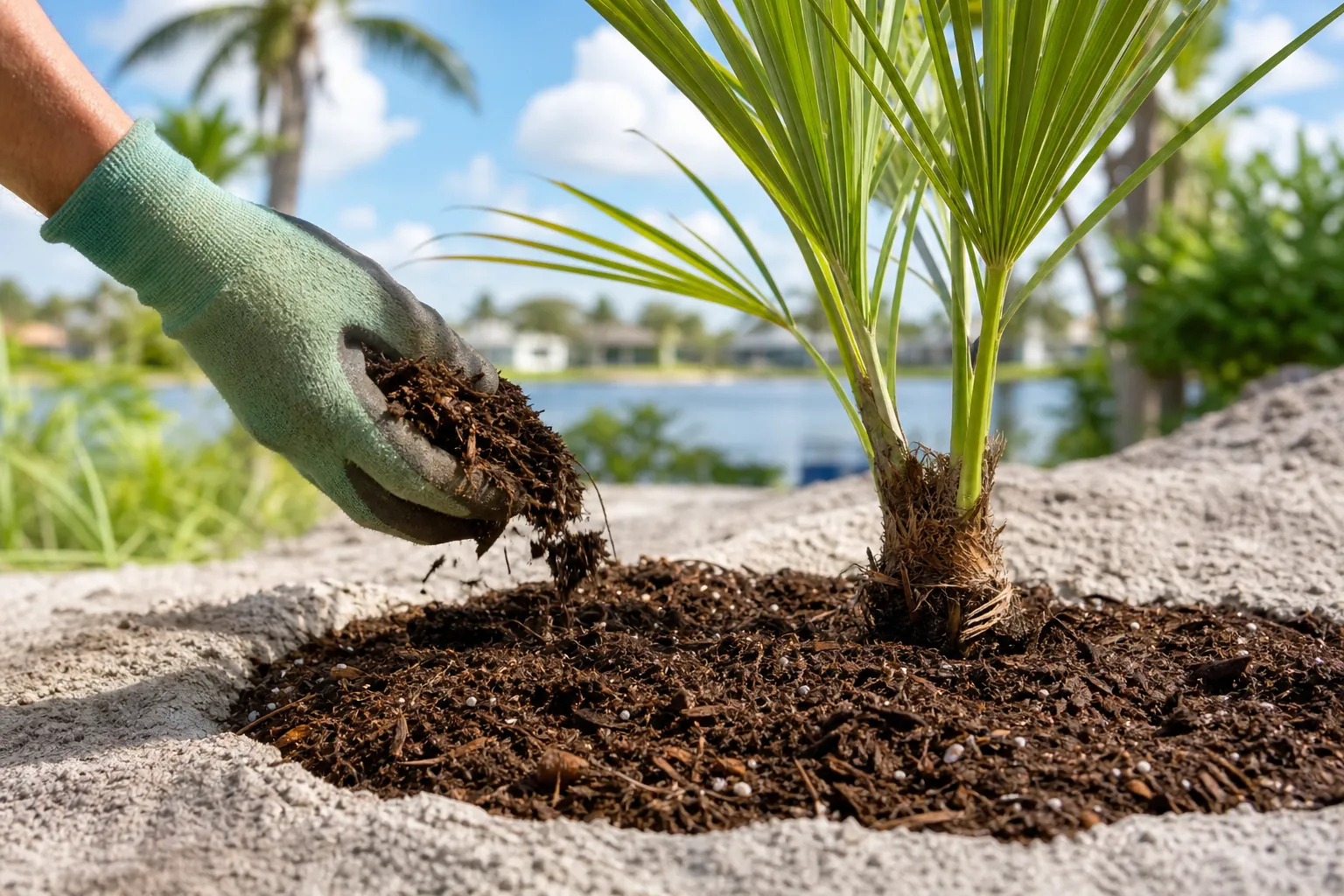
Finished compost can help sandy soil hold moisture and nutrients more effectively. Incorporate it into open planting areas instead of leaving a thick, distinct layer beneath the surface. A sharp boundary between materials can affect water movement, while a gradual blend creates a more consistent root zone.
Work carefully around established plants. Avoid aggressive digging that could cut roots, and keep added material away from trunks, stems, and crowns. In lawns or densely rooted beds, light surface applications may be more practical than deep incorporation. Allow soil organisms, irrigation, and normal maintenance to move the material downward over time.
Use finished material that looks and smells like soil. Do not bury fresh woody debris or create deep pockets of amendment around individual plants. Those pockets can behave differently from the surrounding sand and may hold water unevenly. Make modest additions, then recheck moisture depth and drying time. Gradual improvement is easier to evaluate and less likely to disrupt the drainage that Florida plants may depend on.
Use Mulch to Reduce Evaporation Without Trapping Water
Mulch shields the soil from direct sun and wind, reducing rapid surface drying. It can also soften the impact of heavy rain and help water enter the soil rather than moving loose sand. Apply it evenly across planting beds, but do not pile it against trunks, stems, or plant crowns.
Keep the layer moderate and inspect it periodically. Mulch can shift, compress, or collect in low areas. If the soil remains saturated beneath it long after surrounding areas have drained, pull the mulch back and investigate the cause. The problem may be excessive irrigation, a low spot, compacted soil, or water arriving from a roof or paved surface.
- Cover exposed soil while leaving breathing room around plant bases.
- Break up matted mulch so water can pass through evenly.
- Replace only what has decomposed or moved instead of repeatedly adding full layers.
- Check beneath the mulch before deciding that plants need more water.
Mulch works best as part of a broader plan that includes sound watering and regular soil checks.
Water Deeply Enough, Then Let Conditions Guide Timing
Frequent, very brief watering may wet only the upper surface, where moisture evaporates quickly. Apply water slowly enough to enter the soil and reach the active root zone. If water runs off or pools, pause and allow it to soak in before continuing. This cycle-and-soak approach can be useful where application is faster than infiltration.
Do not rely on a fixed schedule without checking the soil. Plant size, root depth, shade, rainfall, wind, temperature, and irrigation coverage all affect drying time. Probe beneath the surface before watering again. The top may appear dry while moisture remains available below, especially under mulch.
Separate plants with different moisture needs when possible rather than giving every area the same amount. Inspect emitters or spray patterns so water reaches roots instead of pavement, foliage, or empty spaces. After substantial rain, check the soil and postpone unnecessary irrigation. Better retention comes from matching water to actual conditions, not simply increasing frequency or duration.
Avoid Changes That Turn Retention Into Poor Drainage
More water-holding capacity is not always better. Avoid creating a sealed surface, a deep amendment pocket, or a planting basin that remains full after rain. Do not raise soil or mulch against trunks to compensate for rapid drying. These shortcuts can keep sensitive plant tissue wet while doing little to improve the broader root zone.
Evaluate each area after making a change. Dig small inspection holes, compare amended and unamended sections, and note how long moisture remains at root depth. If an area stays wet, smells sour, or repeatedly holds standing water, stop adding water-retentive material and identify the source. Grading, concentrated runoff, or an irrigation problem may need attention.
Seasonal preparation should also account for weather beyond dryness. Young palms, for example, may need protection when cold conditions approach. See how to protect young palms from frost for related planning. Soil improvement is most effective when it supports the plant through changing conditions without replacing careful observation.
Plan the Next Step for Your Yard
If you want to discuss moisture retention and drainage in your Florida yard, call Tropical Yards calmly at 772-267-1611. Describe where water disappears quickly, where it collects, and what you have already tried.
Call 772-267-1611 to talk through next steps.