How to Read Salt Exposure in a Northeast Florida Coastal Yard
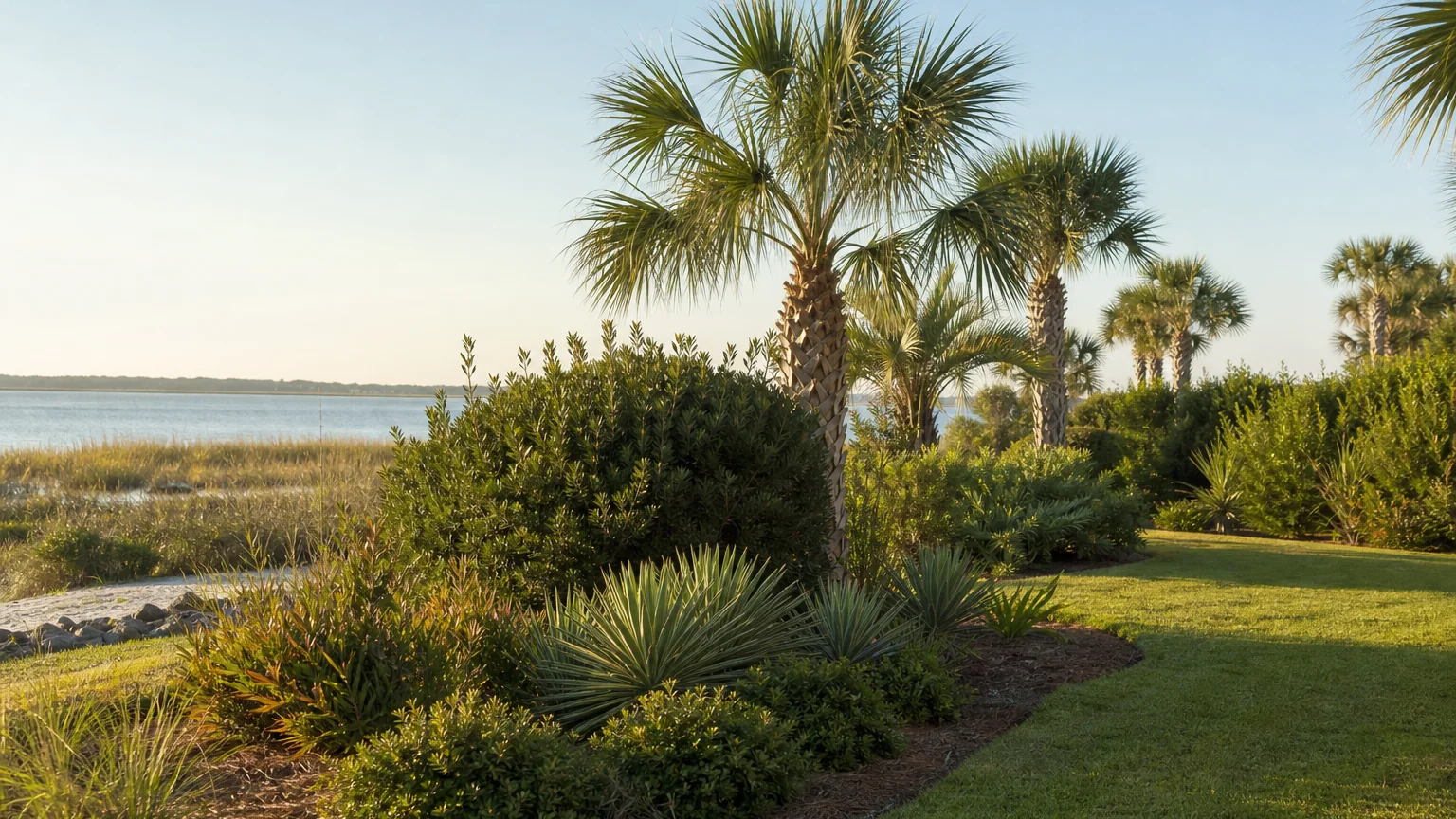
Reading salt exposure in a Northeast Florida coastal yard starts with observation, not guesswork. Look at distance from open water, the direction of prevailing wind, yard elevation, any dune or berm barrier, and how existing plants along the ocean-facing side already look. Yards close to St. Augustine Beach or Flagler Beach with a direct line to onshore wind generally face heavier salt exposure than yards set back behind buildings, fences, or higher ground. Matching these observations to UF/IFAS Extension guidance on salt tolerant plants gives a reasonable starting point before choosing species for any planting bed.
This article describes a general observation process, not a site-specific assessment for any one property. Salt exposure can change block by block, and even side to side on the same lot, depending on wind funnels, storm history, and structures. UF/IFAS Extension St. Johns County publishes salt tolerant plant lists and horticulture fact sheets that serve as the factual floor for this guidance. Tropical Yards supplies and delivers tropical plants, palm trees, flowering plants, privacy plants, and bulk coquina shell in the St. Augustine through Daytona Beach corridor, and installation is handled by the customer or their landscaper.
Key takeaways
- Salt exposure in a Northeast Florida coastal yard depends on distance from open water, wind direction, elevation, and existing barriers like dunes, fences, or buildings.
- A visual check of existing plant leaves, especially browning or curling on the side facing the water, gives an early clue about how much salt spray a yard already receives.
- Windward and leeward sides of the same yard can need different plant choices, since fences and buildings can either block salt spray or funnel salt-laden wind into concentrated pockets.
- UF/IFAS Extension St. Johns County publishes salt tolerant plant lists and horticulture fact sheets that should guide species selection rather than general assumptions about coastal yards.
- Reclaimed irrigation water and post storm rinsing both affect ongoing salt stress on landscape plants and deserve site-specific confirmation rather than a one-size-fits-all answer.
- Tropical Yards supplies and delivers plant and coquina shell products across St. Johns, Flagler, and Volusia counties, while installation and site-specific horticultural decisions remain the responsibility of the customer or an appropriate qualified professional.
What is the direct answer for a Northeast Florida property?
For most yards in St. Augustine Beach, Flagler Beach, and the surrounding corridor, reading salt exposure means walking the property and noting four things: how far the yard sits from open water or the Intracoastal, which direction the prevailing wind usually comes from, whether the yard has any elevation change or barrier like a dune or seawall, and how existing plants along the most exposed side currently look. These four observations, taken together, give a reasonable first read on how much salt stress a planting bed is likely to face.
This is a starting point, not a final verdict. Two lots on the same street can have different exposure levels depending on how a house, fence, or hedge sits relative to the wind. Before ordering plants for a specific bed, it helps to walk that exact spot on a breezy day and see what the wind and existing vegetation are already telling you, then cross-check plant choices against UF/IFAS Extension's salt tolerant plant list rather than relying on assumptions about coastal yards in general.
Sources: UF/IFAS Extension St. Johns County
Which site conditions should you observe first?
Start with distance and line of sight to open water. A yard with a clear, unobstructed view of the ocean or a wide stretch of the Intracoastal will generally receive more direct salt spray than a yard set behind other homes or a tree line. Next, note the prevailing wind direction for your specific location, since Northeast Florida coastal winds are often onshore, meaning they blow salt-laden air from the water toward inland yards during a large share of the year.
Elevation and barriers matter almost as much as distance. A yard sitting above a dune or behind a raised berm often experiences less direct salt deposit than a yard at grade level with an open path to the shoreline. Existing vegetation is one of the most honest indicators available. Leaf tip browning, one-sided leaf drop, or stunted growth on the ocean-facing side of established shrubs and trees usually means that side of the yard is already absorbing meaningful salt exposure.
- Note the straight-line distance and any obstructions between the yard and the nearest open water.
- Identify the direction the wind most often comes from at that specific address, not just the general coastline.
- Check for dunes, berms, seawalls, or raised grade that might reduce direct salt spray.
- Look at established plants for uneven leaf browning, curling, or dieback on the exposed side.
Sources: UF/IFAS Extension St. Johns County; UF/IFAS Extension St. Johns County
What step by step checklist should you follow?
A simple walk-through checklist keeps the observation process consistent from one bed to the next. Start at the point closest to open water and work inward, noting how conditions change as you move away from the shoreline. Record what you see rather than what you assume, since even a short distance can change exposure levels significantly along the coast.
Once you have walked the site, compare your notes against the general zones described in UF/IFAS Extension's salt tolerant plant guidance, which separates plants suited for direct oceanfront exposure from those better suited to more sheltered inland beds. This comparison helps you group planting areas into rough exposure categories before you start choosing specific species or placing an order.
- Walk the yard from the water-facing edge inward and note where existing plant stress lessens.
- Mark any fence lines, walls, or hedges that might block or funnel salt-laden wind.
- Note low spots where runoff or irrigation water might pool and add to salt buildup in soil.
- Compare your notes to UF/IFAS Extension's salt tolerant plant zones before selecting species for each bed.
Sources: UF/IFAS Extension St. Johns County
Which common mistakes create avoidable problems?
One frequent mistake is treating an entire coastal yard as having a single exposure level, when in reality the front, back, and side yards can face very different conditions depending on how the house and any fencing sit relative to the wind. Choosing one salt tolerant plant list for the whole property without checking each bed individually can lead to plants struggling in unexpectedly harsh spots, or overly tough species being placed in beds that never needed that level of tolerance.
Another common issue is ignoring the water source used for irrigation. Some areas rely on reclaimed water, which can carry its own salt content and add to the stress plants already face from wind-driven spray. Skipping a rinse after a significant salt spray event, such as a storm with strong onshore wind, is another avoidable mistake, since built-up salt residue on foliage can worsen leaf damage if left untreated for an extended period.
Sources: UF/IFAS Extension St. Johns County
How do wind, fences, and structures change salt exposure across a yard?
Wind direction is not the only factor that matters, since structures on the property can change how that wind behaves once it reaches your plants. A solid fence or wall on the windward side of a yard can block a good amount of direct salt spray, effectively sheltering the beds immediately behind it. That same fence, however, can sometimes funnel wind around its edges or over its top, creating a concentrated stream of salt-laden air that lands harder on a narrower strip of planting bed than the open yard around it.
Buildings create similar patterns. The side of a house facing the water usually takes the brunt of salt exposure, while the opposite side, sheltered in what is sometimes called a wind shadow, can support a wider range of plant choices. Corners of buildings and fence lines are worth watching closely, since wind often accelerates around corners and can concentrate salt deposit in ways that are easy to miss during a casual walk-through.
Sources: UF/IFAS Extension St. Johns County
When should you consult an authority or qualified professional?
General observation goes a long way, but some questions go beyond what a homeowner can safely determine from a walk-through. Irrigation system design, drainage repair, storm damage assessment on structures, and any pruning or removal of large trees near power lines or property lines are situations where consulting an appropriate qualified professional makes sense. UF/IFAS Extension St. Johns County also publishes horticulture fact sheets that go into more detail on species-specific care, fertilizer needs, and pruning timing than a general observation checklist can cover.
If your property falls under a homeowners association or local ordinance with landscaping restrictions, it is worth confirming those rules with the HOA or the relevant local authority before making significant planting changes, especially near dunes, setbacks, or protected coastal vegetation. These restrictions vary by neighborhood and are not something a general article can responsibly predict for your specific address.
Sources: UF/IFAS Extension St. Johns County
What should you confirm before ordering plants or delivery?
Once you have a general sense of which zones in your yard face heavier salt exposure and which are more sheltered, the next step is confirming current details directly rather than relying on assumptions. Plant availability, pot sizes, current pricing, and delivery charges change over time, so these details should be confirmed at the time of ordering rather than assumed from a general article. Tropical Yards' public page on tropical plants in St. Augustine outlines the categories it supplies, including tropical plants, palm trees, flowering plants, privacy plants, and bulk coquina shell.
It is also worth confirming how delivery works for your order size. Larger plant orders and bulk coquina shell are described as being delivered by a 14-foot dump trailer, but exact scheduling, route timing, and any delivery charge depend on current conditions and should be confirmed directly. Keep in mind that Tropical Yards supplies and delivers these products, while installation is handled by the customer or their landscaper, so any planting, grading, or irrigation work on site falls outside what a plant and shell delivery covers.
Sources: Tropical Yards
How does this apply to yards near St. Augustine Beach and Flagler Beach?
Yards close to St. Augustine Beach often sit near open ocean exposure or the Intracoastal, which means the observation checklist described above tends to matter more there than in yards set further inland. The same is true for many properties near Flagler Beach, where oceanfront and near-oceanfront lots can face similar onshore wind patterns. Readers researching plant options for either area may find it useful to review the tropical plants in St. Augustine page and the related Flagler Beach tropical plants page as a starting reference for the categories of plants and shell products available in the region.
Tropical Yards' public service corridor runs from St. Augustine through Daytona Beach, covering St. Johns, Flagler, and Volusia counties. That range covers a mix of oceanfront, near-water, and more inland yards, which is exactly why a one-size-fits-all salt exposure assumption does not hold up well across the corridor. Walking your specific yard and comparing it to UF/IFAS Extension guidance remains the most reliable way to match plant choices to your actual conditions, regardless of which town you are in.
Sources: Tropical Yards
Related Tropical Yards resources
Frequently asked questions
Can I tell how salty my yard is just by looking at plant leaves?
Leaf condition gives a useful clue, but it is not a precise measurement. Browning tips, one-sided leaf drop, or stunted growth on the water-facing side of established plants often signal ongoing salt exposure. That said, plant response depends on species, age, and recent weather, so leaf appearance should be treated as one piece of evidence among several, alongside wind direction, distance from water, and guidance from UF/IFAS Extension's salt tolerant plant resources.
Does reclaimed irrigation water add to salt exposure?
Reclaimed water can carry salt content that adds to the stress plants already face from wind-driven spray, though the exact level depends on the local water source and system. If your property uses reclaimed water for irrigation, it is worth confirming salt content and recommended practices with your local water provider or UF/IFAS Extension rather than assuming it behaves the same as potable water for landscape use.
Should every plant in a coastal Northeast Florida yard be salt tolerant?
Not necessarily. Exposure often varies across the same property, with windward sides facing heavier salt spray and leeward or sheltered sides facing much less. Matching plant tolerance to each specific zone, rather than applying one salt tolerant list to the entire yard, generally gives better results and more planting flexibility in beds that are naturally more protected.
Call 904-526-8345 or use the contact form to confirm current availability, price, delivery charge, and scheduling.