How Can You Reduce Glare From Landscape Lighting in a Coastal Florida Yard?
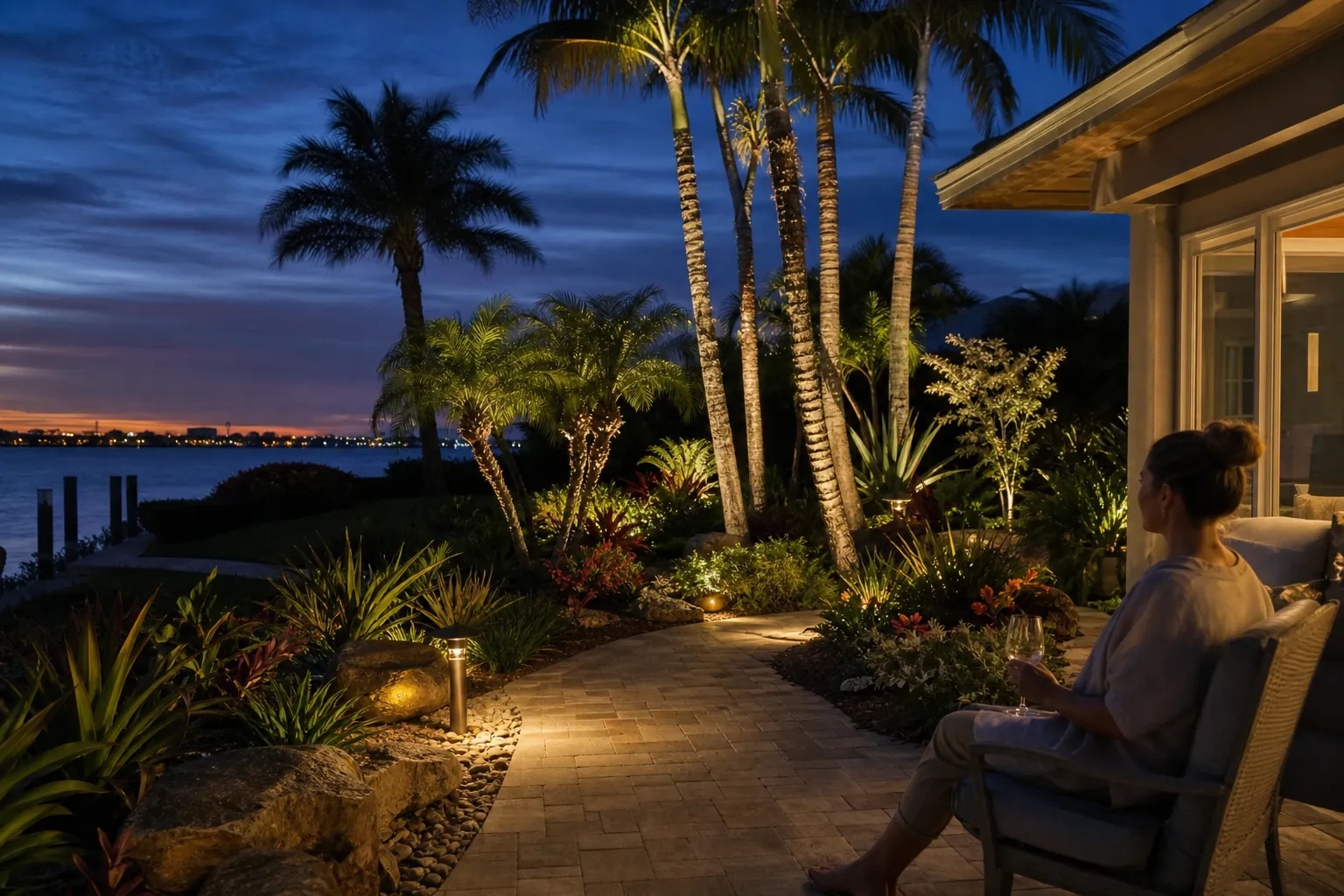
Landscape lighting should help you see paths, steps, plants, and gathering areas without shining directly into your eyes. In a coastal Florida yard, reflective surfaces, open views, light-colored walls, water, and moving foliage can make glare especially noticeable. The solution is usually not simply using fewer lights. It is choosing where light belongs, blocking direct views of the source, and testing the effect from the places people actually use.
Start by Identifying the Source of the Glare
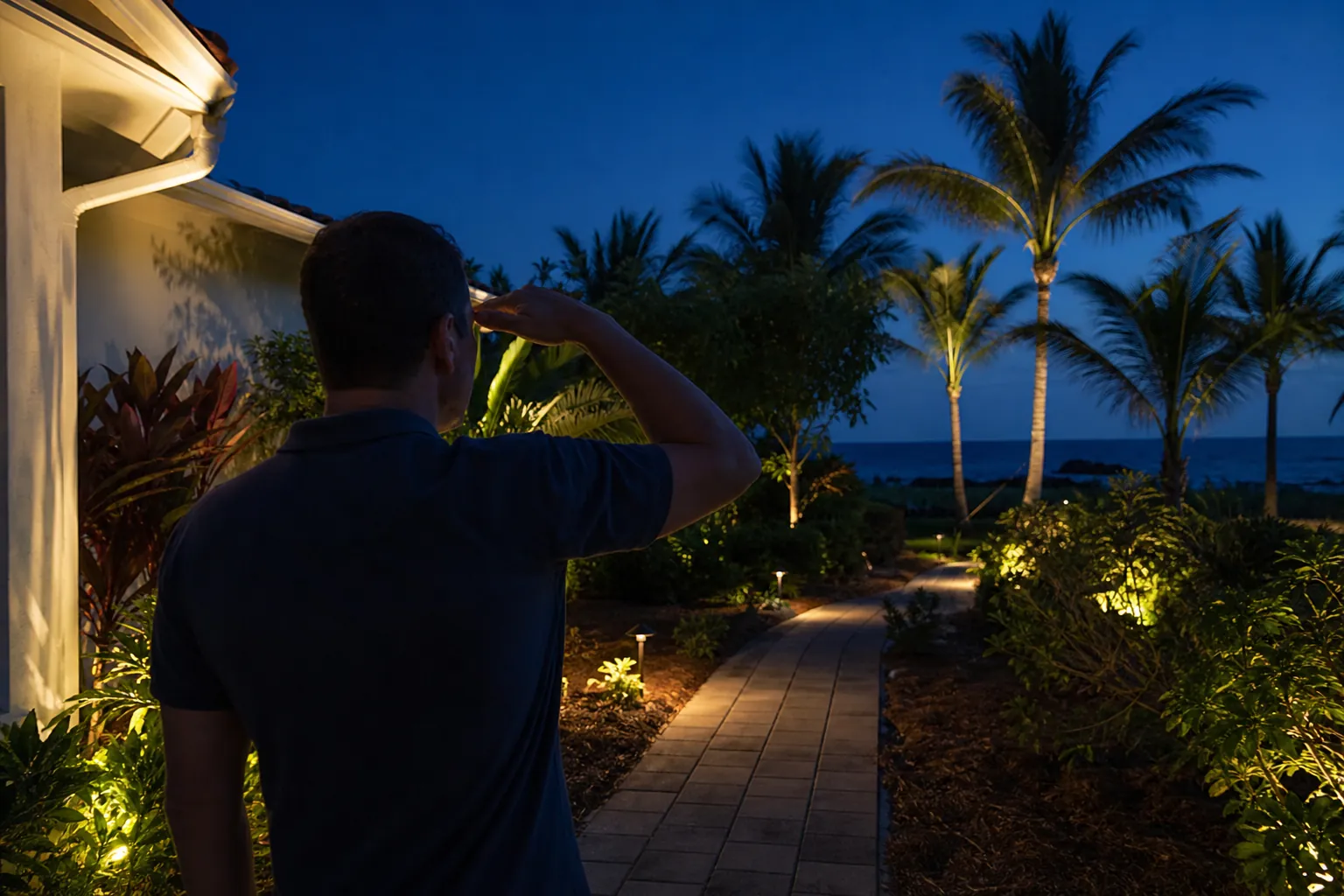
Before moving or replacing anything, walk through the yard after dark and identify exactly what feels uncomfortable. Stand at the front door, driveway, seating areas, gates, windows, and common walking routes. A fixture may appear acceptable from one position but create harsh glare from another. Look for exposed bulbs, bright points visible at eye level, beams aimed toward windows, and light reflecting from pale walls, paving, water, glass, or glossy leaves.
It helps to separate glare from brightness. A space can be adequately illuminated without an exposed source shining toward the viewer. Likewise, reducing output may not solve the problem if the bulb remains directly visible. Note whether the issue comes from the fixture itself, the direction of its beam, or reflection from a nearby surface.
Check the yard from both standing and seated heights. Also view it from inside through windows. This simple survey creates a practical list of fixtures to adjust instead of encouraging broad changes that could leave important areas too dark.
Choose Shielded Fixtures and Conceal the Source
Shielding is one of the most effective ways to control glare. A shield, hood, louver, or recessed light source blocks direct sightlines to the brightest part of a fixture while allowing useful illumination to reach the intended surface. The goal is to see the effect of the light rather than the lamp itself.
Consider how each fixture is viewed. A light installed low beside a path may still be uncomfortable if its source is visible to someone approaching. A fixture near a seating area needs careful shielding because people may look toward it for long periods. Lights positioned behind plants can be concealed, but foliage should not trap excessive light or create unstable shadows when leaves move in the wind.
- Use shields or hoods to block direct views of bulbs.
- Place fixtures outside normal lines of sight when possible.
- Avoid aiming lights across paths, patios, or doors.
- Check that plants do not redirect or expose a beam as they move.
- Keep light focused within the yard rather than toward neighboring property.
Aim Each Beam at a Specific Surface
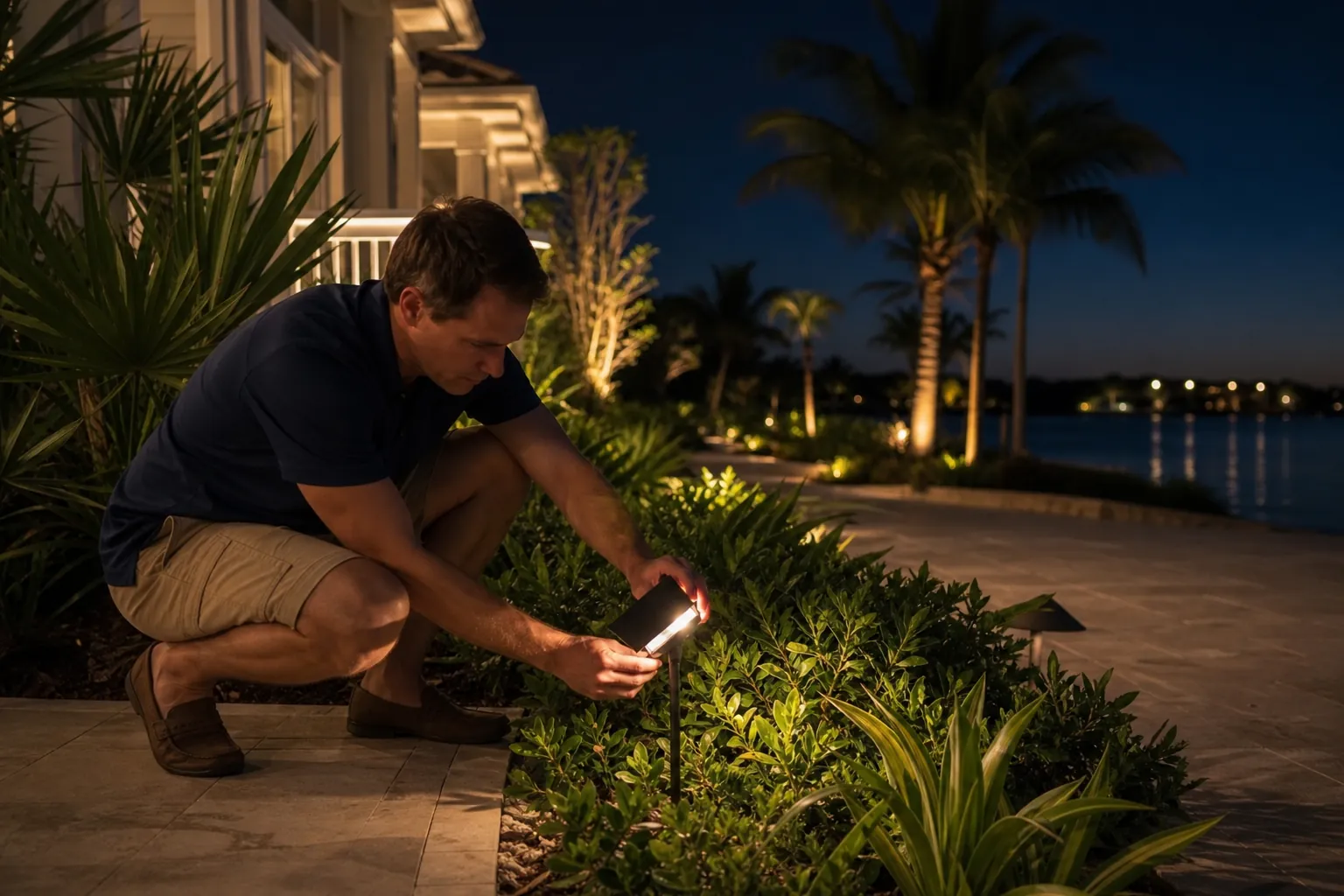
Every fixture should have a clear job. Path lights should illuminate the walking surface. Accent lights should reveal a selected plant, trunk, wall texture, or architectural feature. Lights without a defined target are more likely to spill into eyes, windows, or open sky.
When aiming an uplight, keep the beam tight to the feature instead of tilting it outward. For downlighting, position the fixture so the light lands where visibility is needed without exposing the source from common viewpoints. If a beam crosses a walkway at eye level, change its angle or location. Small adjustments can make a large difference.
Reflected glare also deserves attention. Light aimed at a white wall, pale paving, glass door, or water surface may appear brighter than expected. Reduce the intensity, narrow the beam, or shift the target to a less reflective area. In windy conditions, broad illumination through moving palm fronds or other foliage can produce distracting flashes. Aim carefully and retest when plants are moving, not only on a still evening.
Use Appropriate Output and Comfortable Color
More output does not automatically create better visibility. Strong contrast between a very bright feature and a dark surrounding area can make it harder for eyes to adjust. Use enough light for the task, then reduce unnecessary intensity around decorative features. If fixtures are adjustable, begin at a lower setting and increase only when the target is not sufficiently visible.
Color also changes how lighting feels. Very cool light can appear stark against vegetation, walls, and outdoor living areas. A warmer appearance often feels less severe, although shielding and aiming remain more important than color alone. Keep neighboring fixtures visually consistent unless a deliberate difference serves a clear purpose.
Evaluate the whole scene instead of judging each light separately. Several moderate sources can combine into an overly bright area, while one exposed source can dominate an otherwise balanced design. Consider whether indoor light spilling through windows also contributes to the view. The best arrangement supports movement and highlights selected features without turning every part of the yard into an equally bright focal point.
Test the Lighting After Dark and Recheck It
Final adjustments need to happen after dark. Turn on the entire lighting arrangement and repeat the same route used during the initial review. Approach from the street or driveway, enter through gates, walk each path, sit in outdoor areas, and look through major windows. Cover or switch off one fixture at a time when the source of glare is unclear.
Make one change, then view it from several positions before continuing. Lowering output may solve reflected brightness, while adding shielding or changing the angle may be necessary for direct glare. Confirm that paths, steps, entrances, and other intended targets remain visible after each adjustment.
Landscapes change, so recheck the setup periodically. Plant growth can expose a previously hidden fixture, block a beam, or create new reflections. Wind and seasonal changes can also alter how foliage interacts with light. If you are also planning for cooler weather, review this guide on how to protect young palms from frost in St. Augustine.
Discuss Your Coastal Yard
For a calm conversation about your Florida yard and the lighting concerns you are seeing, call Tropical Yards at 772-267-1611.
Call 772-267-1611 to talk through next steps.