How Should Newly Planted Trees Be Staked Against Ormond Beach Coastal Wind?
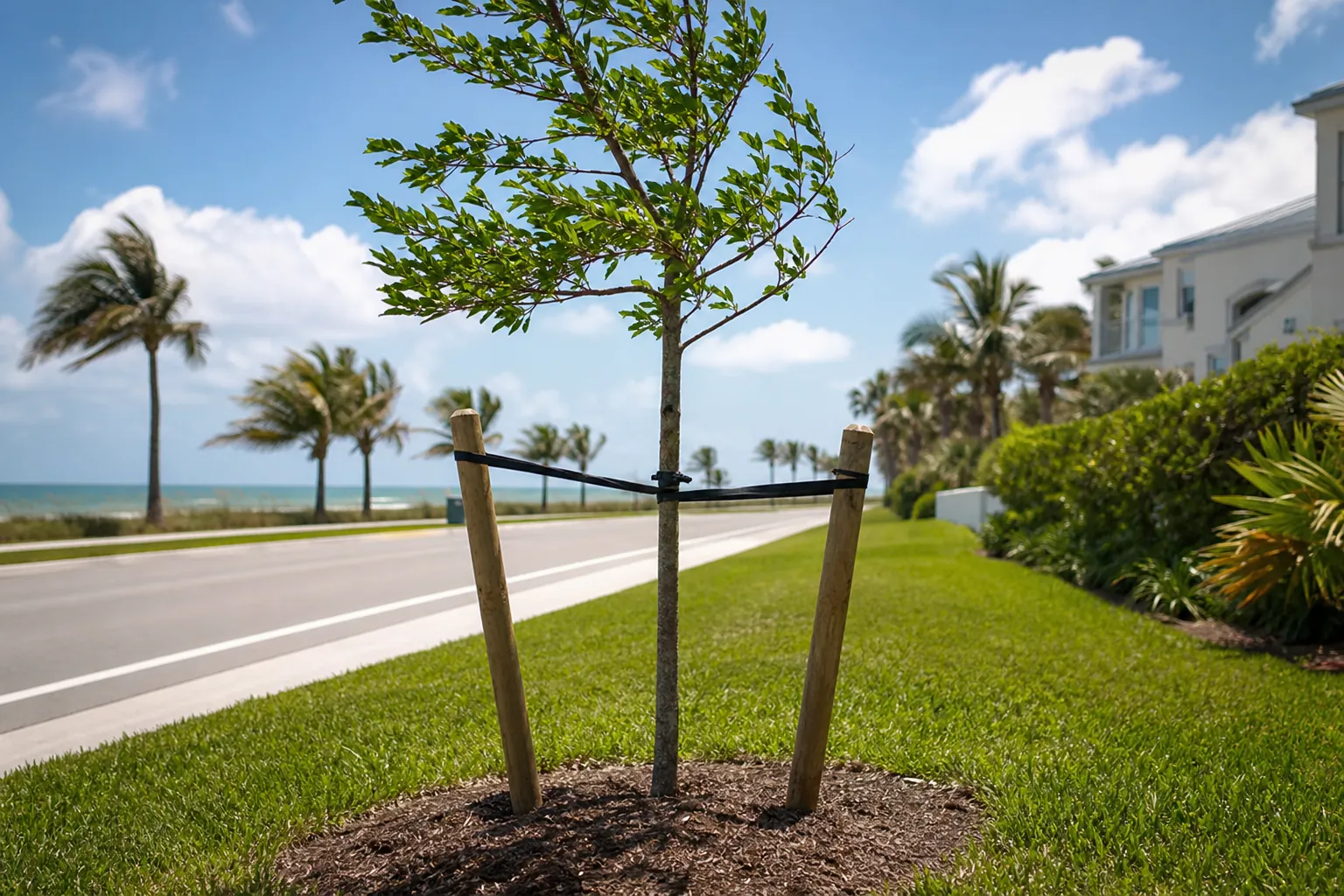
Newly planted trees may need temporary support when coastal wind repeatedly moves the root ball or pushes the trunk beyond a stable position. The goal is not to hold a tree rigid. Proper staking limits damaging movement while allowing enough trunk motion for the tree to adjust and strengthen. Before installing stakes, check whether the root ball shifts in the soil. If it remains steady and the tree stands upright, staking may be unnecessary. If support is needed, use the least restrictive setup that keeps the root ball stable.
Decide Whether The New Tree Actually Needs Stakes
Start by observing the tree during a breezy period or gently moving the trunk by hand. Some movement in the upper trunk is normal. The concern is movement at the base, especially when the root ball rocks, rotates, or opens a gap between the soil and roots. A top-heavy canopy, loose planting soil, exposed placement, or a slender trunk can also make temporary staking appropriate.
Confirm that the tree is planted upright before adding support. Stakes should not be used to pull a poorly positioned root ball into alignment. If the root ball is leaning or sitting loosely, correct the planting position and settle the surrounding soil first. Also check for buried utility lines and irrigation components before driving anything into the ground.
Avoid staking solely because the site is near the coast. Each tree and planting location responds differently. The practical test is whether wind is displacing the root ball or creating sustained, excessive lean. When support is justified, plan a temporary system that stabilizes the base without immobilizing the entire trunk.
Choose A Simple Setup With Broad, Flexible Ties
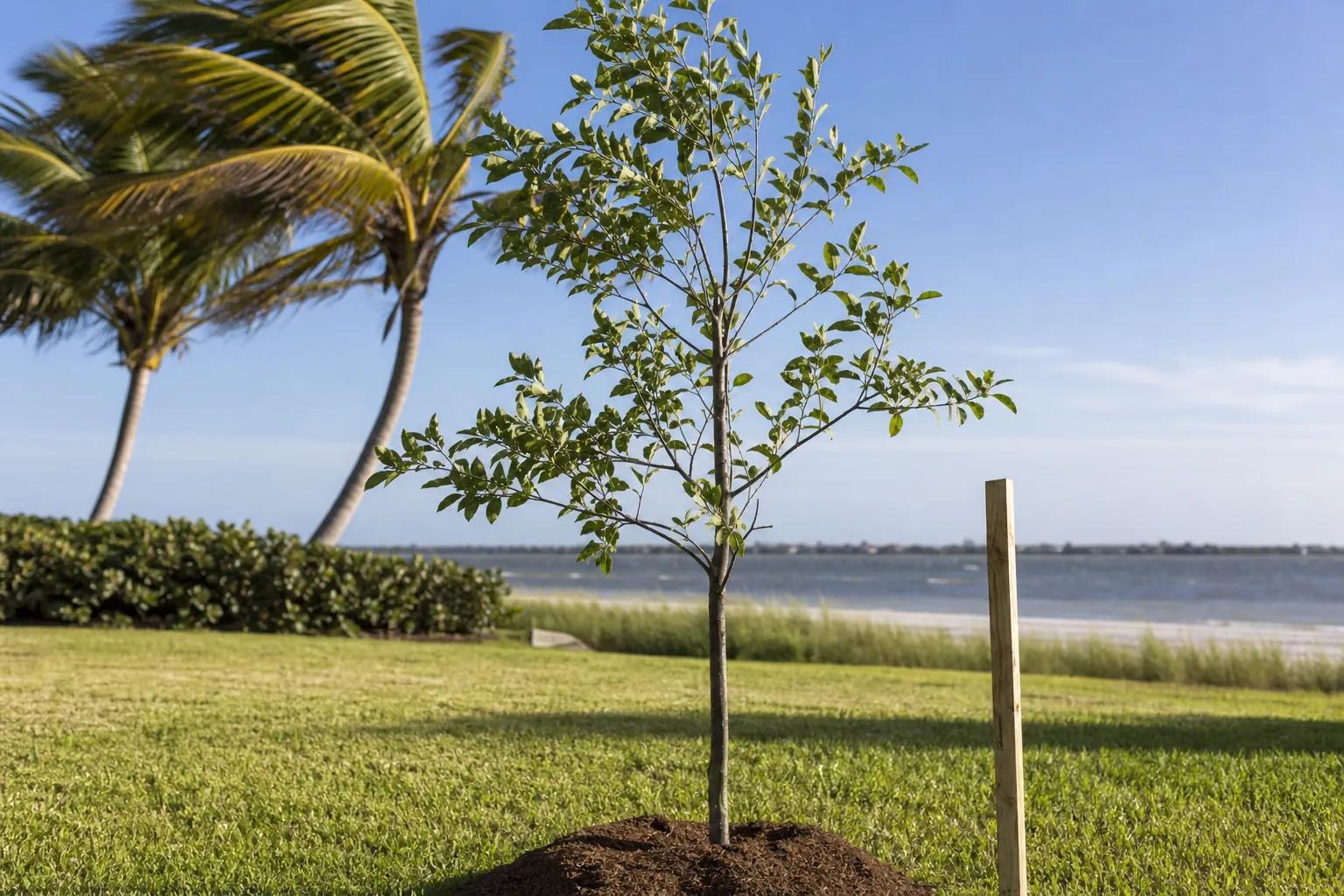
A basic staking system usually uses two or three sturdy anchors positioned around the tree and broad, flexible ties that will not cut into the bark. Do not use bare wire, thin cord, fishing line, or any narrow material directly against the trunk. If wire is part of a tie assembly, it should pass through protective material so it cannot touch the tree.
Choose materials that can withstand outdoor exposure while remaining adjustable. The ties should support the trunk without scraping it as wind changes direction. Bright or visible materials can reduce the chance that people trip over low supports. Keep the area around the system easy to inspect.
- Use two or three stable anchors based on wind exposure and tree size.
- Select wide, smooth, flexible ties designed to protect bark.
- Keep ties below the lowest practical height that provides stability.
- Leave room for slight trunk movement rather than cinching tightly.
- Mark or position supports so they are visible to people using the yard.
Buy only what the tree needs. More stakes, higher ties, and tighter tension do not automatically create a safer installation.
Place Stakes Beyond The Root Ball And Tie Low
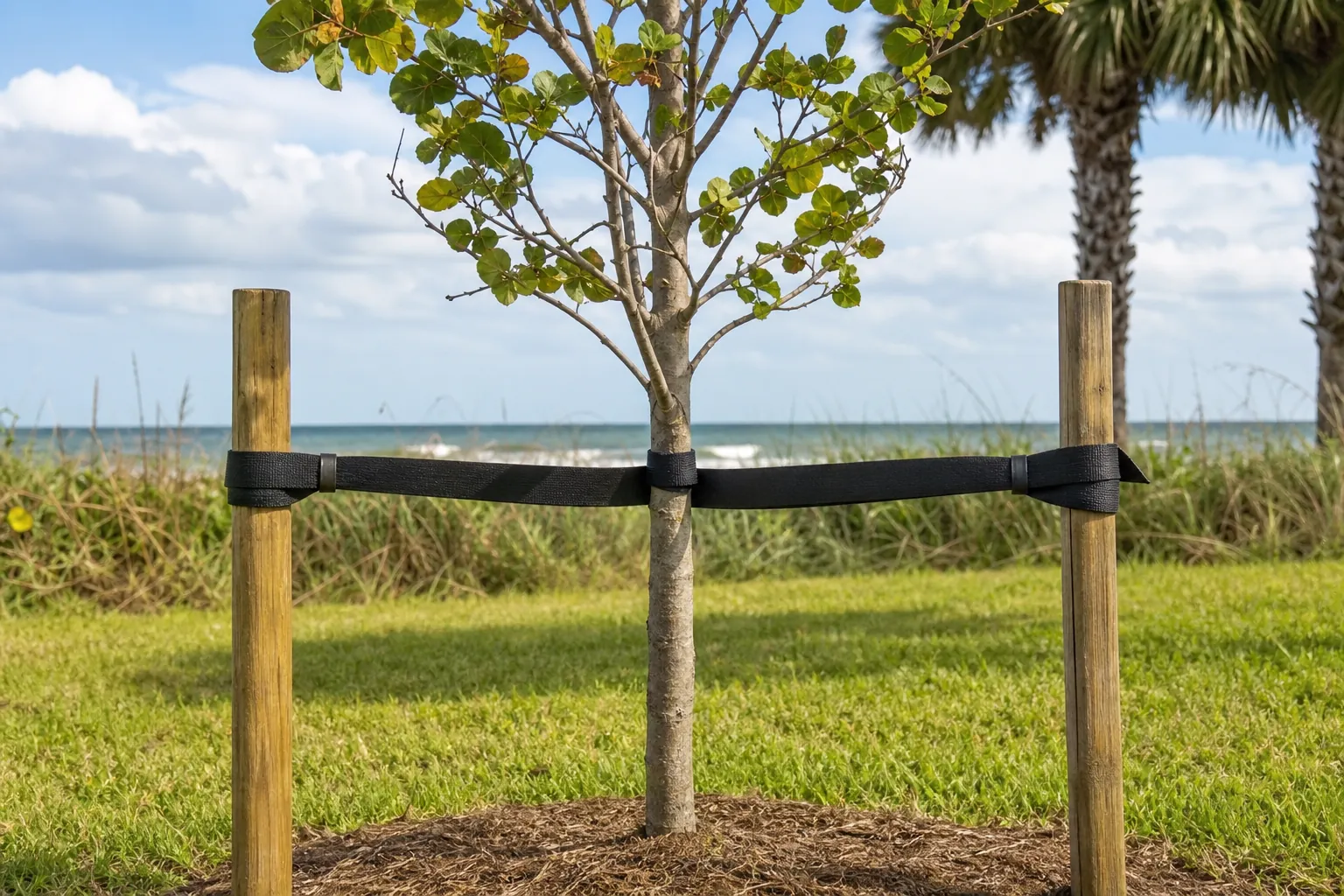
Set stakes outside the root ball so driving them into the ground does not damage concentrated roots. Position them to counter the prevailing movement while giving support from more than one direction. Drive each stake deeply enough to remain stable, but first verify that the selected location is clear of underground obstacles. Stakes that wobble in the soil cannot reliably protect the planting.
Attach ties at the lowest point that keeps the root ball from shifting and the trunk from bending excessively. A useful way to find that point is to hold the trunk at different heights. Choose a height that stabilizes the base while allowing the upper trunk to move slightly. Ties placed unnecessarily high can make the tree overly dependent on support.
Fasten each tie snugly but not tightly. The trunk should not rub against a stake, and the ties should not distort the bark. Stand back and check alignment from several directions. The tree should be upright, the tension should be balanced, and no single tie should pull the trunk sideways.
Inspect The System After Wind And As Growth Continues
Staking is not a set-and-forget task. Check the tree after windy weather and at regular intervals. Soil can settle, anchors can loosen, and ties can shift. Look closely where each tie contacts the trunk. Rubbing, pinching, discoloration, or an indentation means the setup needs immediate adjustment.
Confirm that the root ball remains steady and that the trunk still has limited natural movement. If one side is carrying most of the load, rebalance the ties rather than tightening everything. Keep ties from sliding onto branches, and replace any material that becomes rough or brittle. Check that stakes remain visible and do not interfere with routine movement through the yard.
Water and planting care should be evaluated separately from staking. A support system cannot correct an unstable planting depth, damaged roots, or unsuitable watering. Coastal conditions can also overlap with seasonal cold concerns. Readers caring for palms can review this guide on how to protect young palms from frost in St. Augustine for a separate weather-related topic.
Remove Support Once The Tree Can Stand Independently
Stakes are temporary. Leaving them in place after they are needed can restrict trunk development, trap moisture against bark, and allow ties to girdle expanding tissue. Instead of relying on a fixed calendar, assess the tree directly. Gently test whether the root ball stays firm and whether the trunk returns to an upright position without the ties carrying its weight.
When the tree appears stable, loosen the supports and observe its response during ordinary wind. If the root ball does not shift and the tree maintains a reasonable position, remove the ties and stakes. If instability remains, readjust the system and continue monitoring rather than tightening it excessively. Never leave unused ties wrapped around the trunk.
After removal, inspect the bark for rubbing or constriction and check the surrounding soil for gaps. Store or discard materials so they do not become yard hazards. The decision is simple: support the tree only while its roots establish enough stability to handle the site. If you want to discuss a newly planted tree and coastal wind concerns calmly, call Tropical Yards at 772-267-1611.
Talk Through Your Tree Staking Decision
Not sure whether movement is normal or the root ball needs support? Call Tropical Yards at 772-267-1611 to discuss what you are seeing before choosing a staking setup.
Call 772-267-1611 to talk through next steps.