Landscape demolition for a fresh start in St. Augustine
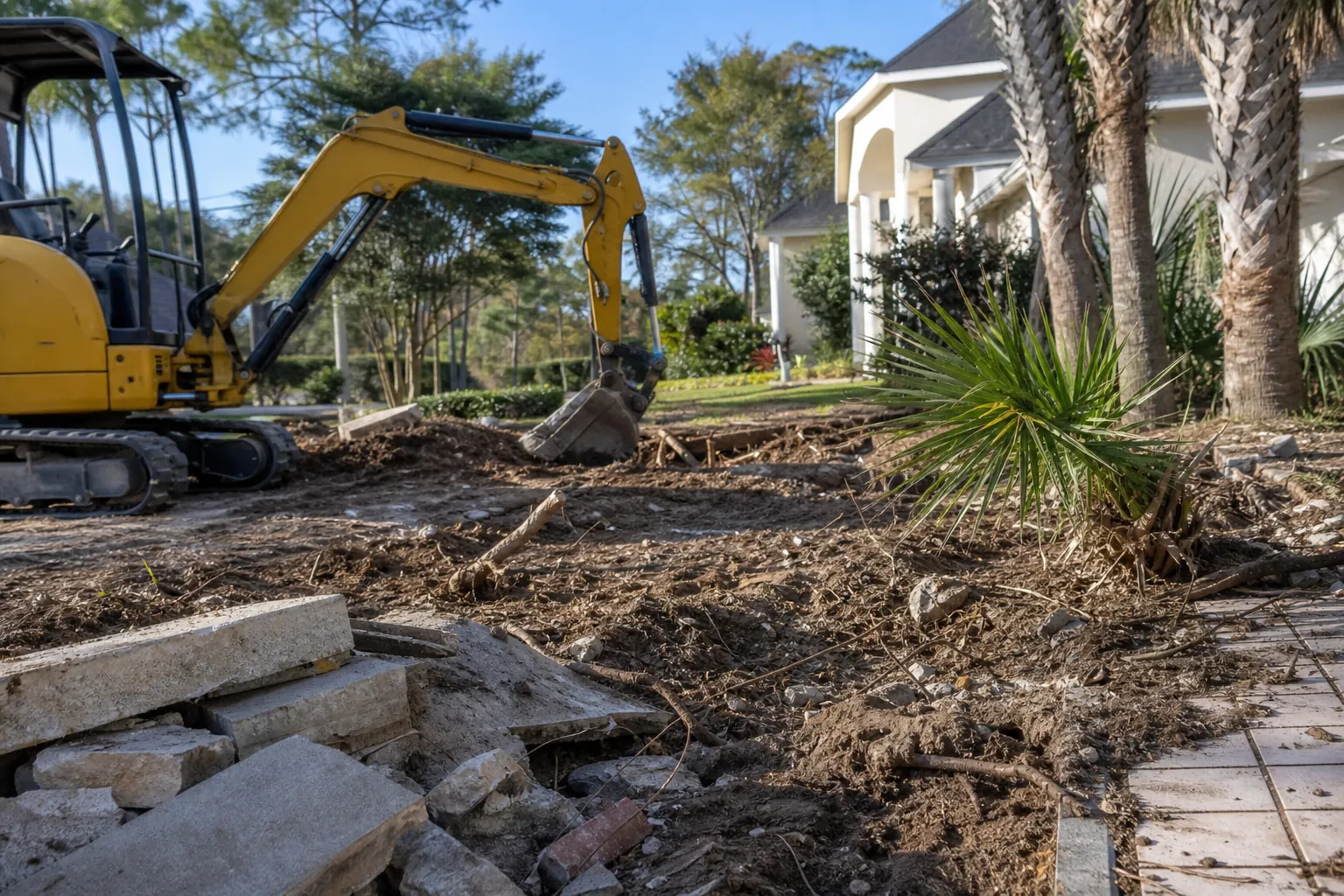
A beautiful outdoor space sometimes begins with removal rather than installation. Overgrown shrubs, failing garden borders, damaged pavers, and outdated landscape features can limit what is possible in your yard. Professional landscape demolition in St. Augustine creates a clean, practical foundation for a new tropical design while protecting the parts of the property that should remain.
Tropical Yards approaches each removal project with care. The goal is not simply to tear out plants and materials. It is to understand the site, identify potential challenges, preserve valuable features, and prepare the area for its next use. This method helps homeowners move forward with fewer surprises and a clearer plan.
When Landscape Demolition Makes Sense
Not every yard needs to be cleared completely. Selective demolition is often the better choice, especially when established palms, healthy trees, irrigation zones, or usable hardscape can be incorporated into the updated design. A site evaluation helps determine what should stay, what should move, and what has reached the end of its useful life.
Landscape removal may be appropriate when beds are crowded beyond routine pruning, roots are lifting nearby surfaces, or old materials are creating drainage and maintenance problems. It can also help when a home has changed ownership and the new owner wants an outdoor space that better reflects their lifestyle.
Common reasons to schedule landscape demolition include:
- Removing dense, overgrown shrubs that block windows, walkways, or sightlines
- Taking out dead, declining, invasive, or poorly placed plants
- Clearing outdated rock beds, edging, landscape fabric, or decorative gravel
- Removing damaged pavers, small patios, pathways, or garden structures
- Preparing an area for new tropical planting, sod, mulch, or outdoor living features
- Correcting layouts that trap water near the home or interfere with drainage
- Reducing high-maintenance planting areas to create a more manageable yard
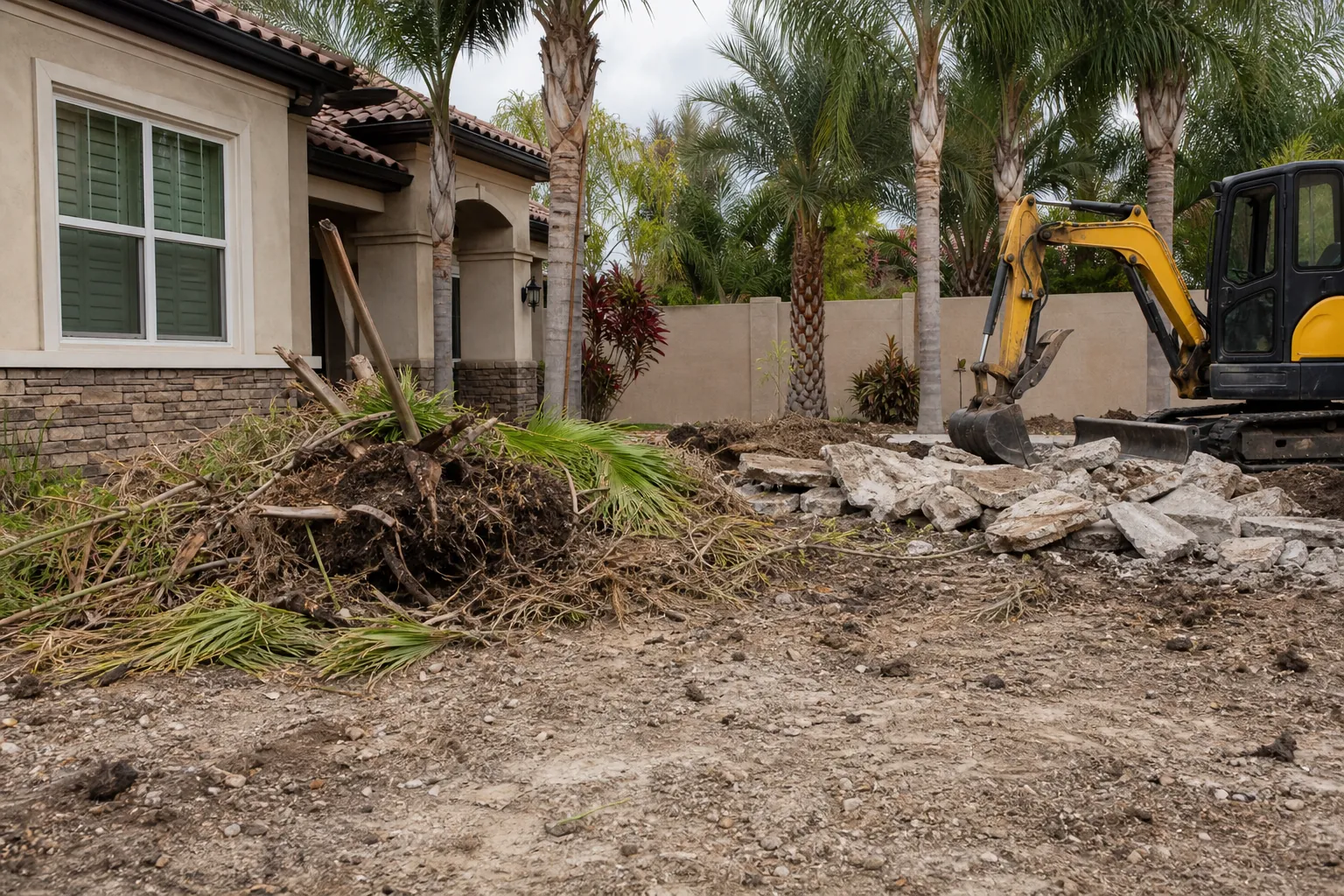
What A Careful Removal Process Involves
Good demolition starts before equipment enters the yard. The work area should be reviewed for access, underground utilities, irrigation components, lighting wires, drainage outlets, and nearby structures. Plants or features marked for preservation also need clear protection.
The removal plan depends on the materials and the future design. Shrubs may need to be cut down and extracted with their main root systems. Pavers and edging are lifted and separated for disposal or possible reuse. Rock and landscape fabric require thorough removal so they do not interfere with grading, soil improvement, or new planting.
Debris management is another important part of the service. Piles of roots, concrete, stone, and green waste can quickly overwhelm a residential property. Coordinated loading and hauling keep the site safer and make it easier to inspect progress. Once demolition is complete, the exposed area can be rough graded and evaluated for the next phase.
St. Augustine Conditions Require Local Planning
Florida landscapes face intense sun, seasonal rain, humidity, salt exposure in some locations, and rapid plant growth. St. Augustine properties may also have sandy soils, compacted fill, mature roots, or narrow access between homes. These conditions affect how removal work should be performed and how the cleared land should be prepared.
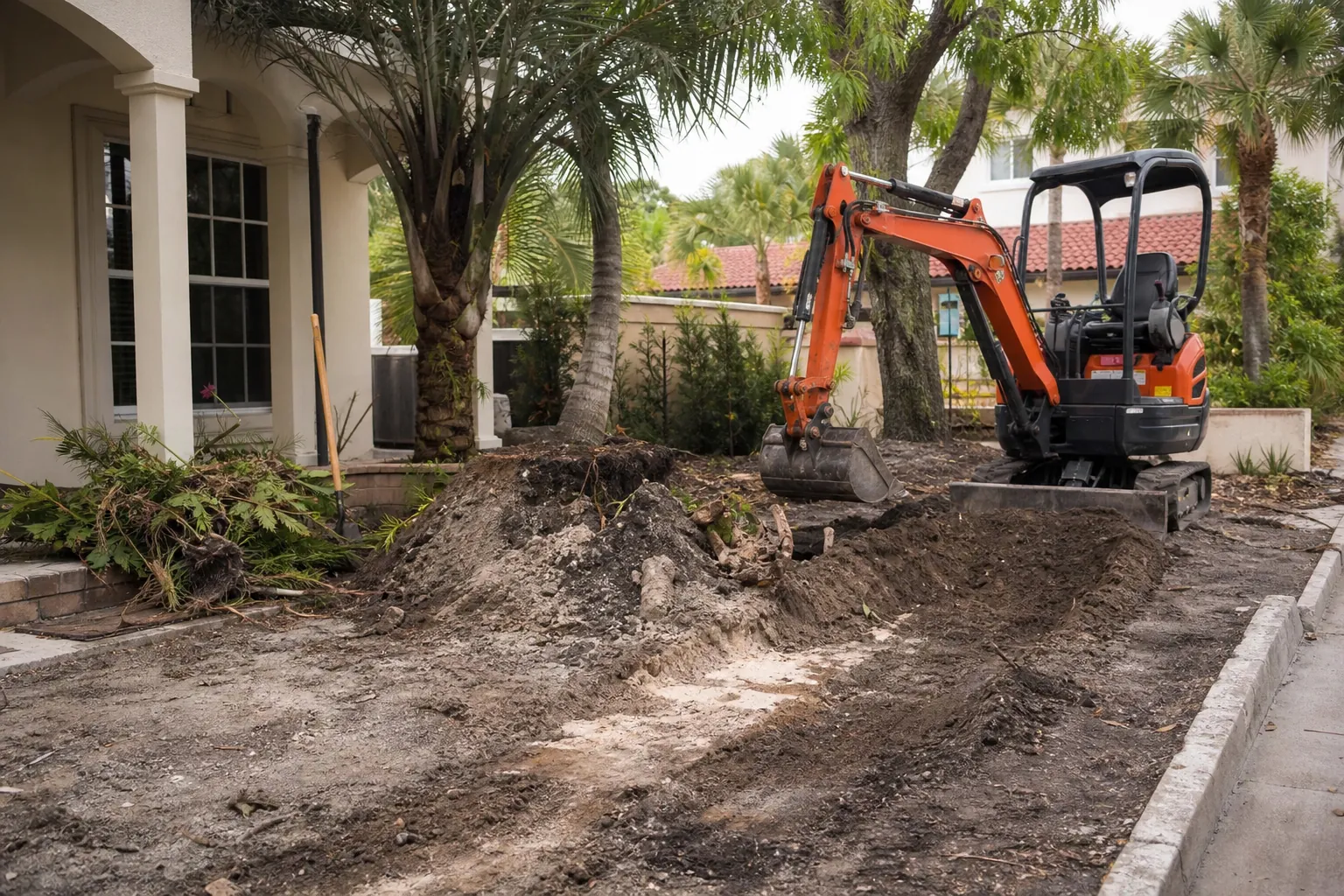
Heavy equipment is not automatically the best option for every site. It can compact soil, damage turf, or disturb roots outside the work zone. Smaller equipment and selective hand removal may provide better control in tight spaces or around features that need to remain. The right approach balances efficiency with protection of the property.
Drainage deserves particular attention. Removing a raised bed, patio, or large root mass may change how water moves through the yard. Before installing new landscaping, low areas and runoff paths should be identified. Thoughtful grading can help guide water away from the home and reduce pooling around new plants.
Protecting Features You Want To Keep
A demolition plan should clearly distinguish between unwanted materials and valuable landscape assets. Mature palms, specimen plants, fences, screened enclosures, driveways, pools, and irrigation equipment may sit close to the removal area. Their location influences access, equipment choice, and the order of work.
Root zones are especially important. A plant does not need to be directly inside the demolition area to be affected. Excavation near established trees can remove structural roots or create stress that appears months later. Defining protected zones before digging helps reduce unnecessary damage.
Irrigation should also be inspected. Old beds may contain hidden drip lines, sprinkler heads, or pipes that were installed during previous landscape updates. If the system will serve the new design, useful components can be capped, relocated, or preserved rather than damaged and repaired later.
Preparing The Site For A New Tropical Landscape
Demolition is most valuable when it supports a well-planned next step. After removal, the site may need soil amendment, grading, drainage corrections, or irrigation adjustments. Addressing these foundational details before adding plants can improve establishment and simplify long-term maintenance.
A tropical landscape does not have to mean dense planting everywhere. Florida-friendly layouts can combine bold foliage, layered heights, open sightlines, and practical spacing. Choosing plants for the property's light, moisture, and exposure conditions is more reliable than selecting them by appearance alone.
The cleared area can also be redesigned around how the household uses the yard. Some owners want privacy and lush borders, while others need play space, pet-friendly surfaces, or easier access to outdoor seating. Planning demolition and installation together helps ensure the removal scope matches the intended result.
Questions To Consider Before Work Begins
Homeowners can prepare by identifying their priorities and gathering any available property information. It is helpful to know whether irrigation, lighting, drainage, or utility work has been completed in the area. Photos of the yard during heavy rain may also reveal problems that are not visible on a dry day.
Consider whether any pavers, stone, plants, or decorative features should be saved. Reusable items need a designated storage location away from equipment and debris. It is also wise to discuss access, gates, pets, vehicles, and neighborhood requirements before scheduling the project.
A clear scope should explain the areas being removed, the materials being hauled away, the features being preserved, and the expected condition of the site afterward. This clarity makes it easier to coordinate future planting, sod, hardscape, or irrigation work.
Start With A Clear Plan
Landscape demolition can turn a difficult, overgrown yard into a workable canvas. Careful removal protects the home, reduces avoidable damage, and creates better conditions for a durable tropical landscape. Whether you need selective bed clearing or a broader outdoor reset, Tropical Yards can help evaluate the property and plan the next steps.
To discuss landscape demolition in St. Augustine, call Tropical Yards at 772-267-1611. The conversation can begin with your goals, the features you want to preserve, and how you would like the finished yard to function.
Call 772-267-1611 to talk through next steps.