Landscape design for circular driveways in Florida

A circular driveway creates a strong first impression, but the landscape around it must do more than look attractive. It should guide vehicles, preserve visibility, handle Florida rain, and complement the architecture without overwhelming the entrance.
Successful landscape design for circular driveways begins with circulation. Every plant bed, palm, light, and accent should support how drivers and pedestrians move through the property. Tropical Yards approaches these spaces as connected outdoor environments rather than treating the center island and perimeter beds as separate projects.
Start With Safe, Comfortable Vehicle Movement
The driveway should remain the functional priority. Before choosing plants, evaluate the turning radius, entrance width, exit visibility, parking needs, delivery access, and the path guests use to reach the front door.
Plants near entry points should stay low enough to preserve sightlines. Large shrubs placed too close to the street can hide approaching vehicles, cyclists, or pedestrians. Similarly, broad palms and spreading ornamentals should not extend into the driving lane as they mature.
Allow enough clearance around curves for larger vehicles. A bed that looks appropriately sized on paper may feel restrictive when a truck, service van, or trailer enters the property. Durable edging can help define planting areas, but it should be visible and forgiving rather than creating a hard obstacle near tires.
Pedestrian circulation also deserves attention. A clear walkway from the driveway to the entrance prevents visitors from cutting through mulch or stepping over irrigation lines. If the front walk crosses the circular drive, lighting and material changes can make that transition easier to recognize.
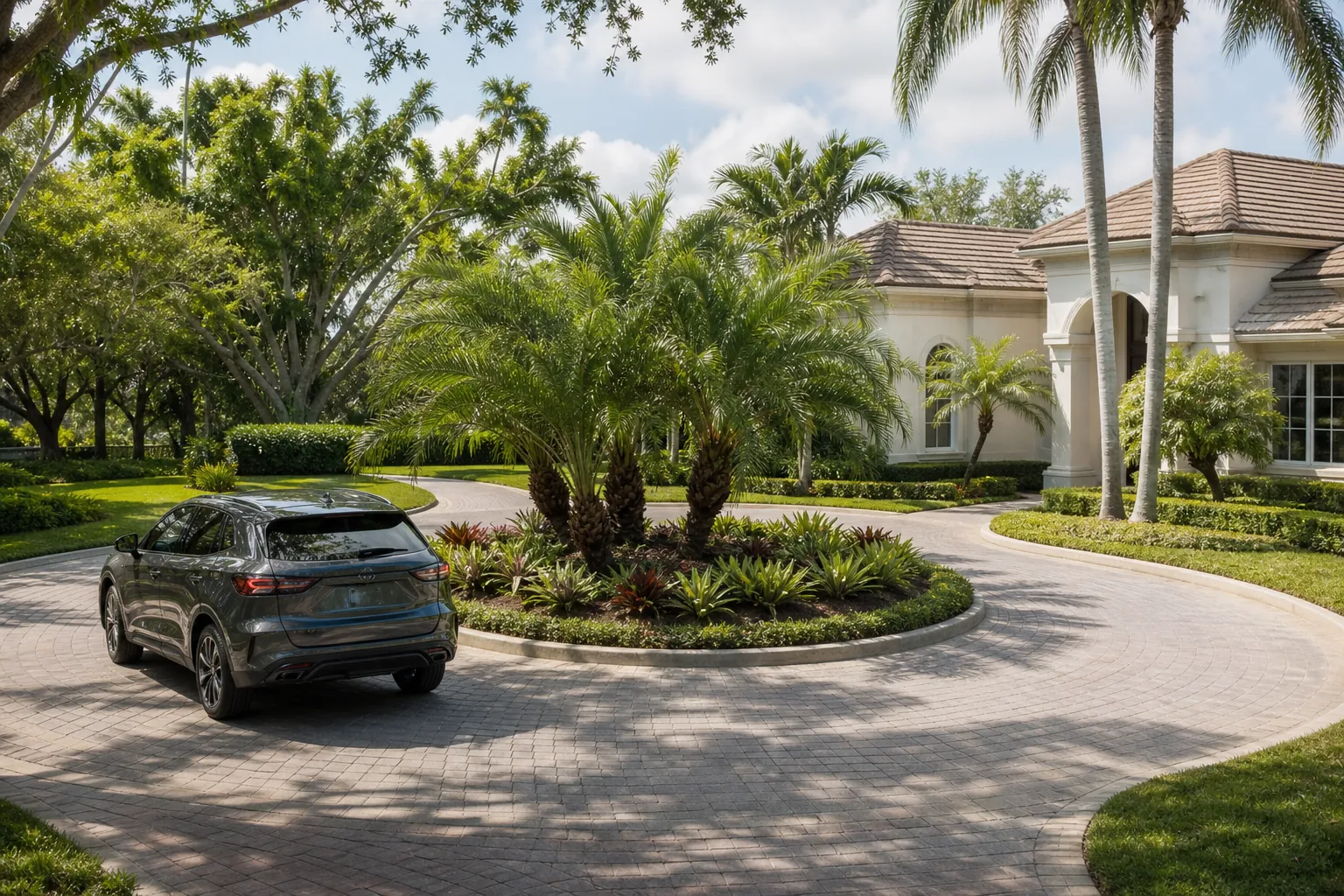
Give the Center Island a Clear Purpose
The center island is usually the visual anchor. Its design should relate to the scale of the home and the diameter of the driveway. A small island can become crowded quickly, while a large island may look unfinished if it contains only one undersized feature.
For a clean Florida landscape, consider one dominant element surrounded by simpler planting. That focal point might be a specimen palm, a sculptural tropical tree, a cluster of complementary palms, or an architectural feature that suits the home. Layer lower plants around it without blocking the view of the trunk or feature.
A balanced island does not need to be perfectly symmetrical. Gentle repetition can create order while still feeling natural. Use plant groups rather than scattering many individual varieties. This makes the island easier to understand from a moving vehicle and reduces a cluttered appearance.
Avoid placing a large tree where roots could eventually lift pavement or where falling fruit and heavy debris could create maintenance concerns. Mature size matters more than nursery size. The right selection should fit the island years after installation, not merely on planting day.
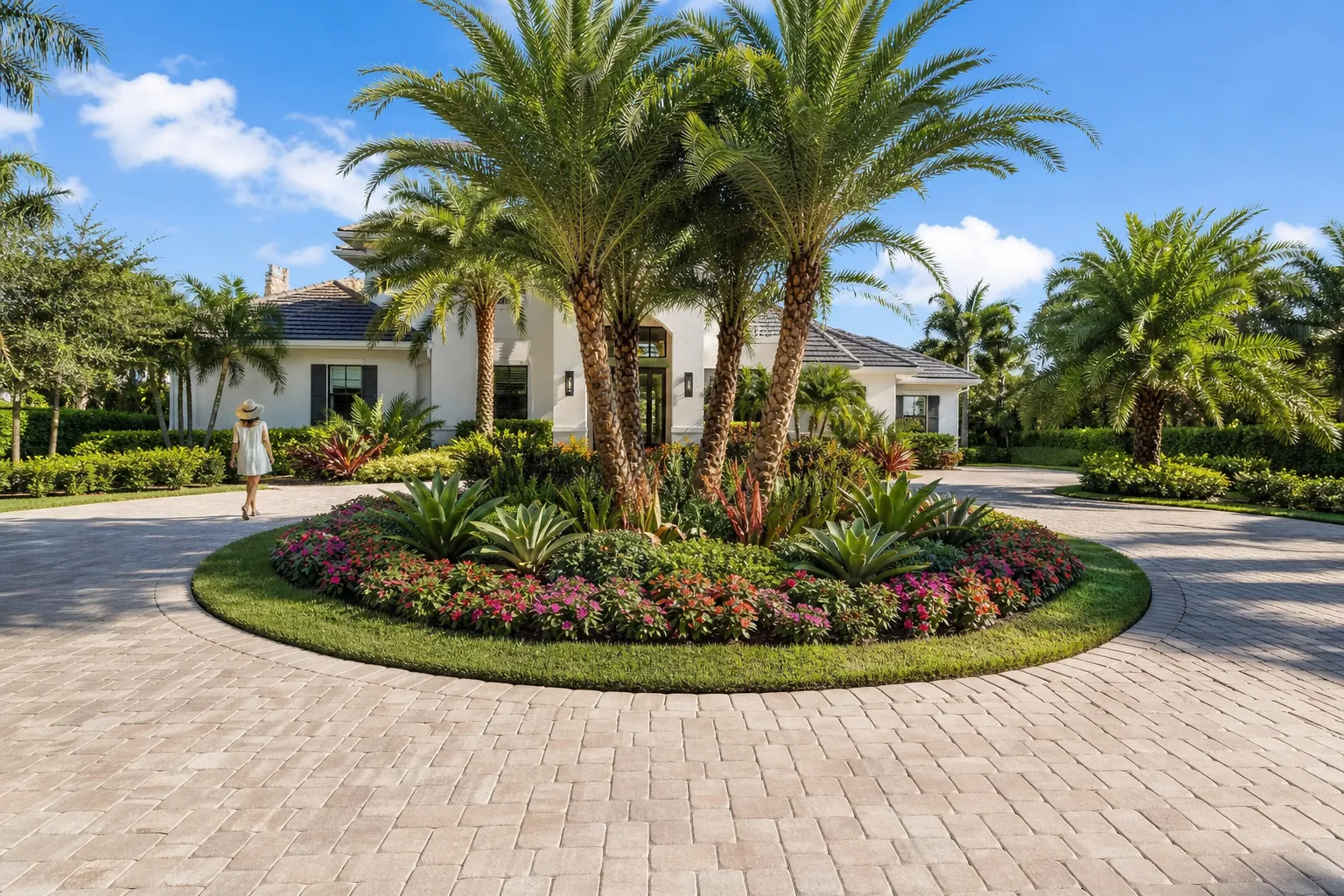
Choose Tropical Plants for Florida Conditions
Florida properties experience intense sun, seasonal downpours, humidity, wind, and periods of limited rainfall. Coastal locations may also face salt spray. Plant selections should reflect the property's specific light, soil, drainage, and exposure rather than relying on appearance alone.
Useful options vary by region and site, but a circular driveway palette may include palms, clumping tropical foliage, flowering shrubs, ornamental grasses, and dependable ground covers. Native and Florida-friendly plants can support resilience while still delivering a lush tropical character.
When developing the plant palette, prioritize these qualities:
- Appropriate mature size: Plants should stay clear of pavement, signs, lights, windows, and utility equipment.
- Heat tolerance: Driveway pavement reflects heat, so plants along the edge need to withstand hotter conditions.
- Drainage compatibility: Select moisture-tolerant plants for low areas and drought-tolerant choices for fast-draining soils.
- Manageable debris: Avoid excessive fruit, thorns, brittle branches, or heavy leaf drop near vehicle paths.
- Layered growth habits: Combine ground covers, low accents, shrubs, and vertical forms for depth without visual congestion.
- Wind resilience: Use well-suited species and proper spacing in locations exposed to tropical storms or strong coastal winds.
- Seasonal interest: Mix foliage color, texture, and selective blooms so the entrance remains attractive beyond one flowering period.
Repeating a limited group of plants around the island, driveway edges, and front foundation can connect the entire entrance. Too many unrelated species often make a prominent driveway look busy and increase maintenance complexity.
Manage Water, Drainage, and Irrigation
Circular drives can redirect a significant amount of stormwater. Watch where runoff travels during heavy rain before finalizing bed elevations. Water should not collect against the pavement, wash mulch into the driveway, or remain around plants that need well-drained soil.
Subtle grading can guide water into suitable planted areas, while permeable materials may help in selected zones. In sites with recurring drainage problems, the solution may require more than adding thirsty plants. Correcting elevations or installing an appropriate drainage system can protect both the landscape and hardscape.
Irrigation should be divided according to plant needs and sun exposure. Overspray onto the driveway wastes water, creates mineral staining, and leaves slick surfaces. Properly positioned drip lines or low-volume emitters can deliver water closer to plant roots. Regular inspections are important because tires, edging work, and routine maintenance can damage components near the pavement.
Use Lighting to Improve Arrival After Dark
Outdoor lighting can make a circular driveway easier to navigate while highlighting its best features. The goal is comfortable visibility, not excessive brightness. Low fixtures may define the driveway edge, while selective uplighting can emphasize a palm, canopy, or architectural detail.
Fixtures should not shine directly into drivers' eyes or neighboring windows. Position lights carefully around curves, intersections, steps, and pedestrian crossings. Warm, restrained illumination generally creates a more welcoming entrance than harsh rows of evenly spaced fixtures.
Keep lights accessible for trimming and maintenance, but protect them from vehicle tires and lawn equipment. Plants should also be spaced so mature foliage does not cover fixtures or produce distracting shadows across the driving surface.
Plan for Practical Long-Term Maintenance
A refined entrance depends on a realistic care plan. Leave room for plants to reach their natural form instead of relying on constant shearing. Maintain access to irrigation valves, drainage inlets, utility boxes, and lighting connections.
Mulch can moderate soil temperature and suppress weeds, but it should be kept off trunks and away from pavement edges where runoff may carry it onto the driveway. Ground covers can reduce exposed mulch over time when selected for the correct light and moisture conditions.
Routine pruning should preserve sightlines and remove damaged growth without turning tropical plants into rigid shapes. Periodic checks after storms can identify leaning plants, blocked drains, broken branches, and displaced edging before they become larger issues.
Create an Entrance That Fits the Property
The best circular driveway landscape feels connected to the home, front walk, and surrounding yard. Plant scale, color, materials, and lighting should reinforce the property's style while keeping arrival safe and intuitive.
Tropical Yards can help develop a Florida-focused plan that balances curb appeal with circulation, drainage, plant performance, and upkeep. To discuss ideas for your circular driveway, call 772-267-1611 for a calm, practical conversation about your property.
Call 772-267-1611 to talk through next steps.