Landscape design ideas for Florida ranch homes
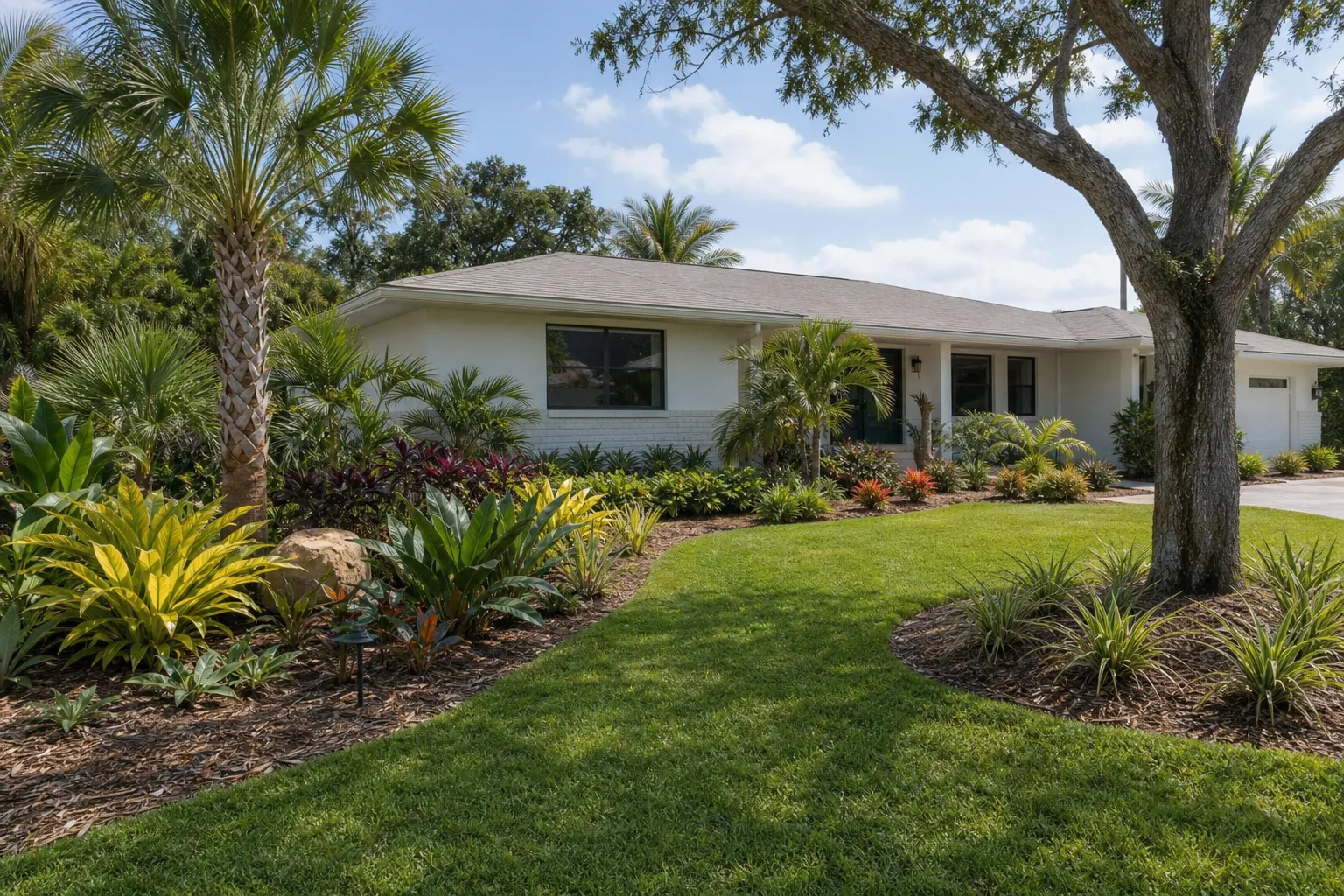
Florida ranch homes have a relaxed, practical character that works beautifully with tropical landscaping. Their long, low rooflines, broad front walls, and open lawns create an ideal canvas for palms, textured foliage, curved beds, and inviting walkways. The challenge is adding personality without hiding the architecture or creating a landscape that demands constant maintenance.
Thoughtful landscape design for Florida ranch homes starts with the building itself. Plant heights, bed shapes, drainage, sunlight, and entry visibility should all guide the plan. When these elements work together, the result feels established, comfortable, and suited to Florida rather than copied from a different climate.
Work With the Home’s Horizontal Architecture
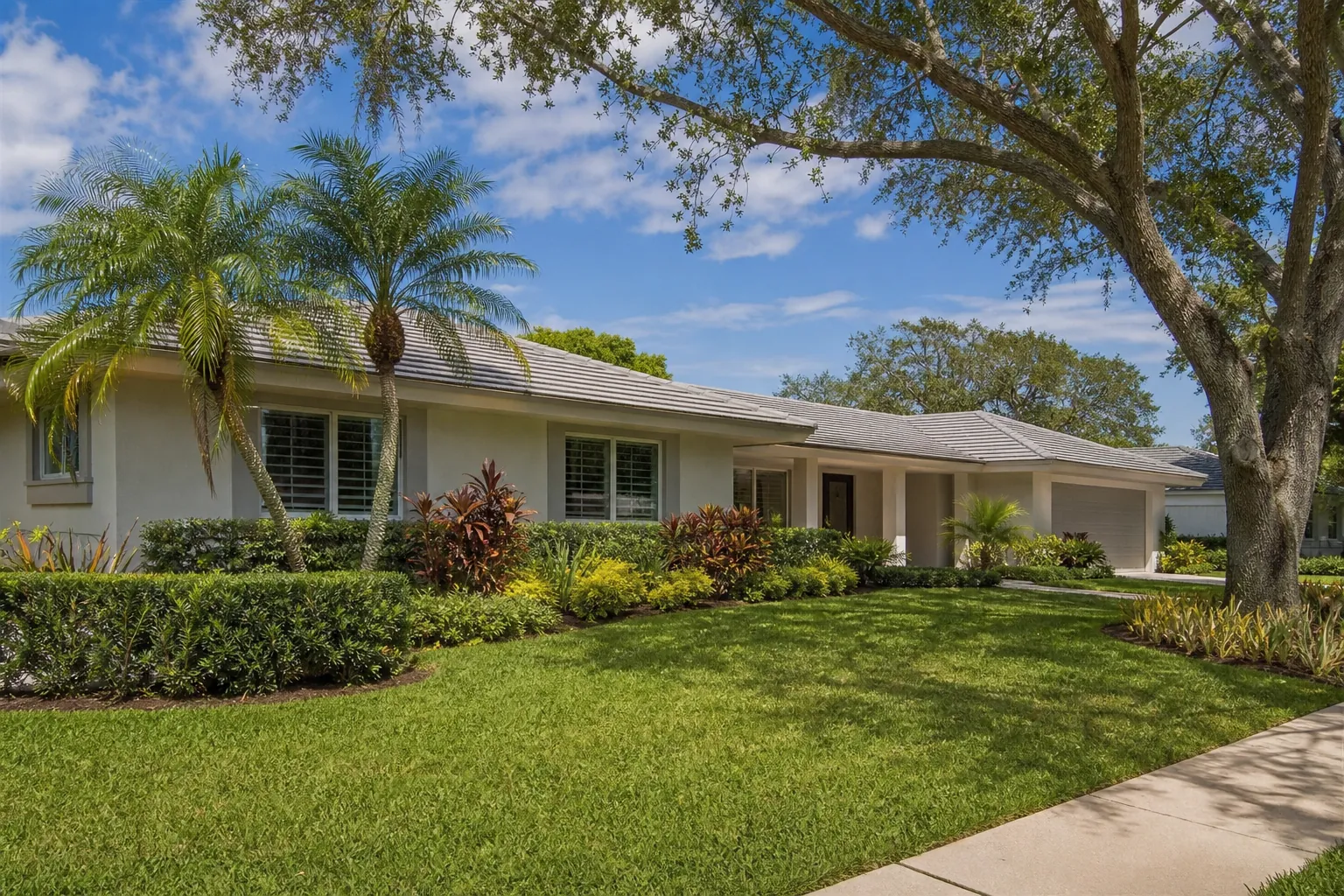
A ranch home typically has a strong horizontal profile. Repeating only low plants can make the property appear even flatter, while placing tall shrubs across the facade may cover windows and make the home feel closed in. A balanced design introduces height selectively and keeps important architectural features visible.
Use a small palm, multi-trunk specimen, or upright accent near a corner to create vertical interest. Then transition toward lower shrubs, ornamental grasses, and ground covers as the bed approaches windows or the front door. This gradual change in height softens the building without overwhelming it.
Curved planting beds can also offset a ranch home’s straight lines. Broad, gentle curves usually look more natural than tight waves or many small pockets. Extending a bed beyond the corner of the house helps connect the structure to the surrounding yard and makes the frontage appear more spacious.
Create a Clear and Welcoming Entrance
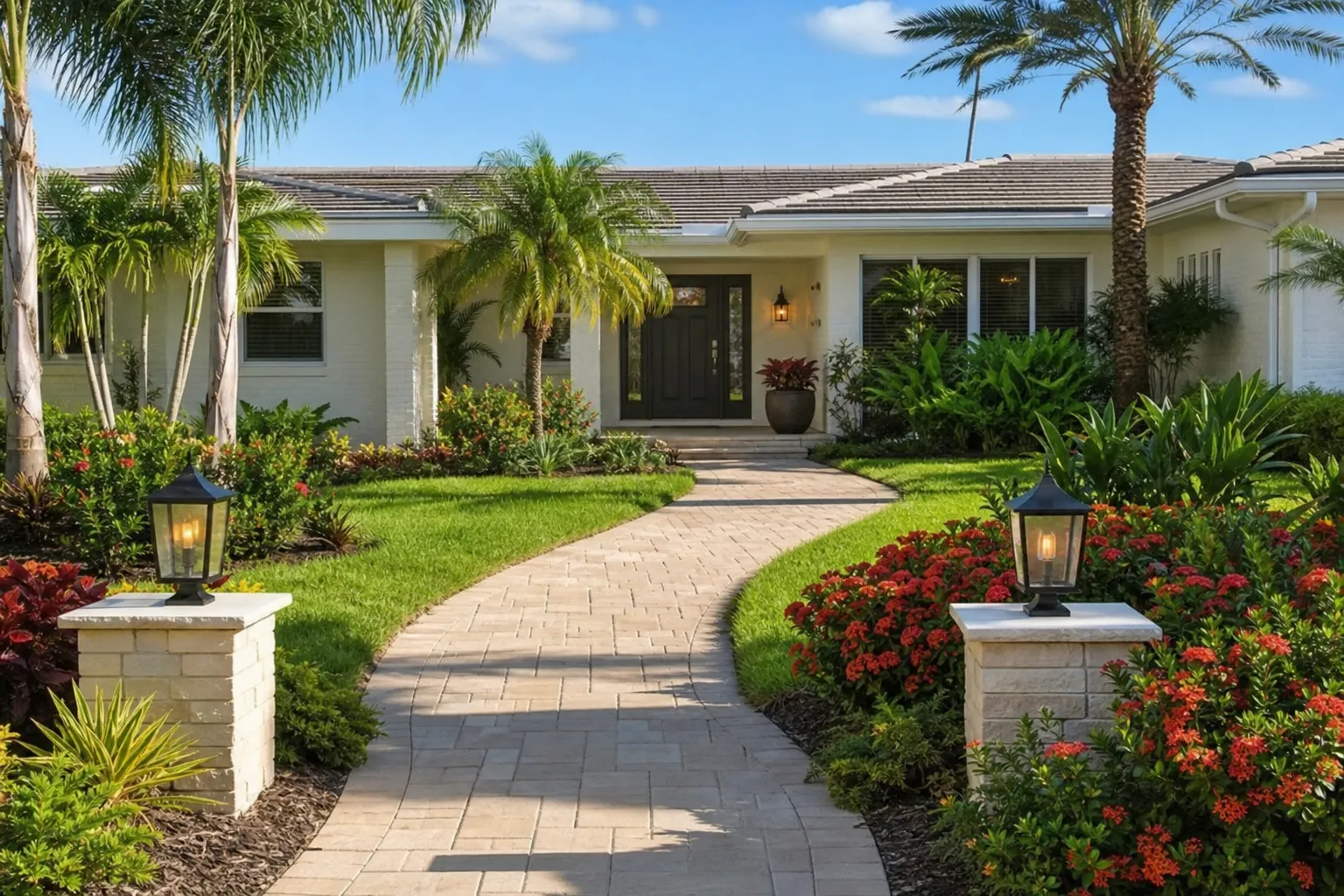
Because many ranch homes have recessed or understated front doors, landscaping should make the entrance easy to recognize. A walkway with a clear route, open sightlines, and coordinated plants can guide visitors naturally from the driveway or sidewalk.
Frame the entry rather than crowding it. Matching containers, compact palms, or groups of colorful foliage can provide symmetry near the door. If the home has a narrow front porch, keep plants closest to the steps low and tidy. Taller material belongs farther away, where it will not block railings, lighting, or house numbers.
Landscape lighting adds another layer of function. Low path lights can define the route, while subtle uplighting can highlight a specimen palm or textured wall. Fixtures should be positioned carefully to avoid glare through windows. Warm, restrained lighting generally complements the welcoming scale of a ranch home better than an overly bright display.
Choose Florida-Friendly Tropical Plants
A successful tropical landscape is not simply a collection of exotic plants. It is a coordinated mix selected for the property’s region, sun exposure, soil, irrigation, salt conditions, and available space. Florida includes multiple growing zones, so a plant that thrives in South Florida may need protection or a different substitute farther north.
Layering plants creates depth and helps beds look full without relying on a single hedge. Start with structural plants, add medium-height foliage, and finish with low ground covers or seasonal color. Repetition keeps the composition cohesive.
- Palms and vertical accents: Choose species with mature dimensions appropriate for the roofline, power lines, and nearby walkways. Avoid planting large palms too close to the foundation.
- Evergreen shrubs: Use dependable shrubs to define beds and provide year-round structure, but place them according to mature size rather than frequent shearing.
- Colorful foliage: Crotons, cordylines, and other climate-appropriate foliage plants can supply lasting color where conditions suit them.
- Flowering plants: Pentas, firebush, dwarf ixora, and native or Florida-friendly selections can support visual interest and pollinators.
- Ground covers: Low-growing plants help finish bed edges, reduce exposed soil, and visually connect taller plant groups.
- Ornamental grasses: Grasses add movement and soft texture, especially near broad walls, corners, and sunny borders.
Before selecting any species, confirm whether it is considered invasive in Florida. Native and Florida-friendly plants can reduce inputs when matched correctly to the site, although even resilient plants need attentive establishment after planting.
Plan for Sun, Shade, and Seasonal Conditions
Ranch homes often create distinct exposure zones. One side may receive intense afternoon sun, while deep eaves shade foundation beds for much of the day. Treating the entire front yard as one growing condition can lead to scorched leaves, sparse growth, or plants leaning toward available light.
Observe the property at different times before finalizing the layout. Full-sun plants belong in open areas with sustained direct light. Shade-tolerant foliage can perform better beneath eaves or near covered entries. On west-facing walls, heat reflected by stucco, masonry, and pavement may require especially durable selections.
Florida weather also brings heavy rain, dry periods, humidity, and tropical storms. Plants with brittle branches or poorly suited root systems should not be placed close to the home. Proper spacing improves airflow and gives plants room to reach a healthy form.
Address Drainage Before Adding New Beds
Drainage is a design issue, not an afterthought. Downspouts, compacted soil, low areas, and runoff from driveways can leave water near the foundation or wash mulch onto walkways. Simply adding soil may redirect water toward a neighboring area or create moisture problems against the house.
A site-based plan should identify how water currently moves and where it can safely go. Bed grades should direct moisture away from the structure while preserving proper foundation clearance. In areas that stay damp, plants must tolerate those conditions. Where soil dries quickly, irrigation zones and plant choices should reflect the difference.
Mulch can moderate soil temperature and limit weeds, but it should not be piled against trunks, stems, or exterior walls. A clean, defined bed edge keeps mulch contained and supports the simple lines that suit ranch architecture.
Design for Practical Maintenance
The easiest landscapes to maintain are planned around mature plant sizes. Oversized shrubs planted under low windows create an ongoing pruning problem. Palms placed beside roofs can interfere with gutters, while thorny plants near walkways make routine access unpleasant.
Group plants with similar water and light needs. Keep access available for air-conditioning equipment, utility panels, hose connections, and window cleaning. Select bed shapes that are easy to mow around, and avoid narrow strips where turf will struggle between pavement and planting areas.
A practical plan can still feel lush. The key is using fewer plant varieties in meaningful groups, leaving appropriate space, and placing bold accents where they have the greatest visual impact. This approach produces tropical character without making the yard look cluttered.
Build a Landscape That Belongs in Florida
The best ranch home landscapes connect curb appeal with everyday function. They highlight the entrance, complement the low architecture, manage Florida rainfall, and use plants that fit each exposure. A clear plan also makes it easier to install improvements in phases if the entire property cannot be completed at once.
Tropical Yards creates Florida landscapes shaped around the home, site conditions, and desired level of upkeep. To discuss a balanced tropical design for your ranch home, call 772-267-1611 for a calm, practical conversation about your property.
Call 772-267-1611 to talk through next steps.