How to plan a thriving St. Augustine landscape
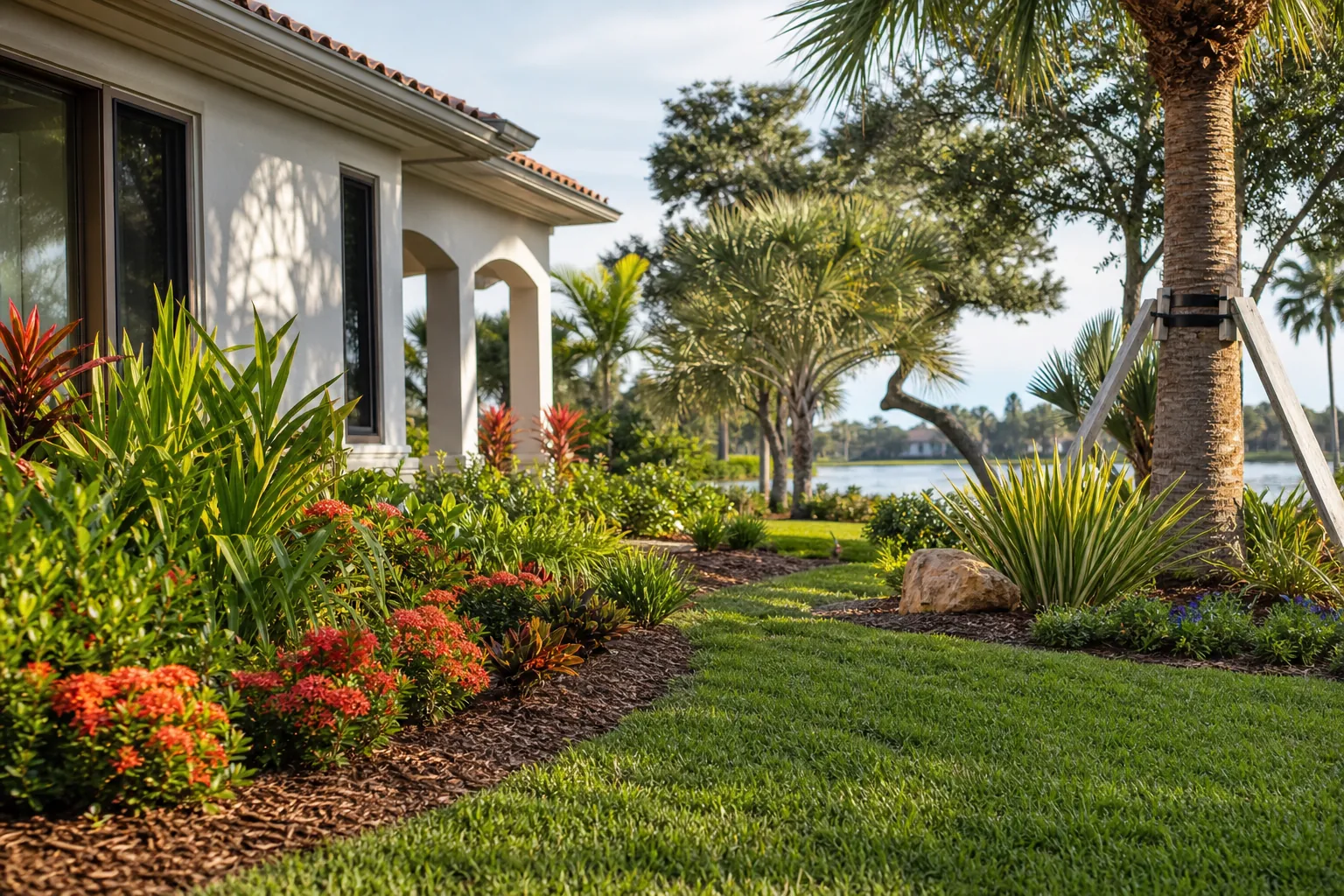
A beautiful landscape in St. Augustine should feel at home in its coastal Florida setting. It also needs to tolerate intense sun, seasonal rain, sandy soils, salt exposure, and occasional cold snaps. Choosing plants only for their appearance can lead to crowded beds, frequent replacement, and higher water use.
A thoughtful landscape planting plan in St. Augustine brings structure to every decision. It matches plants to conditions, anticipates mature sizes, coordinates color and texture, and supports manageable maintenance. Whether you are refreshing an older yard or planting around a new home, planning first can save time and reduce costly corrections.
Start With The Conditions On Your Property
St. Augustine properties can have dramatically different growing conditions, even within the same neighborhood. A sunny front bed may become hot and dry, while a shaded side yard stays damp after summer storms. Coastal locations may also receive salt spray and steady wind.
Begin by observing the property throughout the day. Note where direct sun lasts six hours or more, where afternoon shade provides relief, and where water collects. Check downspout discharge areas and low spots. Plants selected for the wrong moisture level often struggle regardless of how carefully they are maintained.
Soil matters too. Much of Florida has fast-draining, sandy soil with limited organic matter. Other sites may contain compacted fill from construction. A soil test can reveal pH and nutrient conditions, helping you make targeted improvements instead of adding fertilizer or amendments without a clear need.
Finally, consider exposure. Salt-tolerant plants are important near the coast, while protected inland courtyards may support more delicate tropical varieties. Understanding these small climate differences creates a stronger foundation for the entire plan.
Give Every Plant A Clear Purpose
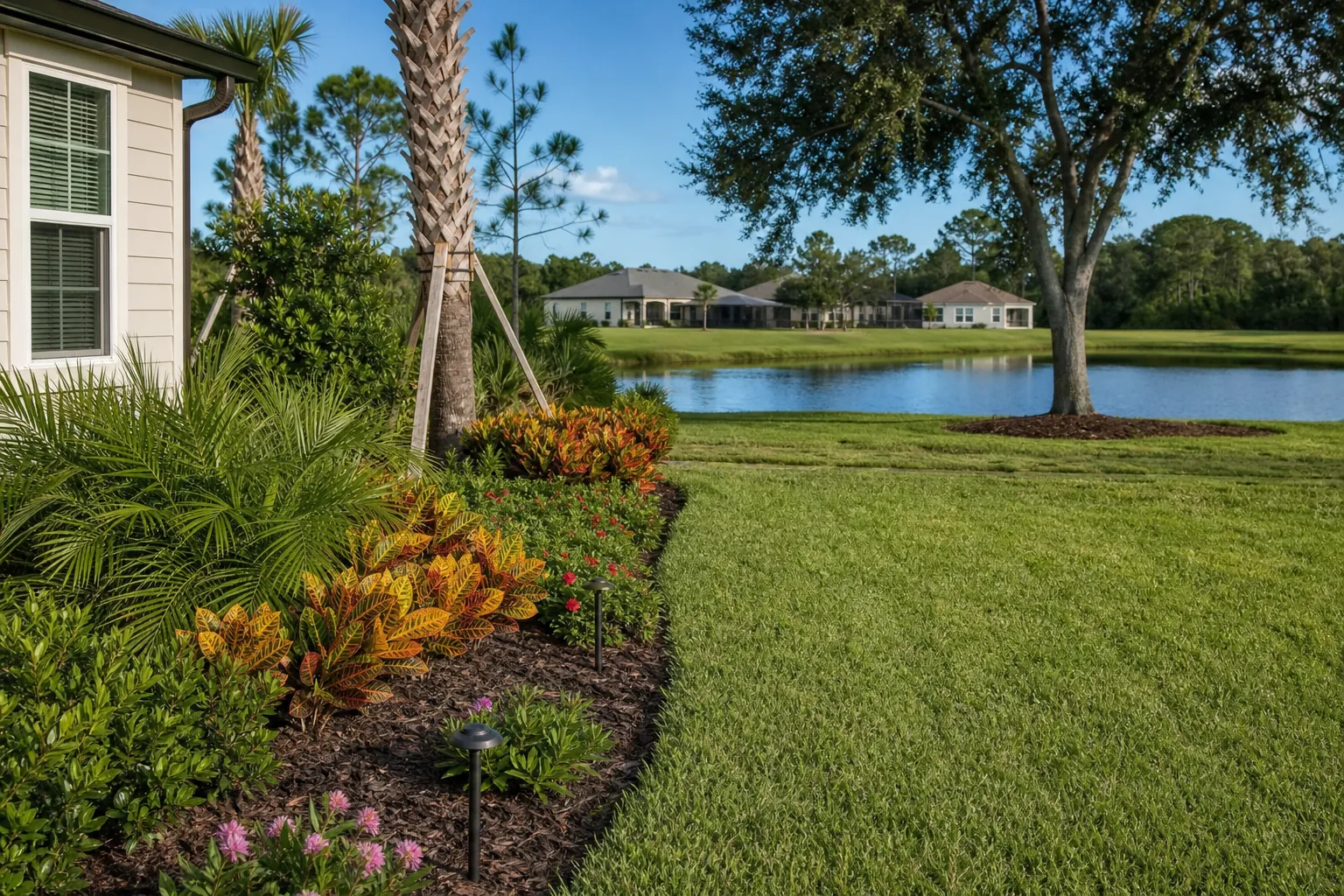
Successful landscapes are not random collections of attractive plants. Each selection should perform a job. Canopy trees can provide shade, palms can add height and movement, shrubs can define boundaries, and low groundcovers can soften bed edges while suppressing weeds.
Start with the largest structural plants because they influence everything around them. Place trees where their mature canopies will not interfere with roofs, power lines, driveways, or neighboring properties. Use evergreen shrubs to create dependable structure, then layer flowering plants and foliage accents in front.
A balanced Florida planting palette may include:
- Canopy or accent trees: Select species with root systems and mature dimensions appropriate for the available space.
- Palms: Use them selectively for vertical emphasis rather than scattering them without a visual pattern.
- Foundation shrubs: Choose varieties that fit below windows and along walls without constant shearing.
- Flowering perennials: Add seasonal interest in repeated groups that look intentional and are easier to maintain.
- Groundcovers: Fill difficult slopes, shaded areas, or narrow spaces where turf performs poorly.
- Screening plants: Create privacy around patios, pools, utility equipment, and property lines.
- Pollinator-friendly plants: Provide nectar, shelter, and host plants for beneficial insects and birds.
Repeating a limited number of species creates a cohesive look. It also simplifies watering, pruning, and replacement because plants with similar needs can be grouped together.
Plan For Mature Size And Healthy Spacing
Newly installed beds can look sparse because young plants have not reached their mature width. The temptation is to place them too close together for immediate impact. Within a few seasons, overcrowding can restrict airflow, encourage disease, hide walkways, and require aggressive pruning.
Plant labels offer useful spacing guidance, but local growth habits and maintenance preferences should also be considered. A shrub listed at six feet wide needs enough room to develop naturally unless you are prepared for regular shaping. Avoid placing large plants directly under windows or too close to air-conditioning equipment.
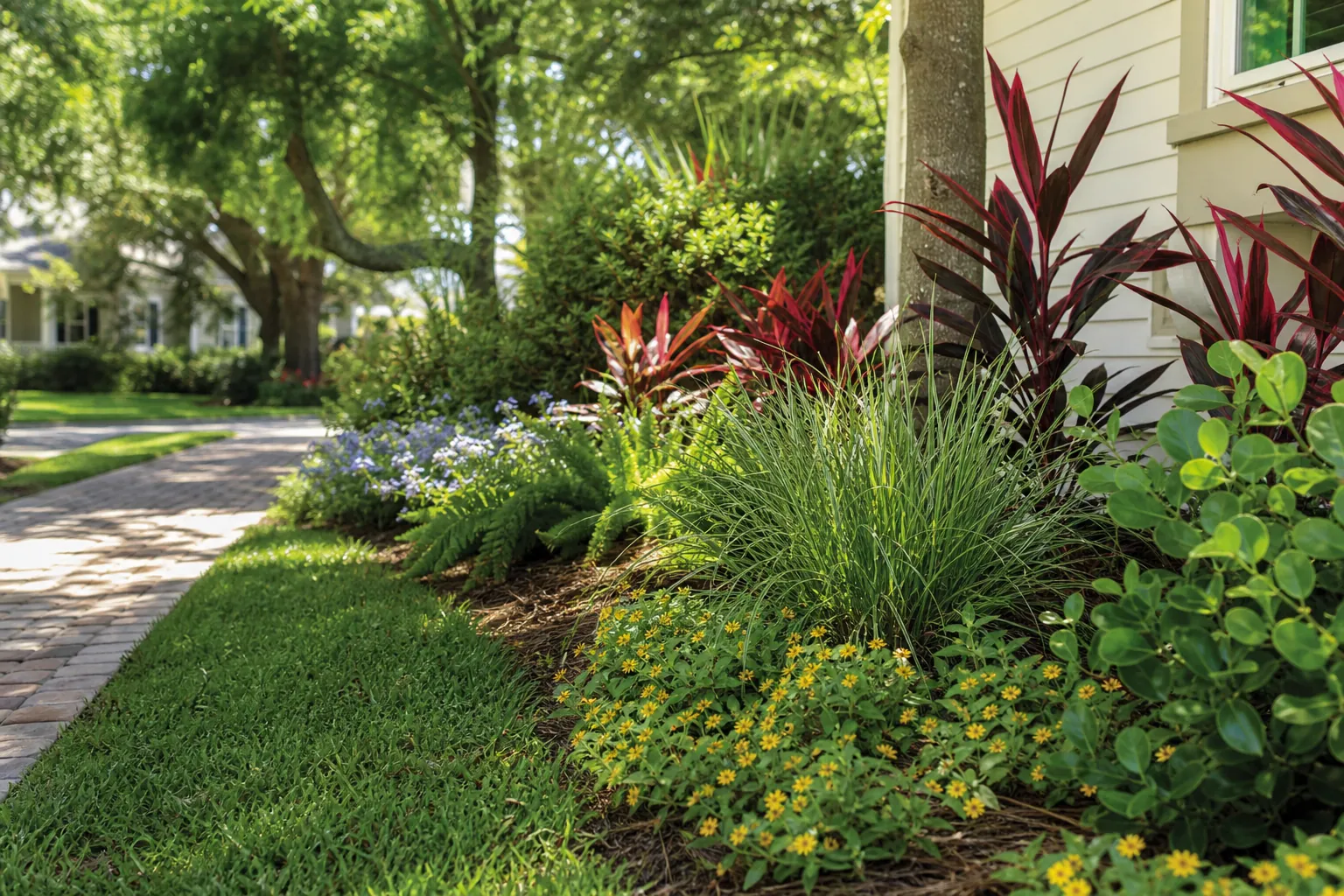
Layering creates fullness without crowding. Taller plants generally belong toward the back of a bed, with medium shrubs in the middle and low plants near paths or lawn edges. Curved beds should be deep enough to accommodate these layers. Narrow foundation strips rarely provide enough room for large tropical foliage.
Spacing also affects irrigation. Grouping plants by water needs allows each zone to receive an appropriate amount. Drought-tolerant species should not share a heavily watered area with plants that prefer consistently moist soil.
Choose Plants For St. Augustine Seasons
St. Augustine has a warm climate, but winter cold can still damage sensitive tropical plants. A resilient plan combines hardy structural species with more tender accents in protected locations. Walls, fences, and tree canopies may create warmer pockets, but exposed areas should rely on plants suited to local temperature swings.
Seasonal rain patterns are equally important. Summer brings heat, humidity, and frequent storms, while spring can be dry. Florida-friendly plants that become drought tolerant after establishment can reduce irrigation demands. Native species may also support local wildlife and adapt well when matched to the correct sun and soil conditions.
Year-round interest comes from more than flowers. Mix broad leaves, fine textures, upright forms, and arching foliage. Use foliage colors such as deep green, silver, burgundy, or variegated tones to maintain appeal when fewer plants are blooming. A few well-placed flowering groups usually create more impact than many isolated specimens.
Coordinate Irrigation, Mulch, And Maintenance
A planting plan should account for what happens after installation. New plants require consistent establishment watering, but irrigation should be adjusted as roots develop. Too much water can be as harmful as too little, particularly in shaded beds or poorly drained soil.
Drip irrigation or targeted micro-irrigation can deliver water close to root zones while reducing overspray on walls and pavement. Irrigation heads should remain accessible and should not be blocked by mature foliage. Regular system checks help identify leaks, clogged emitters, and areas receiving uneven coverage.
Apply mulch at a practical depth to moderate soil temperature, conserve moisture, and limit weeds. Keep it away from trunks, palm bases, and plant crowns to reduce rot. Beds should also provide access for pruning and cleanup without requiring workers to step through dense plantings.
Think honestly about your preferred maintenance level. Formal hedges require frequent trimming, while naturally shaped shrubs may need only periodic selective pruning. Matching the design to your available time and budget is essential for lasting results.
Create A Cohesive Plan Before Planting
A scaled plan helps you see relationships that may be difficult to judge at ground level. It can show bed dimensions, plant quantities, mature spreads, focal points, irrigation zones, and existing features. It also makes phased installation easier because every future improvement follows the same overall direction.
Prioritize entrances, outdoor living areas, and views from inside the home. Screen unattractive features without creating unsafe blind spots near driveways or walks. Keep thorny or irritating plants away from high-traffic areas, and maintain clear access to utilities.
Tropical Yards develops planting ideas around the realities of Florida properties, not just how plants look on installation day. For help organizing species, spacing, color, and practical care requirements for your St. Augustine yard, call 772-267-1611. A calm, site-specific approach can turn your landscape goals into a yard that matures beautifully and remains manageable.
Call 772-267-1611 to talk through next steps.