How to landscape around boat parking in Florida
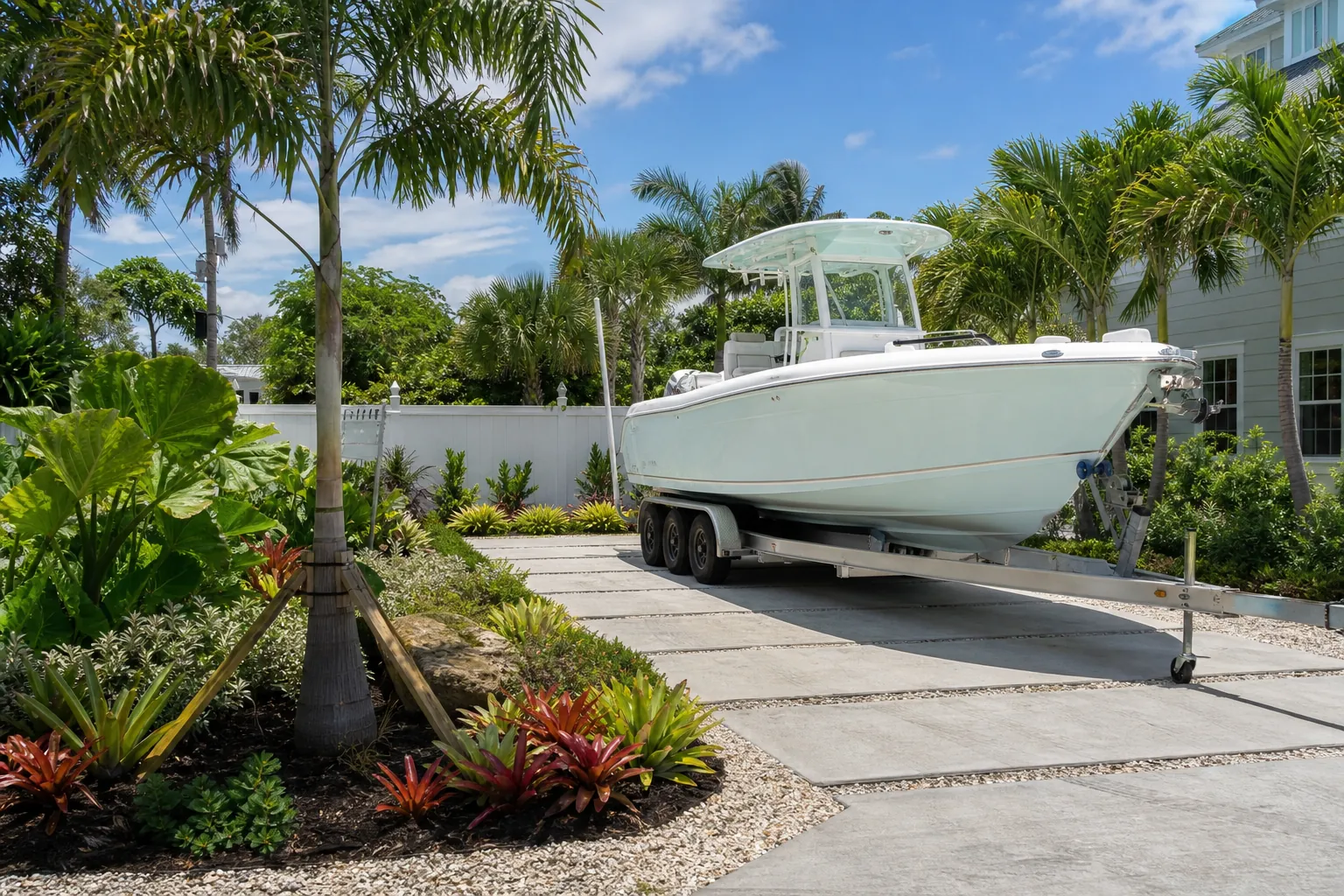
Boat ownership is part of the Florida lifestyle, but storing a boat at home can create landscaping challenges. A trailer needs generous clearance, a stable surface, reliable drainage, and a route that remains easy to navigate. At the same time, many homeowners want to soften the look of the parking area without adding plants that scratch the hull, block visibility, or require constant cleanup.
Thoughtful landscaping around boat parking in Florida balances access, durability, and curb appeal. The best design does not simply hide the boat. It creates an organized space that works with the property, handles heavy rain, and tolerates Florida sun, salt, wind, and humidity.
Start With Boat And Trailer Clearance
Before choosing plants, measure the complete storage and access zone. Include the boat, trailer tongue, outboard motor, guide posts, and any accessories that extend beyond the hull. Remember that the vehicle and trailer need additional turning room when backing into place.
Leave a comfortable buffer around the parking pad so branches do not rub against the boat or interfere with covers. Plants placed too close can also limit access to tie-downs, batteries, wheels, and maintenance points. A wider clear zone near the trailer tongue makes hitching safer and less frustrating.
Visibility matters as well. Keep shrubs low near driveways, sidewalks, and street corners. If the parking area is beside the home, preserve access to utility meters, gates, air-conditioning equipment, and emergency pathways. Planning these practical details first prevents an attractive installation from becoming an everyday obstacle.
Choose A Stable, Drainage-Friendly Surface
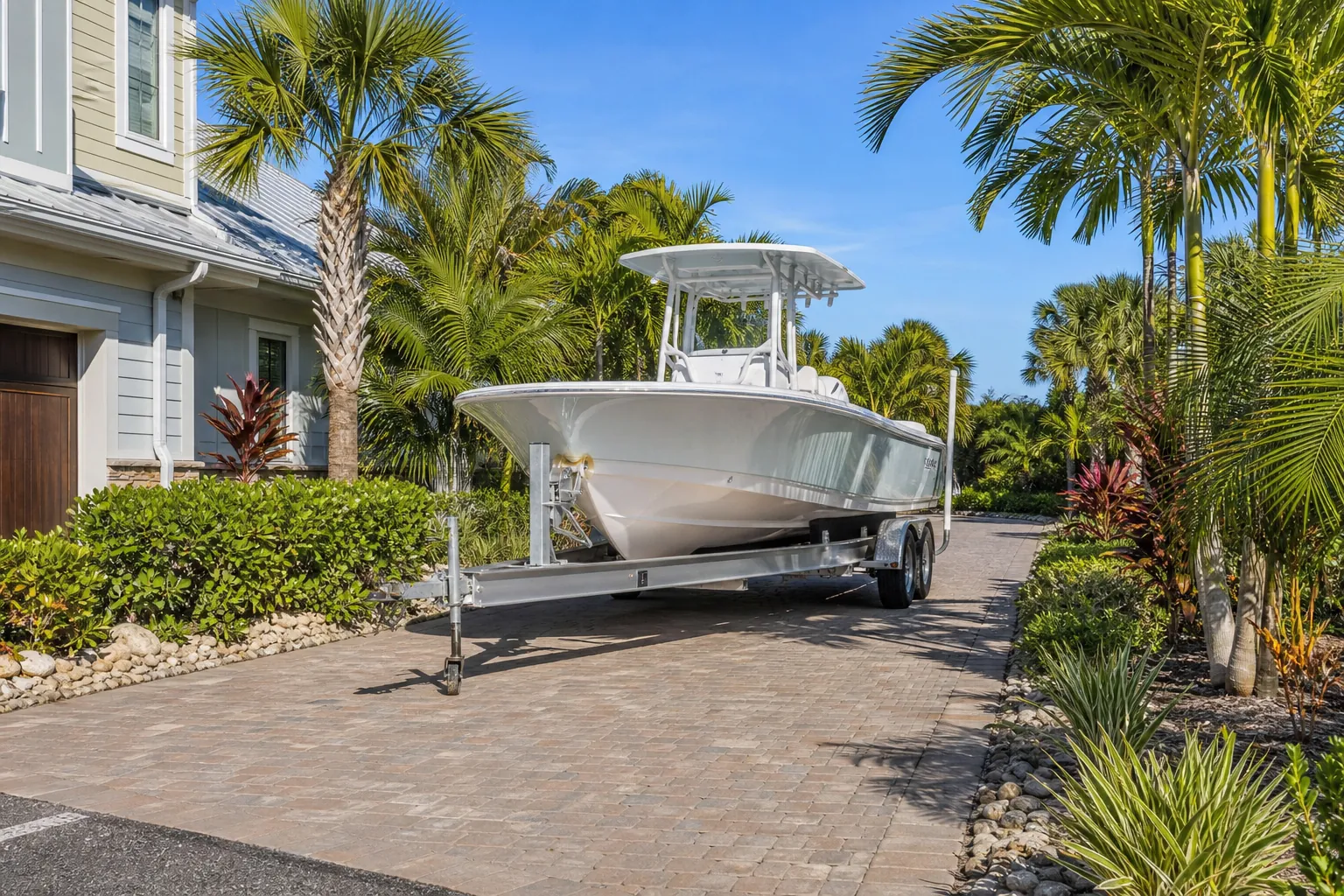
Florida's intense downpours can quickly expose problems in a poorly prepared boat parking area. Soft soil may rut beneath trailer tires, while standing water can encourage weeds, mosquitoes, algae, and muddy footprints. Water that collects near the trailer can also make routine inspections and loading unpleasant.
Compacted aggregate, permeable pavers, and properly installed concrete are common options. The right choice depends on local regulations, soil conditions, budget, and the weight of the boat and trailer. Gravel can provide an informal coastal appearance, but it needs dependable edging and a properly prepared base to reduce migration and sinking.
The finished surface should direct runoff away from the house without sending water onto neighboring property. Swales, shallow collection areas, and permeable borders may help manage stormwater when they are designed for the site. Avoid burying roots or changing grades around established trees without professional guidance.
Select Plants That Fit Florida Conditions
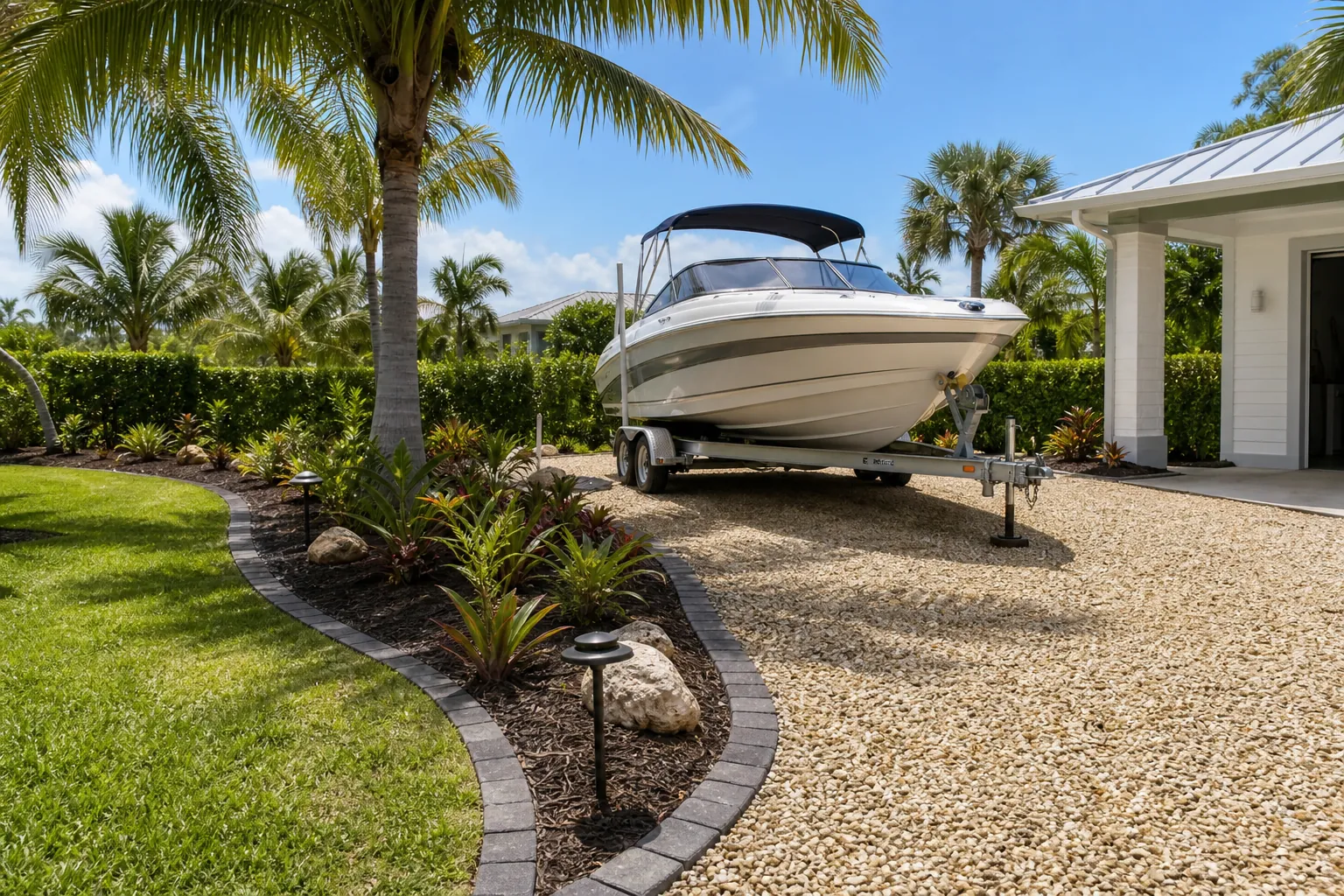
Plants beside boat storage should be resilient and appropriately sized at maturity. Low-maintenance tropical landscaping can screen unattractive views while keeping the area bright, open, and accessible. Coastal properties may also require species that tolerate salt spray and sandy, fast-draining soils.
Good candidates vary by region and site exposure, but compact clusia varieties, cocoplum, Simpson's stopper, saw palmetto, dwarf yaupon holly, flax lily, coontie, and selected ornamental grasses may suit certain Florida landscapes. Native and Florida-friendly plants can reduce maintenance when matched to the available sunlight, moisture, and soil.
Use the following criteria when building a planting plan:
- Mature size: Choose plants that will remain within the available space without frequent hard pruning.
- Branch structure: Avoid thorny, rigid, or spreading branches where people walk or the boat passes.
- Litter level: Limit plants that drop heavy fruit, sticky flowers, large fronds, or abundant leaves onto the boat and trailer.
- Salt tolerance: Near the coast, select plants suited to airborne salt and occasional storm-driven exposure.
- Root behavior: Keep large trees and aggressive roots away from paving, drainage components, and underground utilities.
- Light requirements: Match each species to full sun, partial shade, or reflected heat from nearby walls and pavement.
- Irrigation needs: Group plants with similar water requirements to avoid overspray and unnecessary watering.
A layered layout often works well. Low groundcovers or ornamental grasses can define the parking edge, medium shrubs can provide screening, and carefully positioned palms or small trees can add height. Maintain open sightlines at the driveway entrance and avoid creating dense hiding places beside gates.
Protect The Boat From Irrigation And Debris
Conventional spray heads can leave mineral spots on hulls, windows, metal fittings, and covers. Overspray may also keep the parking surface damp. Drip irrigation or targeted low-volume emitters are often better choices for planting beds near stored boats. Position equipment so trailers do not crush heads or exposed tubing.
Mulch helps moderate soil moisture and suppress weeds, but it should stay contained within defined beds. Loose material can wash onto the parking pad during storms or cling to wet footwear. Stone may appear durable, although it can absorb heat and should not be piled against trunks or building walls.
Tree placement deserves special care. Shade can be appealing, but overhanging limbs may shed sap, seeds, leaves, and bird droppings. Limbs can also become hazards during tropical storms. Place canopy trees far enough away that their mature branches do not extend over the boat, and maintain them with proper pruning rather than topping.
Create Screening Without Blocking Access
Some homeowners want to reduce the boat's visibility from the street or neighboring homes. A hedge, decorative fence, or combination of plants and hardscape can provide screening while keeping the space functional. Check municipal and homeowners association rules before installing fencing or making major changes to front or side yards.
Instead of building a solid wall of greenery, consider staggered plant groupings. This approach can soften the view while improving airflow and making maintenance easier. A durable gate with sufficient width is essential when the trailer must pass through a fenced side yard. Account for mirrors, fenders, turning angles, and future boat upgrades.
Low-voltage lighting can improve nighttime safety around the hitch, wheels, and walking path. Fixtures should cast light downward and remain outside tire paths. Choose marine-friendly materials in coastal areas, where corrosion can shorten the life of ordinary hardware.
Plan For Maintenance And Storm Season
A practical boat parking landscape should remain manageable throughout the year. Keep vines, hedges, and grasses trimmed away from moving equipment, but avoid selecting plants that demand constant shaping. Inspect drainage areas before the rainy season and remove accumulated leaves from channels and permeable surfaces.
Before a tropical storm, secure lightweight pots, garden ornaments, hoses, and loose edging. Do not rely on shrubs to protect a boat from windborne debris. Follow appropriate storm preparation guidance for the vessel, trailer, and property, including any manufacturer or local authority recommendations.
Tropical Yards can help create a Florida landscape that complements boat storage instead of competing with it. For site-specific ideas about plant selection, screening, drainage, and access, call 772-267-1611 to discuss a practical plan for your yard.
Call 772-267-1611 to talk through next steps.