How to landscape safely around a generator in Florida
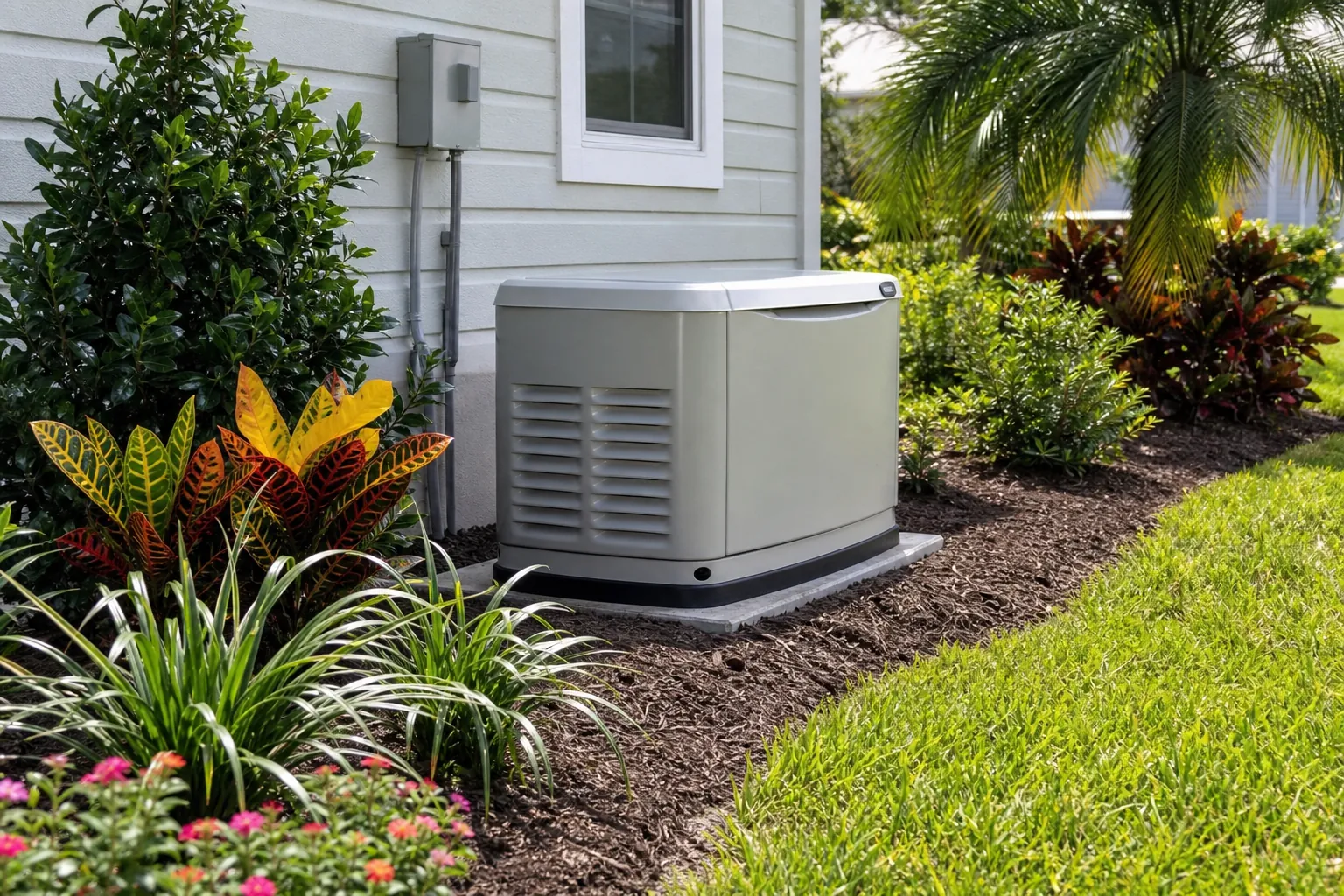
A standby generator provides valuable protection when hurricanes, tropical storms, or routine outages interrupt electrical service. It also creates a practical landscaping challenge. Homeowners often want to soften the appearance of the equipment, but dense plants, loose mulch, and poorly placed screens can interfere with airflow, maintenance, and safe operation.
Thoughtful landscaping around generators in Florida balances appearance with access, ventilation, drainage, and plant durability. The best design makes the generator less visually prominent without trying to hide it completely. It should also remain manageable through the rainy season, dry spells, salt exposure, and strong winds.
Start With Safety And Manufacturer Clearances
Before selecting plants or installing edging, review the generator manufacturer's placement and clearance requirements. Local building, fire, electrical, and gas codes may also affect what can be installed nearby. Requirements vary by equipment model, fuel source, exhaust direction, windows, doors, soffit vents, and property conditions.
Never assume a hedge or decorative panel is safe simply because it does not touch the unit. Generators need open space for cooling, exhaust dispersal, inspection, and repair. Plants grow, branches shift in storms, and palm fronds can fall into areas that once appeared clear.
Keep the exhaust path unobstructed and avoid enclosing the generator in a tight pocket. Technicians should be able to reach service panels without stepping through shrubs or removing landscape features. Always prioritize the manufacturer's instructions and qualified professional guidance over general design recommendations.
Choose Plants That Stay Within Their Space
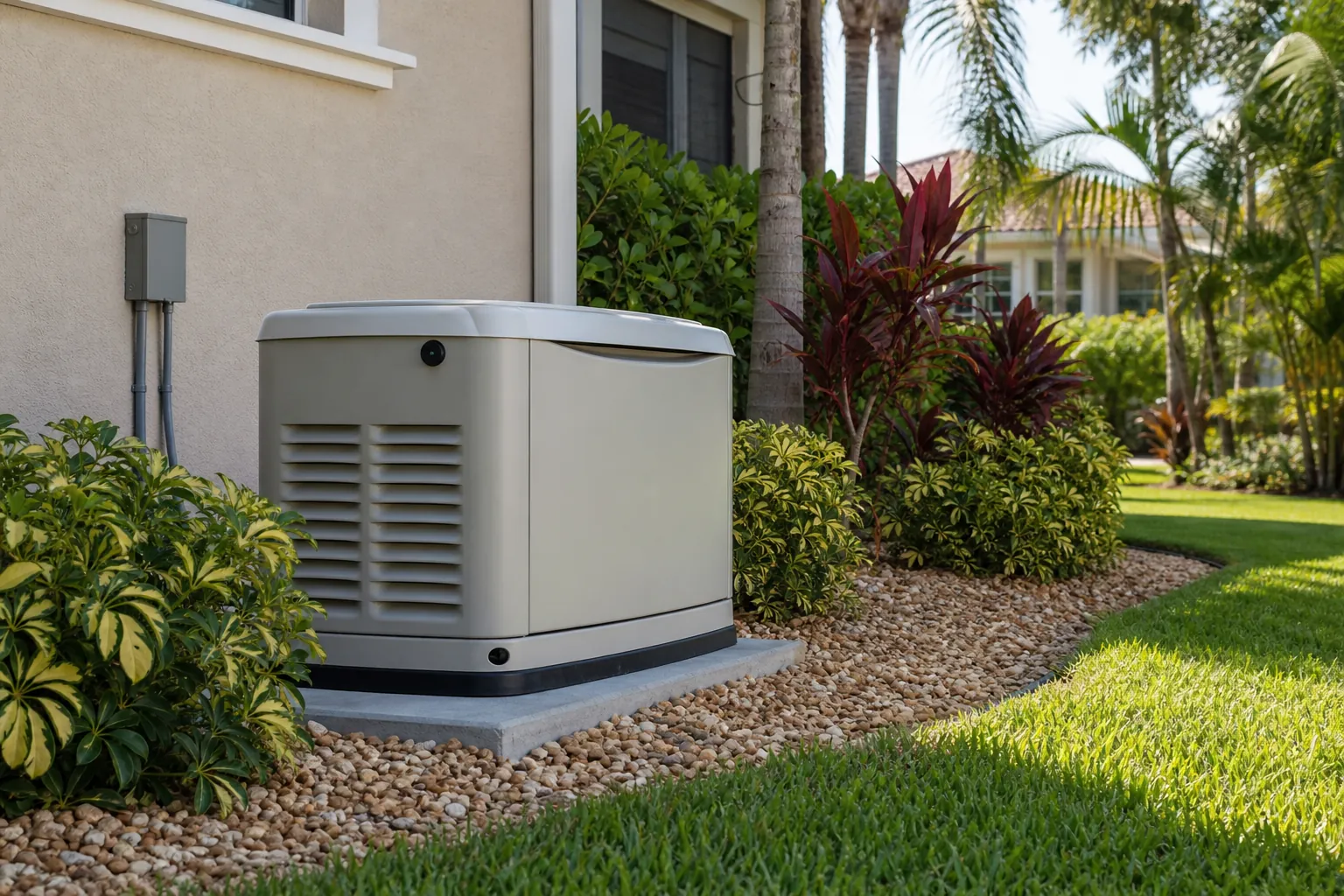
Compact, predictable plants are usually better than fast-growing tropical varieties. A plant that looks appropriately sized in a nursery pot may quickly spread toward the generator once established in Florida's warm climate. Select species according to their mature width, not their purchase size, and account for routine growth between pruning visits.
Good candidates may include compact clumping grasses, low-growing foliage plants, and small shrubs suited to the site's light, soil, and irrigation. Florida native and Florida-friendly options can reduce maintenance when properly matched to the location. In coastal areas, salt tolerance may be as important as heat tolerance.
Avoid thorny plants beside service routes. Aggressive roots, brittle branches, messy fruit, and heavy leaf drop can also cause problems near mechanical equipment. Large palms and trees should be positioned far enough away that expanding trunks, surface roots, or falling debris will not affect the pad or access area.
When evaluating plants, consider these practical traits:
- Mature size: Choose plants that will remain outside required clearances without constant corrective pruning.
- Wind resistance: Favor sturdy growth habits over plants with weak limbs or oversized leaves that tear easily.
- Debris levels: Minimize flowers, seedpods, dry fronds, and leaves that could collect around vents or exhaust areas.
- Root behavior: Avoid species likely to lift edging, disturb the generator pad, or crowd underground utilities.
- Maintenance needs: Select plants that can be trimmed from outside the designated service zone.
- Site tolerance: Match selections to sun, reflected heat, drainage, irrigation coverage, and coastal exposure.
Use Layering Instead Of A Solid Green Wall
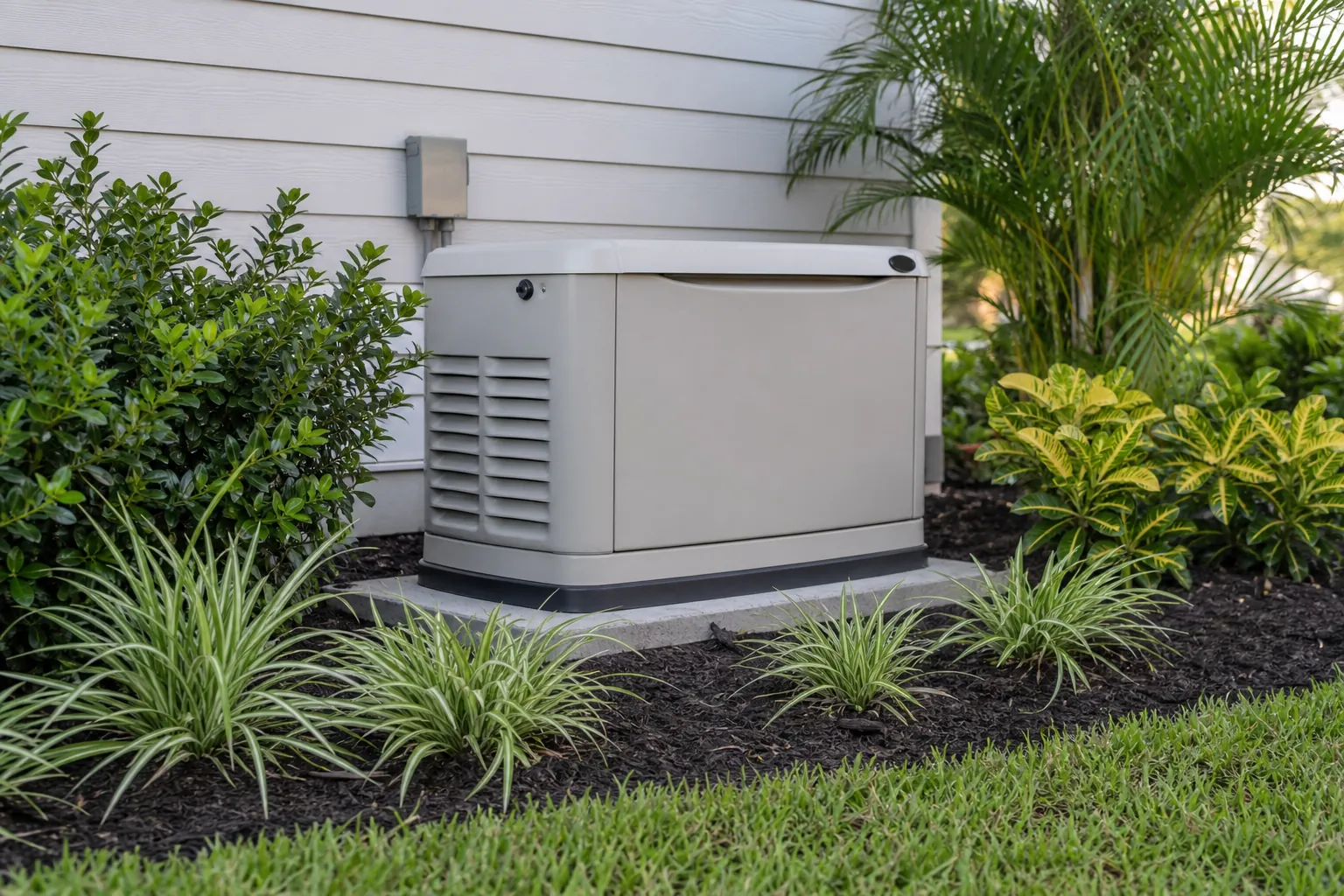
A solid hedge can restrict airflow and make maintenance difficult. Layered planting usually produces a softer, more attractive result while preserving open space. From common viewing angles, place low foliage in the foreground and a limited number of taller accents farther away. This redirects attention instead of sealing off the equipment.
Consider how the area looks from the street, patio, pool, and primary indoor windows. Screening every side may be unnecessary. In many yards, planting along one or two strategic sightlines provides enough visual relief while leaving the service and exhaust sides open.
If a fence or decorative screen is being considered, confirm that its location and materials comply with generator specifications and applicable codes. A screen must be stable, accessible, and appropriately separated from hot components. It should not create a small enclosure where heat or exhaust can accumulate. Removable panels may improve service access, but the overall design still requires professional review.
Protect Drainage, Irrigation, And The Generator Pad
Florida downpours can expose weaknesses in grading quickly. Water should drain away from the generator pad rather than pool beside it. Avoid building up soil or mulch against the pad, since this can retain moisture, conceal erosion, and narrow the intended clearance. If the area remains wet after rain, drainage correction should happen before planting.
Irrigation requires equal care. Spray heads should not direct water onto the generator, electrical connections, vents, or enclosure. Drip or targeted low-volume irrigation may offer better control for nearby beds, depending on site conditions. Inspect the system after planting because foliage can redirect spray as it grows.
Use mulch conservatively and keep it contained within planting areas. Loose material can shift during heavy rain, maintenance, or high winds. Stone may appear tidy, but it can increase reflected heat and should not be placed where it conflicts with equipment requirements. The safest ground treatment depends on the specific unit and site.
Design For Storm Preparation And Routine Service
A generator landscape should remain easy to inspect before hurricane season. Keep a clear route from the home or driveway to the equipment so technicians do not have to cross slippery ground or push through vegetation. Prune plants before they enter required clearances, and remove dead branches, dry fronds, weeds, and accumulated debris.
Do not attach vines, lighting, irrigation tubing, or garden decorations to the generator enclosure. Portable objects such as pots and ornaments can become storm debris, so move them to secure storage when severe weather approaches. After a storm, visually check for fallen limbs, flooding, erosion, and blocked vents before operating the unit. Follow manufacturer guidance and contact a qualified generator professional if damage is suspected.
Regular maintenance also protects the landscape investment. Technicians need room to open panels, change components, and work safely. Leaving that space from the beginning prevents shrubs from being cut back abruptly during an urgent repair.
Create A Plan That Fits Your Florida Property
Every installation has different constraints. A sunny side yard may need heat-tolerant plants, while a shaded location may require moisture-conscious selections. Coastal properties face salt and wind, and compact lots may need especially restrained planting. Utility lines, fuel connections, windows, gates, and pool equipment can further shape the layout.
Tropical Yards can develop a planting plan that complements your home's tropical character while respecting practical access and site conditions. The goal is not to disguise essential equipment at any cost. It is to create a balanced landscape that looks intentional, stays maintainable, and supports safe professional servicing.
For help planning a Florida generator area with suitable plants, drainage awareness, and clear service routes, call Tropical Yards at 772-267-1611. A calm, site-specific approach can improve the view without compromising the generator's essential role.
Call 772-267-1611 to talk through next steps.