How to landscape around an outdoor shower in Florida
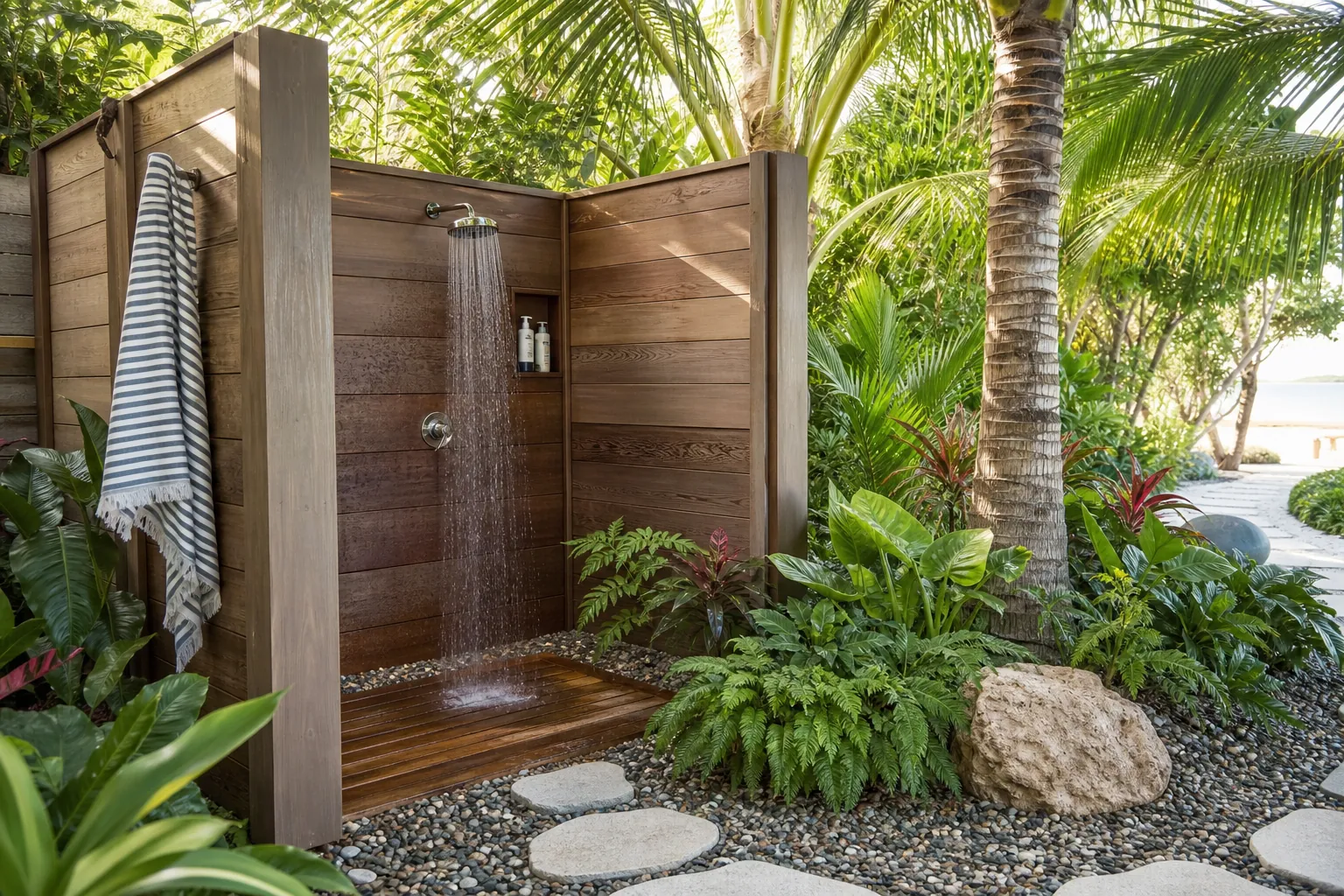
An outdoor shower fits naturally into the Florida lifestyle. It provides a convenient place to rinse off after swimming, gardening, boating, or visiting the beach. With thoughtful landscaping, it can also become a private tropical retreat rather than a purely practical fixture.
Successful landscaping around outdoor showers in Florida requires more than adding a few palms. The area must handle frequent water, intense sun, high humidity, salt exposure in coastal communities, and year-round plant growth. Privacy, drainage, walking surfaces, and maintenance all need to work together.
Start with drainage and water flow
Drainage should be addressed before plants, screens, or decorative materials are installed. Shower water that collects near a foundation, pool deck, or fence can create slippery surfaces, encourage mosquitoes, damage plants, and contribute to unpleasant odors.
The ideal drainage method depends on the soil, shower location, local rules, and frequency of use. Florida's sandy soils often drain quickly, but compacted soil beneath a patio or construction area may hold more water than expected. A properly prepared gravel base, dry well, drain line, or graded planting area may be appropriate.
Direct runoff away from buildings and neighboring properties. Avoid sending soapy water into natural waterways or storm drains. If bath products will be used, choose biodegradable, plant-conscious formulas and confirm applicable local requirements.
Choose plants that suit the exact conditions
Outdoor showers create a small but demanding microclimate. Some areas stay wet, while nearby walls or paving reflect heat. A shower may receive deep shade in the morning and intense afternoon sun. Plant selection should be based on those specific conditions, not simply on a tropical appearance.
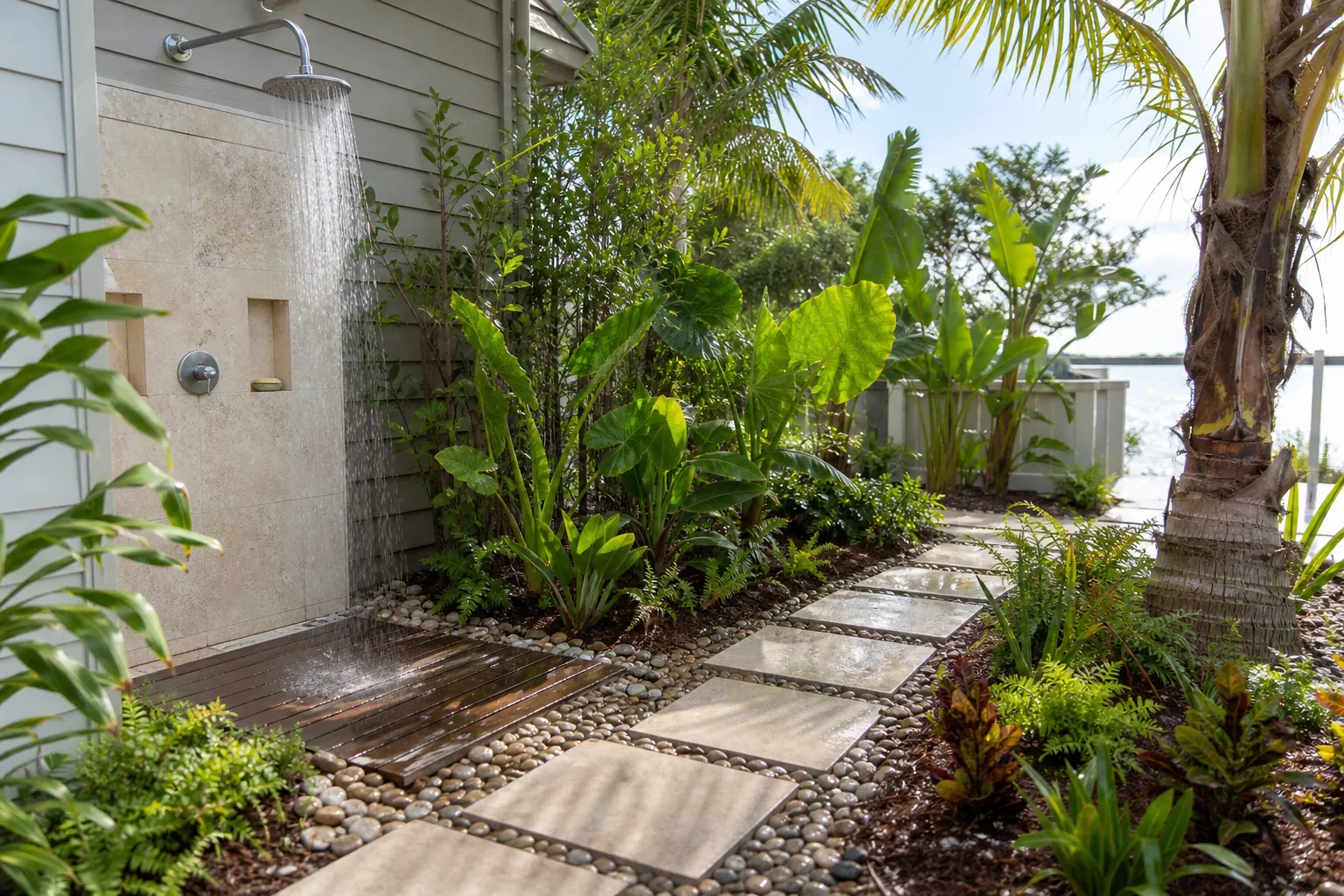
In protected locations, options may include lady palms, clusia, Simpson's stopper, cocoplum, dwarf palmetto, xanadu philodendron, cordyline, bromeliads, and certain gingers. Coastal sites need plants with suitable salt tolerance. Inland properties may offer a broader palette but can experience colder winter temperatures.
Before selecting plants, consider these practical factors:
- Mature size: Leave enough room for foliage without crowding the shower entrance or plumbing.
- Light exposure: Match each species to full sun, filtered light, or shade.
- Moisture tolerance: Keep drought-preferring plants away from regular overspray.
- Salt tolerance: Account for coastal wind, salt spray, and chlorinated pool water.
- Leaf drop: Avoid placing heavy-shedding plants where debris could clog drains.
- Root behavior: Choose plants unlikely to interfere with pipes, paving, or foundations.
- Texture: Keep thorny, sharp, or irritating foliage away from bare skin and narrow paths.
- Cold tolerance: Select plants appropriate for the property's USDA hardiness zone.
Layering plants creates a more natural result. Taller shrubs or palms can form the background, medium-height foliage can soften the enclosure, and low groundcovers can define edges. This approach adds privacy without making the space feel boxed in.
Create privacy without blocking airflow
Privacy is usually the main design concern. Dense hedges can work, but they may take time to fill in and can restrict airflow if planted too close together. Poor circulation keeps foliage and surfaces wet, which can increase mildew and maintenance.
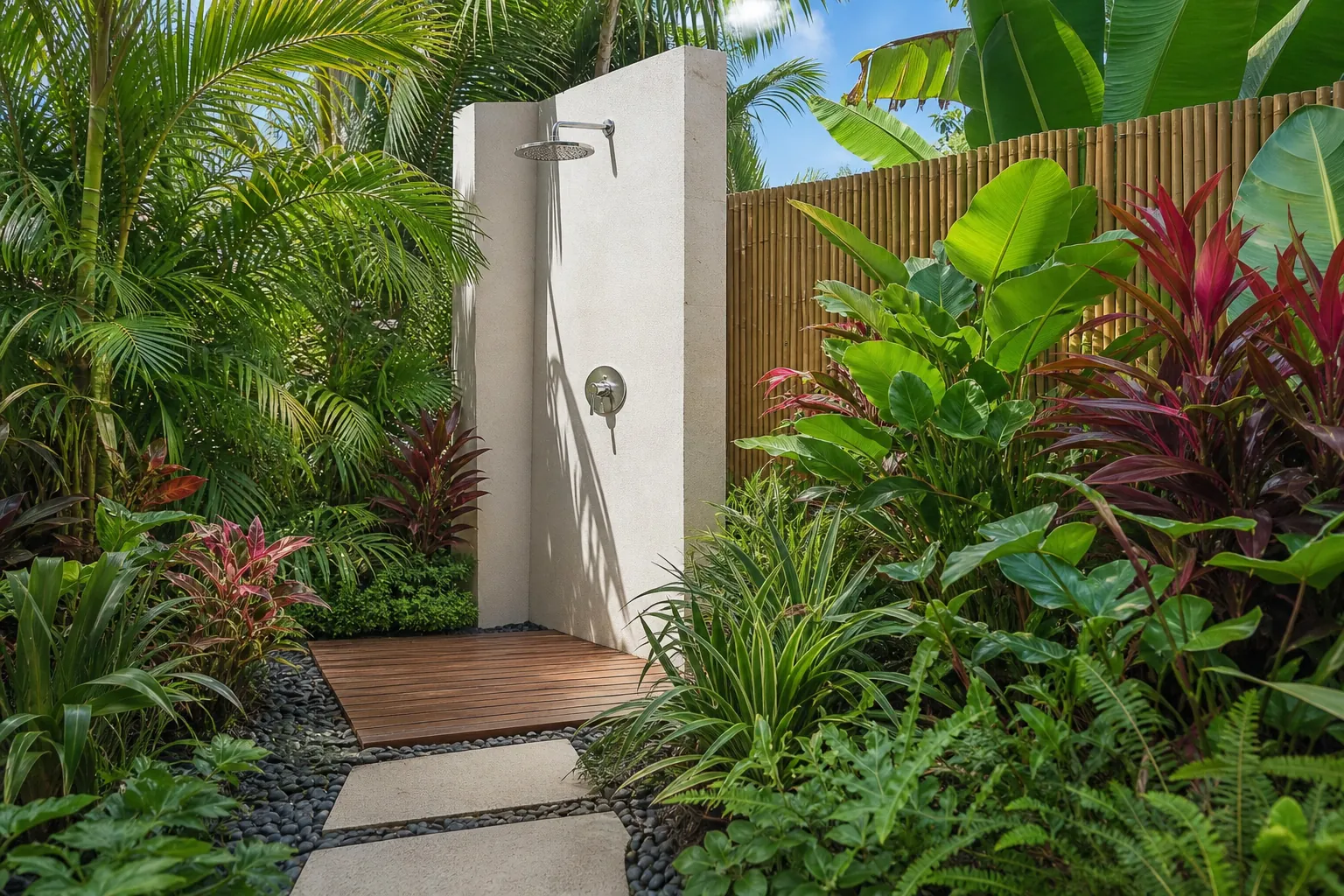
A balanced design often combines plants with a structural screen. Horizontal wood slats, composite panels, masonry walls, decorative metal, or outdoor-rated lattice provide immediate coverage. Planting in front of or beside the screen softens its appearance and helps the shower blend into the landscape.
Study sightlines from neighboring homes, streets, pool areas, and second-story windows. A screen does not always need to surround the entire shower. Strategic panels and layered greenery can block key views while preserving breezes and natural light.
Allow convenient access for plumbing repairs and pruning. Plants placed directly against valves or pipes may look attractive at first but become a problem when maintenance is needed.
Select safe, durable surfaces
Florida heat and frequent moisture can be hard on outdoor materials. Walking surfaces should provide traction when wet and remain comfortable under bare feet. Textured porcelain pavers, natural stone with an appropriate finish, composite decking, and properly installed concrete are common choices.
Loose gravel can support drainage and provide a relaxed coastal look, but it should be contained with edging. Select smooth, stable material that will not shift excessively or hurt bare feet. A solid stepping area inside the shower may improve comfort while gravel handles runoff around it.
Wood can create warmth, but species, fasteners, sealing, and ventilation matter in humid conditions. Untreated or poorly installed boards may warp, splinter, or deteriorate. Any material should be evaluated for slip resistance, heat retention, maintenance, and compatibility with the home's architecture.
Use mulch and edging carefully
Mulch gives planting beds a finished appearance and helps moderate soil moisture. However, lightweight mulch may wash into the shower drain during heavy Florida rain. Keep it outside the main splash zone and use edging to hold it in place.
Rock can be effective around wet areas, especially when coordinated with a drainage layer. It still needs maintenance because leaves and organic debris collect between stones. Landscape fabric may reduce mixing with the soil, but it should not be treated as a permanent solution for weeds.
Clean bed lines and restrained material choices usually create a calmer design. Repeating the same stone, paver, or edging used elsewhere on the property helps the shower feel connected to the overall landscape.
Add lighting and practical finishing details
Low-voltage lighting makes an outdoor shower safer after sunset and highlights tropical foliage. Use fixtures rated for wet outdoor locations, and position them to illuminate steps, pathways, controls, and entrances without shining into neighbors' windows. Electrical work near water should always meet current codes.
Hooks, a small shelf, a towel bar, and a bench can make the space more functional. Choose corrosion-resistant hardware, particularly near the coast. A nearby hose bib, accessible shutoff, and removable drain cover can simplify cleaning and seasonal maintenance.
Irrigation should be adjusted to account for shower overspray. Plants receiving regular runoff may need less supplemental water, while screening plants outside the splash zone may still require consistent irrigation during establishment.
Plan for simple long-term maintenance
A well-designed outdoor shower landscape should be easy to keep clean. Maintain clearance around paths, trim plants before they obstruct fixtures, remove fallen leaves from drainage areas, and periodically check for standing water. Rinse hardscape as needed to control soap residue and organic buildup.
Tropical Yards can design a Florida-friendly setting that balances privacy, drainage, plant health, and everyday comfort. For help planning or improving the landscape around your outdoor shower, call 772-267-1611 to discuss your property and goals.
Call 772-267-1611 to talk through next steps.