Landscaping around screen enclosures in Florida
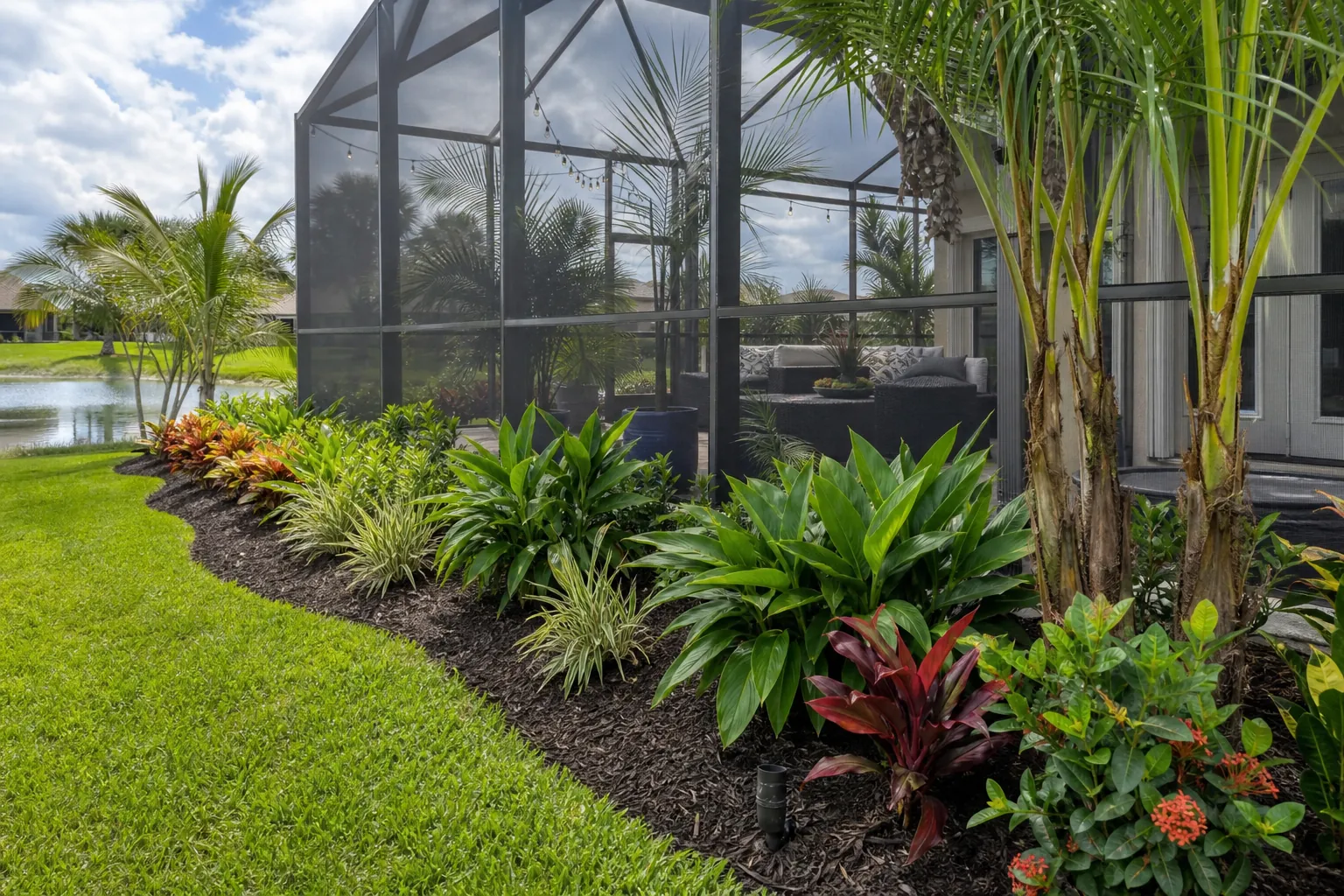
A screen enclosure makes a Florida patio or pool more comfortable, but the surrounding landscape determines how naturally it fits into the yard. Thoughtful planting can soften the structure, add privacy, frame outdoor views, and bring tropical color close to the living area.
Landscaping around screen enclosures in Florida also requires practical planning. Plants must tolerate intense sun, seasonal rain, sandy soil, humidity, and occasional drought. Their roots and branches should remain a safe distance from screens, footings, pool equipment, and walkways. A well-designed plan balances a lush appearance with easy access and manageable upkeep.
Plan Around The Enclosure Before Choosing Plants
Start by walking around the enclosure at different times of day. Note where the ground receives full sun, filtered light, or deep shade. A south- or west-facing screen wall may create a hot planting zone, while the area beside a covered lanai can remain shaded and moist.
Measure the planting space from the enclosure to nearby fences, paths, drains, and property lines. Use each plant's mature width, not its size at the nursery, to determine spacing. Leaving an access strip beside the structure makes screen cleaning, repairs, pressure washing, and pest inspections easier.
Consider views from inside the enclosure as well. Low plants can preserve an open view of the yard, while layered shrubs can screen a neighboring property or equipment area. Place focal plants where they can be enjoyed from seating and dining spaces without blocking airflow.
Select Florida-Friendly Plants For Each Exposure
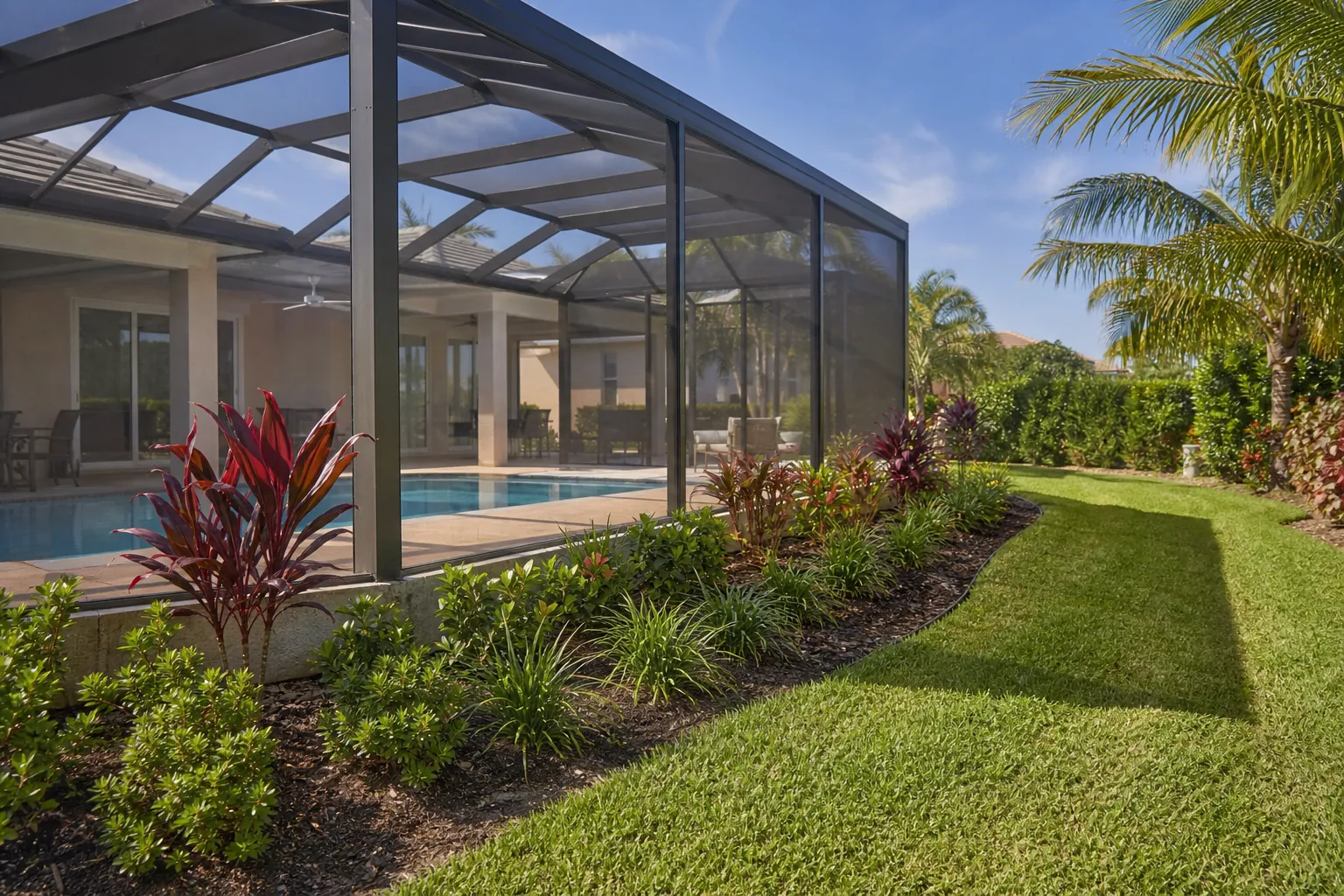
Plants near a screen enclosure should suit the exact light and moisture conditions of the site. Compact varieties generally work better than large trees or aggressive shrubs. They require less pruning and are less likely to press against mesh panels.
For sunny areas, consider dwarf ixora, coontie, muhly grass, lantana, pentas, society garlic, or compact clusia where appropriate. These plants can provide color, texture, or evergreen structure. Some also support pollinators, so position flowering plants far enough from doors and high-traffic areas to reduce close encounters with bees.
In partial shade, options may include bromeliads, cast iron plant, liriope, flax lily, dwarf schefflera, and selected gingers. Plant selection should reflect the region of Florida, because cold tolerance, salt exposure, soil drainage, and local pest pressures vary between coastal, central, and southern areas.
A useful enclosure-side planting plan may include:
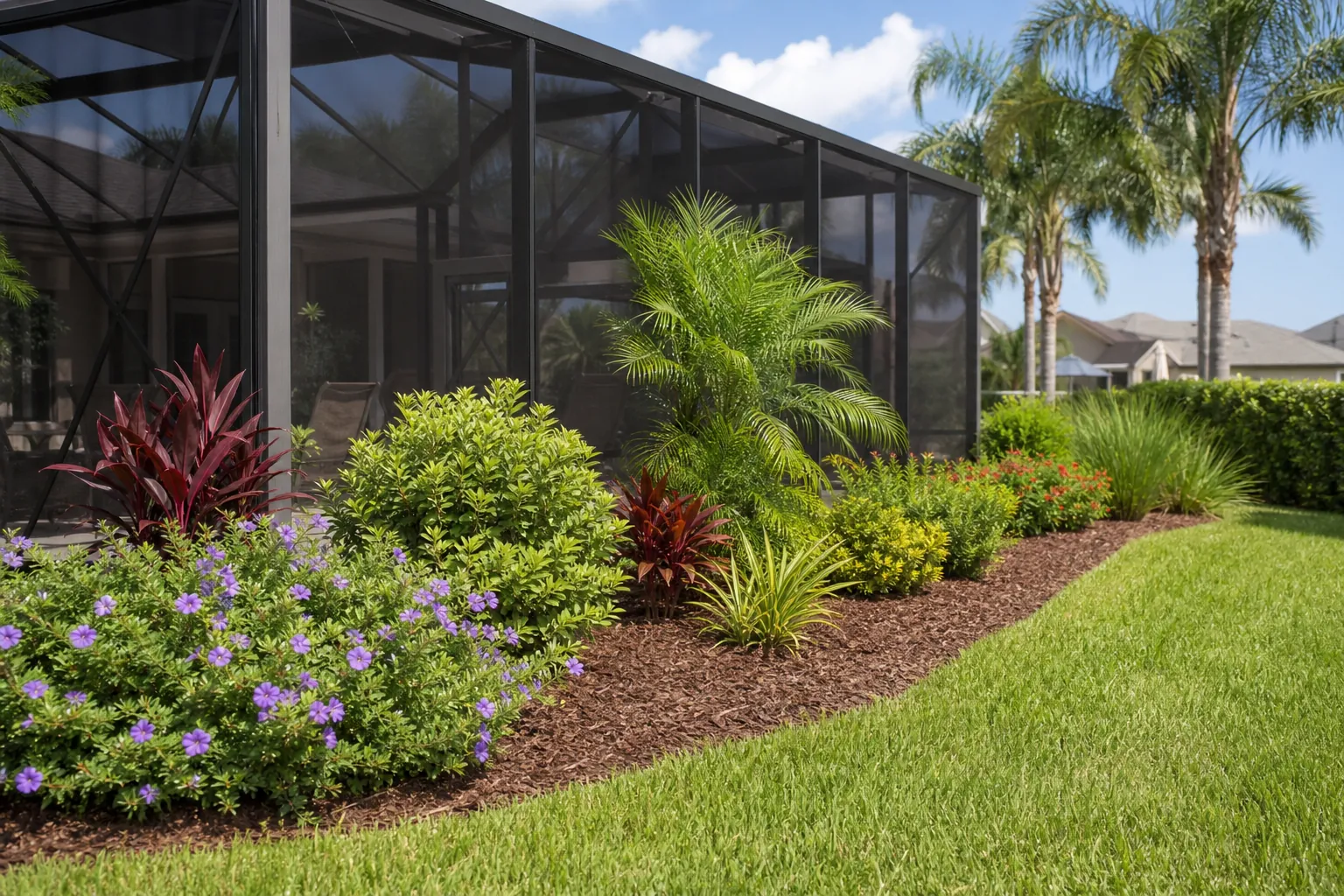
- A low ground layer: Use compact plants to cover bare soil, define bed edges, and reduce splashback during heavy rain.
- A middle layer: Add small shrubs, ornamental grasses, or foliage plants for fullness without crowding the screen.
- Occasional accents: Feature bromeliads, crotons, bird of paradise, or other suitable tropical plants in controlled locations.
- Evergreen structure: Choose well-behaved shrubs that maintain their form and provide privacy throughout the year.
- Clear service zones: Keep plants away from doors, pool pumps, utility boxes, drainage outlets, and screen fasteners.
Protect Screens, Foundations, And Pool Systems
Avoid planting large trees directly beside an enclosure. Expanding trunks, surface roots, falling limbs, and constant leaf litter can create long-term problems. Palms also need careful placement. Although their roots are generally fibrous, mature fronds and flower stalks can strike screens or fall onto the roof.
Keep thorny plants and rigid, sharply pointed foliage away from mesh. Wind can push branches into the screen, causing abrasion or punctures. Regularly trimmed soft foliage is usually safer, but plants should still have enough room to reach maturity without touching the structure.
Poolside conditions deserve extra attention. Avoid plants that drop large quantities of tiny leaves, seeds, berries, or sticky flowers near doors and deck drains. Debris increases cleaning and may enter the enclosure whenever a door opens. Plant roots should not interfere with buried plumbing, and irrigation spray should be directed away from the screen, deck, and pool water.
Manage Drainage, Irrigation, And Mulch
Florida downpours can send roof runoff into beds around a screen enclosure. Standing water may harm plants, attract mosquitoes, wash mulch onto paving, or contribute to soil movement near footings. Before planting, identify low spots and observe where water travels during rain.
Improve drainage through proper grading and plant selection rather than simply piling soil against the enclosure. Soil and mulch should not cover structural components or block weep points. Where roof runoff is concentrated, a drainage solution such as a properly routed downspout, catch basin, swale, or stone-lined channel may be appropriate.
Drip irrigation or carefully placed low-volume emitters can water roots without constantly wetting screens and walls. Group plants with similar water needs on the same irrigation zone. New landscapes need consistent moisture while roots establish, but established Florida-friendly plants may need less supplemental watering.
Apply mulch in a moderate layer to conserve moisture and limit weeds. Keep it away from plant crowns, enclosure framing, and the home's foundation. Mulch piled too deeply can hold excess moisture and conceal pest activity. In windy or runoff-prone beds, heavier mulch or decorative stone may stay in place better, provided heat and drainage are considered.
Create Privacy Without Closing In The Space
Privacy planting works best when it is layered rather than formed by one continuous wall of oversized shrubs. Use taller plants at selected sight lines, then transition to lower foliage near corners, doors, and views worth preserving. This approach feels more natural and promotes air movement around the enclosure.
Do not plant a hedge directly against the screen. Leave room to trim both sides and reach the enclosure for maintenance. Staggered groupings can provide coverage with fewer plants while adding depth. Repeating a limited palette of colors and textures also helps the landscape look calm instead of crowded.
Maintain A Clean, Balanced Border
Even low-maintenance tropical landscaping needs seasonal attention. Prune selectively to preserve natural plant forms rather than shearing everything into tight boxes. Remove branches before they contact screens, control weeds before they seed, and replace plants that consistently outgrow their locations.
Inspect irrigation after storms and check beds for erosion, clogged drains, or displaced mulch. Follow local watering rules and use fertilizer carefully, especially near pools, canals, ponds, and storm drains. Florida-friendly maintenance protects both the landscape and nearby waterways.
Tropical Yards can help create a planting plan that complements your enclosure while accounting for Florida sun, rain, access, and long-term growth. For calm, practical guidance on your outdoor space, call 772-267-1611.
Call 772-267-1611 to talk through next steps.