Should You Start a St. Augustine Landscape During the Rainy Season?
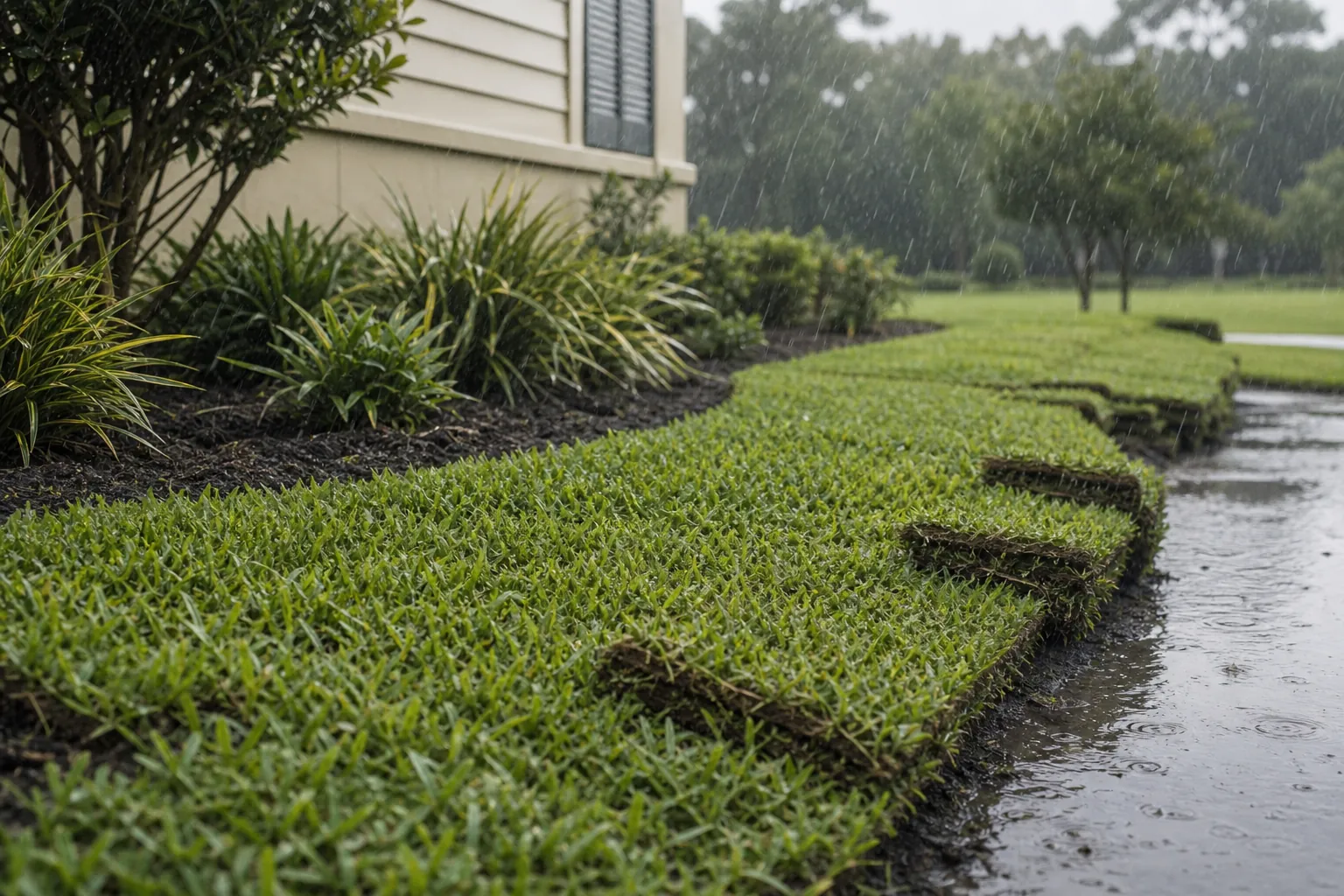
Starting a landscape during Florida’s rainy season can be practical, but rainfall alone should not determine your decision. In St. Augustine, the better question is whether the site, soil, drainage, and project timing are ready for wet conditions. Frequent rain may reduce some watering needs, yet saturated ground can delay work, damage soil structure, and stress newly placed plants. Before moving forward, use the following steps to judge whether your property is ready and what precautions your plan should include.
Begin With Drainage, Not the Weather Forecast
A rainy-week forecast provides only part of the information you need. Start by observing where water goes after a typical downpour. Walk the property once it is safe and note standing water, runoff paths, low spots, erosion, and water collecting near structures. These observations help reveal whether the landscape can handle additional rainfall or whether drainage concerns should be addressed first.
Pay close attention to areas where plants, edging, or soil changes could redirect water. A landscape should not trap runoff against a building or send it toward a neighboring property. If puddles remain long after surrounding ground has drained, planting immediately may expose roots to prolonged saturation. It may also make installation difficult without compacting wet soil.
Record problem areas with photos and simple measurements. Mark the direction of runoff and the approximate boundaries of persistent puddles. This creates a useful site reference and prevents decisions based on a single dry-day inspection. If drainage remains uncertain, postpone irreversible changes until the water pattern is understood.
Check Whether the Soil Is Ready for Work
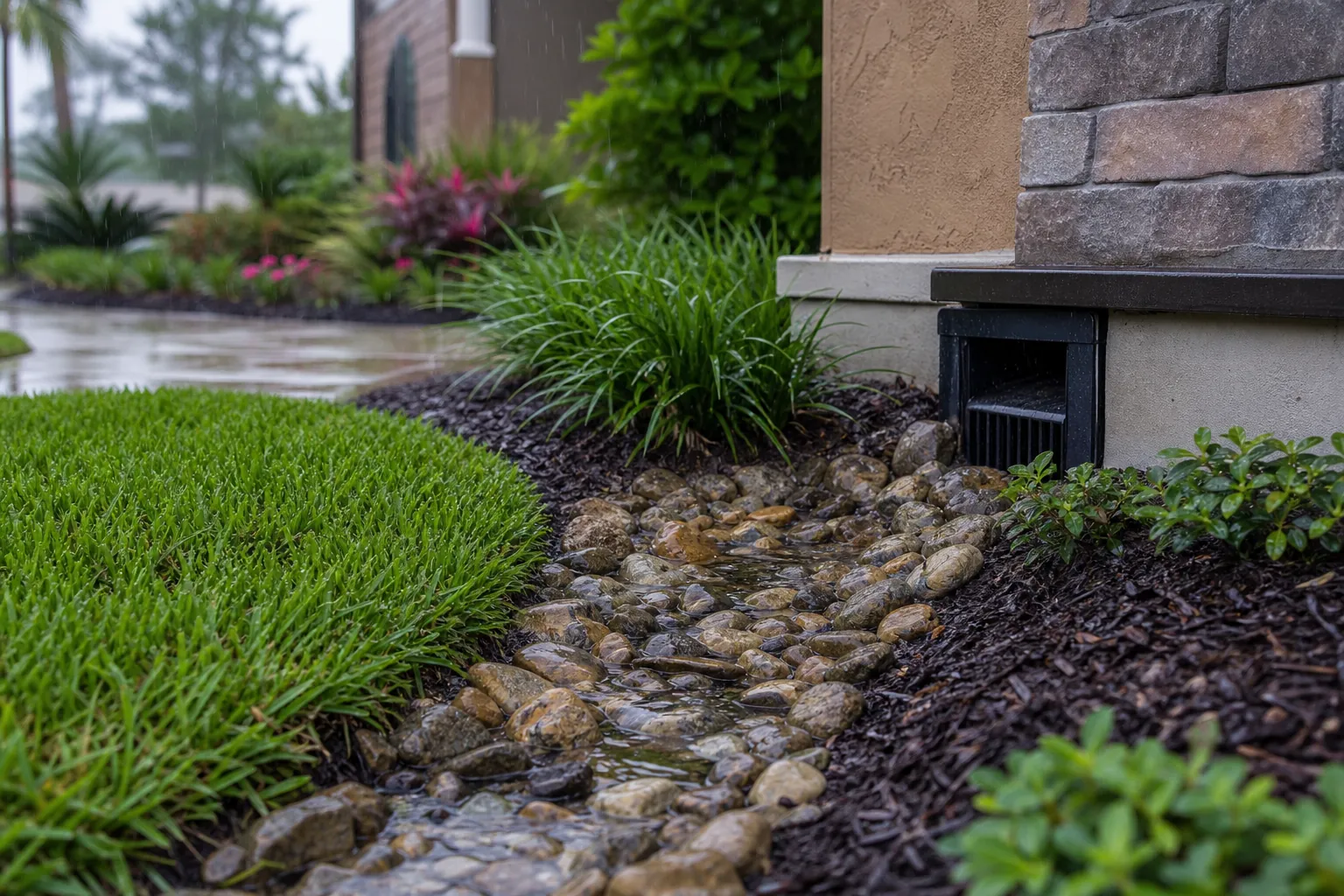
Wet soil can look workable while still being too saturated for digging, grading, or repeated foot traffic. Before beginning, test several areas rather than relying on one convenient spot. Take a small handful of soil from below the surface and squeeze it gently. If it smears heavily, releases water, or stays in a dense ball when handled, give the site more time to drain.
Working saturated ground may compress the soil and reduce the open spaces that allow air and water to move around roots. Footsteps, wheelbarrows, and equipment can also create ruts that later collect water. Those effects may remain after the rain stops, making careful timing more important than simply choosing a date on the calendar.
Use these practical checks before proceeding:
- Inspect low areas after rainfall and again after a drying period.
- Pause digging when soil sticks heavily to tools or shoes.
- Keep materials and repeated traffic away from soft ground.
- Confirm that runoff has a clear path through the property.
- Schedule flexible work windows rather than one fixed wet-weather date.
Choose Plants and Placement for the Actual Site
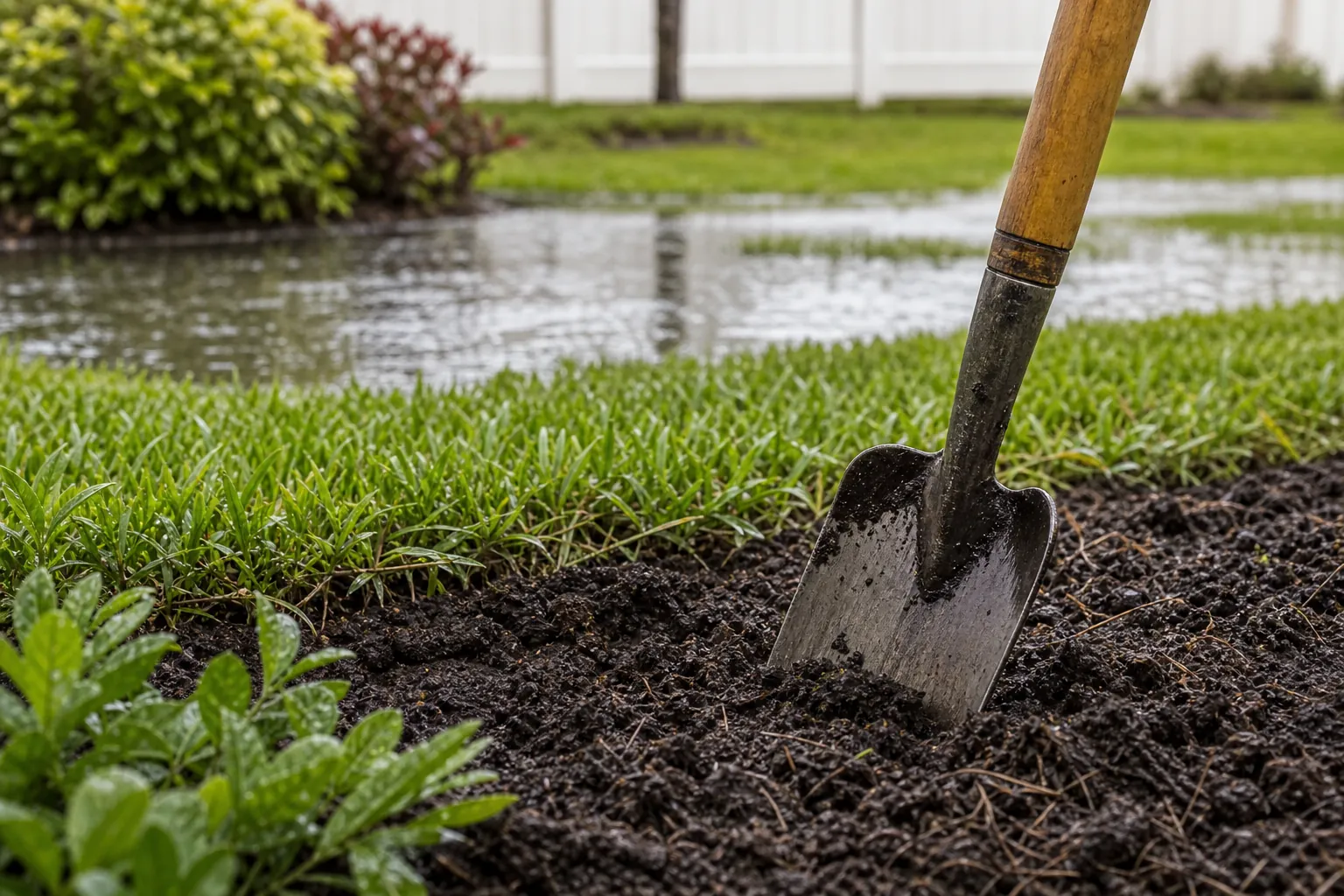
Rainy-season planting decisions should be based on each part of the property, not a general assumption that every plant benefits from more rain. A sunny, fast-draining area may behave very differently from a shaded low spot only a few feet away. Evaluate light, exposure, drainage, mature plant size, and nearby hard surfaces before choosing placement.
Avoid putting plants that need quicker drainage in locations where water regularly collects. Likewise, do not select a plant solely because it appears healthy at the time of purchase. Consider how it will fit the space as it grows and whether its location allows practical access for future care. Crowding plants to create an immediate finished look can reduce airflow and create unnecessary competition.
Also consider seasonal exposure beyond heavy rain. Young palms and other plants may need attention when colder weather arrives. If palms are part of your longer-term plan, review this guide on how to protect young palms from frost in St. Augustine. Planning for both wet and cold periods supports better placement decisions.
Build Flexibility Into Installation and Early Care
A rainy-season project should include clear pause points. Heavy rain on the planned installation day does not automatically mean the entire project must be abandoned, but it may mean delaying soil work until conditions improve. Separate tasks that require dry, stable ground from planning, layout, and material preparation that can occur without disturbing saturated soil.
Once plants are in place, do not assume rainfall reaches every root zone evenly. Tree canopies, roof overhangs, wind, and surface runoff can leave one area relatively dry while another stays soaked. Check soil moisture near the root area before adding water. Automatic watering should not continue unchanged simply because it was programmed before a storm.
Inspect the landscape after significant rainfall. Look for exposed roots, shifted mulch, leaning plants, washed-out soil, blocked runoff, and newly formed puddles. Correct minor movement early, while avoiding unnecessary traffic over soft ground. Keep mulch away from direct contact with trunks and stems, and replace only what rainfall has displaced rather than adding excessive depth.
Decide Whether to Start, Modify, or Wait
The right decision depends on current site conditions and how much flexibility the project allows. Starting may be reasonable when water drains predictably, the soil can be handled without smearing or rutting, plant locations match site conditions, and the schedule can change around storms. A phased approach can also limit disruption and make it easier to observe how completed areas respond to rainfall.
Modify the plan if runoff crosses future planting areas, materials would need to move over saturated soil, or one part of the property drains much more slowly than another. Waiting is the more cautious choice when standing water persists, erosion is active, or work would require substantial grading in wet conditions. Delaying under those circumstances is not lost time. It provides an opportunity to document drainage and refine the layout.
Before making a final decision, write down the project sequence, likely weather delays, plant locations, and post-rain inspection steps. A decision based on observed conditions is more useful than choosing rainy-season installation simply for convenience. The goal is a workable plan that respects the property’s actual water movement.
Discuss Your Rainy-Season Landscape Decision
If you are weighing whether to begin now or wait for drier conditions, call Tropical Yards at 772-267-1611. A calm review of your goals and current site conditions can help you identify the next practical step.
Call 772-267-1611 to talk through next steps.