Landscaping ideas that complement Florida bungalows
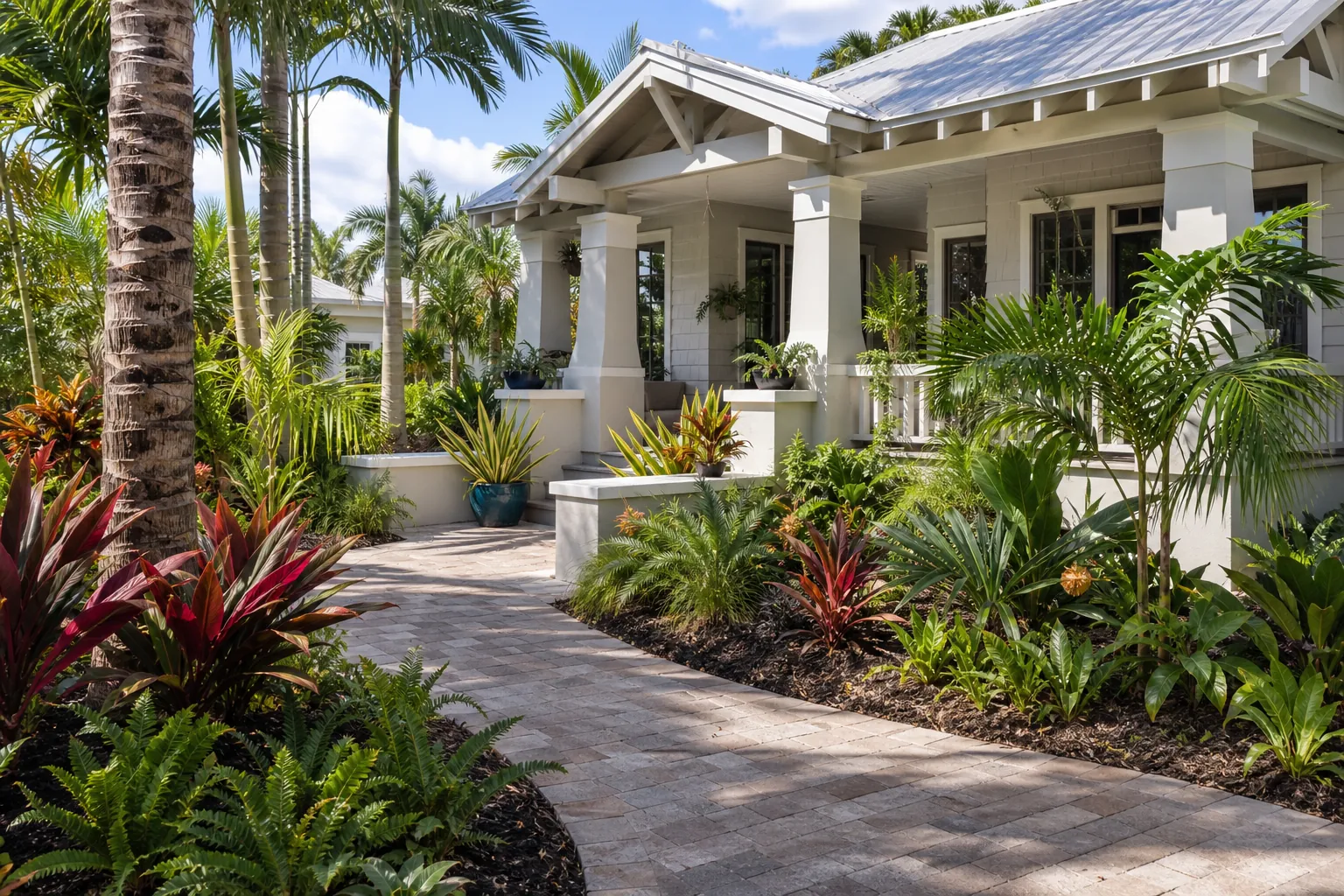
Florida bungalows have an easygoing character that deserves an equally thoughtful landscape. Wide porches, low rooflines, compact lots, and welcoming front steps all influence how the yard should look and function. The best design does not hide these features. It frames them with plants, paths, shade, and practical outdoor spaces suited to Florida’s climate.
Successful landscaping for Florida bungalows begins with proportion. Massive palms, crowded foundation beds, or oversized hedges can overwhelm a modest home. A layered plan using appropriately scaled trees, shrubs, grasses, and groundcovers creates tropical interest while keeping the architecture visible.
At Tropical Yards, we focus on outdoor spaces that feel established, comfortable, and connected to the home. Whether a bungalow sits near the coast or farther inland, its landscape should account for heat, intense rain, sandy soils, seasonal dryness, and storm conditions.
Let the bungalow guide the landscape
Begin by identifying the home’s strongest architectural features. These may include a deep front porch, tapered columns, exposed rafters, a central walkway, or colorful trim. Preserve clear views of these details instead of covering them with tall foundation shrubs.
Low and medium-height plantings usually work well beneath windows and along porch foundations. Repeating a limited selection of plants creates rhythm without making a small frontage feel busy. Taller specimens can mark corners, soften blank walls, or provide privacy where it is actually needed.
The route to the front door should remain obvious. A gently widened path, a defined edge, and plants that stay clear of the walking surface make the entry more inviting. Curves can soften a rigid lot, but they should have a purpose rather than winding unnecessarily through a compact yard.
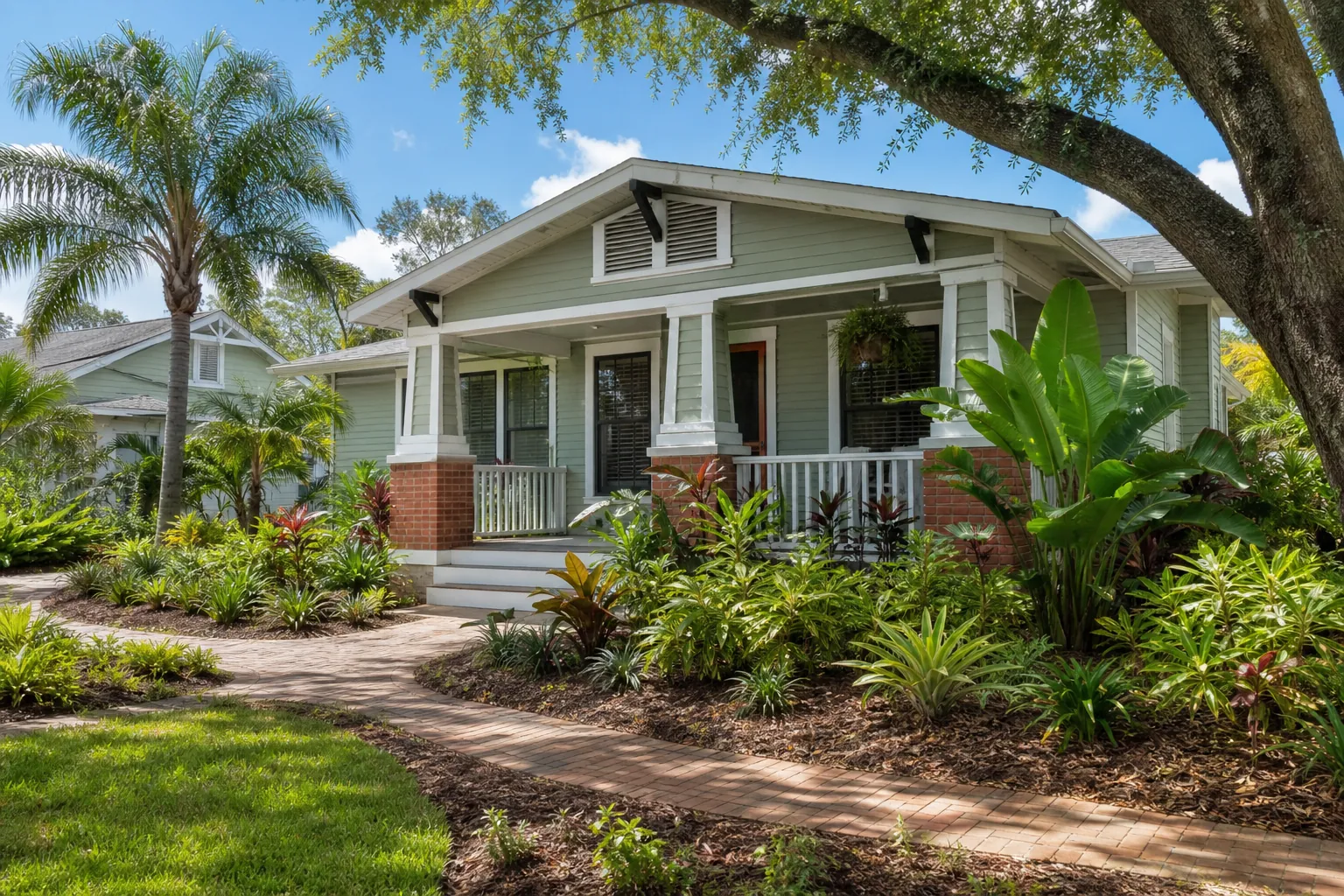
Choose tropical plants for the actual site
A tropical appearance does not require filling every bed with thirsty or delicate plants. Florida offers many choices that provide bold leaves, colorful flowers, and layered texture. Plant selection should be based on the property’s USDA hardiness zone, sun exposure, drainage, salt conditions, and available maintenance time.
Native and Florida-friendly plants can form the dependable structure of the garden. Accent plants can then supply seasonal color or a more dramatic tropical effect. Before planting, confirm mature height and width. Correct spacing improves airflow, reduces constant trimming, and helps individual plants develop a natural shape.
Useful options may include:
- Small trees: Simpson’s stopper, pigeon plum, and yaupon holly can provide scale, habitat value, and light shade where conditions are suitable.
- Palms and cycads: Sabal palm, needle palm, coontie, and appropriately sized accent palms add strong form without automatically dominating the house.
- Flowering shrubs: Firebush, wild coffee, hibiscus, and ixora offer color, although cold tolerance and site conditions vary across Florida.
- Texture plants: Dwarf palmetto, flax lily, ornamental grasses, and bromeliads create contrast beneath trees or near porches.
- Groundcovers: Sunshine mimosa, perennial peanut, and low-growing jasmine can reduce exposed soil when matched carefully to light and foot traffic.
Plant availability and performance differ between northern, central, and southern Florida. Local conditions should always guide the final palette.
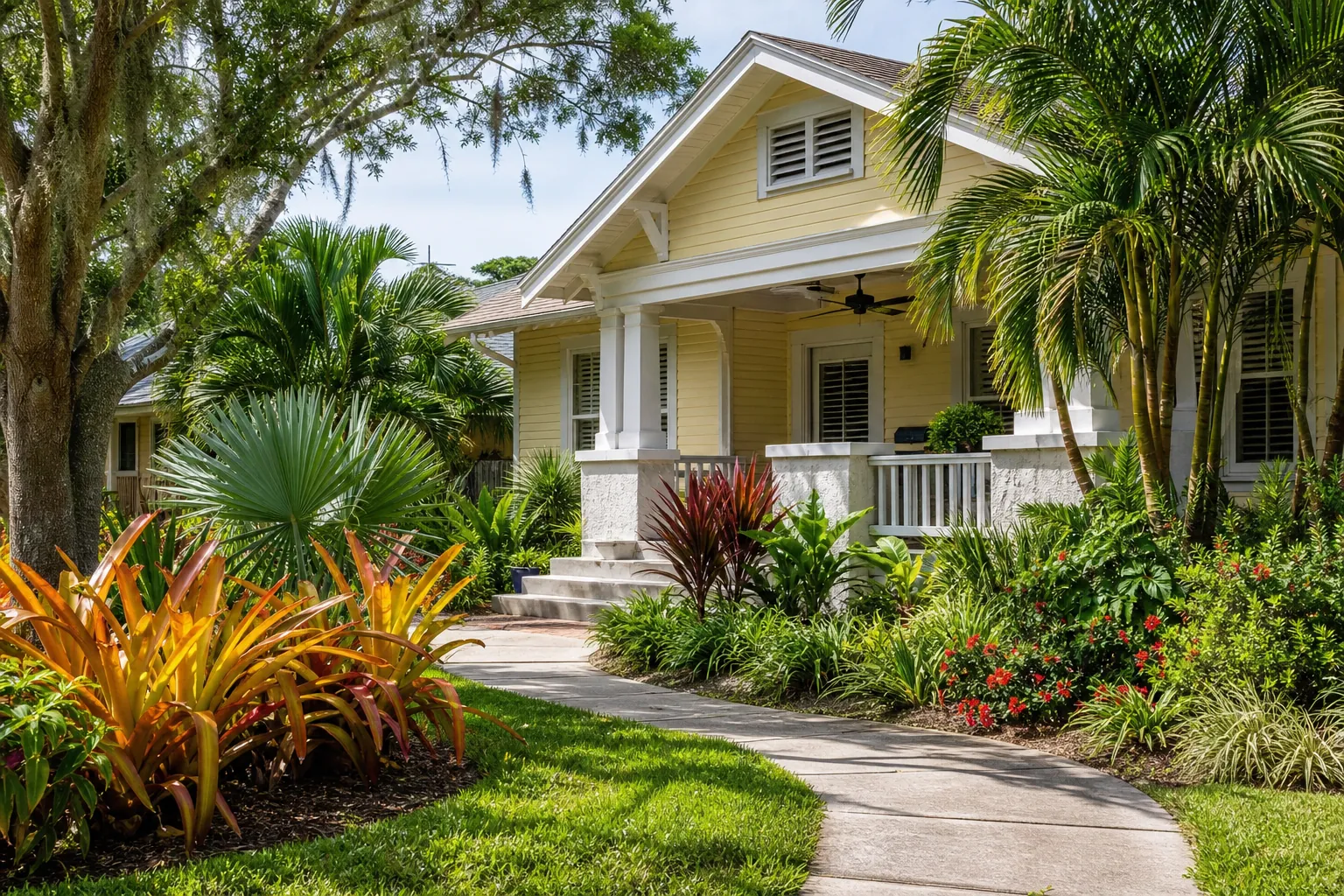
Create shade without concealing the home
Shade can make a bungalow porch and yard noticeably more comfortable. A well-positioned canopy tree may reduce afternoon heat, protect understory plants, and create a pleasant transition between street and entry. Placement matters because roots, branches, utilities, roofs, and foundations all require adequate clearance.
Avoid planting large trees too close to the structure simply for quick shade. Select species with a mature size appropriate for the lot and allow enough room for responsible pruning. Palms should also be located so falling fronds or fruit do not create problems over walkways, parked vehicles, or the roof.
Layering below the canopy strengthens the tropical effect. Medium shrubs, ferns, foliage plants, and groundcovers can turn a shaded side yard into a garden passage. Keep dense growth away from siding and maintain access for inspections, painting, pest control, and storm preparation.
Manage Florida rain and seasonal dryness
Florida landscapes must often handle heavy downpours followed by dry periods. Watch how water moves across the property before changing grades or installing beds. Water should drain away from the home, and planting should not block foundation vents or trap moisture against walls.
Where runoff collects, a shallow rain garden or planted drainage area may help slow and filter water, provided the site is appropriate and local requirements are followed. Permeable pavers, gravel set over a suitable base, and spaced stepping stones can also reduce the amount of fully sealed surface.
Group plants by water needs and use efficient irrigation rather than spraying every area equally. Drip or low-volume irrigation can serve beds effectively, while established drought-tolerant plants may need only supplemental watering. Apply mulch in a moderate layer, keeping it away from trunks, stems, siding, and the foundation.
Design useful outdoor rooms for a compact lot
Bungalow properties often benefit from several small, clearly defined spaces instead of one oversized patio. A porch-facing seating area, shaded side path, herb bed, or private backyard table can make the lot feel larger and more useful.
Use materials that relate to the home. Brick, shell-toned gravel, natural stone, and warm concrete pavers can suit bungalow architecture, depending on its age and finish. Repeating one paving material or border detail gives separate spaces a cohesive appearance.
Privacy should feel layered rather than walled in. A combination of open fencing, shrubs, and small trees can screen neighboring views while preserving airflow. Low-voltage path lighting can improve nighttime visibility, but fixtures should be shielded and restrained. Soft light on steps and gathering areas is usually more effective than illuminating the entire yard.
Plan for maintenance and storm resilience
A beautiful design should remain manageable after installation. Provide access to hose bibs, air-conditioning equipment, utility meters, gates, and drainage features. Leave enough space between plants to prune selectively and remove storm debris without damaging neighboring specimens.
Healthy trees with sound structure are generally better prepared for severe weather than neglected or improperly cut trees. Avoid topping. Use qualified tree professionals for structural pruning, risk assessment, or work near buildings and power lines. Before a storm, secure containers, lightweight furniture, and loose garden objects.
Regular maintenance can be simple: inspect irrigation, remove invasive weeds, refresh mulch only when needed, and prune plants according to their growth habits. These steps preserve the relaxed appearance of the landscape without allowing it to become overgrown.
Bring the bungalow and garden together
The most appealing bungalow landscapes feel natural to both the home and the region. They reveal the porch, guide visitors comfortably, provide usable shade, and rely on plants selected for real site conditions. Careful spacing and water planning also reduce avoidable maintenance.
If you are considering landscaping for a Florida bungalow, Tropical Yards can help shape a tropical plan around your architecture, priorities, and property conditions. Call 772-267-1611 to discuss a practical, inviting landscape for your Florida home.
Call 772-267-1611 to talk through next steps.