Landscaping for Florida duplexes that works for both households
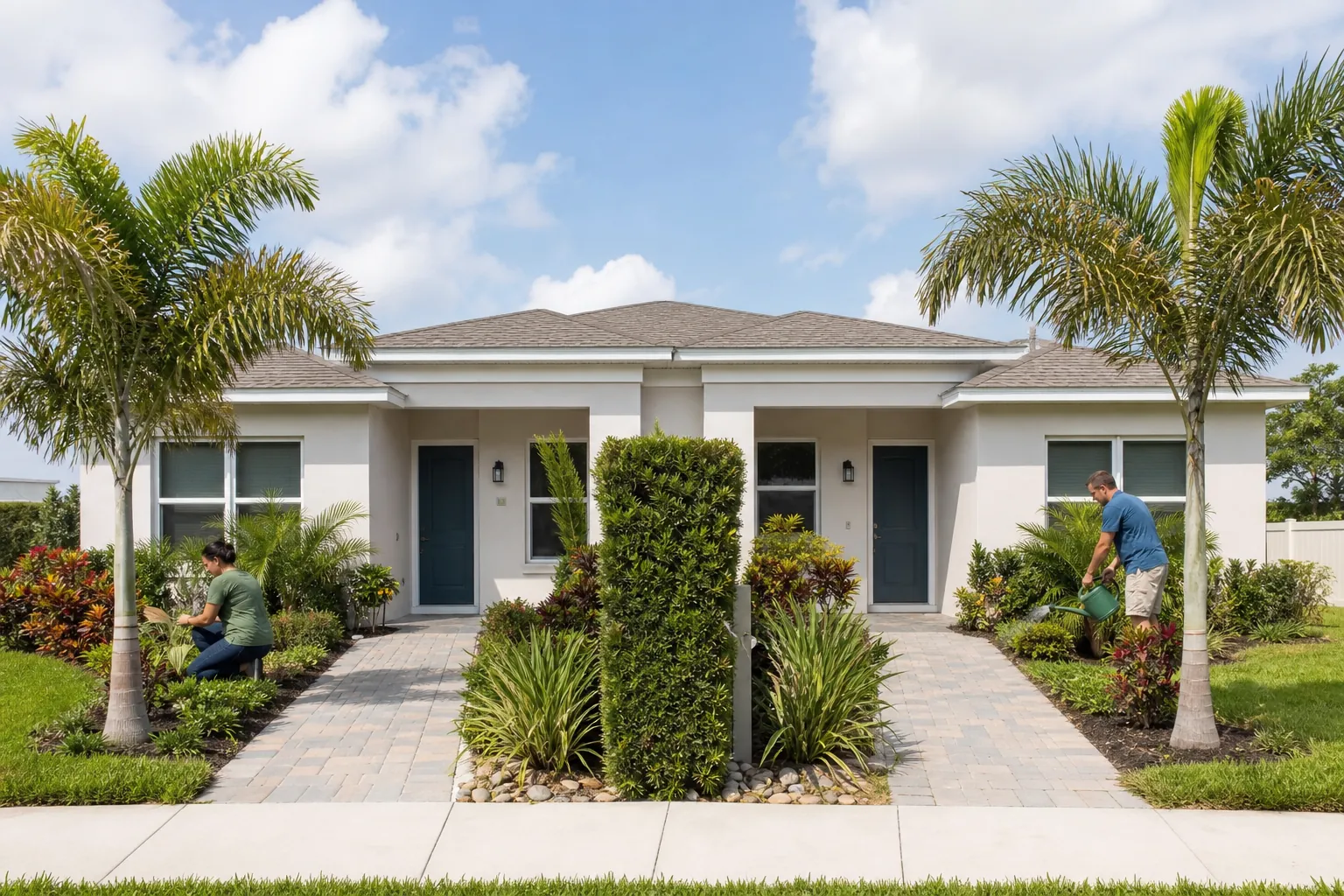
A duplex landscape has to serve two households while still looking like one thoughtfully designed property. In Florida, that challenge comes with intense sun, heavy seasonal rain, sandy soils, salt exposure in some areas, and year-round plant growth. A successful plan balances curb appeal with privacy, drainage, maintenance, and fair access to shared outdoor areas.
At Tropical Yards, we approach landscaping for Florida duplexes as both a design project and a practical property-management decision. The goal is not simply to add tropical plants. It is to create clear, comfortable spaces that remain attractive without becoming difficult or expensive to maintain.
Start With A Unified Plan For The Property
Duplexes often look disjointed when each side is landscaped independently. Different edging, unrelated plant palettes, and mismatched entry treatments can make the building feel smaller and less polished. A unified plan gives the entire property a stronger identity while allowing each household to have a distinct entrance or private area.
Begin with repeated elements across the frontage. Matching foundation plants, consistent mulch or decorative stone, and coordinated pathway materials create visual continuity. Individuality can then be introduced through porch containers, small accent beds, or different colors within the same plant family.
Symmetry can work well for duplexes with mirrored architecture, but it is not mandatory. An asymmetrical design may better accommodate driveways, utility boxes, mature trees, or drainage patterns. The important point is that both sides feel intentional and balanced.
Choose Florida-Friendly Plants With Manageable Growth
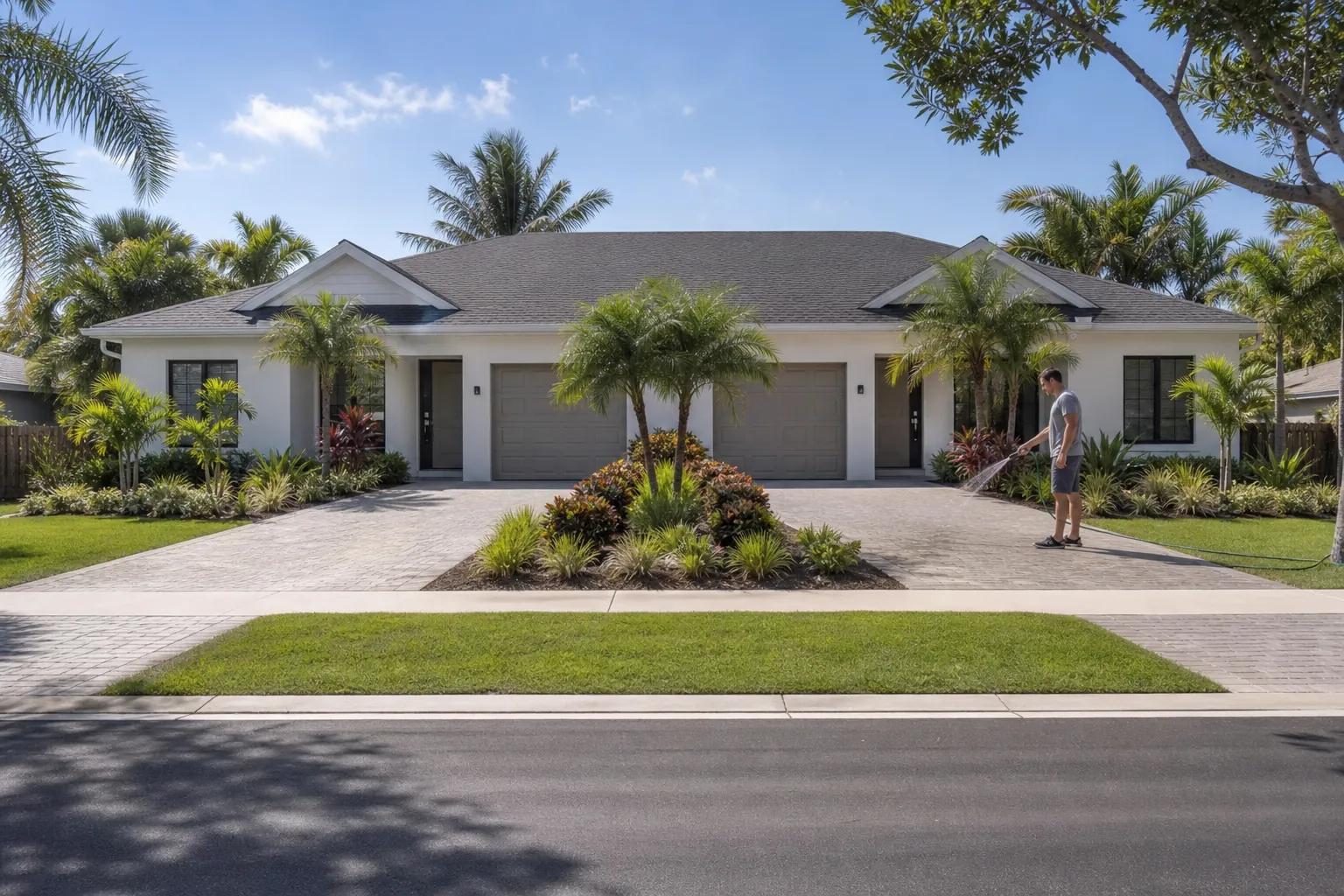
Tropical landscaping can quickly overwhelm a compact duplex lot if plants are selected only for their appearance at installation. Consider mature height, width, root behavior, leaf drop, and pruning needs before placing anything near walkways, windows, roofs, or shared property lines.
Depending on the specific Florida region and site conditions, useful options may include coontie, dwarf yaupon holly, Simpson's stopper, muhly grass, firebush, saw palmetto, bromeliads, and selected varieties of clusia. Native and Florida-friendly plants are often better adapted to local heat and rainfall, but every species still needs the right amount of sun, water, and space.
A layered planting design typically works best. Use low groundcovers near paths, medium shrubs for structure, and carefully positioned palms or small trees for height. Avoid packing plants tightly for an instant full look. Proper spacing improves airflow, reduces pruning, and helps prevent moisture-related problems.
Create Privacy Without Building A Green Wall
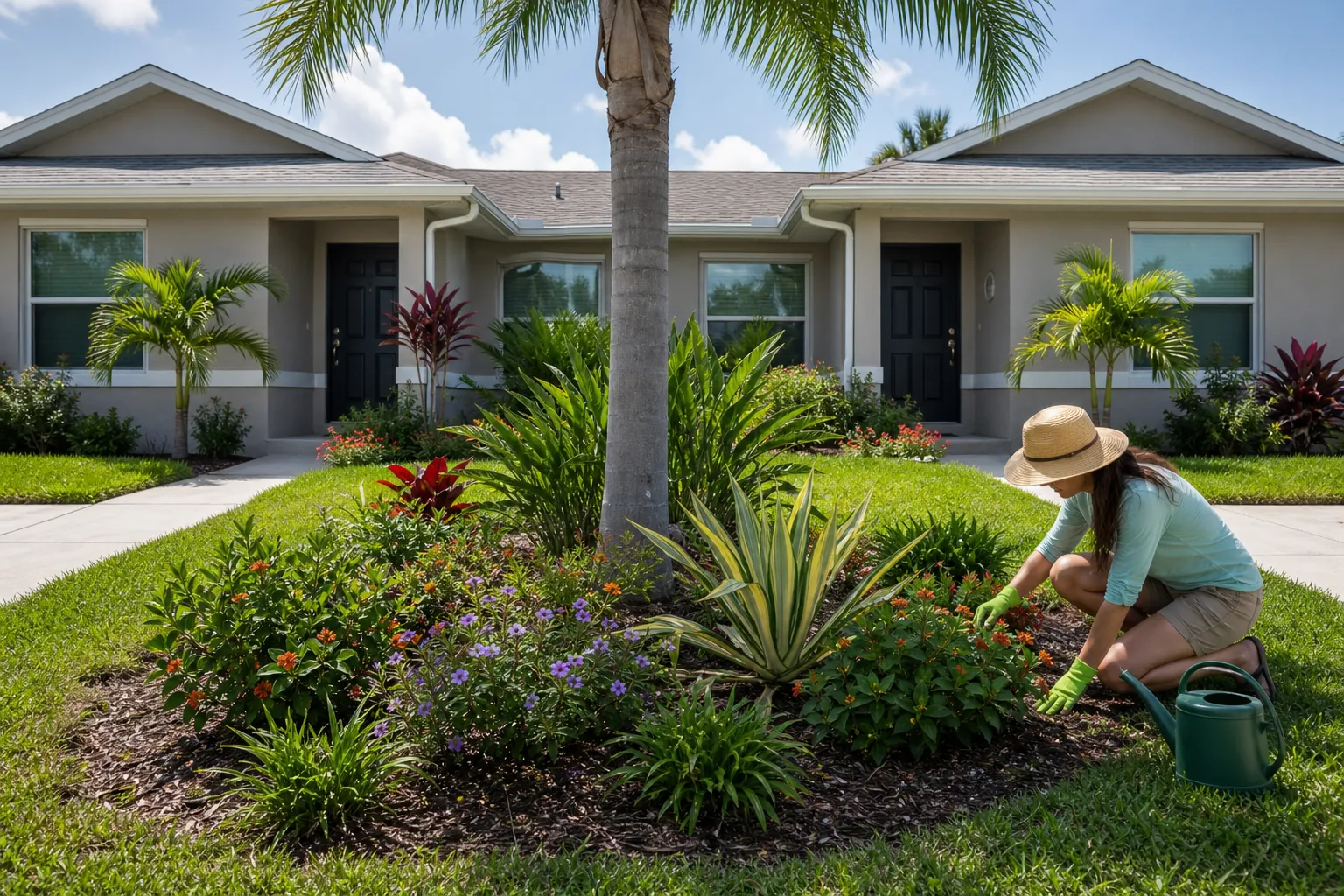
Privacy matters when patios, windows, and side yards sit close together. Dense hedges can help, but an oversized hedge may block breezes, create deep shade, and demand frequent trimming. A more flexible solution combines plants with screens, fencing, or trellises where local rules allow.
Place screening where it solves a specific sightline rather than surrounding the entire property. For example, a compact hedge may separate two rear seating areas, while an ornamental tree can soften views between second-story windows. Trellises with suitable vines can add privacy in narrow areas where broad shrubs would restrict movement.
Keep security in mind. Entry walks, address numbers, and parking areas should remain visible and well lit. Plants near doors and windows should be maintained at appropriate heights so they do not create hidden areas or interfere with access.
Plan For Rain, Irrigation, And Drainage
Florida downpours can expose grading problems quickly. Water may collect between units, flow across walkways, or remain near the foundation. Before adding new beds, observe where water moves during a storm and identify low spots, downspout discharge points, and compacted soil.
Drainage solutions depend on the property, but they may include correcting grade, extending downspouts, creating shallow swales, installing suitable drains, or using rain gardens in approved locations. Any work that affects structures, neighboring properties, easements, or municipal systems should be evaluated by qualified professionals and completed according to local requirements.
Irrigation should match separate plant zones rather than watering the entire landscape equally. Turf, shrubs, and drought-tolerant beds may have very different needs. Inspect coverage regularly because blocked heads and overspray can waste water, stain walls, and leave some plants too dry while others remain saturated.
Make Shared Spaces Easy To Understand
Even an attractive landscape can cause frustration if residents are unsure who uses or maintains each area. Design can provide subtle visual cues. Separate paths, small planting borders, and clearly positioned seating areas help define individual zones without making the yard feel divided.
When planning shared and private areas, consider these practical features:
- Distinct entrances: Give each front door a direct, well-lit walkway and an unobstructed address marker.
- Consistent materials: Repeat pavers, edging, mulch, and plant groups so both sides belong to one property.
- Screened utilities: Soften views of meters, air-conditioning equipment, and bins without blocking required service access or airflow.
- Defined maintenance zones: Clarify which beds, lawn sections, and irrigation components are shared or assigned to each unit.
- Private seating: Position patios or small garden areas to reduce direct views and noise between households.
- Safe circulation: Keep branches, thorns, roots, and irrigation spray away from walkways, parking spaces, and gates.
- Pet considerations: Select noninvasive, site-appropriate plants and verify potential toxicity when pets use the yard.
Reduce Routine Maintenance From The Beginning
Low maintenance does not mean no maintenance. Florida landscapes grow rapidly during warm, wet months, and storms can create additional cleanup. However, thoughtful design can reduce repetitive work and help the property stay presentable between service visits.
Limit tiny turf strips that are difficult to mow and irrigate. Use defined bed lines that allow efficient trimming, and choose groundcovers or mulch for awkward corners. Keep large palms and trees far enough from buildings to reduce conflicts with roofs, gutters, and utility lines as they mature.
A simple care plan is especially valuable for rentals or properties with shared ownership. It should identify pruning schedules, irrigation responsibilities, fertilization practices, storm preparation, and procedures for reporting leaks or damaged plants. Consistent care protects the design and prevents one side from looking neglected.
Build Curb Appeal That Benefits Both Units
The strongest duplex landscapes combine a cohesive street view with comfortable, functional spaces for each household. A restrained plant palette, clear entrances, selective screening, and reliable drainage generally deliver more lasting value than an overcrowded collection of decorative plants.
Tropical Yards can help evaluate your Florida duplex and develop a landscape suited to its sunlight, layout, maintenance goals, and shared-use needs. For a calm, practical conversation about your property, call 772-267-1611.
Call 772-267-1611 to talk through next steps.