Practical landscaping ideas for Florida mobile homes
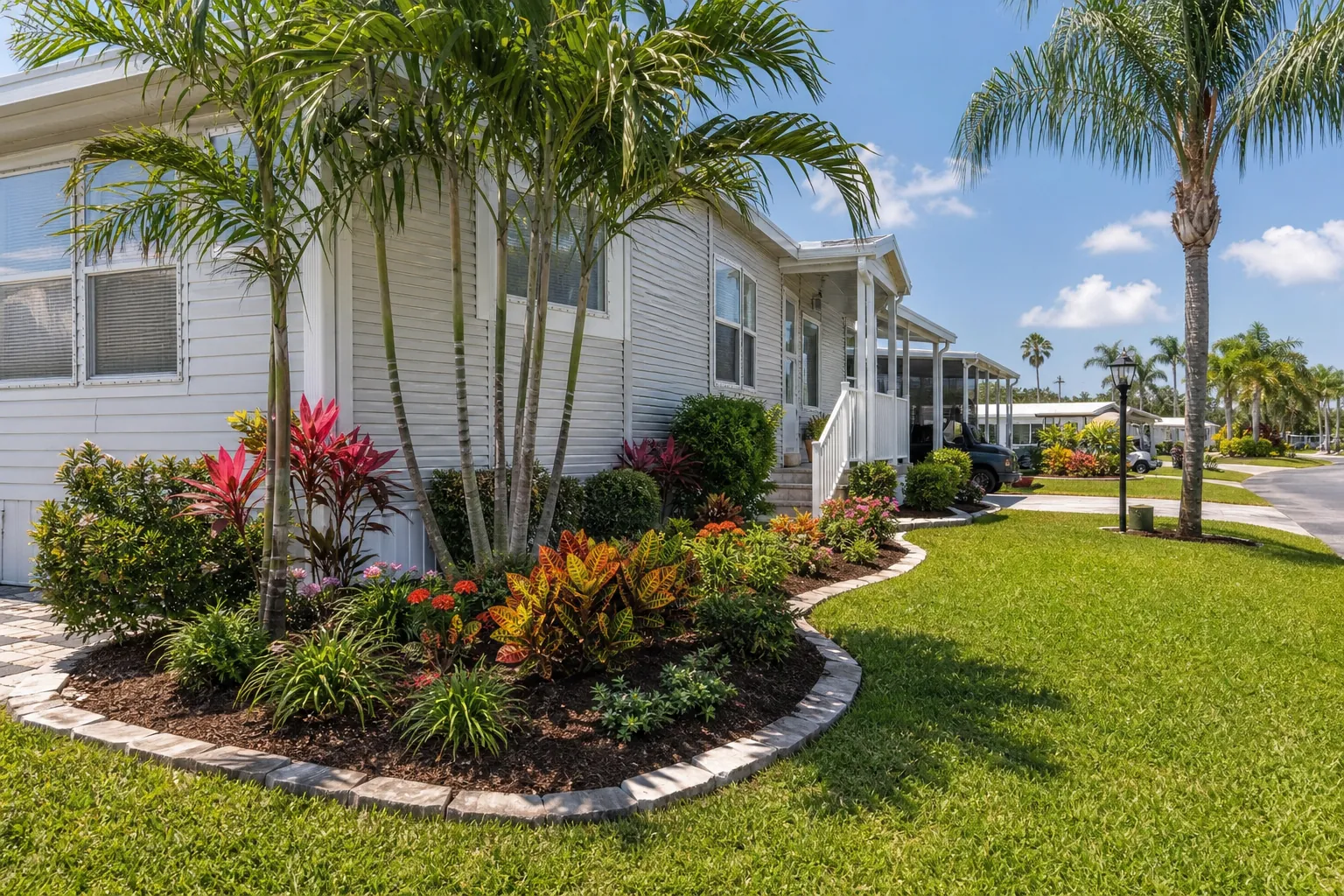
A well-planned landscape can make a mobile home feel more inviting, comfortable, and connected to its Florida setting. The right combination of tropical foliage, shade, drainage, and easy-care materials can improve curb appeal without creating constant weekend work.
Landscaping for Florida mobile homes requires a slightly different approach than landscaping around many conventional houses. Lot sizes may be compact, utility access must remain clear, and plants need to tolerate heat, intense rain, sandy soil, and occasional drought. Thoughtful planning helps every square foot work harder while protecting the home and simplifying maintenance.
Start With The Home, Lot, And Community Rules
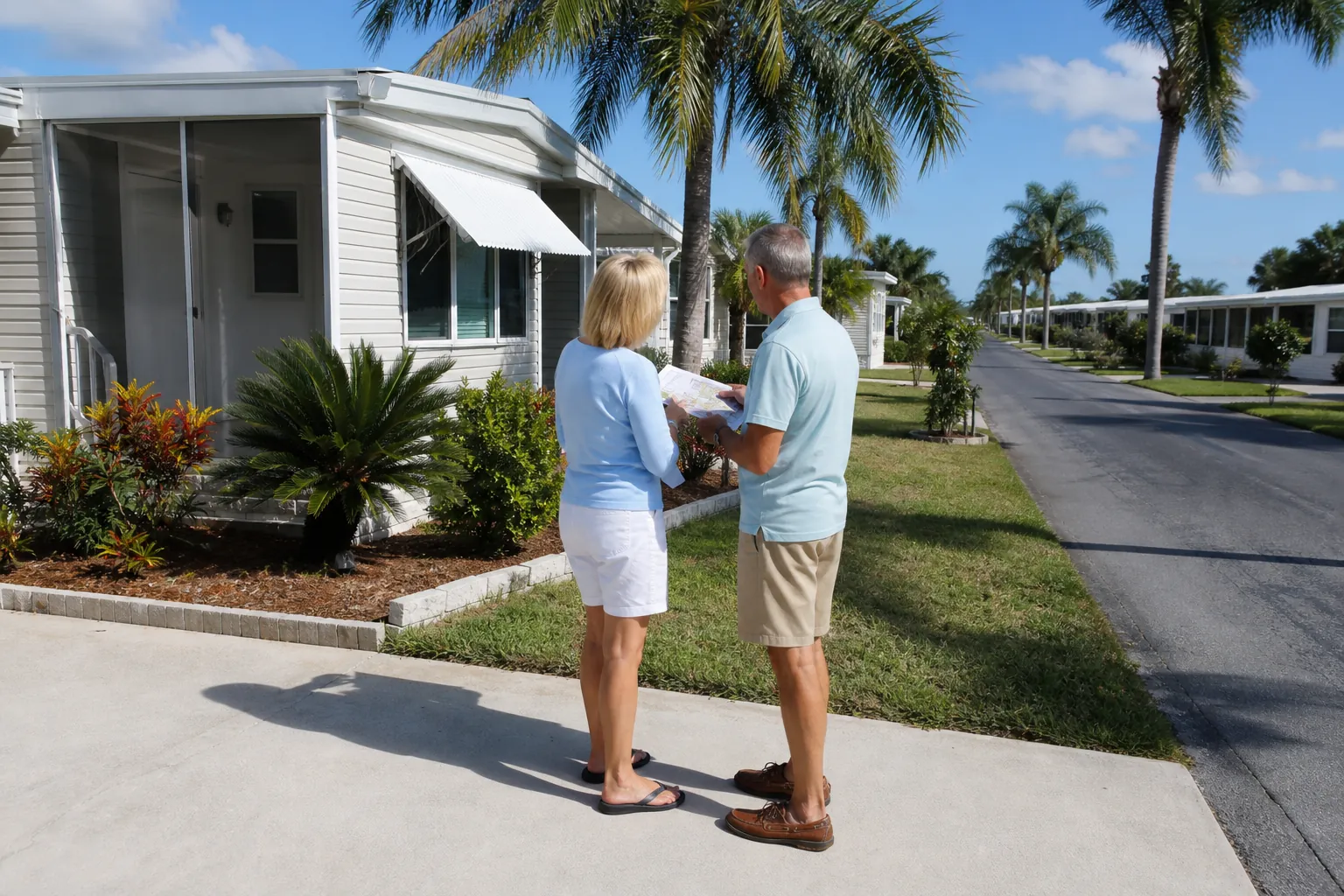
Before selecting plants, study how water, sun, and people move across the property. Note where rainwater collects, which walls receive strong afternoon sun, and how technicians reach utilities, air-conditioning equipment, and the underside of the home.
Mobile home communities may also have landscaping guidelines covering tree placement, lawn alternatives, decorative borders, and visibility near roads. Confirm local rules before installing permanent features. If the property is leased, obtain approval for larger trees, irrigation changes, or hardscape additions.
Measure planting areas instead of estimating them. Narrow beds can become overcrowded quickly when tropical shrubs reach mature size. Accurate measurements help you choose plants that will fit without blocking windows, skirting vents, walkways, or utility connections.
Choose Florida-Friendly Plants For Easier Care
Florida-friendly landscaping focuses on matching plants to site conditions. A plant that naturally tolerates the property's light, moisture, and soil will generally need less water, fertilizer, and pest treatment. This approach is especially valuable on smaller mobile home lots, where one struggling or overgrown plant can affect the entire design.
Consider compact varieties of coontie, dwarf yaupon holly, Simpson's stopper, firebush, saw palmetto, or native grasses where site conditions are suitable. For tropical character, carefully selected crotons, cordylines, philodendrons, and clumping palms can add bold color and texture. Plant suitability varies across North, Central, and South Florida, so selections should reflect the local climate zone.
A layered design creates depth without requiring a large yard. Place taller structural plants toward the back of a bed, medium shrubs in the center, and low groundcovers near the edge. Keep mature height and width in mind, and avoid crowding plants against the home.
- For sunny, dry areas: Consider coontie, muhly grass, lantana varieties approved for local use, and other heat-tolerant choices.
- For partial shade: Use ferns, cast iron plant, Simpson's stopper, or shade-tolerant tropical foliage suited to the region.
- For seasonal color: Add small pockets of annuals rather than filling entire beds with short-lived plants.
- For privacy: Choose appropriately sized shrubs with dense foliage, leaving room for air circulation and maintenance.
- For pollinators: Include staggered bloom times and avoid unnecessary pesticide applications.
- For small spaces: Favor clumping, compact, or slow-growing species over plants that spread aggressively.
Manage Drainage Before Adding Decorative Features
Heavy Florida rain can expose drainage problems quickly. Water pooling beside a mobile home may damage skirting, create muddy access areas, and encourage mosquitoes. Decorative stone or new plants will not solve an underlying grading issue.
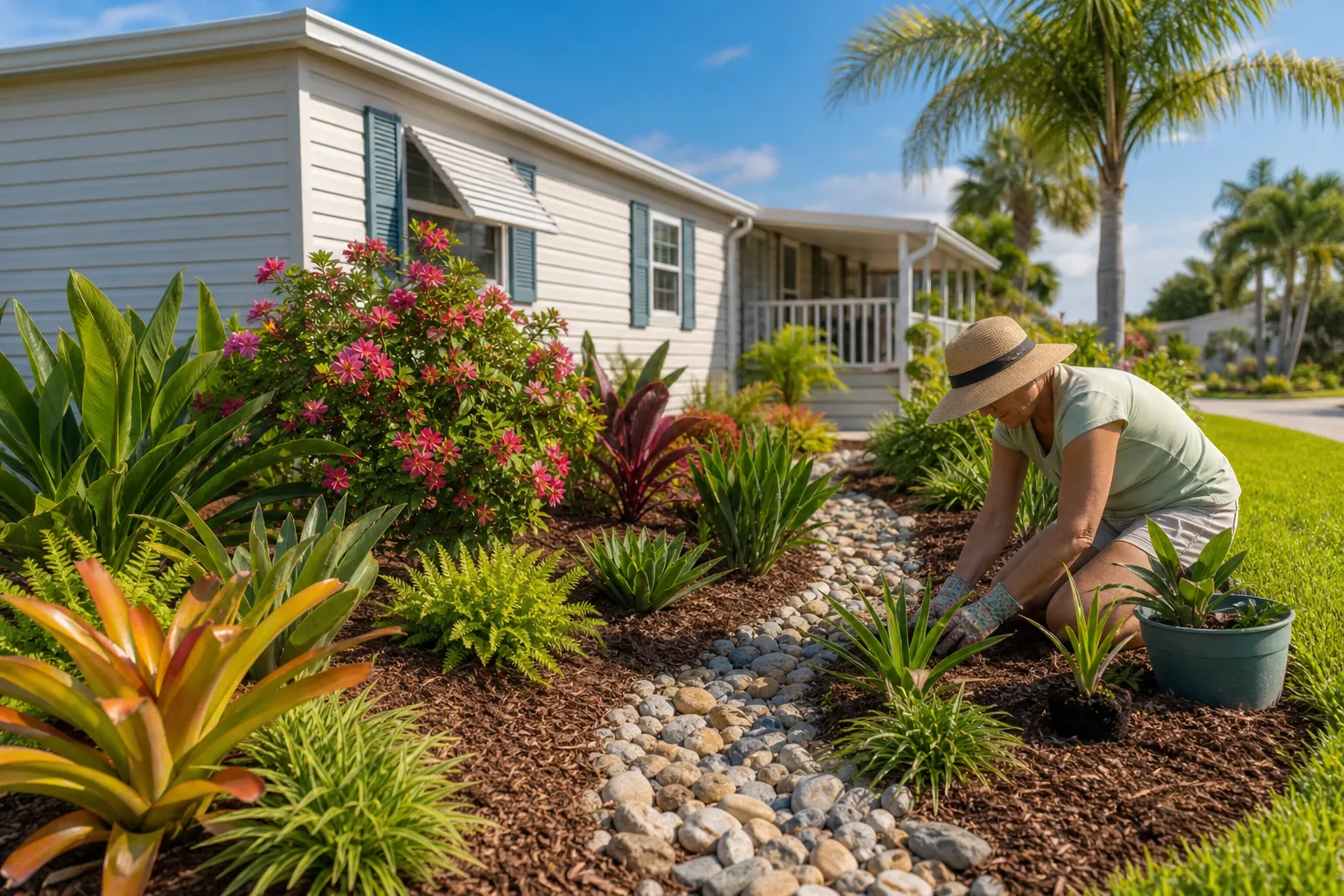
Direct runoff away from the home while keeping neighboring properties and community drainage systems in mind. Downspout extensions, shallow swales, permeable walkways, and properly graded beds may help water disperse safely. Serious or persistent drainage concerns should be evaluated by an appropriate professional.
Mulch can moderate soil temperature and reduce evaporation, but it should not be piled against skirting, steps, trunks, or structural supports. Maintain a clear gap around the home so surfaces can dry and technicians can inspect the perimeter. Organic mulch usually supports healthier soil than an uninterrupted layer of landscape fabric and rock, although gravel can be useful in targeted utility or drainage areas.
Create Shade Without Creating Storm Hazards
Shade can reduce heat around patios and west-facing walls, but tree placement deserves careful consideration in a storm-prone state. Avoid planting large-maturing trees too close to the home, driveway, power lines, or neighboring lots. Small ornamental trees may offer filtered shade while fitting the scale of a compact property.
Palms should also be selected by mature size, cold tolerance, and maintenance needs. Some species eventually tower over the roof or produce heavy fruit and fronds. A cluster of smaller, well-placed plants often creates a more balanced tropical look than one oversized palm planted close to the structure.
Keep branches and foliage from rubbing against siding, roofing, screens, and awnings. Regular structural pruning is better than severe cutting after a plant becomes too large. During design, preserve clear routes to entrances and maintain visibility near steps, ramps, and parking areas.
Design Safe, Comfortable Outdoor Living Areas
Mobile home landscapes often benefit from a defined sitting area. A modest patio with stable, permeable paving can become an outdoor room when framed by foliage. Use plants to soften the space without narrowing circulation.
Walkways should be level, slip resistant, and wide enough for their intended users. Low-voltage lighting can improve visibility near steps, ramps, parking pads, and entrances. Position fixtures to illuminate the walking surface rather than shining into windows or neighboring homes.
For privacy, combine a small screen panel with layered plants instead of relying on a tall wall of shrubs. This keeps the design visually lighter and can improve airflow. Containers are another flexible option for renters or homeowners who want seasonal color. Choose heavy, stable pots with drainage holes, and secure or relocate them when severe weather approaches.
Build A Landscape That Stays Manageable
Low maintenance does not mean no maintenance. It means choosing materials and plants that reduce repetitive tasks. Group plants with similar water needs, limit high-maintenance lawn in awkward corners, and provide enough spacing for mature growth.
Efficient irrigation can target root zones while reducing overspray onto siding and pavement. Check irrigation seasonally for leaks, clogged emitters, and misdirected heads. Florida watering restrictions differ by location, so follow current local requirements and adjust schedules during rainy periods.
A simple maintenance rhythm can include checking drainage after storms, replenishing mulch as needed, removing invasive seedlings, pruning selectively, and watching for early signs of pests. Fertilize only when plants need it and when local ordinances permit. Overfertilizing can cause weak growth and contribute to water pollution.
Bring The Plan Together With Tropical Yards
A successful mobile home landscape should look attractive from the street while remaining practical up close. Start with drainage and access, select regionally appropriate plants, and add tropical color in measured layers. The result can feel lush without overwhelming the home or the maintenance schedule.
Tropical Yards helps Florida property owners consider plant scale, site conditions, outdoor comfort, and long-term care. To discuss a thoughtful landscape plan for your mobile home, call 772-267-1611. A calm, site-specific approach can turn a compact yard into a welcoming Florida retreat.
Call 772-267-1611 to talk through next steps.