Landscaping that helps Florida rental properties thrive
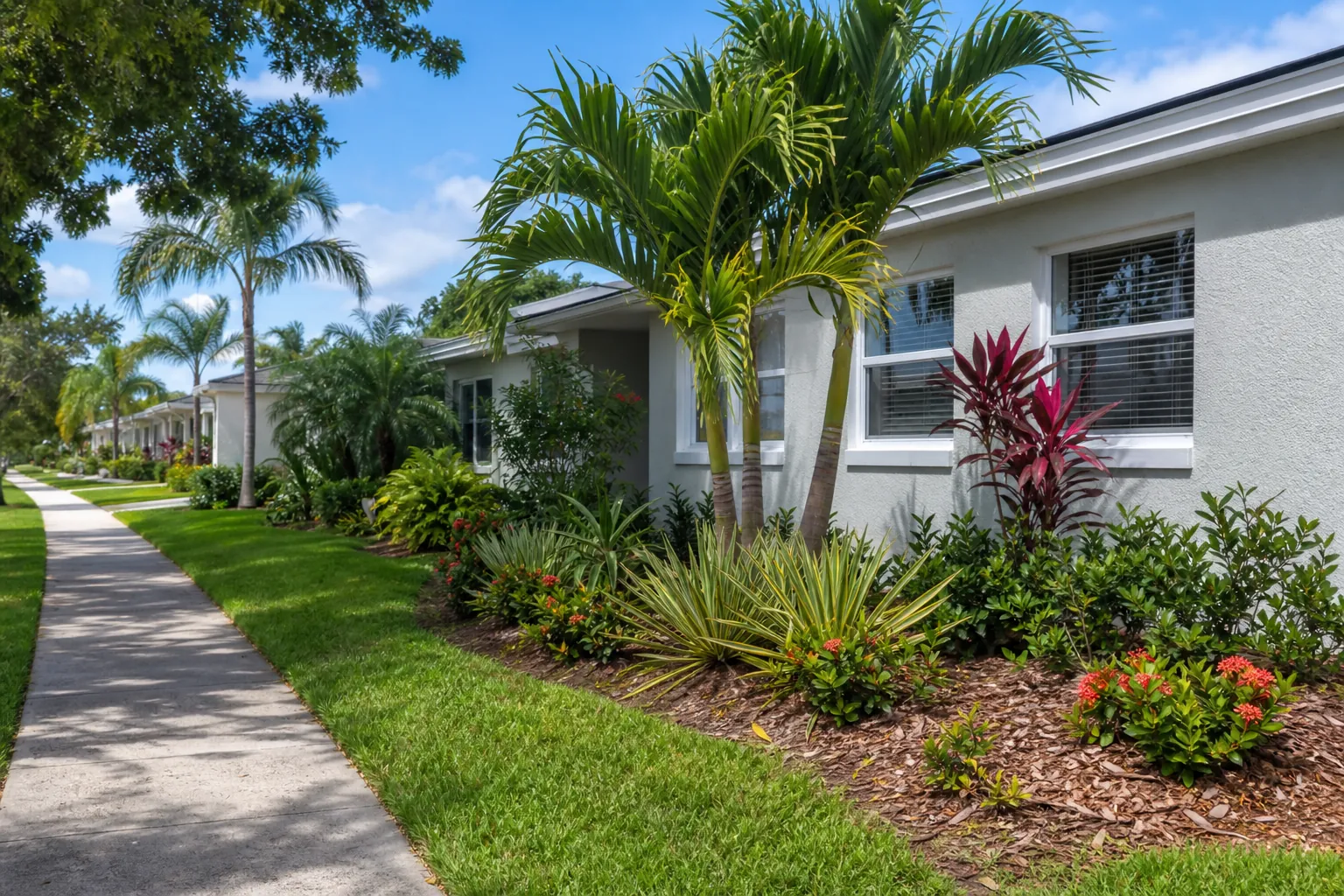
Rental property landscaping has to do more than look attractive on listing day. It must tolerate heat, heavy rain, intense sun, occasional drought, and the realities of changing occupants. A successful design also needs to remain manageable when tenants have different levels of interest in outdoor care.
For Florida owners and property managers, the best landscape is rarely the most elaborate one. It is a well-planned outdoor space that supports curb appeal, protects the property, and keeps recurring work predictable. Tropical Yards approaches landscaping for Florida rental properties with those practical priorities in mind.
Start with the rental property's real needs
Before selecting palms, shrubs, or decorative stone, evaluate how the property functions. A single-family home with a fenced backyard has different needs from a duplex with shared walkways. Sun exposure, drainage, irrigation, parking patterns, pet use, and existing trees all affect the right plan.
Visibility matters too. The front yard shapes first impressions for prospective tenants, neighbors, and inspectors. Investing in a clean entry, defined beds, and healthy foundation plants often delivers more value than adding complicated features in a secluded area.
Maintenance responsibilities should guide the design. If professional service is included in the lease, the plan can support a consistent schedule. If tenants handle routine upkeep, simple beds and forgiving plants become especially important. The landscape should remain presentable even when trimming or watering is not perfectly timed.
Choose plants suited to Florida conditions
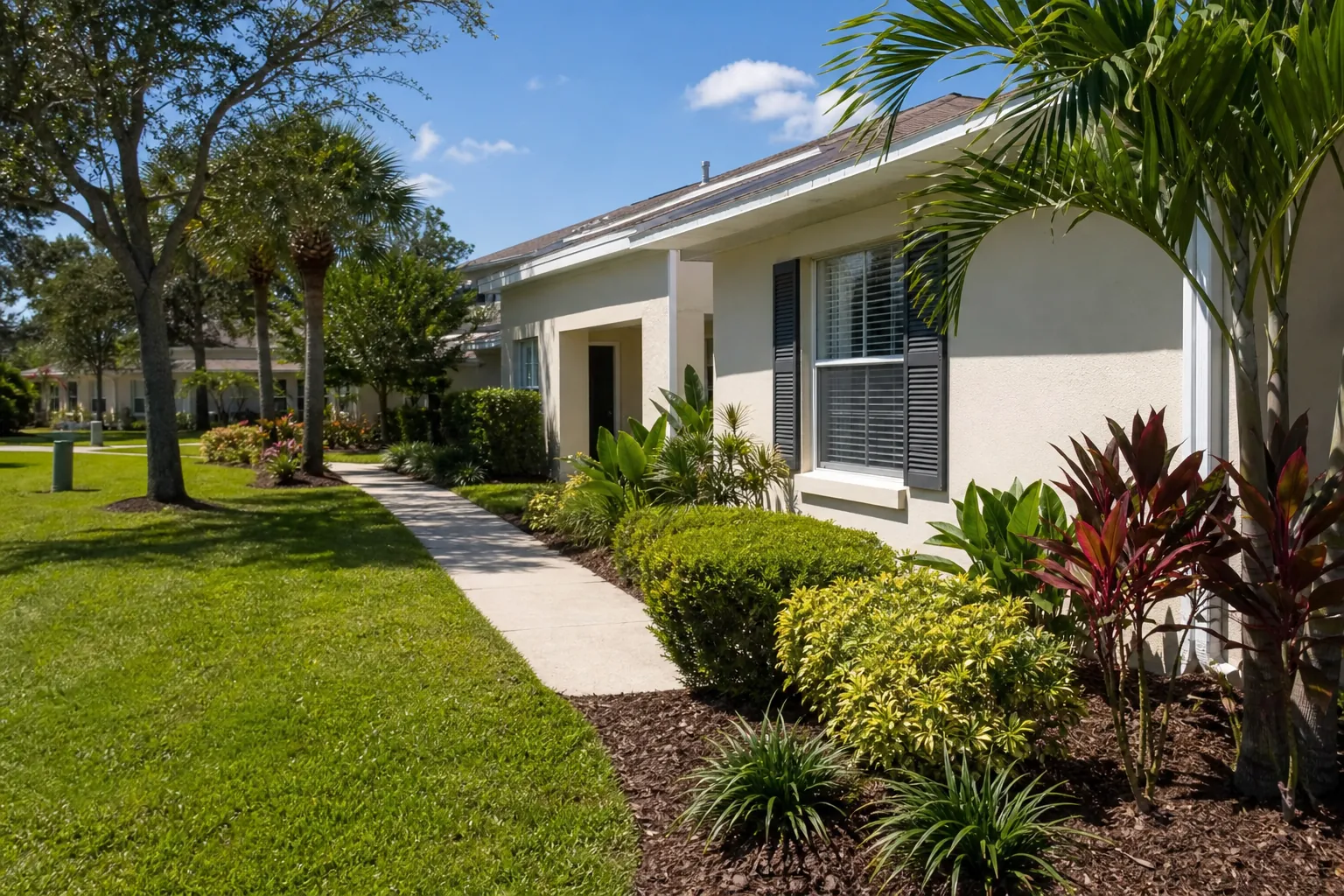
Florida's climate supports abundant growth, but not every tropical-looking plant belongs at every rental. Some species need frequent pruning, attract pests, develop aggressive roots, or decline quickly when irrigation changes. Right plant, right place is particularly important when controlling long-term costs.
Site-specific choices may include native and Florida-friendly shrubs, ornamental grasses, durable groundcovers, and appropriately sized palms. Salt tolerance may be essential near the coast, while inland properties can require plants that handle colder winter nights. Soil type and drainage can vary considerably, even within the same region.
Plant placement is as important as plant selection. Small shrubs installed too close to walls can block windows and trap moisture as they mature. Large palms beneath power lines create avoidable pruning issues. Plants near air-conditioning equipment should allow clear airflow and service access.
A practical rental landscape commonly benefits from:
- Layered but limited plant varieties: Repeating a focused palette creates visual consistency and simplifies care.
- Plants matched to available sunlight: Sun-loving species struggle in deep shade, while shade plants may scorch in exposed beds.
- Mature sizes that fit the space: Correct sizing reduces constant shearing and prevents crowded walkways.
- Groundcovers in difficult areas: Suitable groundcovers can fill narrow or shaded spaces where turf performs poorly.
- Clear sightlines: Lower planting near entries, driveways, and windows can support visibility and a welcoming appearance.
- Seasonal color used selectively: Small accents can refresh an entrance without creating extensive replacement work.
Reduce maintenance without creating a bare yard
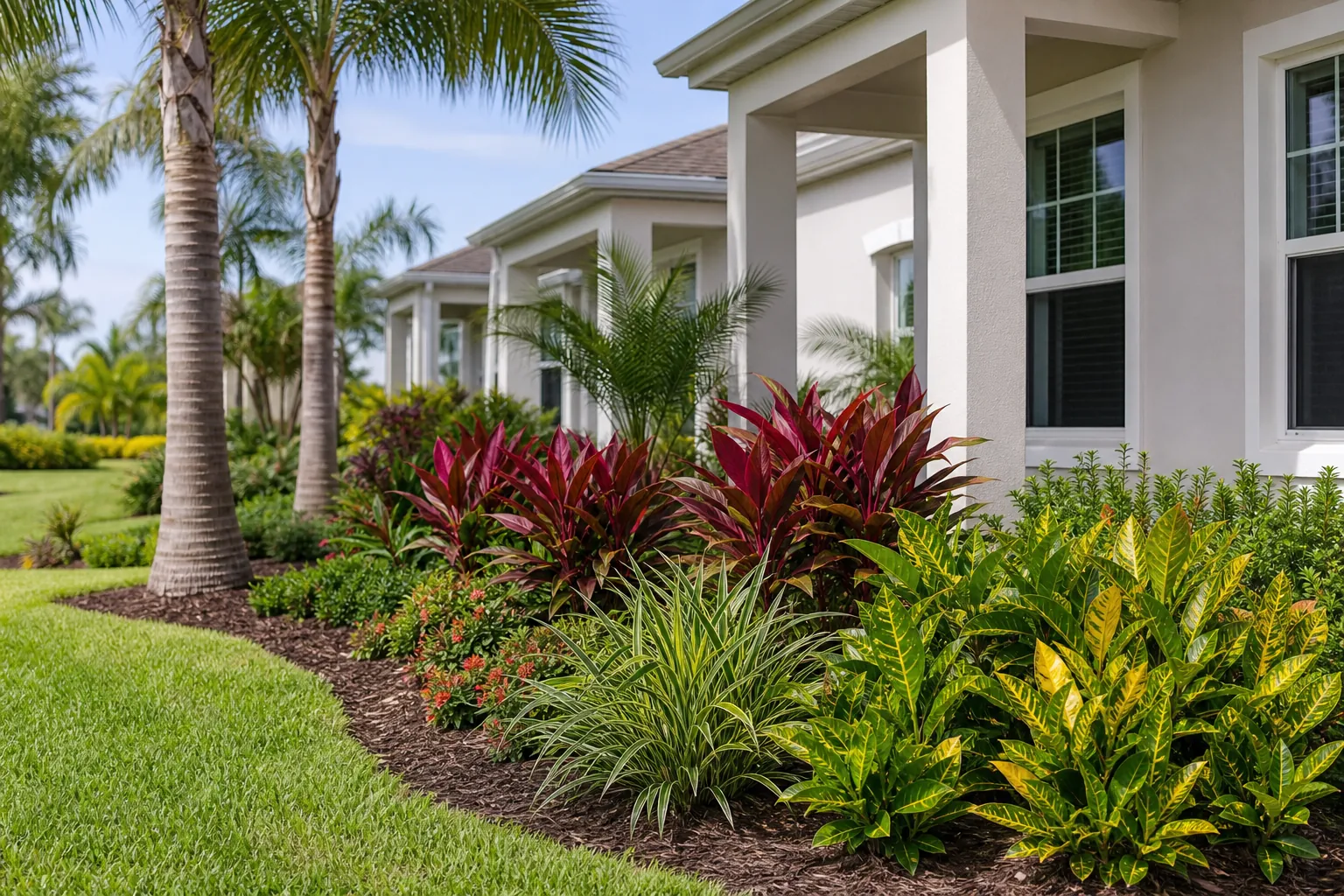
Low-maintenance landscaping does not mean covering the property with gravel or removing all plant life. In Florida, poorly planned rock areas can absorb heat, collect debris, and still develop weeds. A balanced design uses durable plants, defined edges, appropriate mulch, and manageable lawn areas.
Bed lines should be simple enough to mow efficiently. Tight corners, tiny turf strips, and obstacles scattered across the lawn increase service time and can lead to inconsistent results. Broad curves or straight, purposeful edges generally look cleaner and are easier to maintain.
Mulch helps conserve soil moisture, moderate temperature, and give beds a finished appearance. It should not be piled against trunks, stems, walls, or siding. Excess mulch around plants can hold unwanted moisture and contribute to poor root health.
Fast-growing hedges may appear economical at installation, but frequent trimming can raise recurring expenses. Slower-growing or naturally compact selections can retain their intended form with less intervention. Similarly, choosing turf based on site conditions can reduce thin patches and repeated repairs.
Plan irrigation and drainage carefully
Water management is central to Florida landscaping. Heavy summer storms can saturate low areas, while dry periods place stress on new plants and turf. Standing water near the foundation, walkways, or driveways should be addressed rather than hidden with additional planting.
Irrigation zones should reflect plant needs. Turf and shrub beds often require different watering patterns, and overspray onto pavement wastes water while leaving streaks or slippery areas. Broken heads, blocked emitters, and poorly aimed sprinklers can cause landscape decline before an owner realizes there is a problem.
Smart controllers and rain sensors can improve scheduling, but they still require periodic checks. Irrigation should also follow local watering rules. Newly installed plants may need establishment watering, while mature Florida-friendly material can often perform with less supplemental irrigation once rooted.
Grading, downspout discharge, and soil conditions deserve attention when puddles persist. Effective drainage planning helps protect plants and can reduce muddy areas that tenants track indoors. Solutions depend on the site, so identifying the source is more useful than applying a generic fix.
Protect access, safety, and property condition
A rental landscape should make the home easy to approach and maintain. Walkways need adequate clearance, branches should not obstruct lighting, and thorny plants should be kept away from high-traffic areas. Tree limbs near roofs may drop debris into gutters or rub against building surfaces.
Roots and irrigation should be considered around patios, pools, fences, utility boxes, septic components, and paved areas. Service technicians need room to reach equipment. Plants should also be positioned so routine exterior inspections can occur without pushing through dense foliage.
Storm preparation is another Florida priority. Healthy trees with appropriate structure are generally preferable to neglected trees with dead or damaged limbs. Qualified tree professionals should evaluate significant concerns, particularly before hurricane season. Topping trees is not a substitute for proper assessment and pruning.
Create a repeatable plan for turnovers
Tenant turnover is a useful time to inspect the entire property. Look for irrigation leaks, dead plants, overgrown shrubs, damaged edging, bare turf, clogged drains, and branches affecting the structure. Correcting several small issues together can be more efficient than responding to separate complaints later.
Photographs can help owners track landscape condition between inspections. A basic maintenance scope should clarify mowing, edging, pruning, weed management, irrigation checks, and debris removal. Clear expectations reduce uncertainty for tenants, managers, and service providers.
Improvements can be phased when a full renovation is not practical. Begin with drainage, unsafe vegetation, irrigation problems, and access concerns. Then improve the entrance and other highly visible areas. Decorative additions should come after the landscape's basic systems are working properly.
Build curb appeal around long-term value
Strong rental landscaping combines presentation with resilience. Healthy plants, an orderly entrance, clean bed lines, and reliable water management can create a polished appearance without demanding constant attention. The goal is a landscape that continues to support the property between listings, inspections, and lease renewals.
Tropical Yards can help Florida owners consider plant placement, maintenance demands, and tropical character as part of one practical plan. To discuss options for your rental property, call 772-267-1611. A thoughtful review can identify priorities and help you decide which improvements make sense now and which can wait.
Call 772-267-1611 to talk through next steps.