How thoughtful landscaping helps Florida vacation rentals stand out
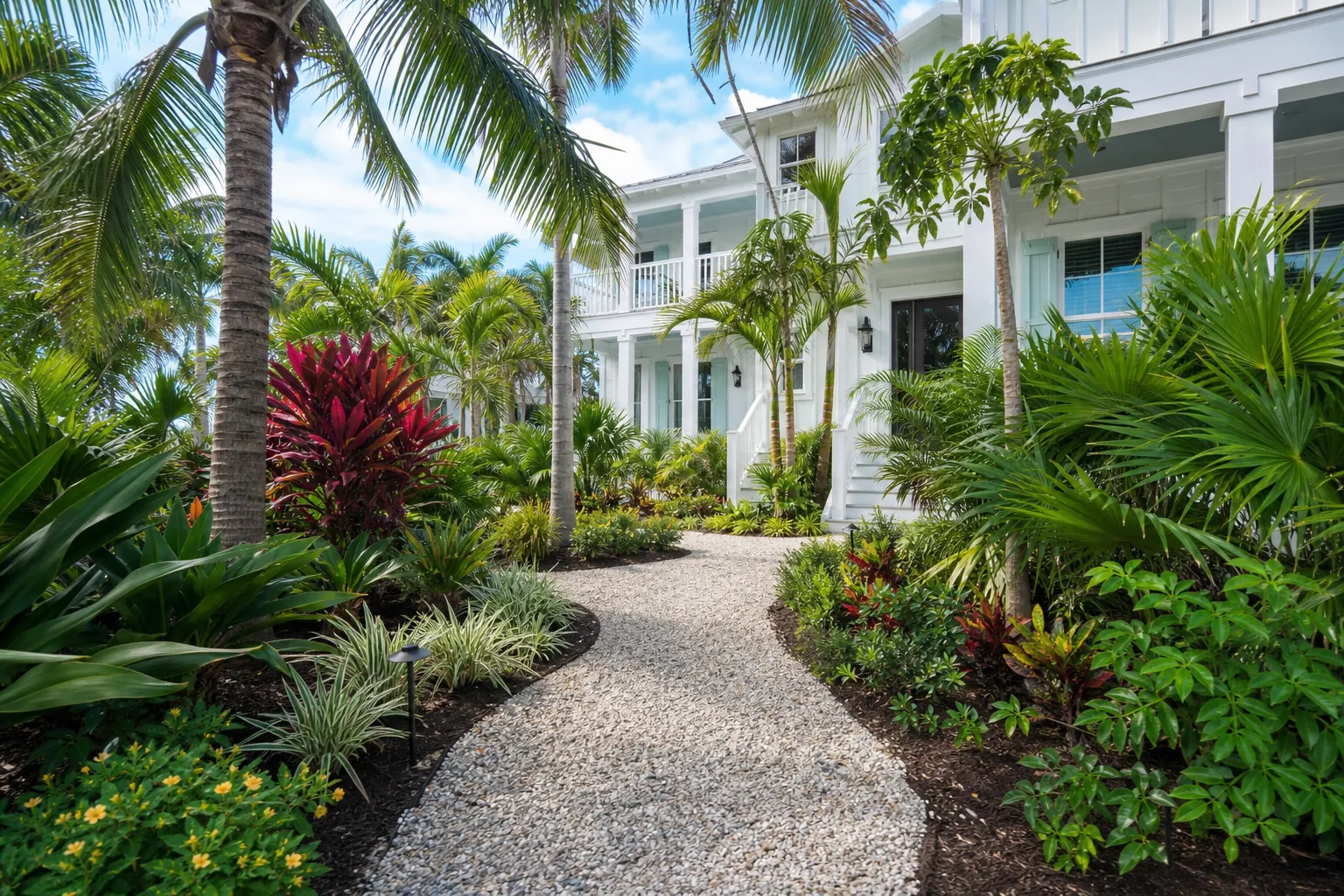
Guests begin judging a vacation rental before they open the front door. A neat driveway, healthy tropical plants, visible walkways, and a welcoming entrance can reinforce the quality shown in listing photos. An overgrown or poorly planned yard can create the opposite impression, even when the home itself is beautiful.
Effective landscaping for Florida vacation rentals is not simply about filling beds with colorful plants. The landscape must tolerate heat, intense rain, salty air in coastal areas, occasional drought, and periods when owners are away. It should also be easy for guests to navigate and practical for a maintenance team to manage between bookings.
Tropical Yards helps Florida property owners create outdoor spaces that look inviting without introducing unnecessary upkeep. The right plan balances visual appeal, durability, safety, and the day-to-day realities of operating a short-term rental.
Make The Arrival Experience Feel Effortless
The front yard and entry path shape a guest's first in-person impression. Travelers may arrive after dark, in unfamiliar surroundings, while carrying luggage or helping children. They should be able to identify the entrance and move from the parking area to the door without brushing against plants or stepping around obstacles.
Define the route with clean bed lines, appropriately placed plants, and lighting designed for visibility. Keep shrubs below windows and away from address numbers, lockboxes, gates, and exterior cameras. Palms and specimen plants can create a memorable tropical look, but their mature size must fit the space.
A focused entrance usually performs better than a crowded one. Repeating a limited plant palette can look polished in photographs while simplifying care. Seasonal color can be added near the doorway in controlled areas where it is easy to monitor and replace.
Choose Plants For Florida Conditions
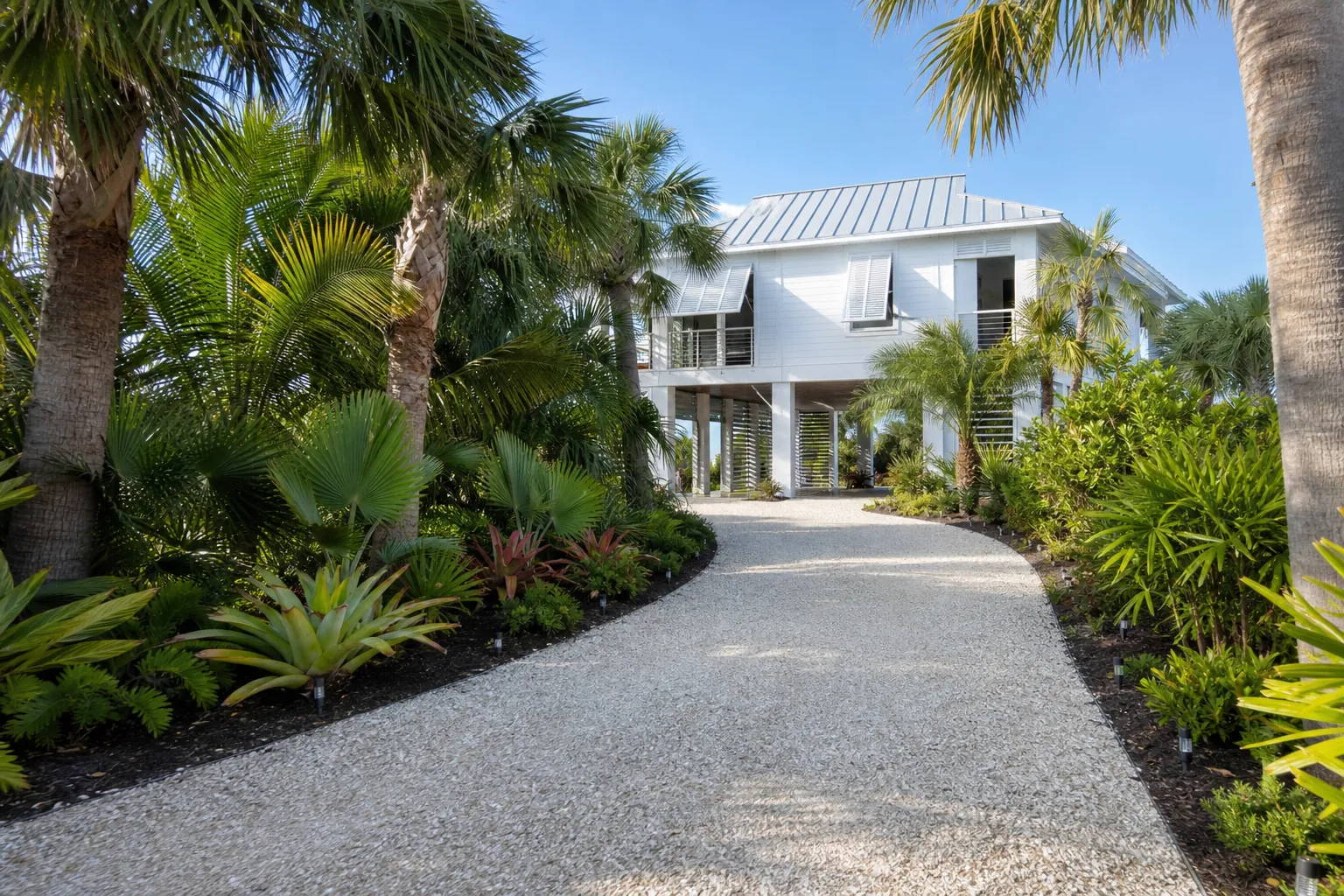
Florida includes several growing zones and a wide range of site conditions. A plant that thrives in a shaded inland yard may struggle on a sunny coastal property exposed to wind and salt. Before selecting plants, consider daily sunlight, drainage, soil condition, irrigation coverage, salt exposure, and the amount of space available at maturity.
Florida-friendly and regionally appropriate plants can reduce avoidable stress. Depending on the property, useful options may include coontie, firebush, dwarf yaupon holly, saw palmetto, muhly grass, cocoplum, Simpson's stopper, and selected palm varieties. Plant choices should always be matched to the specific site rather than copied from a generic tropical design.
Layering plants by height creates depth without blocking sightlines. Groundcovers can soften bed edges, medium shrubs can provide structure, and carefully positioned accents can establish focal points. Adequate spacing also improves airflow and reduces the constant trimming that comes with overcrowding.
Design For Low-Stress Maintenance
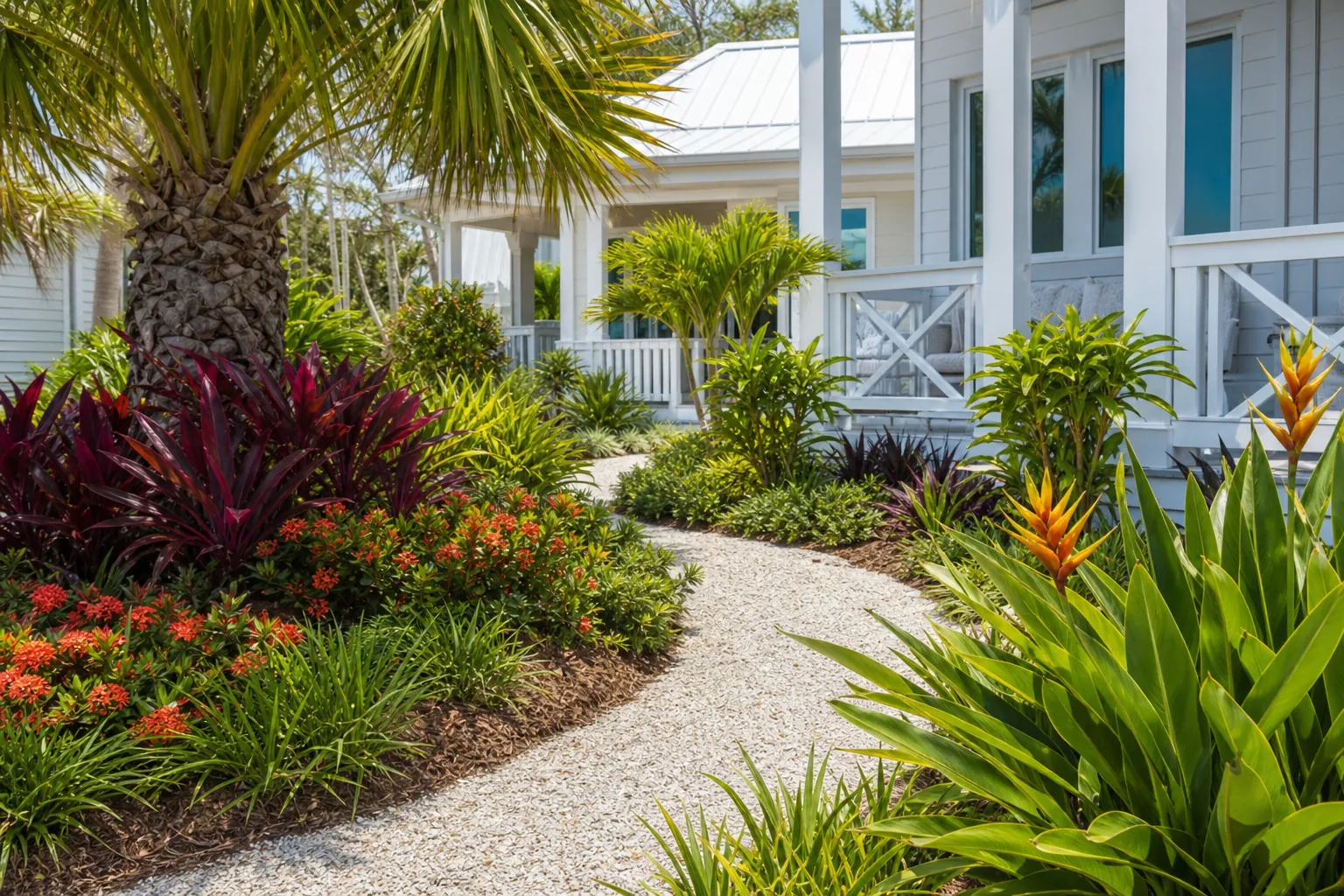
Vacation rental landscapes must stay presentable through back-to-back reservations. Complicated designs, fast-growing hedges, and thirsty plants can increase service visits and make the yard look inconsistent between them. A lower-maintenance layout gives owners a better chance of maintaining the same appearance guests saw online.
Start with defined zones and straightforward access for mowing, pruning, irrigation checks, and debris removal. Avoid narrow turf strips that are difficult to cut. Use mulch to help moderate soil temperature, retain moisture, and limit weed growth, while keeping it away from trunks and building walls.
A practical rental landscape plan may include:
- Plants selected for the property's light, drainage, wind, and salt conditions
- Clear access to meters, air-conditioning equipment, hose connections, and utility panels
- Open walkways with branches and fronds kept away from head and shoulder height
- Drip or targeted irrigation where appropriate instead of unnecessary overspray
- Simple bed shapes that make edging, mulching, and cleanup more efficient
- Durable plantings near pools and patios that do not create excessive litter
- Routine checks for weeds, pests, broken irrigation components, and storm damage
- A refresh schedule timed before busy travel periods and listing photography
Maintenance expectations should be considered during design, not after installation. Knowing who will handle pruning, cleanup, and irrigation monitoring helps determine how detailed the landscape should be.
Support Guest Safety And Property Protection
A beautiful yard still needs to function safely. Uneven pavers, concealed steps, thorny plants near paths, slippery organic debris, and low branches can become problems for guests. Keep circulation areas open and inspect them regularly, especially after severe weather.
Landscape lighting can improve navigation around entries, paths, steps, pools, and gathering spaces. Fixtures should direct light where it is needed without shining into bedrooms or neighboring properties. Low-voltage systems may be useful, but fixture placement and ongoing operation require periodic review.
Plant placement can also protect the building. Avoid installing large plants too close to foundations, roofs, drains, or pool equipment. Maintain access for repairs and inspections. In hurricane-prone areas, proper pruning and ongoing palm care are important, although no landscape can be made completely storm-proof.
Create Outdoor Spaces Guests Can Enjoy
Many Florida travelers expect to spend time outside. Even a compact yard can feel valuable when it includes shade, comfortable circulation, and a defined place to relax. Rather than filling every open area with plants, preserve usable space around patios, grills, pools, and seating.
Use landscaping to frame these amenities without overwhelming them. Broad-leaved foliage can establish a tropical atmosphere, while hedges or small trees may provide screening where site conditions allow. Privacy plantings should not eliminate necessary visibility or crowd fences and neighboring structures as they mature.
Pool areas deserve special attention. Choose plants that tolerate reflected heat and local exposure, and limit species that drop large quantities of flowers, fruit, or leaves into the water. Roots, irrigation overspray, and access for pool service should also influence placement.
Keep Listing Photos And Reality Consistent
Strong exterior photos help earn clicks, but the property should deliver the same experience when guests arrive. Schedule trimming, mulch renewal, plant replacement, and pressure cleaning before professional photography. Afterward, maintain the major shapes and focal points shown in the listing.
It is also helpful to conduct periodic landscape reviews. Plants grow, shade patterns change, irrigation parts wear out, and storm seasons can alter the yard. Updating a few problem areas early is often easier than completing a major cleanup after guest comments begin mentioning the exterior.
Build A Landscape Around Your Rental Goals
Every vacation property has different priorities. A waterfront home may need salt-tolerant planting and wind protection, while an inland rental may require better drainage or shade planning. The ideal solution reflects the site's conditions, the desired guest experience, and a realistic maintenance budget.
Tropical Yards can help you plan a resilient, welcoming landscape that supports your Florida rental instead of adding operational stress. For a calm conversation about your property and its outdoor needs, call 772-267-1611.
Call 772-267-1611 to talk through next steps.