Landscaping waterfront homes for lasting Florida beauty
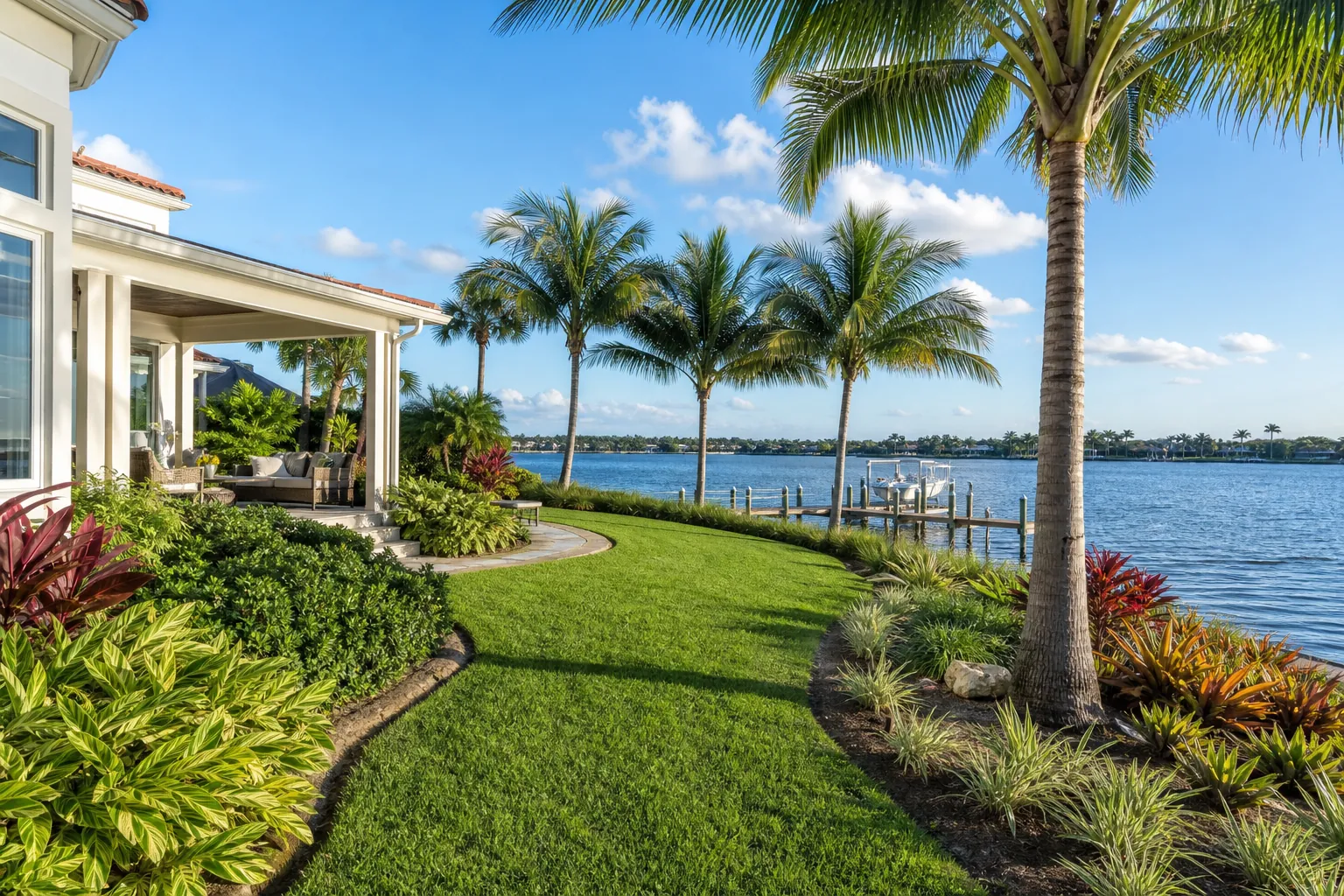
Waterfront properties offer remarkable views, cooling breezes, and a direct connection to Florida's natural beauty. They also present landscaping challenges that inland homes may never face. Salt spray, sandy soil, intense sunlight, wind, flooding, and shoreline rules can all influence what belongs in the yard.
Effective landscaping for waterfront homes in Florida begins with a site-specific plan. Rather than forcing a conventional suburban landscape onto a coastal property, the design should work with local conditions. Tropical Yards creates outdoor spaces that feel lush and inviting while accounting for the realities of waterfront living.
Start With The Waterfront Microclimate
Conditions can change significantly within a single property. Plants near open water may receive heavy salt spray and stronger wind, while areas behind the home may be protected. Low spots can stay wet after storms, but elevated sandy areas may drain so quickly that plants experience drought stress.
A professional site assessment identifies sunlight patterns, drainage routes, soil conditions, prevailing winds, irrigation coverage, and exposure to salt. It should also consider existing trees, views, utilities, seawalls, docks, and access points. These details determine where plants and hardscape features can perform reliably.
Florida's coastal regions are not identical. A plant that thrives along a sheltered canal may struggle beside an exposed oceanfront lot. Selecting materials based on the property's actual microclimate can reduce replacements, irrigation demands, and long-term maintenance.
Choose Salt-Tolerant Plants In Layers
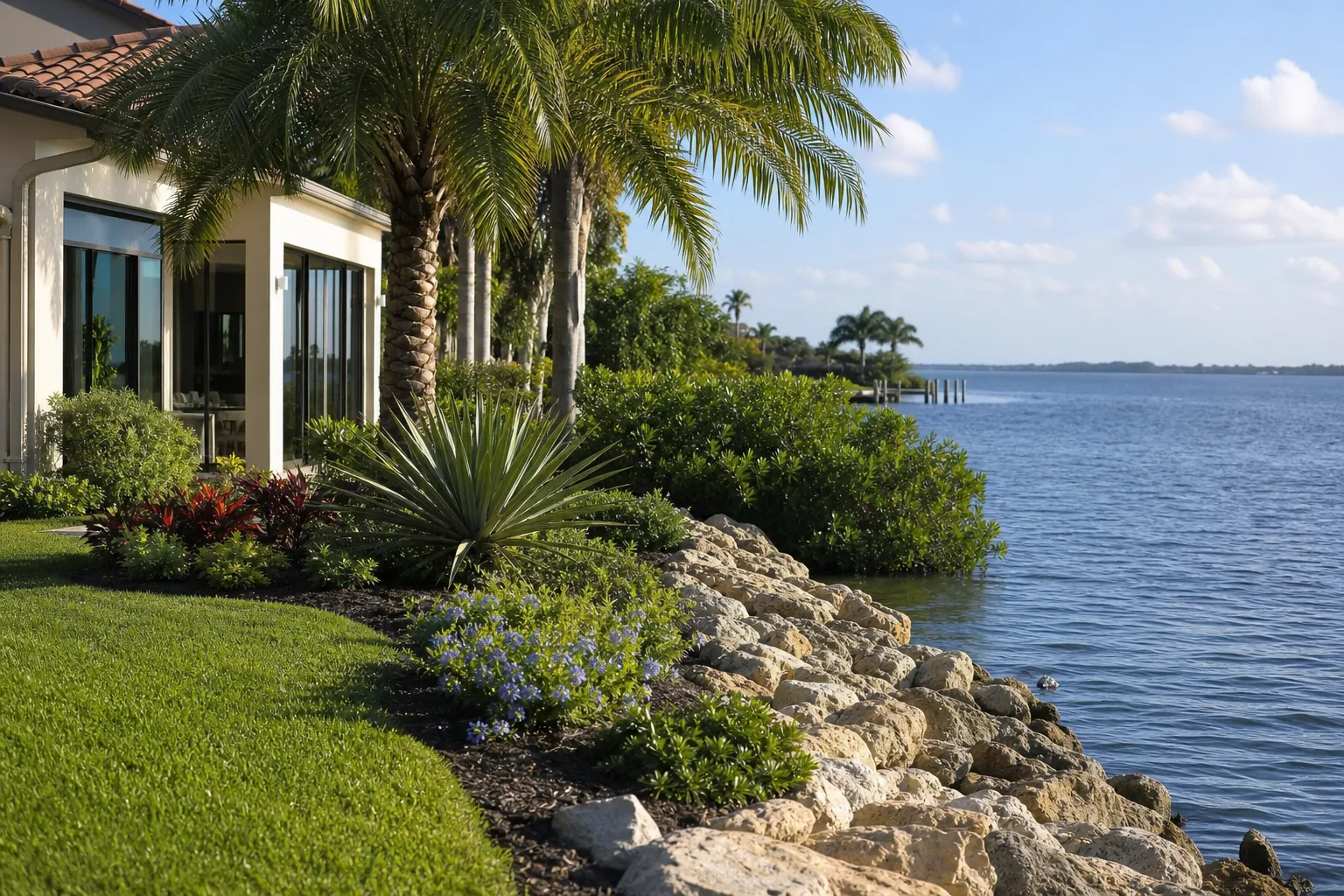
Salt tolerance is essential near brackish or ocean water. Salt can arrive through airborne spray, irrigation sources, storm surge, or soil accumulation. Sensitive plants may develop scorched leaf edges, stunted growth, or premature leaf drop.
A layered planting design provides visual depth and helps buffer wind. Taller palms and trees can establish the upper canopy, shrubs can form a durable middle layer, and ground covers can protect exposed soil. Native and Florida-friendly plants are often valuable because many are adapted to heat, seasonal rain, sandy soil, and local wildlife.
Depending on the site and regional suitability, a waterfront palette may include:
- Sea grape: Broad foliage, strong coastal character, and useful screening where space permits.
- Silver buttonwood: Silvery leaves and good salt tolerance for hedges, accents, or small-tree forms.
- Coontie: A compact Florida native suited to layered beds and lower-maintenance designs.
- Saw palmetto: A rugged native with sculptural foliage for larger naturalistic areas.
- Railroad vine: A spreading ground cover that can help stabilize suitable sandy locations.
- Muhly grass: Fine texture and seasonal color when planted in appropriate well-drained areas.
- Simpson's stopper: A versatile native shrub with flowers, berries, and screening potential.
- Cocoplum: Dense foliage that works well in warm regions with compatible site conditions.
Plant selection must account for mature size. Crowding plants for an immediate full appearance can obstruct views, reduce airflow, and create constant pruning. Proper spacing produces healthier growth and makes the landscape easier to maintain.
Manage Drainage, Runoff, And Erosion
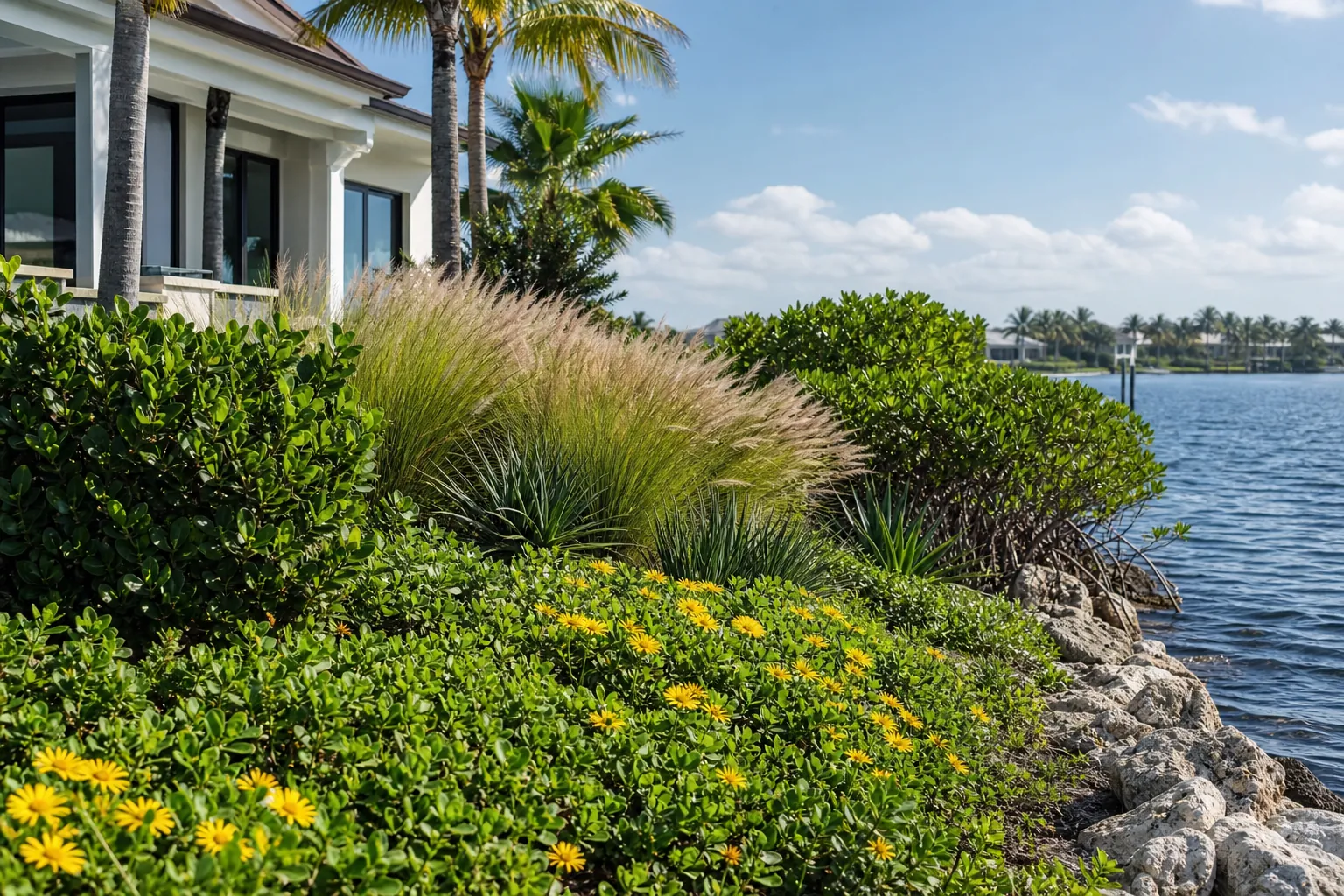
Waterfront landscapes must handle water from multiple directions. Heavy rain may flow toward the shoreline, tides can raise groundwater levels, and storm events may temporarily inundate low areas. Poor grading can send runoff toward the foundation, pool deck, or neighboring property.
Thoughtful grading and drainage help move water safely without accelerating erosion. Shallow planted depressions, permeable surfaces, appropriate ground covers, and strategically placed drainage components may be useful. The correct solution depends on elevation, soil, structures, local regulations, and the type of shoreline.
Bare soil is especially vulnerable to washouts. Dense roots and properly installed mulch can soften rainfall impact and help hold soil in place. Mulch should not be piled against trunks or allowed to migrate into the water. Near shorelines, plantings should complement existing stabilization systems rather than interfere with seawalls or drainage outlets.
Any work close to wetlands, mangroves, dunes, or regulated shorelines may require review or permits. Property owners should confirm requirements with the appropriate local and state authorities before clearing vegetation or altering grades.
Protect Views Without Sacrificing Privacy
A waterfront landscape should frame the view rather than cover it. Sightlines from interior rooms, patios, pools, and outdoor seating areas can guide plant placement. Low plantings may preserve open water views, while taller clusters can screen neighboring properties, equipment, or service zones.
Selective screening often works better than a continuous tall hedge. Grouping palms, small trees, and shrubs at the sides of a view creates privacy while leaving the center open. Plants with airy forms can provide separation without making the yard feel enclosed.
Lighting should be equally restrained. Low-voltage fixtures can improve safety along steps and pathways while highlighting trunks or textured foliage. Shielded, warm lighting helps limit glare toward the water and may reduce disruption to neighbors and wildlife. Coastal fixtures should be chosen for corrosion resistance.
Design Outdoor Living For Coastal Conditions
Patios, walkways, seating areas, and outdoor kitchens need materials suited to Florida's heat, moisture, and salt exposure. Slip resistance matters around pools and docks. Permeable pavers may support drainage in appropriate applications, while light-colored surfaces can remain more comfortable underfoot than darker materials.
Furniture and built-in features should be positioned to preserve airflow and withstand weather. Stainless hardware must be selected carefully because not every grade performs equally near saltwater. Irrigation equipment, lighting connections, and outdoor appliances also need materials and installation methods rated for the environment.
Shade is a practical part of the design. Palms, well-placed canopy trees, pergolas, and covered seating can make outdoor areas more usable throughout the year. Tree placement should consider mature roots and canopies so they do not conflict with roofs, pools, seawalls, or utilities.
Use Irrigation And Maintenance Strategically
Even salt-tolerant landscapes need consistent care while becoming established. Irrigation zones should reflect different plant needs and sun exposures. Drip or low-volume irrigation can deliver water efficiently in planting beds, while smart controllers and rain sensors can reduce unnecessary watering.
Routine maintenance should focus on plant health instead of aggressive trimming. Proper pruning preserves natural form and reduces stress. Soil testing can identify nutrient or pH concerns before fertilizer is applied. Florida fertilizer restrictions vary by location and season, so maintenance practices should follow local rules and protect nearby waterways.
Regular inspections are particularly valuable after storms. Crews can identify broken limbs, blocked drains, irrigation damage, washouts, and salt stress before small problems become expensive repairs.
Build A Landscape That Belongs On The Water
The best waterfront yards look connected to their surroundings. They combine resilient plants, clear views, functional drainage, and comfortable living areas without requiring constant intervention. A well-planned landscape can also improve curb appeal and help homeowners enjoy the property more fully.
Tropical Yards can develop a tropical landscape tailored to your Florida waterfront property's exposure, soil, architecture, and maintenance goals. For a calm, practical conversation about your yard, call 772-267-1611.
Call 772-267-1611 to talk through next steps.