How to landscape successfully under palm trees in Florida
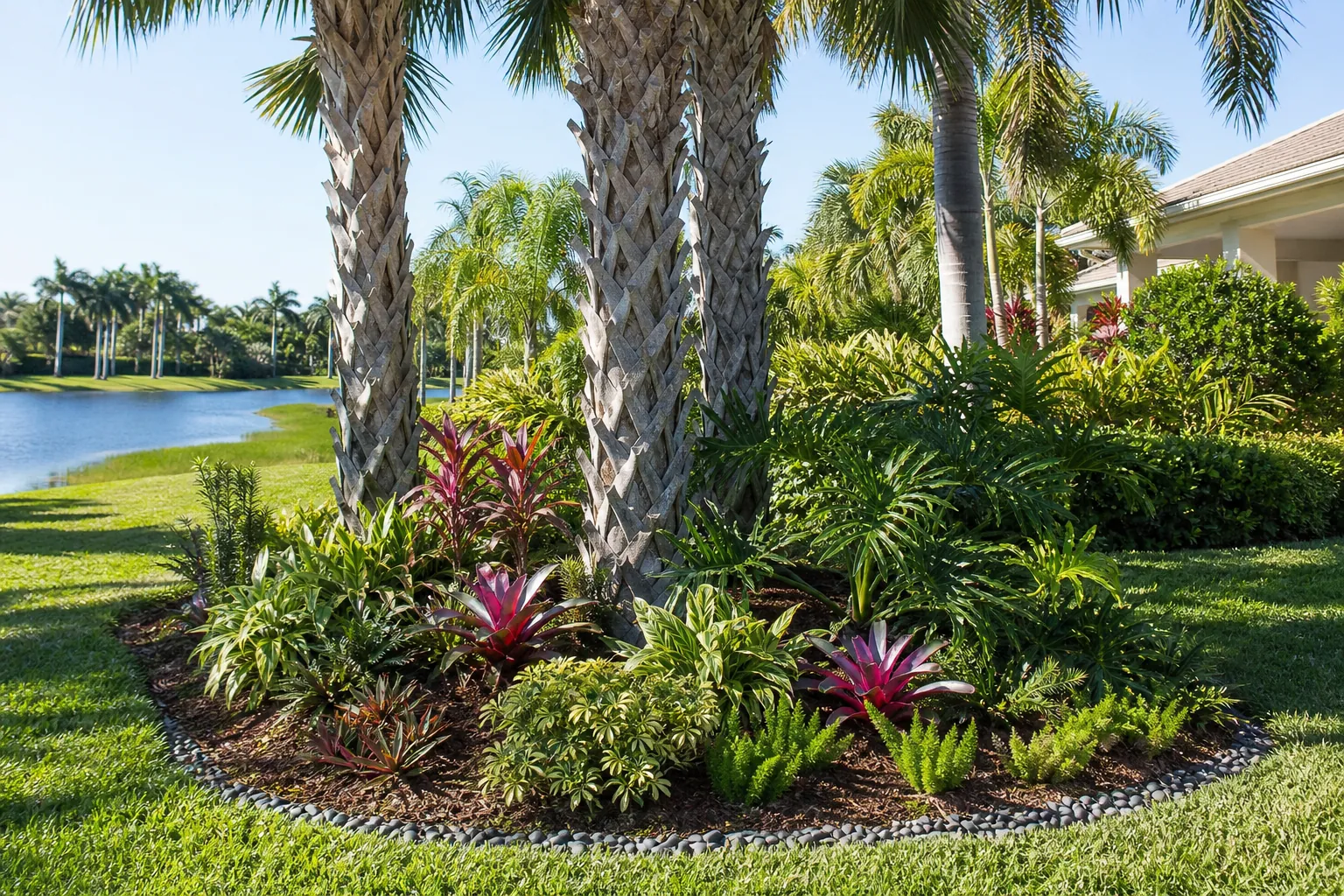
Palms create an unmistakable Florida look, but the ground beneath them can be challenging to landscape. Shifting shade, thirsty roots, falling fronds, sandy soil, and salt exposure may all influence what will thrive. A successful design works with those conditions instead of treating the area like an ordinary flower bed.
When planning landscaping under palm trees in Florida, begin with the palm itself. Its mature canopy, root zone, maintenance needs, and location should guide every decision. With suitable plants and careful installation, the space can become an attractive garden layer that complements the palms without competing with them.
Evaluate the conditions beneath each palm
Spend time observing the site before choosing plants. An area that appears shady in the morning may receive several hours of intense afternoon sun. Palm canopies also move in wind and cast filtered rather than constant shade. Note the pattern throughout the day so plants receive the light they need.
Check drainage after rainfall or irrigation. Florida soils range from fast-draining sand to compacted fill and moisture-retentive pockets. Some tropical plants tolerate brief wet periods, while others quickly decline in soggy soil. Coastal properties must also account for salt spray and wind.
Consider how the palm is maintained. If crews need room to prune fronds, remove fruit, or access irrigation, dense planting against the trunk can cause problems. Falling coconuts, heavy fronds, or seed stalks may damage delicate plants, making sturdy groundcovers and low shrubs more practical in active drop zones.
Choose plants suited to filtered light and root competition
The best companion plants depend on the region of Florida, the amount of sun, and the site's exposure. A plant that performs well under a broad canopy in humid South Florida may struggle in a cooler inland location. Always confirm local cold tolerance and mature dimensions before planting.
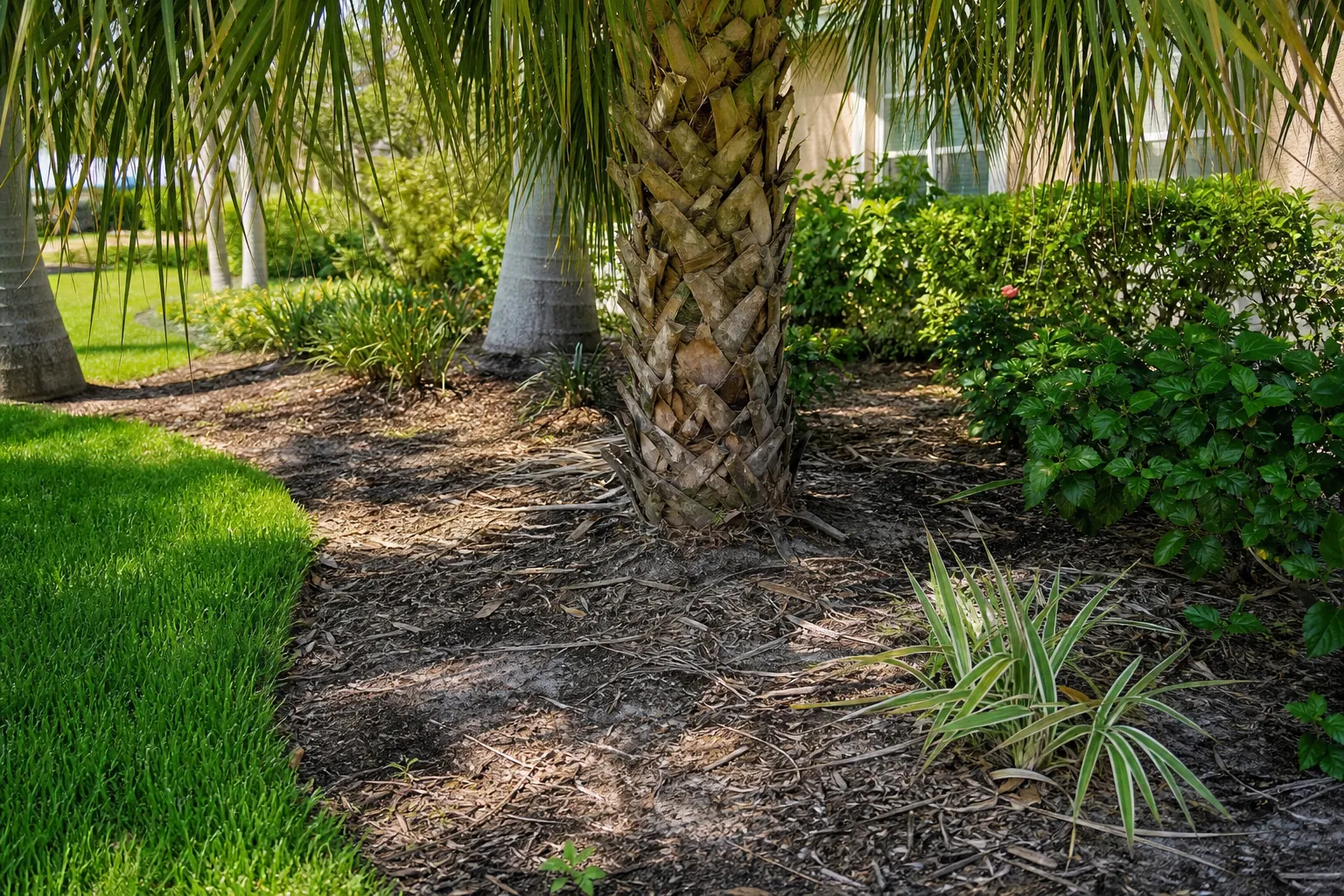
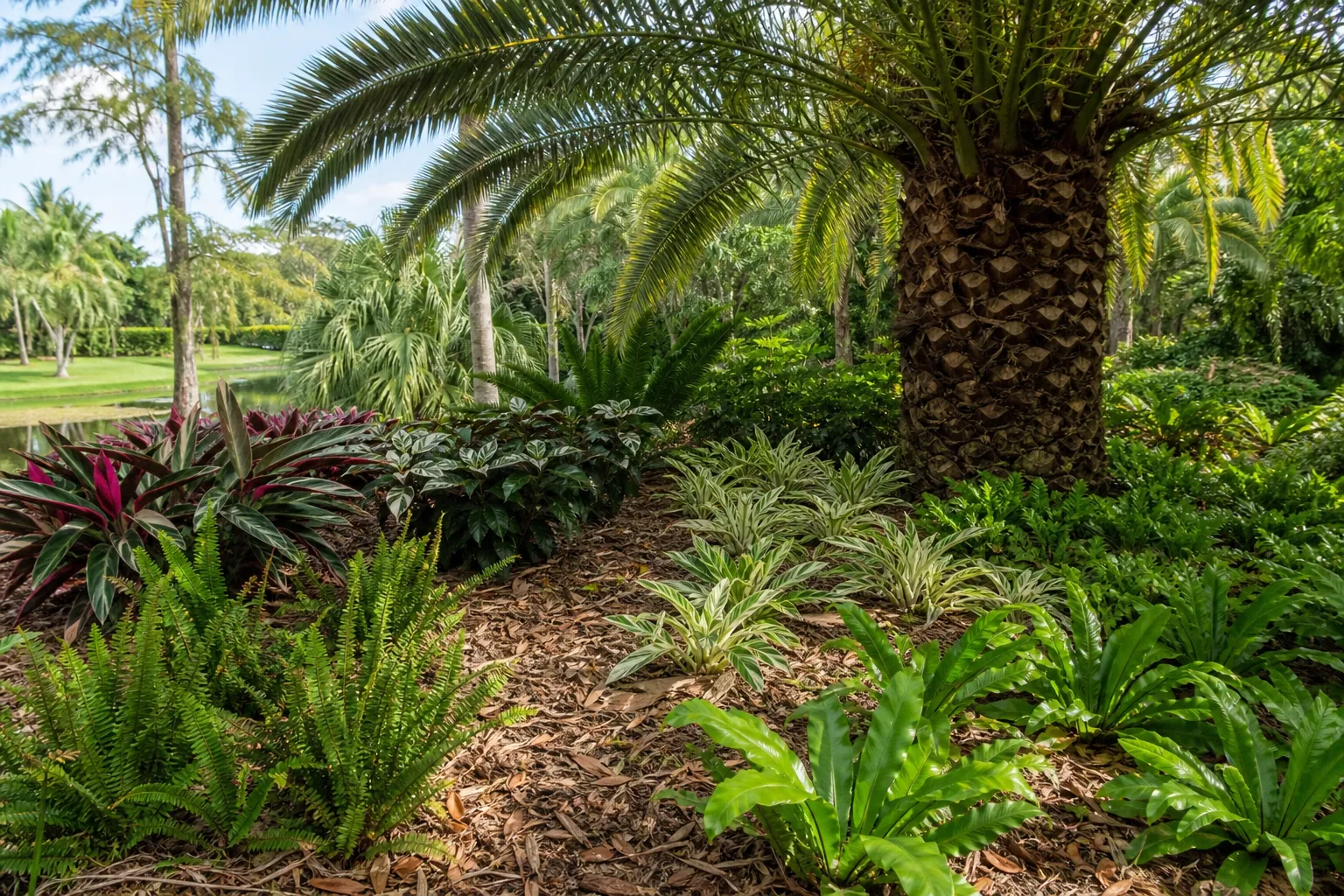
For filtered shade, options may include coontie, cast iron plant, bromeliads, liriope, flax lily, mondo grass, and selected ferns. Shell ginger and dwarf varieties of other tropical foliage plants can provide height where adequate moisture and space are available. In brighter sites, drought-tolerant choices such as beach sunflower, bulbine, society garlic, and some ornamental grasses may be appropriate.
Use a restrained palette rather than collecting too many unrelated species. Repeating three to five compatible plants creates a calmer, more intentional appearance. Contrast broad foliage with narrow leaves, then add limited seasonal color where it can be maintained easily.
- Match light levels: Select true shade plants for dense canopies and sun-tolerant species for the bright outer edge.
- Check mature size: Leave enough room for airflow and access instead of relying on frequent trimming.
- Favor durable foliage: Strong leaves handle wind, rain, and occasional falling debris better than fragile blooms.
- Use Florida-friendly species: Well-adapted plants generally require less water and recover more reliably from seasonal stress.
- Avoid invasive plants: Verify recommendations with current local resources because invasive status can vary by region.
- Plan for irrigation zones: Group plants with similar moisture needs so palms and understory plants are not overwatered.
Protect palm roots during bed preparation
Palm roots spread outward from the base and remain relatively close to the soil surface. Aggressive digging can cut active roots and stress the palm. Avoid mechanical trenching, deep cultivation, and major grade changes within the root zone. Hand digging small planting holes is usually the safer approach.
Do not pile soil around the trunk to create a raised bed. Burying the trunk base can hold excess moisture against tissues that need air, increasing the risk of decline. Keep the original grade visible and preserve a clear ring around the trunk.
If the existing ground is poor, improve individual planting areas modestly rather than replacing all soil beneath the canopy. Organic matter can help certain beds retain moisture, but it should be blended thoughtfully based on drainage. Installing small plants limits root disturbance and lets them establish gradually among existing palm roots.
Use mulch correctly around palms
Mulch gives beds a finished appearance, moderates soil temperature, reduces weeds, and slows moisture loss. Apply an even layer about two to three inches deep, adjusting for the material and drainage conditions. Keep mulch several inches away from the palm trunk and from the crowns of understory plants.
Avoid forming a mulch volcano. Deep piles can trap moisture, conceal decay, and encourage roots to grow into unstable organic material. Pine bark, pine straw, melaleuca mulch, and other locally available products can work when applied properly. Stone may suit certain designs, but it can retain heat and make later planting more difficult.
Refresh mulch based on actual depth rather than a fixed schedule. Before adding more, loosen compacted material and check whether older layers remain. This simple step prevents beds from becoming progressively deeper each year.
Design irrigation for palms and understory plants
New plants need consistent moisture while their roots establish, even when the selected species will eventually tolerate dry periods. Water deeply enough to moisten the planting area, then allow conditions to move toward the appropriate moisture range before watering again. Constantly saturated soil is not beneficial.
Drip tubing or low-volume emitters can direct water to the understory without repeatedly soaking the palm trunk. Inspect the system as plants mature because foliage, roots, mulch, and landscape work can shift or block emitters. Seasonal rainfall should also influence the schedule.
Palms have specific nutritional requirements. A fertilizer intended for Florida palms may differ from products used on turf or flowering shrubs. Applying the wrong analysis across the entire bed can contribute to nutrient imbalances. Follow current regional guidance, product labels, and any local fertilizer restrictions.
Create a layered design that remains maintainable
Start with a clear bed shape that relates to the palm canopy and surrounding architecture. Gentle curves often suit tropical landscapes, while simple geometric beds complement modern homes. Make the bed large enough for mature plants, but avoid extending it into walkways or areas needed for lawn equipment.
Place taller foliage toward the background or between widely spaced trunks. Use medium-height plants for rhythm and low groundcovers along visible edges. Keep sightlines open near driveways, intersections, windows, and paths. Repetition can connect separate palm groupings across the property.
Finally, plan for debris removal. Leave discreet stepping spaces so crews can reach trunks and collect fronds without crushing plants. A landscape that looks lush but cannot be serviced safely will become expensive and untidy over time.
Get help planning your Florida palm beds
The most attractive palm understories balance tropical character with drainage, root protection, water use, and realistic maintenance. Tropical Yards can help assess your light, soil, existing palms, and preferred style before recommending a practical planting plan.
For calm, site-specific guidance on a Florida landscape, call Tropical Yards at 772-267-1611. A thoughtful plan can turn bare or difficult ground beneath palms into a cohesive part of the yard.
Call 772-267-1611 to talk through next steps.