How Do You Plan a Low-Maintenance Tropical Bed for Full Sun in Flagler County?
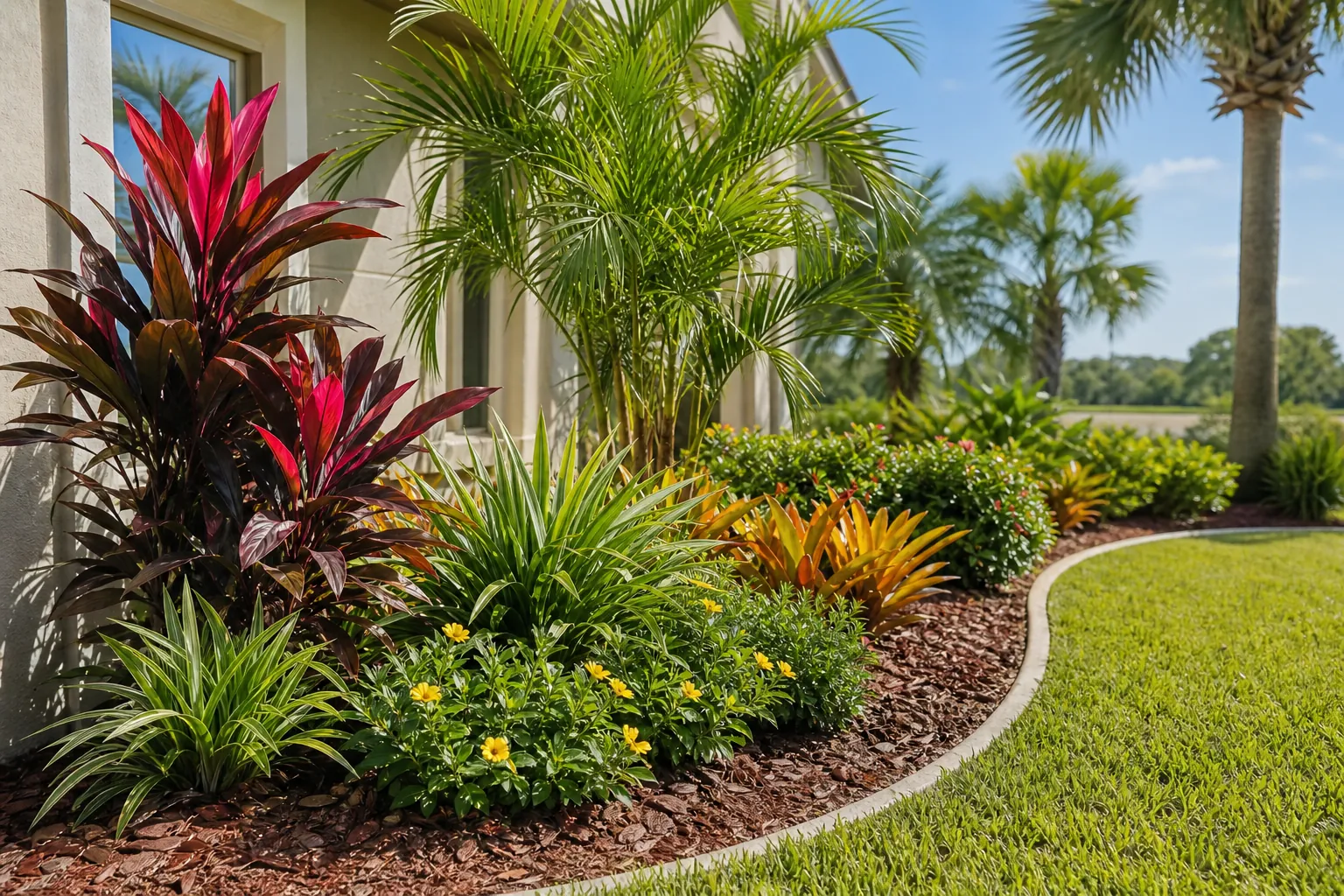
A successful tropical bed in full sun starts with decisions that reduce avoidable work. In Flagler County, begin by studying the site rather than buying plants based only on appearance. Note how sunlight, drainage, wind, irrigation, and nearby structures affect the space. Then create a restrained planting plan with suitable spacing, a clear watering strategy, and room for mature growth. The goal is not a bed that requires no care. It is a bed whose routine upkeep is predictable and manageable.
Start With Sun, Drainage, and Existing Conditions
Observe the proposed bed at several points during the day. “Full sun” should describe the actual site, not an assumption based on its direction. Nearby trees, fences, buildings, and rooflines can create changing patterns of shade. Also look for reflected heat near walls, paving, and driveways. A plant that tolerates open sunshine may react differently beside a hot surface.
Next, check how water moves after rain or irrigation. Identify low spots where water collects and raised areas that dry sooner. Do not hide a drainage issue beneath new soil or mulch without understanding where the water will go. Record irrigation coverage, including places that receive too much or too little water.
Wind exposure also matters. An open corner can be harsher than a protected bed near the home. Finally, locate utilities, downspouts, walkways, windows, equipment, and property boundaries. These observations define the usable planting area and help prevent choices that create pruning, access, or moisture problems later.
Choose Plants by Function Before Appearance
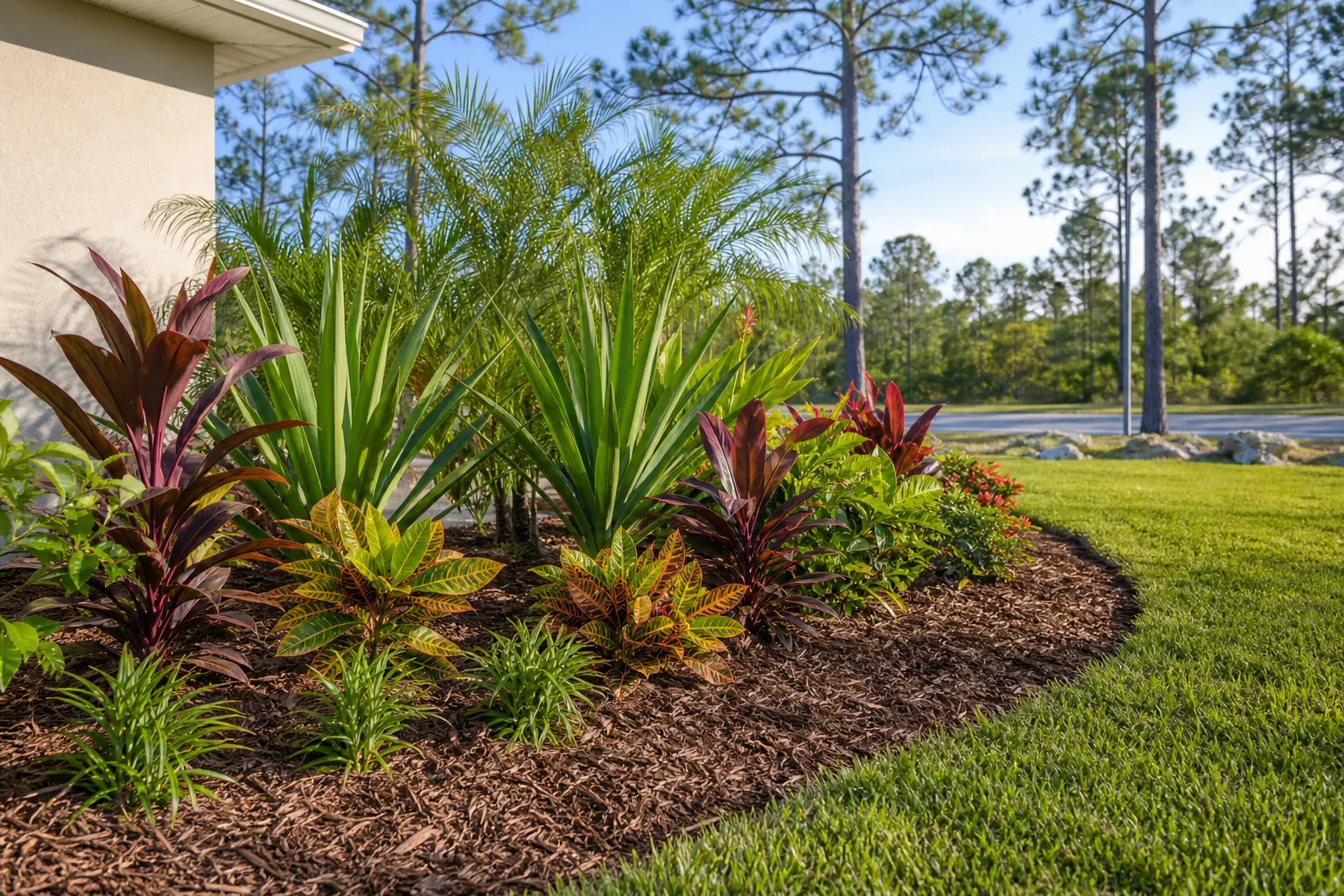
Build a short list of plants that fit the bed’s real conditions. Evaluate each choice for sun exposure, drainage preference, mature height and width, cold sensitivity, and likely maintenance. A tropical appearance can come from bold foliage, layered forms, repeated shapes, and a limited color palette. It does not require filling every gap with a different plant.
Assign each plant a function. Larger plants can form the structural layer, medium plants can provide mass and rhythm, and lower plants can define the bed edge. Repeating dependable selections usually creates a calmer design and simplifies care because similar plants can often be maintained together.
Before purchasing, compare mature dimensions with the available space. Avoid placing plants where their natural size will block a window, narrow a walkway, cover equipment, or require frequent cutting. If cold-sensitive plants are being considered, decide whether their visual value justifies seasonal attention. That tradeoff is easier to make on paper than after the bed is planted.
Use a Simple Layout With Mature Spacing
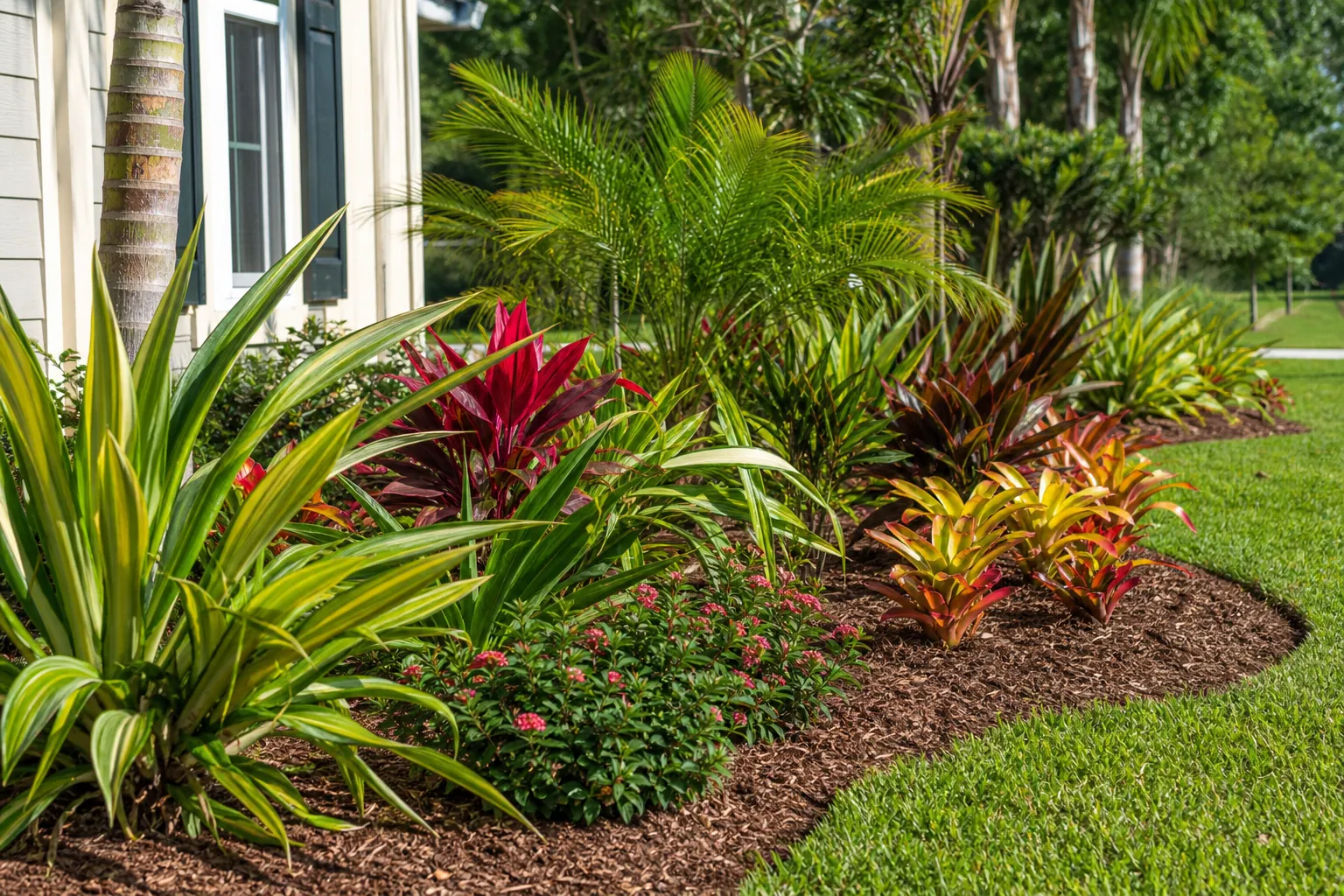
Sketch the bed to scale, even if the drawing is basic. Mark permanent features and show the expected mature spread of every plant. This reveals crowding before it becomes an expensive problem. Plants should be spaced for future growth rather than immediate fullness. Open soil at installation is normal and can be managed with mulch while plants establish.
Keep taller material where it will not obscure views, interfere with rooflines, or make entrances feel cramped. Place lower plants along paths and driveways so foliage does not spill into travel areas. Preserve direct access to hose connections, utility equipment, drains, and exterior walls.
- Group plants with similar sun, water, and drainage needs.
- Repeat a small selection instead of using many unrelated varieties.
- Leave clear access for inspection, cleanup, and irrigation adjustments.
- Keep mature growth away from paving, windows, and equipment.
- Use defined bed lines that are practical to edge and maintain.
Before digging, set containers in position and view the arrangement from the street, windows, and primary outdoor spaces.
Plan Watering, Soil Coverage, and Routine Care
Low-maintenance design depends on matching water delivery to the planting plan. Review whether existing irrigation reaches the entire bed evenly. Grouping plants with similar needs makes it easier to avoid keeping one area too wet while another remains dry. Newly planted material may need closer observation while roots establish, so do not treat installation day as the end of the process.
Apply mulch as soil coverage, but keep it from piling against trunks, stems, walls, or equipment. Mulch can help moderate soil conditions and make weeds easier to notice, yet excessive depth or contact with plant bases can create new problems. Maintain a visible gap around crowns and trunks.
Create a simple care schedule based on observation rather than automatic intervention. Check moisture, irrigation coverage, weeds, damaged foliage, and encroachment along edges. Prune for a clear reason, such as removing damaged material or preserving access. Avoid repeatedly cutting plants to force them into spaces that were too small from the beginning.
Prepare for Cold Without Complicating the Bed
A tropical look and low maintenance can conflict when a design relies heavily on cold-sensitive plants. Decide in advance how much protection work you are willing to perform. Reserve more vulnerable selections for accessible locations where they can be monitored without stepping through dense planting. Avoid layouts that make temporary protection difficult to place or remove.
Young palms may require particular attention when cold weather approaches. For focused planning, read this guide to protecting young palms from frost. Use it as a seasonal companion to the broader bed plan.
After planting, review the bed following intense sun, heavy rain, irrigation cycles, and cold periods. Look for persistent wilting, standing water, wind damage, or plants outgrowing their assigned area. Early adjustments are usually simpler than redesigning an established bed. Keep notes on what performs well in each microclimate. Those observations make future replacements and additions more deliberate and help preserve a cohesive tropical appearance without steadily increasing maintenance.
Talk Through Your Tropical Bed Plan
If you are deciding how to organize a full-sun tropical bed in Flagler County, call Tropical Yards at 772-267-1611. A calm conversation can help you clarify the site questions and planning priorities to consider next.
Call 772-267-1611 to talk through next steps.