How Should You Space Plants in a Low-Maintenance Flagler County Tropical Bed?
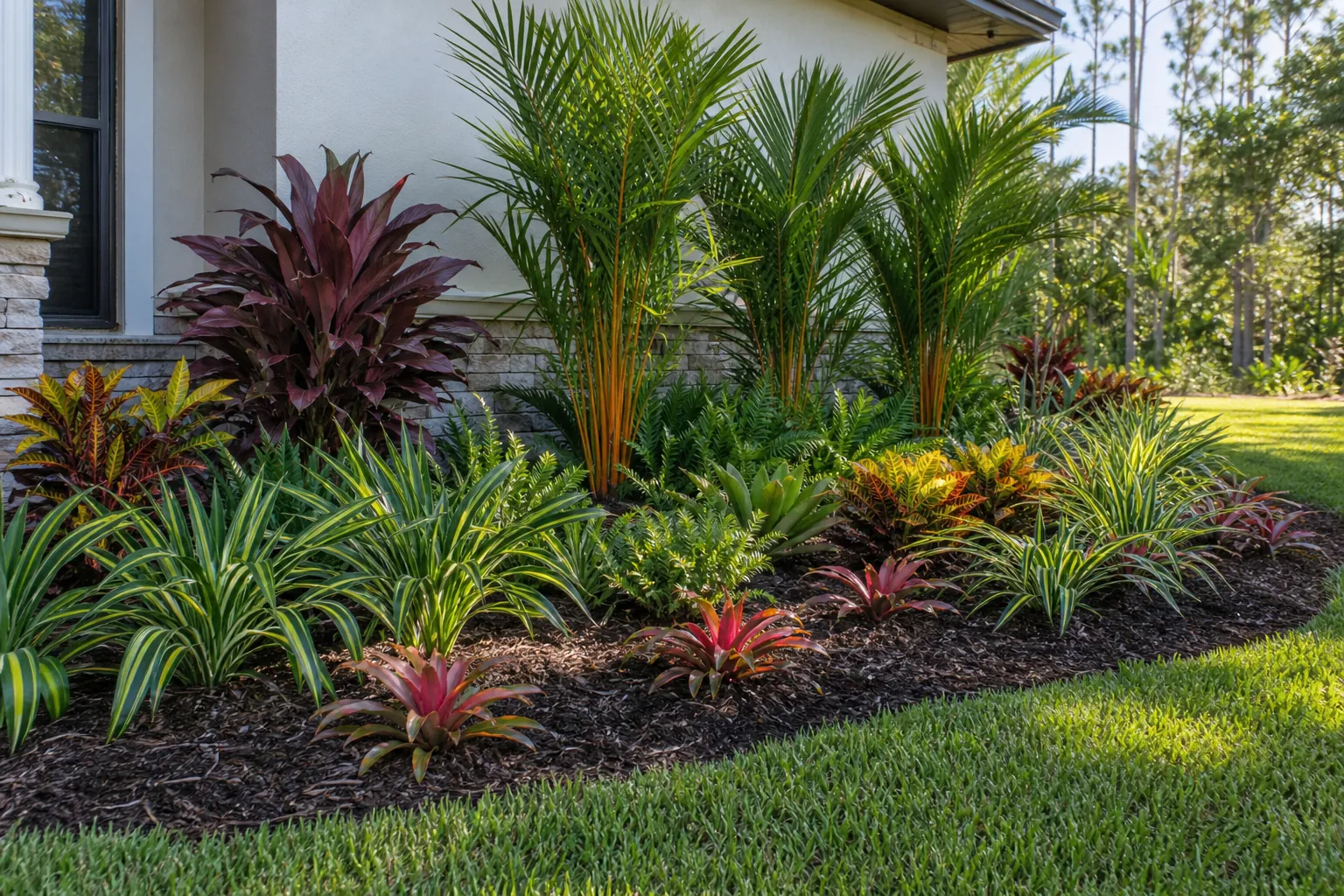
Good spacing starts with the size plants will reach, not how they look in nursery containers. For a low-maintenance tropical bed in Flagler County, leave enough room for mature growth, routine access, airflow, and changing seasonal conditions. A bed planted for immediate fullness can become crowded, difficult to inspect, and harder to manage. A bed planned around mature dimensions may look open at first, but it gives each plant room to develop. Use the steps below to compare plant choices and decide where each one belongs before planting.
Begin With Mature Width, Not Container Size
Check the expected mature width of every plant under consideration. Container size shows what you are buying today, while mature width helps determine how much bed space the plant may eventually occupy. Divide the mature width roughly in half to estimate how far the plant's center should sit from a wall, walkway, edging, or neighboring plant that should not be covered.
Then compare that estimate with the actual bed. Mark the center of each proposed planting location using flags, stakes, or removable landscape paint. Measure from center to center rather than from leaf tip to leaf tip. This creates a consistent layout even when plants have uneven or flexible foliage.
Do not assume all specimens of one type will remain identical. Growing conditions and plant form can affect their eventual spread. When a plant's listed size varies, plan around the larger realistic width if your priority is reducing future correction. A little restraint at planting time can preserve a clearer layout as the bed fills in.
Organize The Bed In Functional Layers
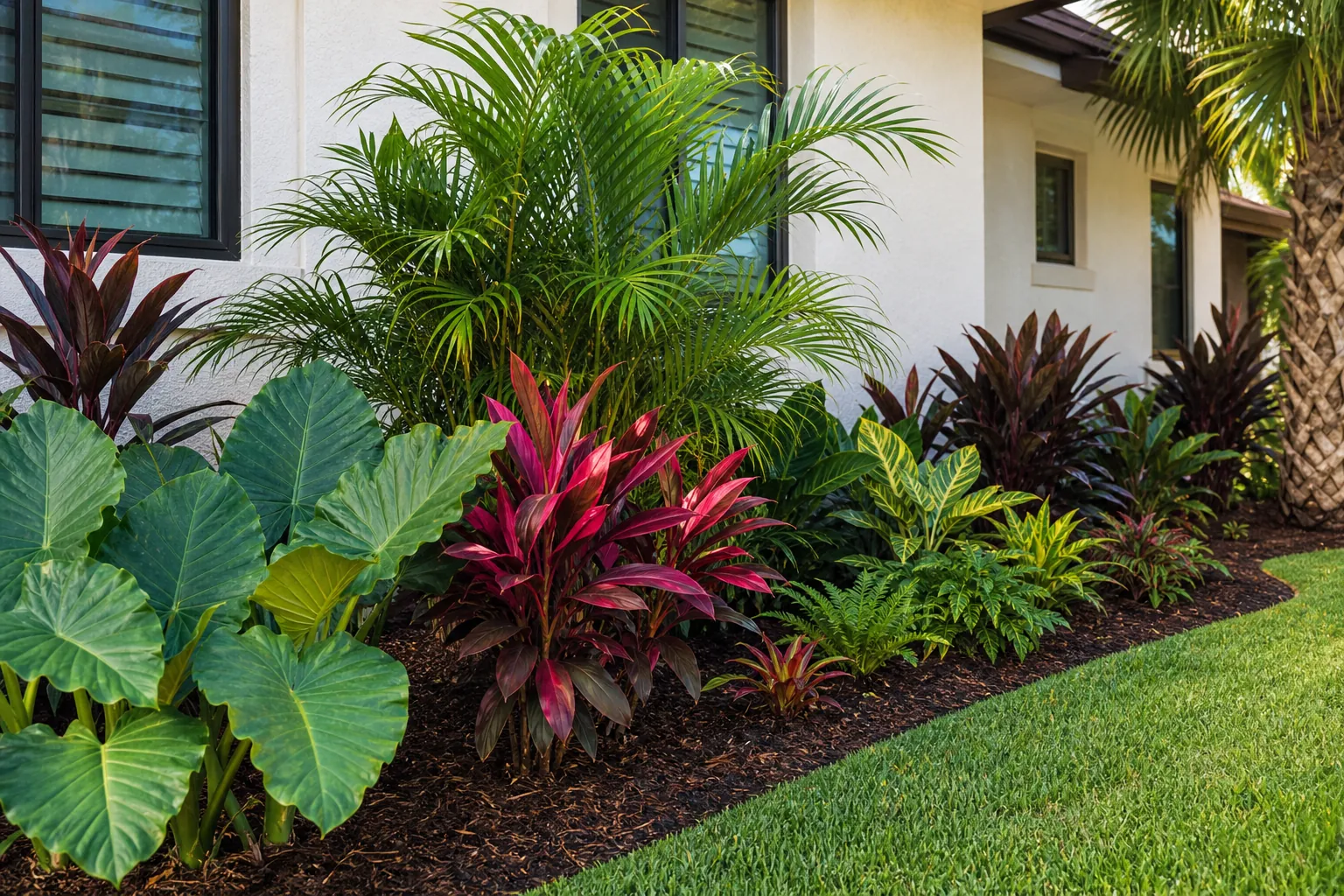
Arrange plants by role before deciding exact spacing. Taller structural plants generally belong where they will not block windows, signs, paths, or shorter plants. Mid-height plants can connect the structure to the bed's lower edge. Smaller plants may define the front, but they still need enough room to avoid spilling across pavement or disappearing beneath larger foliage.
Draw the bed to scale on paper, including fixed features such as walls, corners, utility elements, drains, and walkways. Sketch each plant as a circle representing its mature spread. Overlapping circles indicate likely crowding. Circles that touch or nearly touch show where plants can create visual continuity after growth.
- Record the mature height and width of each plant.
- Mark doors, windows, paths, edging, and other fixed features.
- Place structural plants first, followed by middle and front layers.
- Reserve clear routes for inspection and routine access.
- Review the plan from the street, entry, and main viewing areas.
Leave Practical Access Around Every Plant
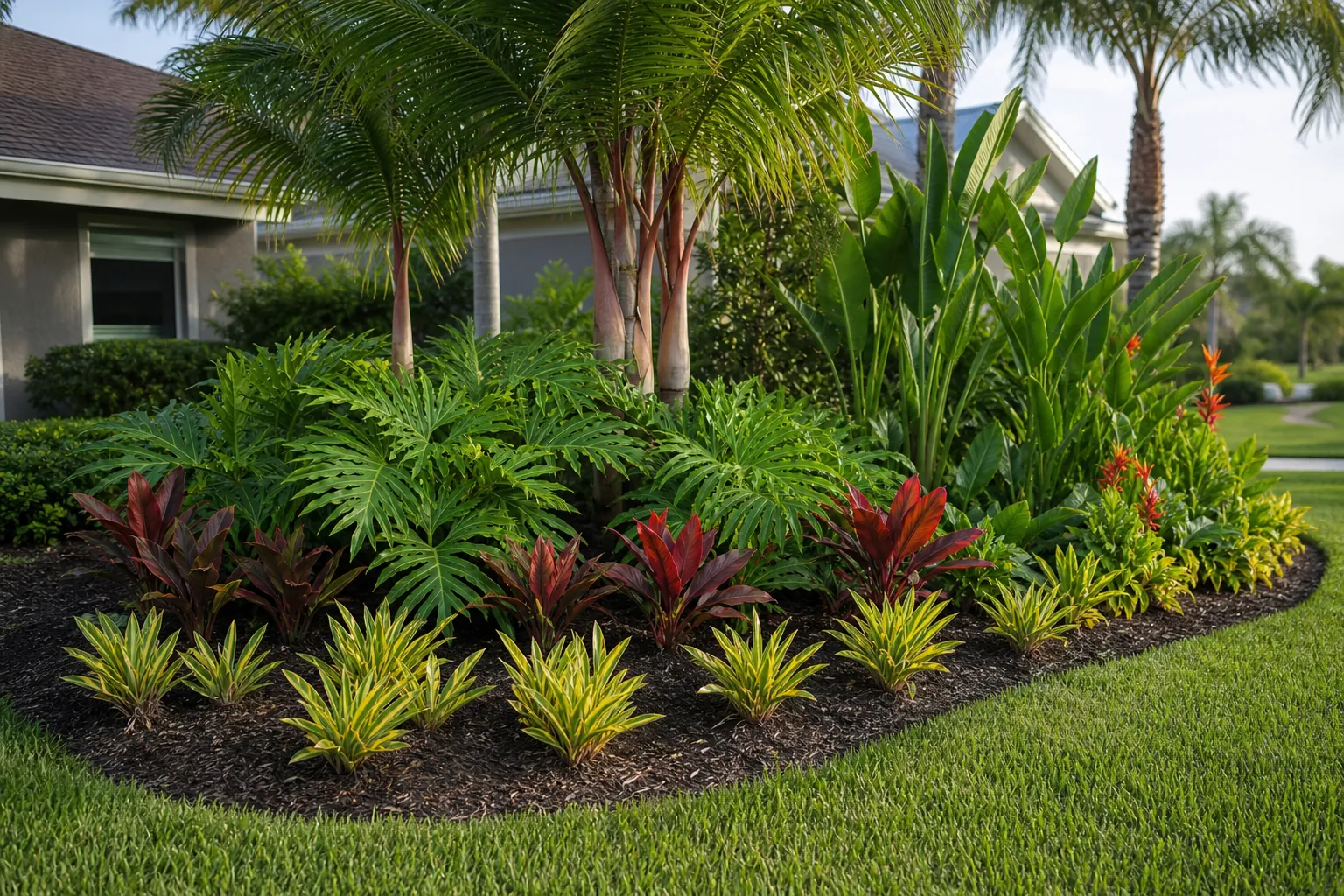
Low maintenance does not mean no access is needed. A workable tropical bed allows you to reach plants without stepping on neighboring roots or pushing through dense foliage. Identify where you may need to inspect stems, remove fallen material, check soil conditions, or reach irrigation components. Leave intentional openings instead of relying on temporary gaps that will close as plants mature.
Pay particular attention to narrow side yards, corners, and beds bordered by walls. These areas can become difficult to enter when broad plants grow toward one another. Keep foliage from being positioned to cover vents, drains, meters, or equipment. Near a walkway, account for the way leaves arch outward, not only the plant's upright height.
Access can be subtle. A small open zone behind a planting group or a few stepping points within a wide bed may be enough. The goal is not to divide the design into obvious lanes. It is to preserve a practical way to observe and manage the bed without repeatedly cutting plants back simply to move through it.
Account For Airflow, Water, And Microclimates
Spacing should respond to conditions within the property, not only a plant label. Walls, fences, pavement, roof runoff, shade, and exposure can create different microclimates within one bed. Before planting, watch where water collects after rain, which areas dry first, and how sunlight changes during the day. Place plants according to those real conditions while preserving mature clearance.
Avoid packing foliage tightly against buildings or creating dense clusters where leaves remain pressed together. Space that permits air movement and visual inspection makes it easier to notice changes before a problem spreads through an entire grouping. Also consider rooflines and downspouts. A plant positioned under concentrated runoff may receive very different moisture than one only a few feet away.
Flagler County beds can also experience cold periods. Give vulnerable young plants locations that fit their needs and allow room for seasonal protection if necessary. If palms are part of the plan, review this guide on protecting young palms from frost before finalizing their placement.
Test The Layout Before Planting
Once the plan looks workable on paper, mark it in the actual bed. Set container plants at their proposed center points without removing them from their pots. If the plants are not yet available, use stakes and measured circles. Walk past the bed from every normal direction and check sightlines, access, and clearances.
Ask practical questions. Will a mature plant lean into the walkway? Could a taller specimen hide a smaller one? Is there room to reach the back of the bed? Does the layout keep fixed property features accessible? Are plants grouped according to the bed conditions you observed? Adjust the center points until the answers support long-term use.
Resist closing every visible gap with another plant. Planned open space is part of the design, especially during establishment. If temporary openness is unacceptable, consider using movable containers or another reversible visual element rather than inserting permanent plants into space reserved for mature growth. Photograph the marked layout and save your measurements. That record can help you maintain the intended arrangement as plants develop.
Discuss Your Tropical Bed Layout
If you are weighing spacing choices for a tropical bed in Flagler County, call Tropical Yards at 772-267-1611. A calm review of plant size, bed dimensions, and access priorities can help you make a more informed decision.
Call 772-267-1611 to talk through next steps.