Matching coquina shell to an existing surface in Florida
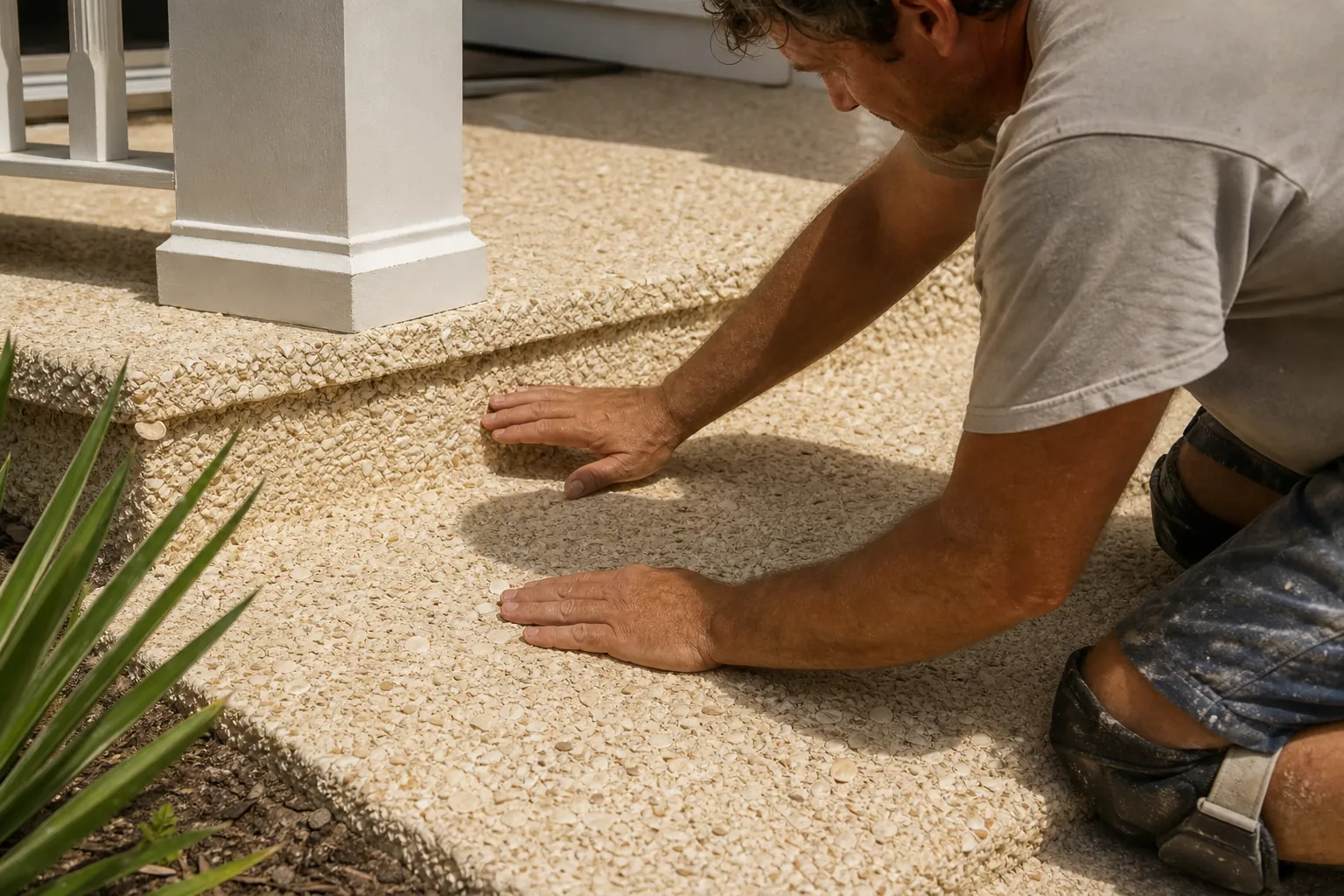
A fresh load of coquina shell can look surprisingly different beside a surface that has been in place for years. The older material may be faded, compacted, partly buried, or mixed with sand and soil. New shell may look brighter and more textured even when it belongs to the same general material category.
Matching coquina shell to existing surface conditions starts with understanding what you already have. Instead of choosing from a photograph alone, compare representative samples, look at the material in different moisture conditions, and decide whether you need a close patch match or a consistent refresh across a larger area.
Tropical Yards supplies coquina shell and tropical plants, with dump trailer delivery from St. Augustine to Daytona Beach. This guide focuses on buyer decisions and DIY preparation so you can discuss your material needs clearly before ordering.
First, Identify What You Are Trying To Match
Before evaluating new shell, separate the surface's current appearance from the material underneath. An older path might look mostly sandy because small particles have settled between the shell pieces. A garden border may appear darker because soil has migrated into the top layer.
Examine several places, including a sunny area, a shaded area, and a protected edge. These locations can reveal how much of the visible difference comes from exposure rather than the original shell selection.
Lift a small amount from below the top layer without disturbing edging or buried utilities. Compare those pieces with the loose material on top. If the buried shell is lighter, surface staining or accumulated soil may be influencing the match.
- Check whether the surface contains mostly recognizable shell fragments or a finer, sandier mixture.
- Look for gravel, mulch, or other materials that may have become mixed into the shell over time.
- Note whether the area is a decorative bed, a walking path, or another surface with different practical requirements.
- Record where the old material is thin, deeply settled, or pushed against the edges.
Do not assume that every pale aggregate is coquina shell. If the existing material is uncertain, keep a small representative sample and ask the supplier what characteristics can reasonably be compared. A photograph helps explain the project, but it cannot establish composition by itself.
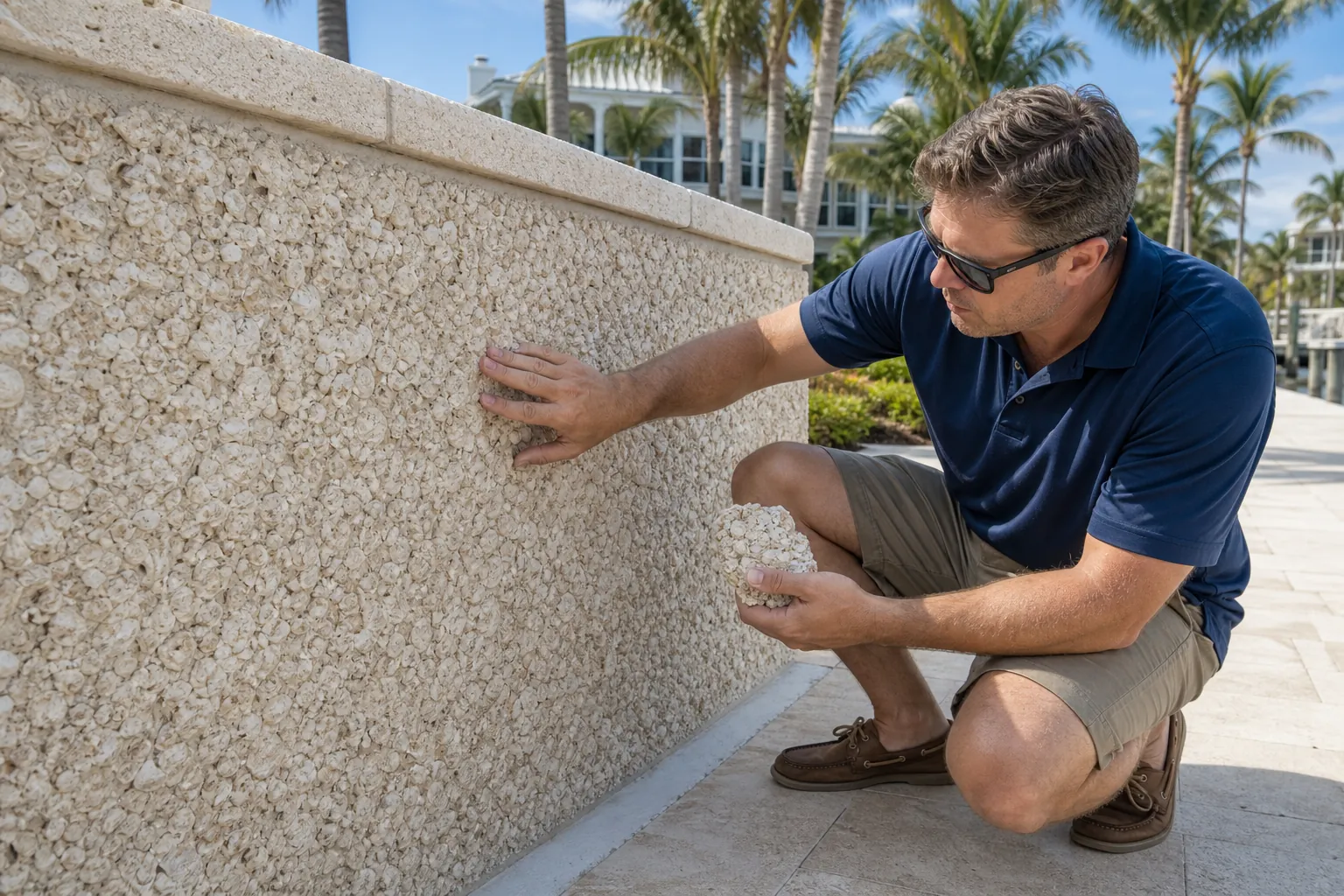
Compare Color, Fragment Size, And Overall Texture
A useful match involves more than finding the same shade of cream. Color, fragment size, and the balance between larger pieces and fine material all affect how a finished surface looks.
Start with color families. The older surface may contain white, cream, tan, gray, or darker stained pieces. Look at the overall impression from normal viewing distance, then inspect individual fragments. Matching one unusually bright piece can lead you away from the appearance of the area as a whole.
Next, compare the visible fragment sizes. A surface dominated by small pieces can look noticeably different from one with broad, recognizable shell fragments, even if their colors are similar. Texture matters especially along a patch boundary, where two materials sit directly beside each other.
Finally, inspect the fine material between the fragments. Fines can soften the appearance of a shell surface and influence how it settles. Ask about the material currently available rather than assuming every load will have identical proportions.
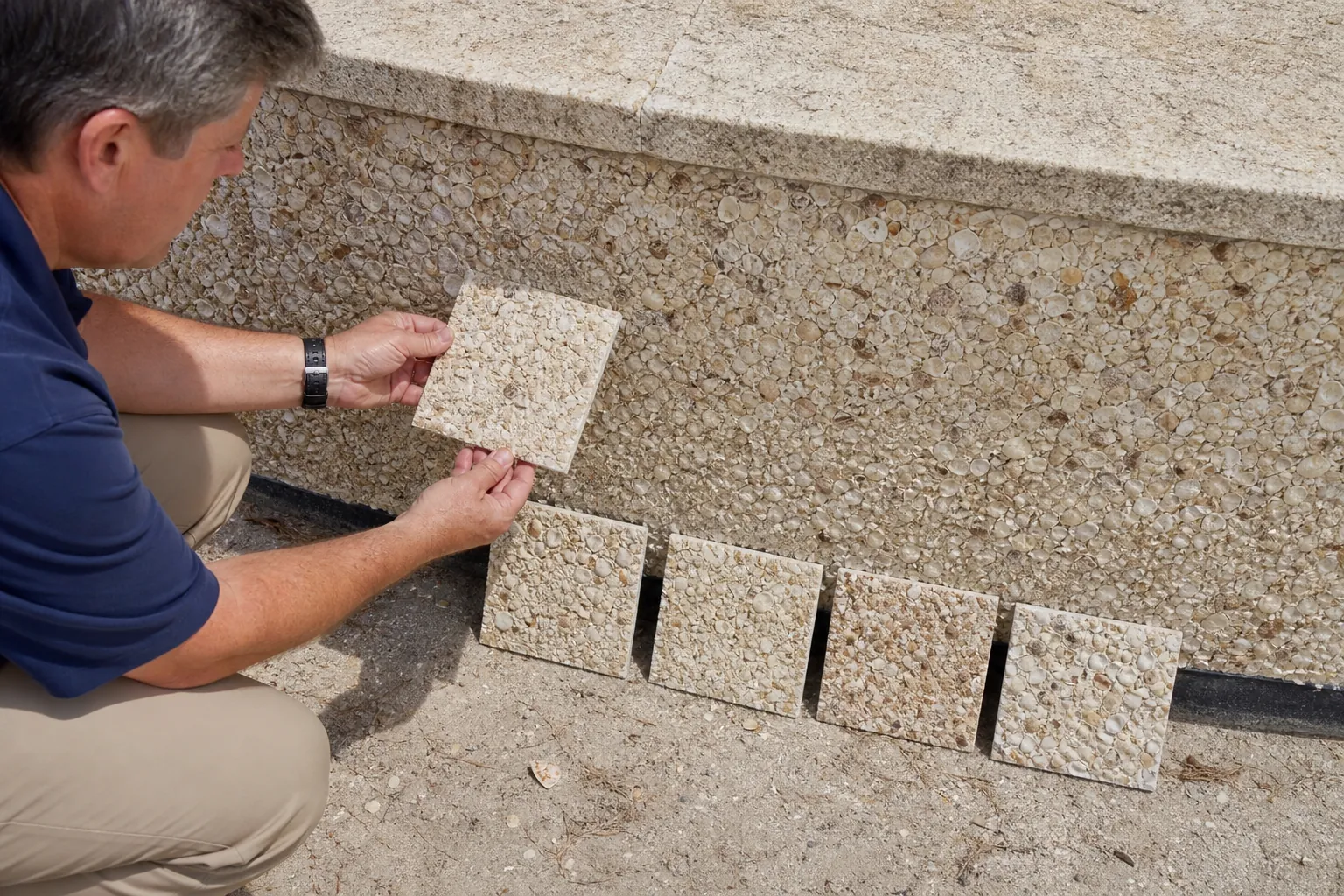
- Compare a handful of old shell with a representative sample of the available material, if one can be provided.
- Spread both samples shallowly so a deep pile does not distort the color comparison.
- Judge the samples from standing height as well as close up.
- Keep samples separate and labeled so old and new material do not become confused.
For a broader introduction to the material before narrowing your choice, review the coquina shell supply page. Use that overview alongside a conversation about the current supply, because natural variation makes a generic product image an incomplete matching tool.
Account For Florida Sun, Rain, And Surface Aging
Florida conditions can make the same shell look different from one location to another. Moisture darkens many surfaces temporarily, while shade, leaf litter, and soil movement can change their appearance over longer periods.
Compare dry material with dry material first. If your old surface is damp after rain and the new sample is dry, you may be judging moisture instead of color. Then wet a small sample of each with plain water and compare again. Let both dry before making your final assessment.
Lighting also matters. Strong midday sun can make pale pieces look brighter, while a shaded bed may appear more subdued. View your samples where the shell will actually be used rather than only beside the driveway or inside a garage.
Fresh shell may become less visually stark as it is exposed to normal outdoor conditions, but that does not mean a poor match will eventually become exact. There is no reliable timetable for two different materials to acquire the same appearance.
Avoid choosing a material solely because someone says it will weather into a perfect match. Instead, ask whether its present color and texture are acceptable, and whether a broader refresh would make any remaining difference less noticeable.
If the existing area contains substantial soil or organic buildup, recognize that you are comparing new shell with a mixed surface. Adding more shell can change that balance, but it cannot reproduce years of accumulated material in a controlled way.
Choose Between A Small Patch And A Broader Refresh
The size and location of the repair determine how closely the material needs to match. A small patch in the middle of a uniform path is often more conspicuous than an entire bed refreshed with one consistent batch.
Use the existing edges and sight lines to guide your decision. A transition at a border, corner, or change in use can look more intentional than a sharp color change across an uninterrupted surface.
There are three practical approaches to consider:
- A localized patch works best when the surrounding shell is reasonably consistent and the available material compares closely in color and texture.
- A light refresh across a defined area can reduce isolated bright spots when there is enough room below edging and adjoining surfaces.
- A broader replacement may be worth considering when the old surface contains a substantial mix of unwanted materials or has become uneven beyond a simple top-up.
Each option has different material requirements. Do not order enough for a small patch and expect it to create a uniform top layer across the whole area. Likewise, avoid adding depth everywhere just to disguise a mismatch if doing so would obstruct drainage or cover edging.
For connected beds or paths, decide whether they should read as one continuous surface. If they do, evaluate them together before ordering. If they are separated by planting areas or hardscape, a slight difference may be less important.
Tropical Yards supplies the material rather than installing or refreshing the surface. Your chosen approach should reflect the work you can safely complete yourself or arrange independently.
Test A Small Area Before Committing To The Full Surface
A sample comparison can narrow your choice, but a small trial area gives better information about how the material looks in place. If you can obtain a suitable amount for testing, choose a discreet spot with conditions similar to the main project.
Keep the test shallow and manageable. You want to assess appearance and handling without creating a raised mound that tells you little about the finished surface.
For a patch, place the proposed material directly beside the old shell. For a refresh, spread it over a small representative section at the depth you are considering. Do not judge only from a bucket, where the mass of material can make color and texture look different.
- Inspect the test in ordinary daylight and in the shade conditions typical of that location.
- Observe it when dry and after it has been dampened.
- Walk the edge of the test area to see whether the transition is noticeable from normal viewing positions.
- Check whether larger fragments rise to the surface when you spread the material with your chosen hand tools.
If the trial looks too bright, determine whether the issue is color, particle size, or simply the contrast between new and weathered shell. These are different problems. Changing the material may help with the first two; expanding the refresh area may be more useful for the third.
Do not use stains, household chemicals, or improvised coatings to force a color match. They can introduce avoidable concerns around plants, runoff, and future surface use.
Measure The Area And Decide On Added Depth
Once you have a matching strategy, calculate material needs from the area you will actually cover. Divide irregular spaces into rectangles or other manageable shapes, then combine their areas.
The key measurement is the depth of new shell, not the total depth of the old and new layers together. A thin visual refresh and a deeper fill for a depleted section require different quantities.
For rectangular sections, multiply length by width to find square footage. To estimate cubic feet, multiply that area by the planned added depth in feet. Divide cubic feet by 27 to convert to cubic yards.
As a measurement example, a 12-foot-by-20-foot area has 240 square feet. If your independently chosen added depth is 2 inches, multiply 240 by 2/12 to get 40 cubic feet, or about 1.48 cubic yards. This illustrates the calculation, not a recommended depth for every shell surface.
Take separate measurements for low spots that need extra material. Guessing an average depth across an uneven area can produce an order that does not match your actual needs.
- Measure clear usable space rather than including tree trunks, large stones, or permanent features.
- Check the height of edging, adjoining pavement, and other boundaries before choosing added depth.
- Identify areas where raising the surface could affect water flow.
- Share your measurements and intended use when asking how the available shell is sold and delivered.
Confirm the ordering unit and discuss practical allowances with the supplier. Material handling, uneven ground, and the intended finish can all affect how your estimate translates into an order.
Plan Dump Trailer Delivery Before Ordering
A well-matched material still needs a workable delivery location. Tropical Yards offers dump trailer delivery of coquina shell and plants from St. Augustine to Daytona Beach. Discuss your address and site access before settling on delivery arrangements.
Describe the route to the proposed unloading area, including gates, tight turns, overhead branches, utility lines, and any soft ground. Do not assume that a space accessible to a passenger vehicle is suitable for a loaded delivery vehicle and trailer.
Ask what clearance, access, and unloading conditions are needed. A dump trailer needs an appropriate location for unloading, and the driver must be able to evaluate site conditions safely.
- Choose a proposed drop location that keeps the material out of roads, sidewalks, and drainage routes.
- Explain whether the approach includes slopes, narrow sections, or surfaces that may be vulnerable to damage.
- Keep children, pets, and bystanders away from the unloading area.
- Plan how you will move the shell from the drop location to the project area.
If you intend to use a ground cover beneath the pile, discuss that plan in advance and make sure it does not interfere with safe unloading. Protecting a staging surface should never take priority over vehicle stability or access.
Delivery brings the purchased material to an agreed location; it is not spreading, grading, or installation. Have your wheelbarrow, tools, and DIY schedule ready, or make separate arrangements for work you will not perform yourself.
Blend New Shell Without Creating New Problems
When you begin your DIY work, focus on a controlled transition rather than burying the whole surface immediately. Keep some new material aside until you have assessed the first section.
Where the old and new shell are compatible, light blending along a patch edge may soften the boundary. Work carefully so you do not pull underlying soil into the visible layer or disturb the base that supports the surface.
If you are refreshing a defined area, spread material consistently rather than dumping extra shell into visually dark spots. A dark spot may reflect shade or staining, not a lack of depth.
Wear gloves and suitable footwear when handling shell, since broken fragments can have sharp edges. Follow appropriate dust precautions when working with dry aggregate, and avoid creating unnecessary airborne dust.
Near plants, keep added material away from trunks, stems, and root flares. Do not raise the surrounding grade simply to achieve a color match. Maintain access to irrigation components and avoid covering features that you need to inspect later.
Stop and reassess if the new layer begins to interfere with drainage, adjoining surfaces, or comfortable use. A visual improvement is not worth an unsuitable change in surface height.
What To Ask Before Buying Your Coquina Shell
The most useful buying conversation combines appearance, quantity, and delivery details. Bring photographs of the full area and close-ups of the existing shell, along with measurements and notes about your intended approach.
Ask these focused questions:
- Can the current material be compared with my existing sample for color and fragment size?
- What natural variation should I expect in the material available for this order?
- What ordering unit should I use when discussing my measured area and planned added depth?
- What access information is needed to evaluate dump trailer delivery to my address?
- What should I prepare at the proposed unloading location before delivery?
The goal is a sensible match, not an unsupported promise of identical weathering. Comparing samples, testing in place, and choosing a clear project boundary will usually give you a stronger basis for buying than relying on a product photograph alone.
Call Tropical Yards at 772-267-1611 to discuss coquina shell sales and dump trailer delivery from St. Augustine to Daytona Beach. Explain what you are matching, how much area you plan to cover, and where the material would be unloaded so the supply conversation can start with the right details.
Call 772-267-1611 to talk through next steps.