Which Native Florida Plants Provide Bold, Tropical-Looking Foliage?
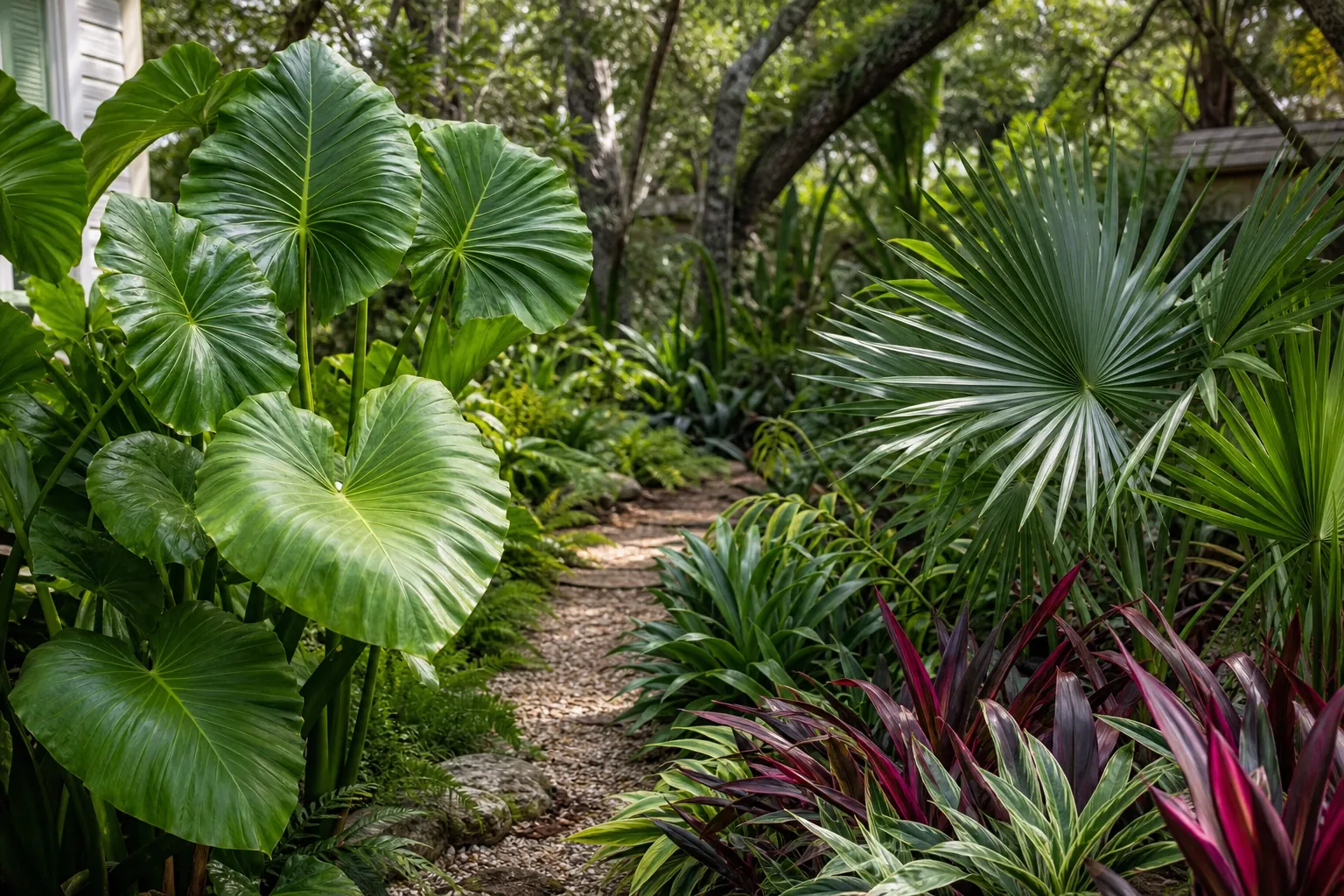
A tropical-looking Florida yard does not have to depend entirely on exotic plants. Several Florida natives offer broad leaves, strong silhouettes, dense texture, or palm-like structure. The right choice depends on more than appearance, however. Before selecting a plant, compare its mature size, preferred moisture, sunlight needs, cold exposure, and relationship to nearby structures. Use the following process to narrow your options and create a landscape that looks intentional rather than crowded.
Start With the Tropical Effect You Want
“Tropical” can describe several visual qualities, so begin by identifying the specific effect you want. If you prefer an overhead canopy and a recognizable palm shape, consider Florida native palms such as cabbage palm, saw palmetto, or Florida thatch palm. If broad leaves are the priority, native sea grape can create a bold, rounded texture. Coontie offers arching, fern-like foliage at a lower height, while wild coffee can contribute glossy leaves and a dense shrub form.
Decide whether the plant must serve as a canopy, screen, foundation accent, ground-level mass, or focal point. This prevents you from choosing a plant solely because its foliage looks appealing in a photograph. A specimen with an impressive mature form may overwhelm a narrow bed, while a low-growing plant may not provide the privacy or vertical emphasis you expected. Write down the desired role, approximate available width, and preferred height before comparing individual plants.
Match Native Plants to Sun, Soil, and Moisture
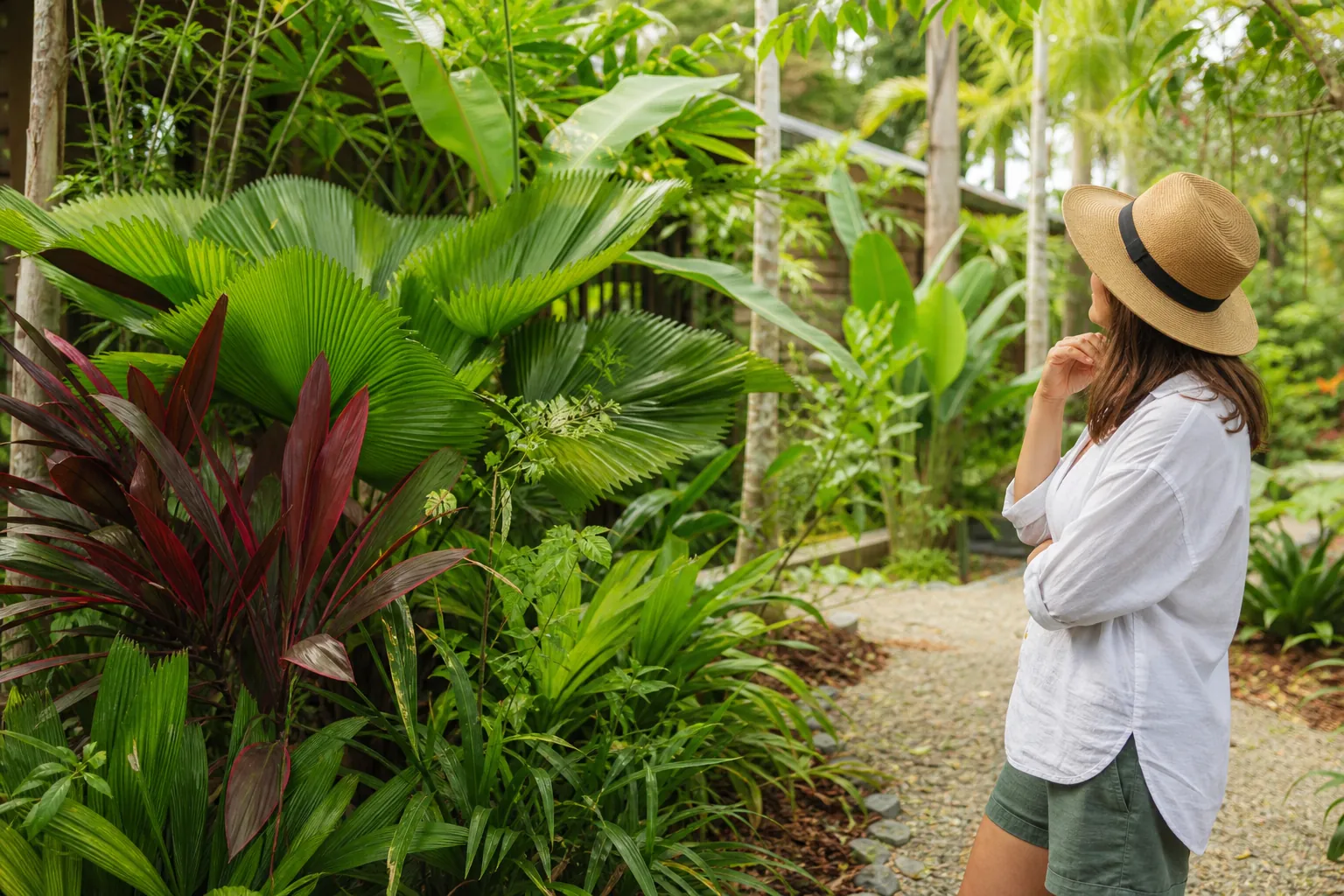
A native plant is not automatically suitable for every Florida yard. Native species occupy different habitats, and those differences matter in a residential setting. Observe the planting area through the day to determine whether it receives full sun, filtered light, or substantial shade. Then check how quickly water drains after rain. A dry, sandy site requires a different choice than an area that stays damp.
Sea grape generally fits sunny coastal-style settings better than deeply shaded beds. Wild coffee is often considered for shaded or partly shaded areas, while coontie can be useful where a compact, textured plant is needed. Saw palmetto has a spreading habit that calls for adequate room. Florida thatch palm is associated with warmer parts of the state, so cold exposure deserves careful consideration.
Also account for salt exposure, reflected heat, irrigation patterns, and competition from established roots. Matching the plant to existing conditions is usually more practical than trying to remake the entire site around one preferred species.
Compare Strong Candidates Before Buying
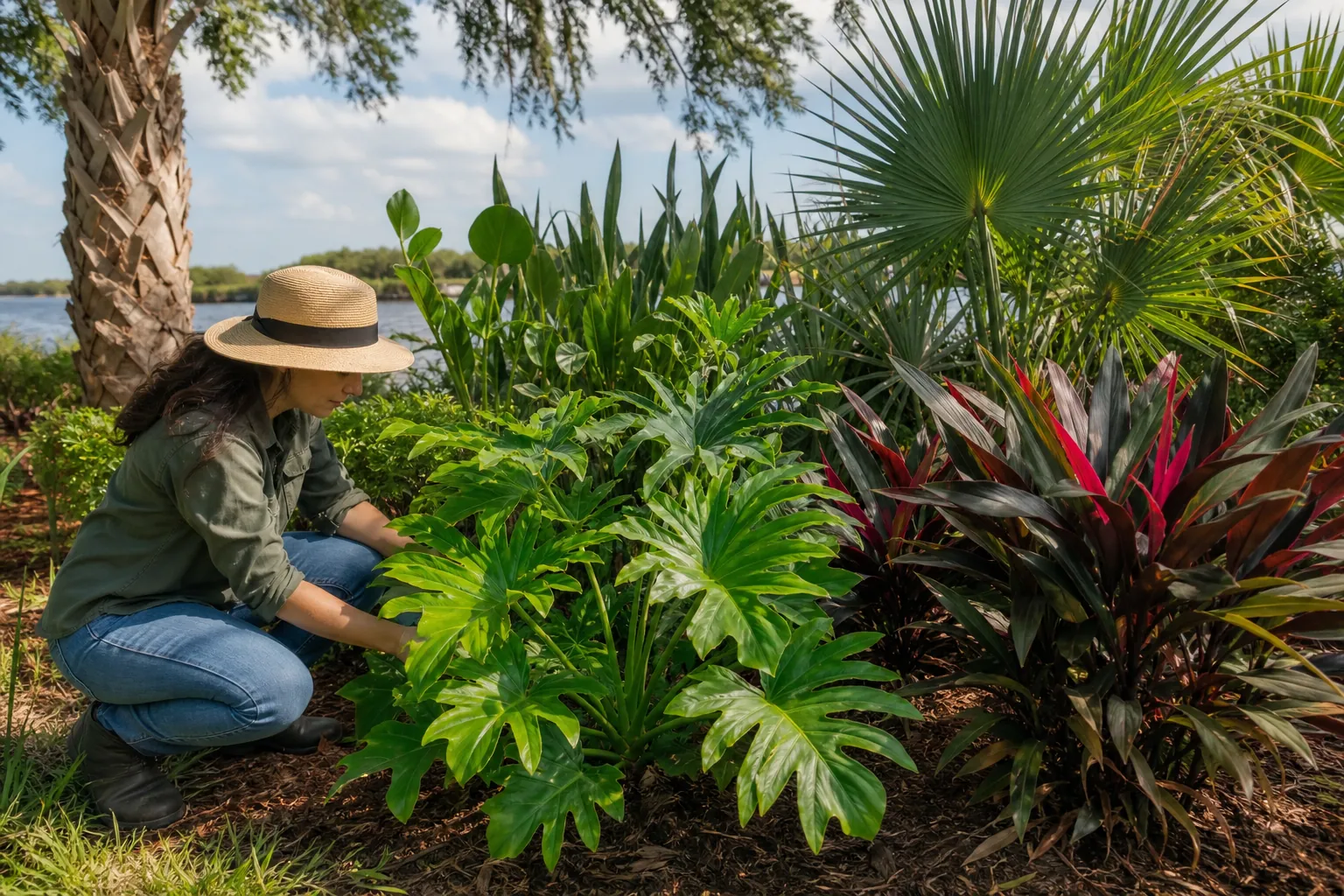
Create a short list only after documenting the site. The following plants can contribute bold or tropical-looking foliage, but each has a distinct form and placement requirement:
- Cabbage palm: A Florida native palm with a tall, upright profile and fan-shaped leaves.
- Saw palmetto: A spreading palm with fan-shaped foliage that needs horizontal space.
- Florida thatch palm: A slender native palm best evaluated carefully for regional cold exposure.
- Coontie: A low cycad with arching, finely divided foliage suited to layered planting designs.
- Sea grape: A broad-leaved native with large, rounded leaves and a substantial mature presence.
- Wild coffee: A native shrub valued for glossy foliage, especially in protected or shaded settings.
For each candidate, verify mature dimensions and site requirements before purchasing. If the plant will sit near a walkway, driveway, wall, utility, or property boundary, measure the available area instead of estimating it visually.
Plan Layers, Repetition, and Practical Spacing
Bold foliage has more impact when the planting has a clear structure. Start with the largest element, such as a palm, large shrub, or broad-leaved specimen. Add medium-height shrubs to connect that element to the house or surrounding beds, then use lower plants such as coontie to soften edges. Repeating a limited group of plants usually creates a calmer design than adding one of every interesting species.
Spacing should be based on mature spread, not the container size at purchase. Young plants placed too closely may look full immediately, but they can compete, block circulation, and require repeated pruning as they grow. Leave access for routine care and keep sight lines open near driveways and paths.
Consider leaf scale as well. Large sea grape leaves create visual weight, while the divided foliage of coontie or palms adds finer texture. Combining contrasting leaf forms can create a lush appearance without relying on excessive plant variety. Use foliage color, shape, and height deliberately rather than filling every open space.
Evaluate Cold Exposure and Long-Term Care
Florida contains meaningful climate differences, and even one property can have warmer and colder pockets. Low areas may collect cold air, while walls, pavement, wind exposure, and overhead canopy can change local conditions. Before choosing a tropical-looking native, consider how often the site experiences cold weather and whether the plant comes from a warmer part of Florida.
New palms and other young plants may be more vulnerable while establishing. If palms are part of your plan, review how to protect young palms from frost in St. Augustine for additional cold-weather planning. Do not assume that native status removes the need for careful placement.
Finally, consider mature cleanup, pruning access, fallen leaves, and irrigation needs. Ask how the plant will affect nearby roofs, paths, screens, and neighboring plants over time. A successful choice should fit the property after maturity, not merely look attractive on installation day.
Discuss Your Florida Yard
Need help thinking through bold, tropical-looking foliage for your property? Call Tropical Yards at 772-267-1611 for a calm conversation about your yard and priorities.
Call 772-267-1611 to talk through next steps.