Which Northeast Florida Natives Create a Tropical Look in Shade?
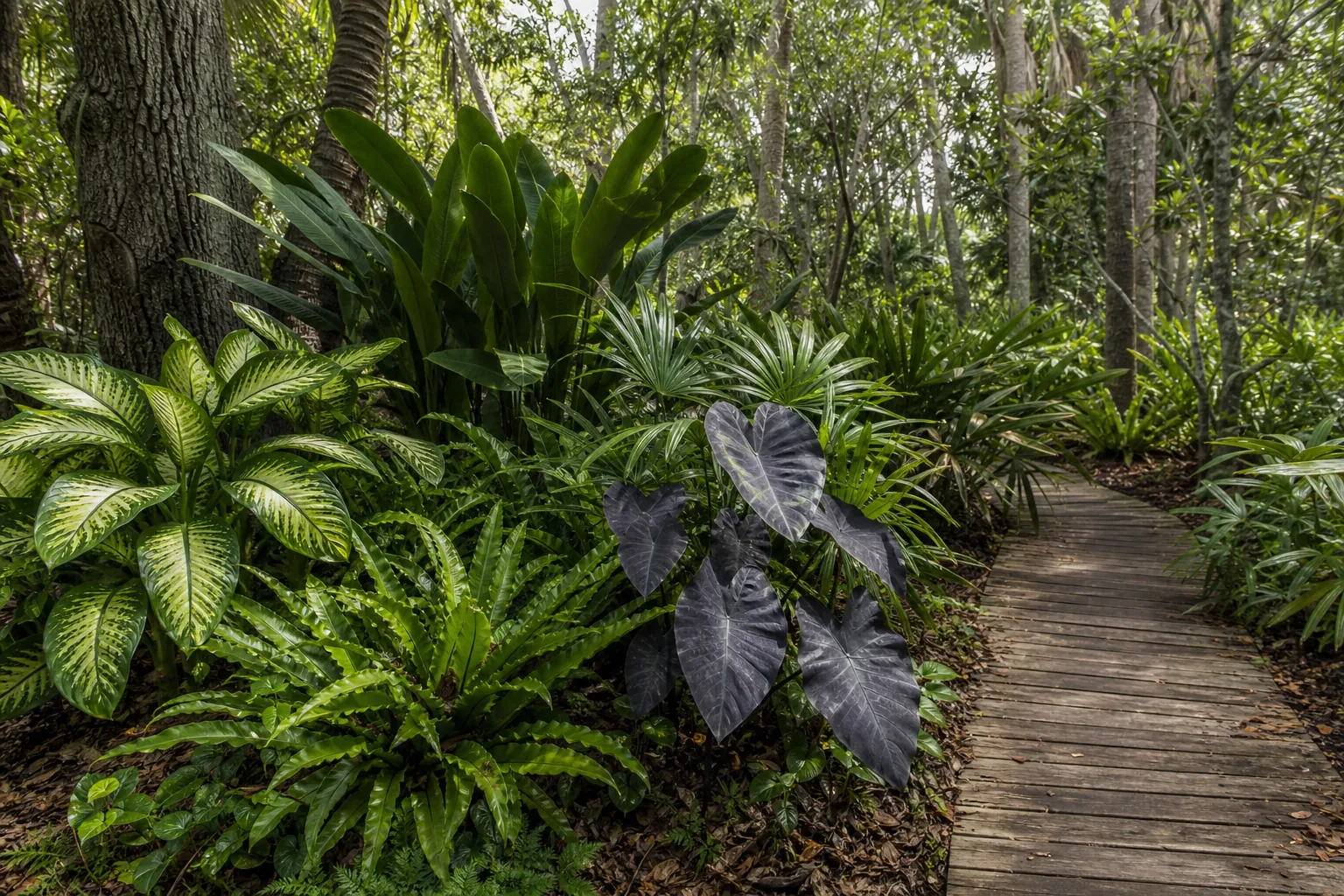
A tropical-looking shade garden in Northeast Florida does not require filling every space with tender plants. The more reliable approach is to study the site, choose Florida natives suited to its conditions, and combine broad leaves, fine textures, layered heights, and evergreen structure. This guide offers a practical framework for making those decisions without assuming that every shaded yard has the same soil, moisture, or winter exposure.
Start With the Kind of Shade You Actually Have
Before choosing plants, observe how light moves through the intended bed. Bright shade beneath a high canopy is different from the deep shade beside a building. Dappled sunlight can support different choices than a location receiving a few hours of direct afternoon sun. Record when direct light reaches the area, how long it remains, and whether nearby trees create changing patterns through the year.
Moisture matters just as much. Check the soil after ordinary rain and again during a dry period. A shaded low spot that stays damp needs a different plant palette from dry soil beneath mature tree roots. Also note roof runoff, irrigation overspray, reflected heat, and wind. Existing roots can make digging difficult and compete for moisture, so avoid assuming shade automatically means cool, moist soil.
Use these observations to divide the area into smaller planting zones. This prevents one attractive species from being repeated across conditions it cannot tolerate. It also produces a more natural, layered design because each plant occupies the part of the garden that fits it best.
Choose Native Forms That Suggest a Tropical Garden
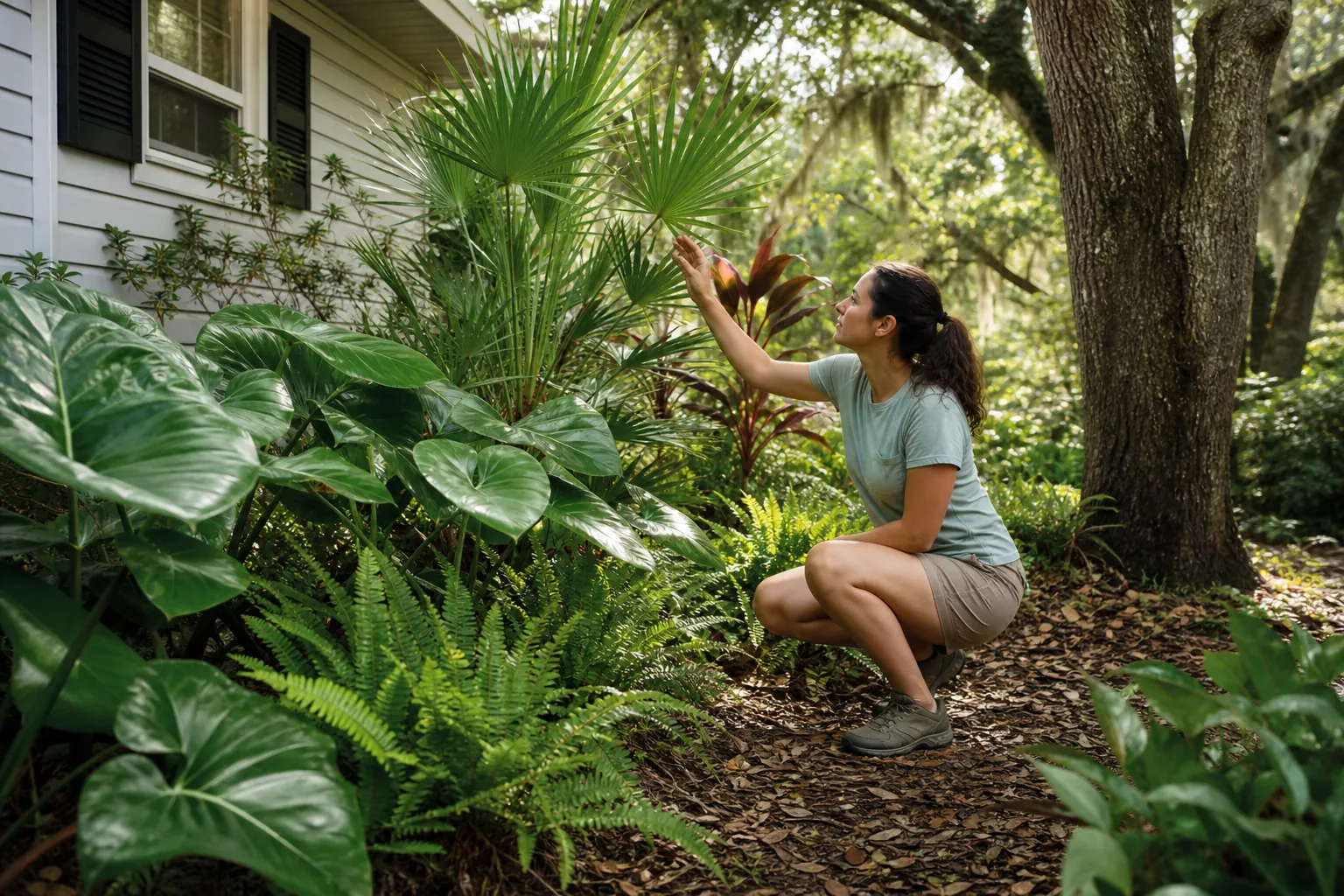
The tropical effect comes primarily from form and composition, not from a plant's place of origin. Look for native candidates with bold foliage, arching fronds, upright evergreen growth, glossy leaves, or dense ground-level texture. Saw palmetto can provide fan-shaped structure where its mature scale and site requirements fit. Coontie contributes stiff, divided foliage and a compact cycadelike form. Native ferns can soften shaded areas, while shrubs with substantial leaves can create the visual mass associated with tropical planting.
Do not select a species from appearance alone. Confirm its botanical identity and evaluate its mature width, mature height, soil preference, moisture needs, and light tolerance. Florida natives are not interchangeable. A plant native to a wet habitat may perform poorly in dry shade, while a species adapted to sandy ground may not suit a bed that remains saturated.
When shopping, compare the plant's requirements with your written site notes. That simple step is more useful than relying on a broad label such as “shade plant” or “Florida native.” Choose fewer compatible species, then repeat them deliberately.
Build Layers Instead of Collecting Individual Plants
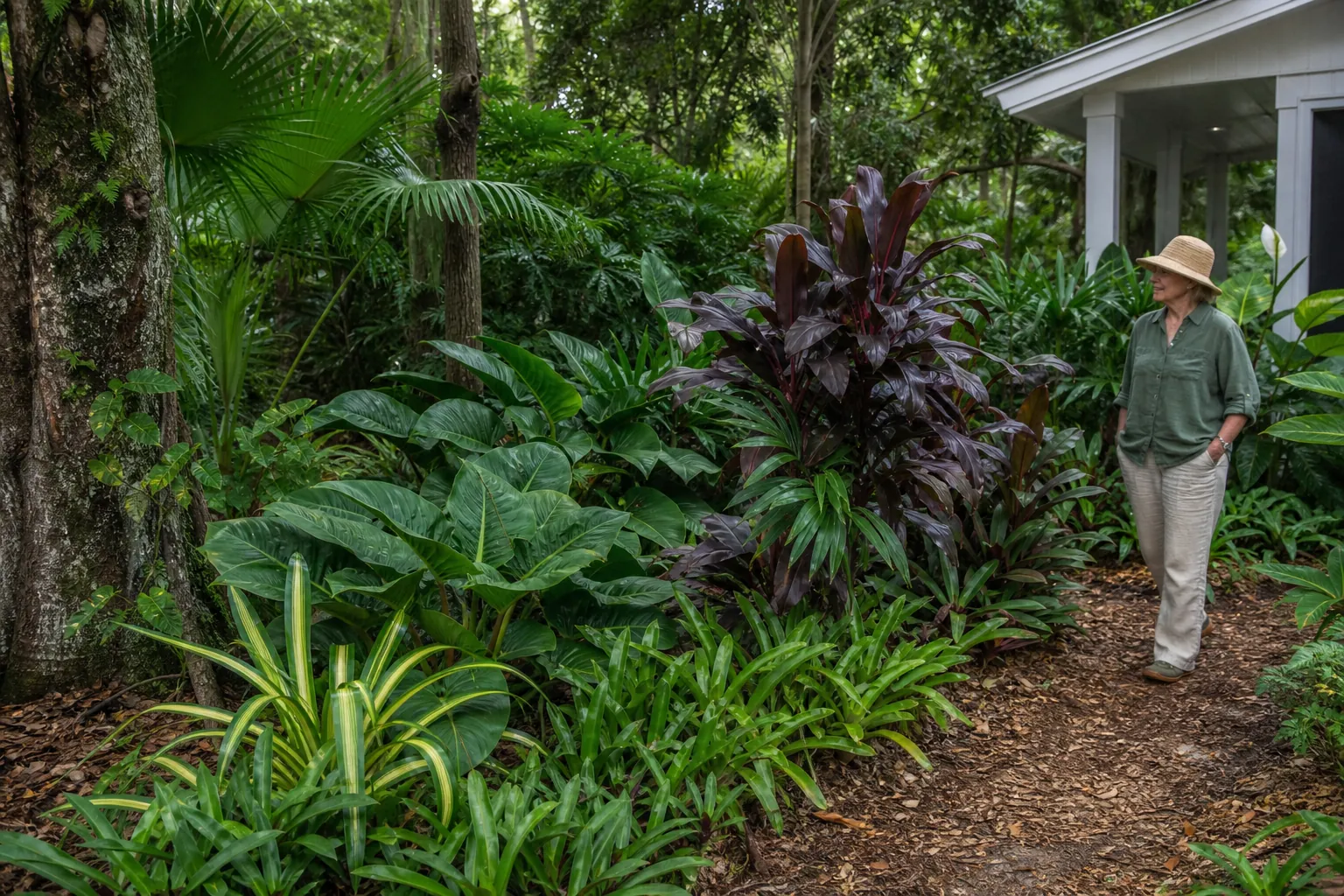
A convincing tropical-style planting has depth. Begin with an upper layer supplied by existing trees or appropriately placed large shrubs. Add a middle layer of shrubs, palmetto forms, or other structural plants. Finish with lower foliage, ferns, and groundcovers. The eye should move from one height to another rather than encountering isolated specimens surrounded by empty mulch.
Plan the composition on paper before buying. Mark windows, paths, gates, utility access, drainage routes, and the expected mature spread of every selection. Keep plants back from structures and circulation areas according to their mature size. This reduces future crowding and helps preserve airflow and access.
- Place the strongest foliage form where it can serve as a focal point.
- Repeat two or three supporting plants to create visual continuity.
- Contrast broad, solid leaves with fine or divided foliage.
- Use ground-level plants to cover transitions between taller groups.
- Leave enough space for mature growth instead of planting for instant fullness.
Repetition creates calm, while texture creates richness. Together, they produce a tropical impression without requiring a large assortment of unrelated plants.
Evaluate Cold Exposure Before Finalizing the Plan
Shade does not always mean protection from winter weather. A bed beneath open tree branches may lose heat differently from one near a wall, and low areas can collect colder air. Wind exposure also matters. Walk the property on a cool, breezy day and note which locations feel sheltered and which receive direct airflow. Use that information when positioning plants and deciding where more sensitive-looking design elements belong.
Native selection can reduce dependence on plants poorly matched to the region, but “native” should not be treated as a universal promise of suitability. Verify that each species is appropriate for your part of Florida and the exact conditions in the bed. Young or newly installed plants may also need closer attention while establishing.
If palms are part of the wider landscape, cold planning should be addressed separately from native shade planting. Tropical Yards' guide on how to protect young palms from frost in St. Augustine provides related seasonal reading. Incorporate cold access into the layout so plants can be reached without stepping through the bed.
Use a Careful Selection and Installation Process
Once the design is sketched, verify every plant before purchase. Use botanical names to avoid confusion between similarly named species. Inspect available plants for balanced growth and avoid choosing solely by the largest container or fullest top growth. Recheck mature dimensions against the plan, especially beside walks, entries, windows, and equipment.
Prepare the site without unnecessarily damaging established tree roots. Rather than forcing plants into a rigid grid, adjust each position around major roots while preserving the intended layers and repetition. Plant at an appropriate depth for the plant and site, then water according to current conditions and the needs of the selected species. Monitor the bed instead of following a fixed assumption that all shaded plants need the same amount of water.
After installation, review the garden through at least one cycle of seasonal change before filling every gap. Note where foliage remains dense, where soil dries faster, and where plants compete. Correct mismatches early. A measured process produces a stronger design than buying plants impulsively and trying to solve the layout afterward.
Discuss Your Shaded Yard
If you are deciding how to approach a tropical-looking shaded area in Florida, call Tropical Yards at 772-267-1611. A calm conversation can help you clarify the site details and next steps.
Call 772-267-1611 to talk through next steps.