Orange vs white bird of paradise in Florida: a buyer’s guide
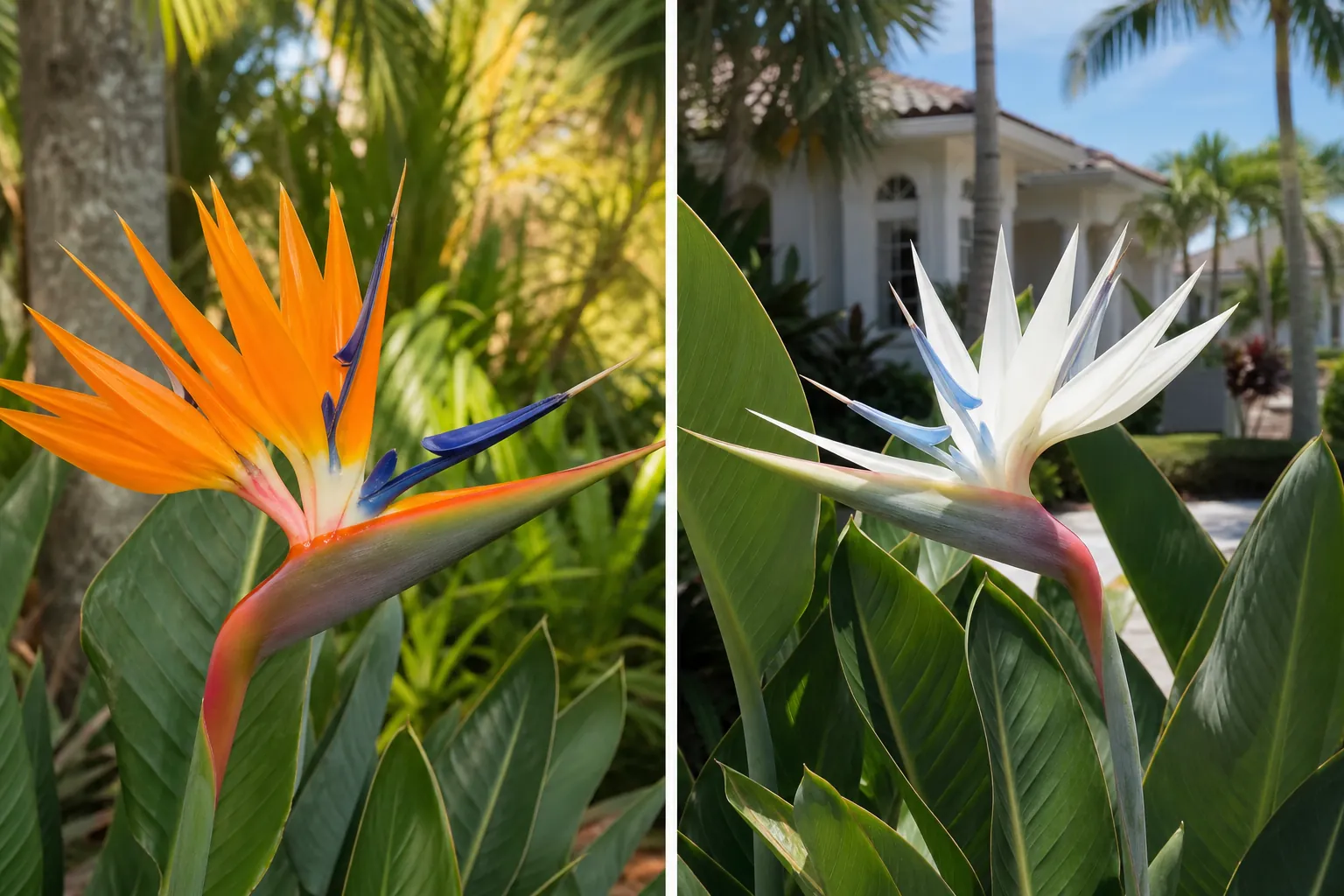
Bird of paradise brings a distinctive tropical look to Florida yards, but the orange and white forms are not interchangeable. One is a relatively compact flowering perennial. The other develops into a large, upright plant with broad leaves and a substantial footprint. Buying the right one starts with understanding how each will fit your property after several growing seasons.
If you are comparing orange vs white bird of paradise in Florida, focus on mature size, sunlight, winter exposure and your reason for buying. Do you want colorful flowers beside a patio, or tall foliage that becomes a major feature in the yard? That decision matters more than how similar the plants look in nursery containers.
Tropical Yards is a supplier of tropical plants and coquina shell, with dump trailer delivery from St. Augustine to Daytona Beach. This guide explains how to choose and care for bird of paradise yourself, along with practical considerations for ordering plants and planning a delivery.
Orange And White Bird Of Paradise: What Is The Difference?
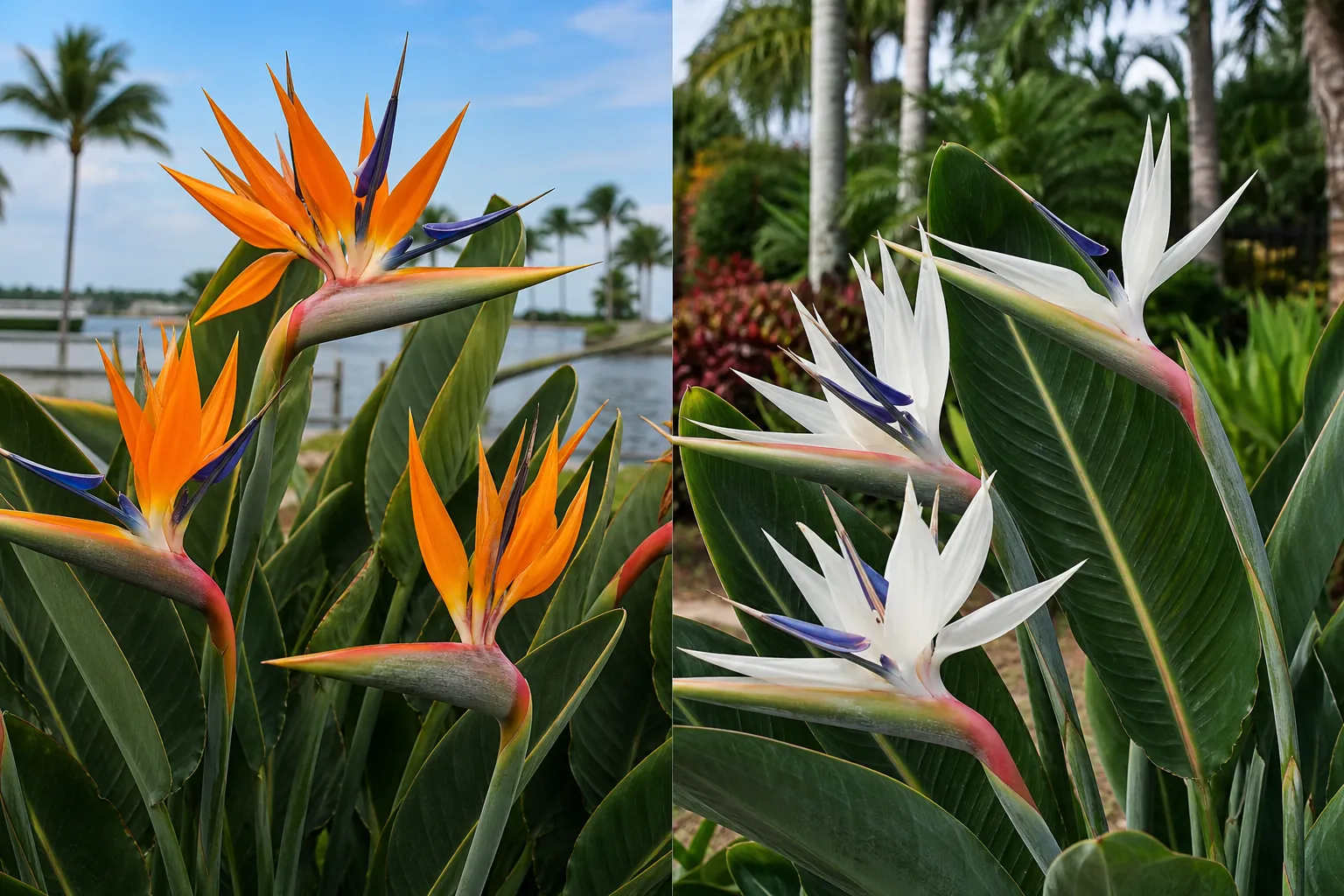
Orange bird of paradise, Strelitzia reginae, produces the familiar orange and blue flowers that resemble a bird’s head. Its leaves are stiff, paddle-shaped and held on individual stems. It grows as a clump rather than developing the tall, trunklike growth associated with white bird of paradise.
White bird of paradise, Strelitzia nicolai, is also called giant bird of paradise. It has much larger, banana-like leaves and produces white flowers with dark blue floral structures. Mature plants can develop multiple upright stems and become much taller than nearby shrubs.
The common names describe flower color, but size is usually the more important difference for a Florida buyer. A young white bird of paradise may seem manageable in its container, yet it can eventually overwhelm a narrow bed.
- Orange bird of paradise commonly reaches about 3 to 5 feet tall, with a clump that expands over time.
- White bird of paradise can reach 20 to 30 feet or more outdoors in favorable, frost-free conditions.
- Orange bird of paradise is usually the better candidate when colorful flowers and a lower profile are the priorities.
- White bird of paradise is better suited to generous spaces where large foliage and height are welcome.
Actual growth depends on climate, exposure, soil, watering and plant maturity. Treat size ranges as planning guidance, not a promise that a plant will stop growing at a particular height.
Which One Fits Your Florida Property?
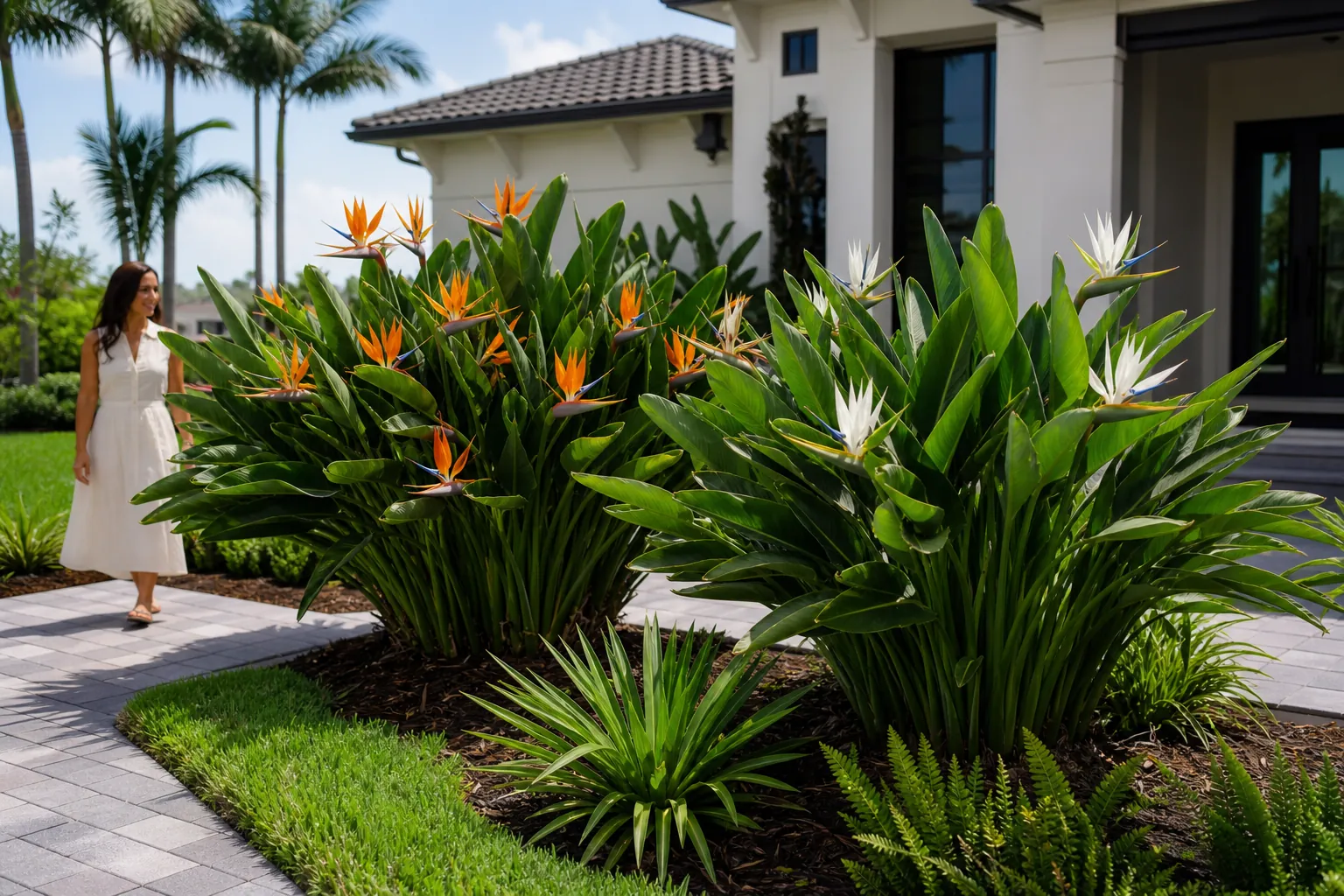
Orange bird of paradise generally fits smaller residential planting areas more easily. It can work near a patio, along a broad walkway or in a sunny bed where its flowers remain visible. Even so, leave room for the clump to widen without pushing leaves into foot traffic.
White bird of paradise needs a location selected for its eventual height and spread. Its foliage can create a strong tropical backdrop, but it should not be squeezed between a wall and a sidewalk. Allow clearance from roof edges, gutters, windows and overhead utilities.
Neither plant should be selected simply because it fits the available space on delivery day. Measure the bed, look upward for obstructions and picture the mature leaves extending beyond the container’s footprint.
- Choose orange bird of paradise when you want a flowering accent that remains relatively low.
- Consider white bird of paradise when you have a wide, open planting area and want a large foliage feature.
- Avoid placing either plant where expanding growth will block an exit, gate or regularly used path.
- Check mature clearance around pool equipment, irrigation controls and other items you need to reach.
For a tight courtyard, orange bird of paradise is often the more practical starting point. For a large yard, white bird of paradise may provide the desired scale, provided winter conditions and exposure are suitable.
Florida Sun, Wind And Winter Conditions
Florida is not one uniform growing environment. A sheltered yard near Daytona Beach can experience different winter conditions from an exposed inland property or a location farther north. Even within one neighborhood, walls, elevation and wind exposure can change a plant’s conditions.
Orange bird of paradise grows in full sun to partial shade. Strong light generally supports flowering, although some afternoon shade may be helpful in particularly hot, reflective locations. Plants coming from a shaded growing area should be introduced to intense sunlight gradually.
White bird of paradise also grows in sun or partial shade, depending on local conditions and its previous growing environment. Its large leaves may split along the veins in wind. This is common and does not automatically mean the plant is unhealthy.
Both species are cold-sensitive. Orange bird of paradise is generally more cold-tolerant than white bird of paradise, but neither should be treated as frost-proof. Frost can damage leaves, and severe or prolonged freezing weather can cause more serious injury.
- Review your property’s winter history instead of relying only on a broad Florida hardiness-zone label.
- Use a sheltered location when possible, while still allowing adequate light and mature clearance.
- Avoid low areas where cold air settles if another suitable planting location is available.
- Plan how you will protect a manageable plant before a cold forecast arrives.
For smaller plants, a frost cloth supported above the foliage can provide temporary protection. Follow the covering’s instructions and remove or adjust it as conditions improve. A mature white bird of paradise is much harder to cover, making site selection especially important.
Flowering Expectations And Leaf Appearance
If flowers are your main reason for buying, orange bird of paradise is usually the clearer choice. Its blooms are conspicuous and accessible at a smaller scale. However, a recently purchased or immature plant may need time before flowering reliably.
Light, maturity and growing conditions all influence blooming. A plant in deep shade may produce attractive foliage without many flowers. Repeated relocation, excessive fertilizer or unsuitable watering can also interfere with steady growth.
White bird of paradise is often purchased mainly for its foliage. It can flower outdoors when mature and well established, but flowers should not be the only reason to select it. On tall plants, blooms may also be less convenient to view closely.
Leaf condition deserves realistic expectations. White bird of paradise leaves frequently develop wind splits, particularly in open coastal settings. Orange bird of paradise has smaller, firmer leaves, but those can still suffer cold injury, sun scorch or mechanical damage.
Before buying, decide whether natural leaf wear will bother you. If you expect every large leaf to remain perfectly intact, an exposed site may not match that expectation, even when the plant is growing normally.
How To Evaluate A Plant Before Buying
A healthy purchase begins with more than height. Look for a plant with sound stems, reasonably firm foliage and no obvious signs of widespread pest activity. A few damaged leaves do not necessarily indicate a poor plant, but severe decline deserves questions.
Ask which species is being offered. Common names can be used loosely, and a label that only says bird of paradise does not tell you whether the plant will remain relatively compact or become a giant.
- Confirm the botanical name so you know whether you are buying Strelitzia reginae or Strelitzia nicolai.
- Ask about container size and overall dimensions so you can plan transport and handling.
- Ask whether the plant has been growing in sun or shade before placing it in a different exposure.
- Inspect leaf undersides and stem junctions for insects, sticky residue or unusual spotting.
- Check that the plant sits securely in its container and does not have an obviously soft or decaying base.
Tropical Yards sells tropical plants, including palm trees, hibiscus, bougainvillea, ferns and other tropical plants. Call to ask about current bird of paradise availability, species and sizes rather than assuming a particular plant is in stock.
If you are ordering several plants, make a simple list with botanical names, quantities and intended locations. This helps prevent a large-growing plant from being purchased for a space intended for a smaller flowering accent.
DIY Planting In Florida Soil
Bird of paradise needs a site that drains well. Florida’s sandy soils often drain quickly, but compacted ground, low spots and some fill soils can retain water. Observe the area after heavy rain before deciding where to plant.
Dig a hole wider than the root ball and no deeper than needed to keep the plant at its existing soil level. The surrounding grade should not bury the base. If drainage is poor, reconsider the location rather than assuming a deep hole filled with amended soil will solve the problem.
Remove the container carefully and inspect the roots. Gently loosen circling roots where practical without tearing the root ball apart. For large plants, arrange appropriate help and equipment before handling begins; wet root balls can be heavy.
- Place the root ball at the correct depth before backfilling.
- Use the excavated soil for backfill where suitable, and avoid creating a sharply different pocket around the roots.
- Water thoroughly after planting to settle soil and moisten the root ball.
- Keep mulch away from the stems and plant base.
- Allow enough space for future growth instead of planting tightly for an instant filled-in appearance.
Do not apply a fixed watering schedule without checking conditions. The root ball can dry while nearby soil still feels damp, particularly soon after planting. Check moisture in the root zone and adjust for rainfall, temperature and soil drainage.
Planting and ongoing care are DIY responsibilities or tasks for a separately hired professional. Tropical Yards supplies materials and offers dump trailer delivery; it does not provide planting or other landscaping labor.
Watering, Feeding And Everyday Care
Newly planted bird of paradise needs consistent attention while roots establish beyond the original root ball. Water thoroughly enough to reach those roots, then check moisture before watering again. Persistently saturated soil can encourage root problems.
Established plants generally need less frequent watering than new purchases, but Florida drought periods can still require supplemental irrigation. Container-grown plants often dry faster than plants in the ground, especially in heat and wind.
Use fertilizer according to the product label and any local restrictions. More fertilizer is not automatically better, and pushing rapid growth does not guarantee flowers. Avoid applying fertilizer immediately before heavy rain or where it can wash into a storm drain.
Remove fully dead foliage yourself with clean tools when needed, taking care not to damage emerging leaves. Do not remove healthy leaves merely because a white bird of paradise leaf has split. Those leaves still support the plant.
Watch for scale insects, mealybugs and other pests, especially on plants kept in sheltered areas. Identify the problem before choosing a treatment. Your county’s UF/IFAS Extension office can provide locally relevant guidance on symptoms, pest identification and suitable care practices.
Bird of paradise should not be treated as an edible plant. Keep plant parts out of reach of pets or children who may chew them, and seek appropriate veterinary or medical advice if ingestion occurs.
Using Coquina Shell Near Tropical Plants
Coquina shell can provide a textured surface in suitable yard areas, including decorative spaces near tropical planting beds. Tropical Yards sells coquina shell and offers dump trailer delivery, allowing buyers to plan material purchases alongside plant orders.
However, shell should not be treated as a substitute for good planting soil or drainage. Do not pack it against bird of paradise stems, bury the plant base or use it to raise the grade over an established root ball.
Shell contains calcium carbonate and can influence soil alkalinity over time. That matters when you are selecting nearby plants or managing nutrient availability. If your soil already has a high pH, testing can help you make a more informed material choice.
- Measure the proposed shell area and choose an intended depth before requesting a quantity.
- Keep the plant base visible and leave a clear buffer around stems.
- Consider edging where shell could migrate onto pavement or into adjacent beds.
- Account for runoff and existing drainage rather than assuming a shell layer will fix standing water.
- Decide who will move and spread the shell after delivery, since material delivery is not installation.
Choose shell placement with future plant growth in mind. A decorative area around a young white bird of paradise may become difficult to access once the plant develops a large clump.
Planning A Dump Trailer Delivery
Tropical Yards provides dump trailer delivery of plants and coquina shell from St. Augustine to Daytona Beach. Before placing an order, confirm your address is within the delivery area and discuss access and unloading requirements.
A dump trailer needs a suitable approach and unloading location. Narrow gates, low branches, soft ground, steep grades and parked vehicles can complicate access. Describe these conditions in advance instead of waiting until the delivery arrives.
For shell, select a staging location where the load will not block drainage, access or essential equipment. For plants, arrange a safe place to receive them and a realistic plan for moving them to their final locations.
Have your measurements, species choices and handling arrangements ready when you call. Delivery brings purchased materials to the agreed location; it does not include yard preparation, plant installation, trimming, maintenance or cleanup.
Making The Final Choice
Choose orange bird of paradise if your priority is recognizable flowers and a more manageable mature size. Choose white bird of paradise if your property has room for a large tropical foliage plant and you accept its height, expanding clump and natural leaf splitting.
For either species, a suitable location and realistic care plan matter more than buying the largest available plant. Check light, drainage, winter exposure and mature clearance before ordering.
To ask about tropical plant availability, coquina shell or dump trailer delivery from St. Augustine to Daytona Beach, call Tropical Yards at 772-267-1611. Bring your plant list and site measurements so you can discuss the materials that fit your DIY project.
Call 772-267-1611 to talk through next steps.