Choosing ornamental ginger plants for Northeast Florida
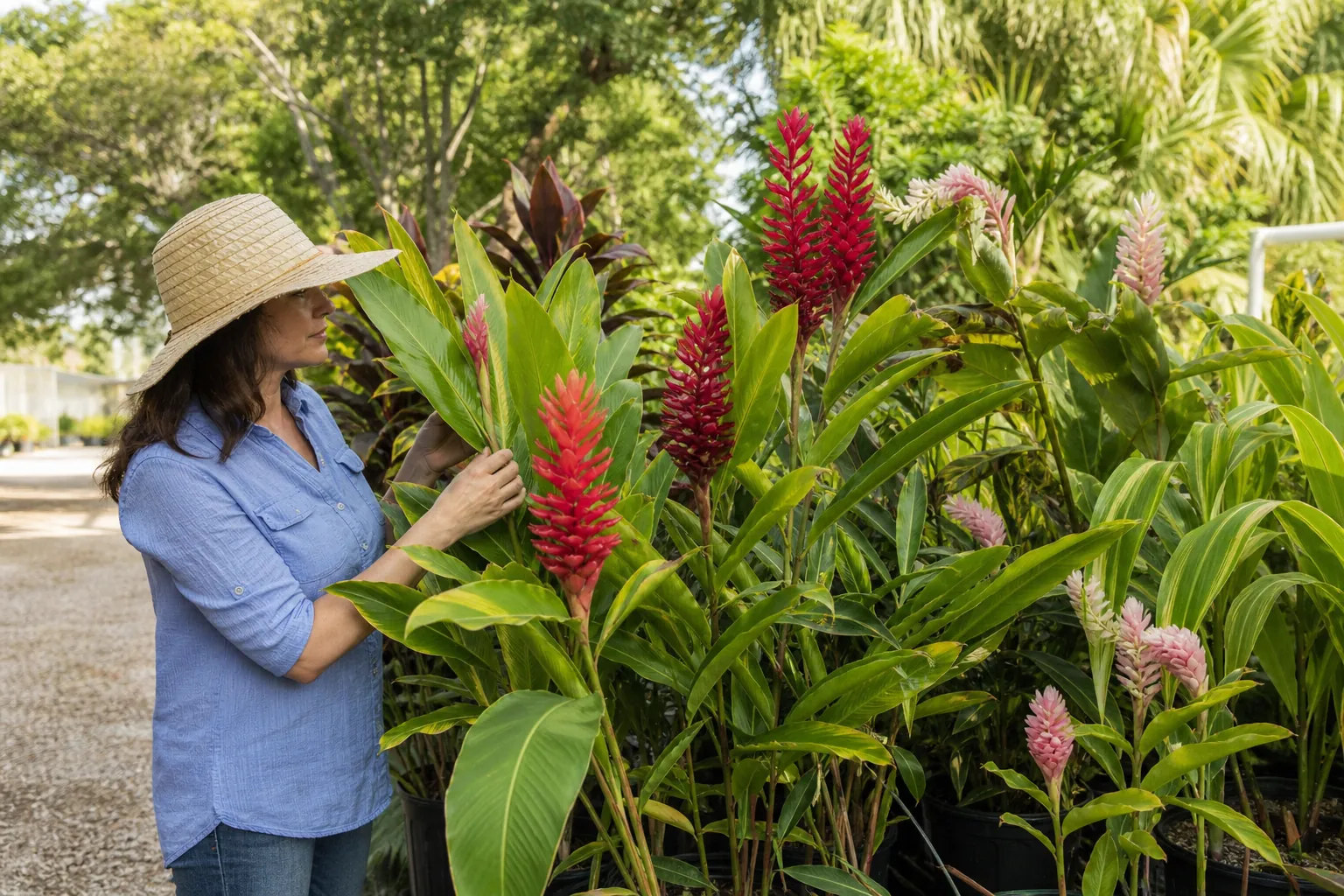
Ornamental gingers can bring broad leaves, layered texture, and distinctive flowers to a Florida garden. In Northeast Florida, however, choosing a ginger involves more than finding an attractive plant. Winter cold, summer rainfall, soil drainage, and exposure all influence whether a particular variety fits your yard.
If you are researching ornamental ginger plants in Northeast Florida, start with the conditions where you intend to grow them. A sheltered bed near a building may behave differently from an exposed garden only a short distance away. The right match reduces disappointment and makes ongoing care more manageable.
Tropical Yards supplies tropical plants and coquina shell, with dump trailer delivery from St. Augustine to Daytona Beach. This guide focuses on choosing plants, asking useful buying questions, planting them yourself, and planning materials delivery. Tropical Yards is a supplier, not an installation or yard-maintenance provider.
Understand Northeast Florida's Growing Conditions
Northeast Florida supports many tropical-looking plants, but winter temperatures can limit species that grow easily farther south. Cold tolerance also involves two different questions: whether the underground rhizome survives and whether the foliage remains attractive through winter.
Some gingers lose their leaves after frost and return when conditions warm. Others can suffer more serious injury during prolonged cold, especially when planted in exposed locations or poorly drained soil. A plant described as perennial should not automatically be treated as evergreen in your particular yard.
Coastal conditions add another consideration. Salt spray, strong winds, and sandy soil can challenge broad-leaved plants. A location protected from direct ocean exposure may be more suitable than an open bed facing prevailing winds. Do not assume every tropical plant tolerates salt.
- Observe how much direct sunlight the planting area receives in the morning and afternoon.
- Check whether rainwater drains away or remains pooled around the proposed planting spot.
- Identify nearby walls, fences, and established plants that provide shelter without crowding the ginger.
- Consider whether seasonal leaf loss would be acceptable in a highly visible bed.
- Ask about the cold tolerance of the exact species or cultivar rather than relying on the word ginger.
Plant tags and botanical names are especially helpful. Common names can cover plants with different growth habits, flowering patterns, and temperature requirements.
Compare Ginger Types Before You Buy
Ornamental ginger is a broad category, not a single plant. Several commonly discussed types offer different advantages, and their suitability varies by site. Confirm identification and current availability before making plans around any particular variety.
Shell ginger
Shell ginger, Alpinia zerumbet, produces arching stems and broad foliage. Variegated selections are popular for their striped leaves, which provide interest even when flowers are absent. These plants need room to develop into substantial clumps.
Shell ginger often flowers on older growth. When winter cold kills stems back, the plant may recover vegetatively without producing the flower display a buyer expected. In Northeast Florida, it is sensible to choose it primarily for foliage unless your location reliably preserves older stems.
Butterfly ginger
Butterfly gingers in the genus Hedychium are known for upright growth and showy flowers, with fragrance in some species and cultivars. Their flowering season, mature size, and hardiness vary. Ask for the cultivar name when comparing options.
Many appreciate moisture during active growth, but moisture should not mean stagnant water around the rhizomes. Their spreading habit also deserves attention. Leave space for the mature clump and monitor its boundaries rather than squeezing a small nursery plant into a narrow gap.
Peacock ginger
Plants sold as peacock ginger, often Kaempferia species or hybrids, can offer lower-growing foliage for shaded areas. They may become dormant seasonally, leaving a temporary gap in the bed. Their size and light needs differ from those of tall shell or butterfly gingers.
These plants can be useful where the goal is a low foliage layer rather than a tall screen. Verify the botanical name, since plant performance and dormancy differ among selections.
More cold-sensitive tropical gingers
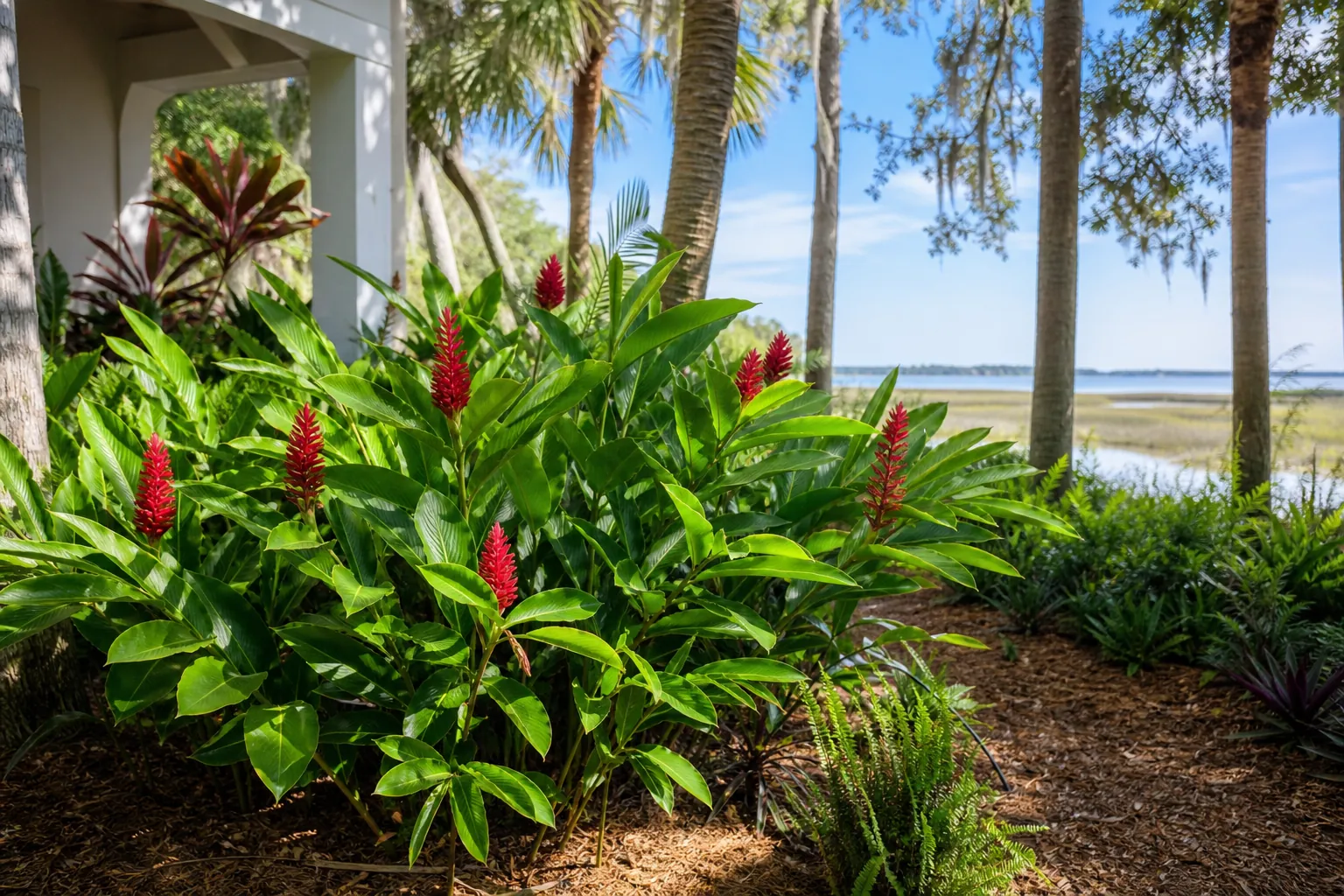
Red ginger, Alpinia purpurata, and some other tropical ornamentals generally require more warmth than Northeast Florida provides outdoors year-round. A protected container may be more practical than a permanent exposed planting, but moving and sheltering it becomes the owner's responsibility.
Do not purchase an ornamental ginger as a culinary substitute. Decorative plants are not automatically edible, and nursery production practices may not be intended for food crops.
Match The Plant To Sun, Space, And Drainage
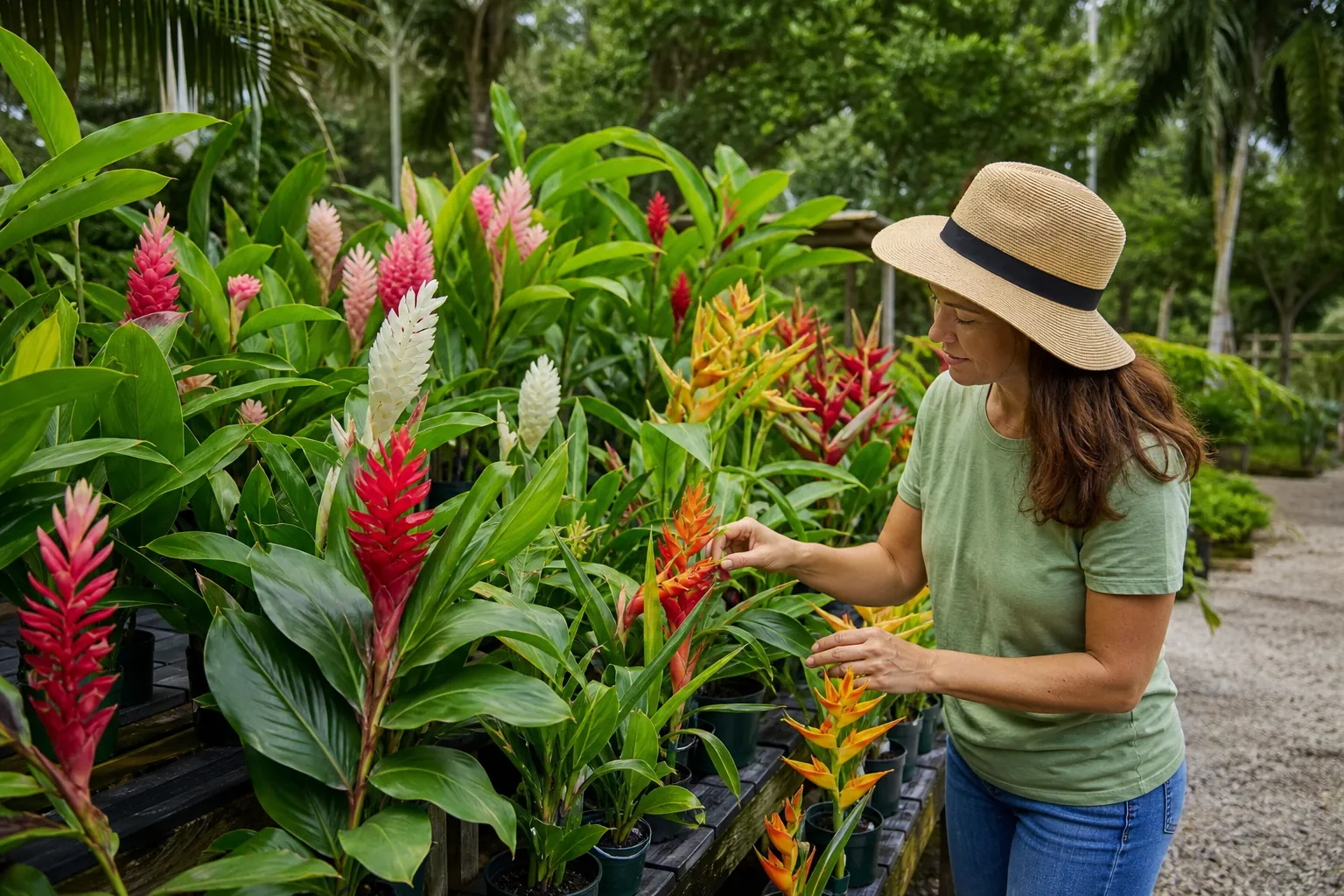
Light requirements depend on the ginger you choose. Many ornamental varieties perform well with bright filtered light or morning sun, while some tolerate more direct sun when moisture is adequate. A generic recommendation for shade or full sun can be misleading.
Strong afternoon sunlight can scorch sensitive foliage or increase watering demands. Dense shade may reduce flowering or produce weak growth. Compare the actual planting location with the requirements of the identified plant.
Measure available width as well as height. A mature clump can extend beyond its original nursery container and interfere with paths, access points, or neighboring plants. Allow room for leaves to arch naturally rather than planning around repeated cutting.
Drainage is equally important. Sandy Florida soils can dry quickly, while compacted areas or low spots may remain wet after storms. Both situations require attention, but the solution is not simply adding more water or more organic material.
- Avoid planting directly beneath a downspout where concentrated runoff repeatedly saturates the soil.
- Keep mature foliage clear of walkways, utility equipment, and doors that need unobstructed access.
- Choose a location where watering can be directed to the root zone without routinely soaking nearby structures.
- Use a soil test when soil chemistry is uncertain, particularly near concrete, shell, or other alkaline materials.
If a location stays waterlogged, consider another spot or a suitable container. A planting hole filled with rich soil does not correct drainage problems in the surrounding ground.
Ask Better Questions When Buying Ginger Plants
A useful buying conversation starts with your location, growing conditions, and expectations. Explain whether you want foliage, flowers, fragrance, or a particular mature height. Mention exposed coastal conditions or recurring frost if those affect your yard.
Tropical Yards offers tropical plant sales, including palm trees, hibiscus, bougainvillea, ferns, and other tropical plants. Ask about current ornamental ginger availability rather than assuming a particular species, cultivar, or container size is in stock.
- Ask for the botanical name and cultivar so you can verify mature size and cold tolerance.
- Ask whether the plant is grown mainly for foliage or whether reliable flowering requires older stems.
- Confirm the approximate mature spread before deciding how many plants to order.
- Inspect accessible foliage and stems for damage, pests, or signs of ongoing stress.
- Check that the container drains and that the plant is firmly rooted without assuming a larger pot always means better quality.
- Ask how the plant has been exposed to sun so you can avoid abruptly moving shade-grown foliage into intense light.
Buying fewer well-matched plants is often more practical than filling every space immediately. A small plant may become a broad clump, and empty space at planting time can be necessary growing room.
Plant Your Ginger Yourself With Care
For many ornamental gingers, planting after the risk of frost has passed allows time for establishment during warmer weather. Avoid treating the calendar as a guarantee. Soil temperature, local forecasts, and the needs of the particular plant should guide your timing.
Water a dry root ball before planting and prepare the surrounding area. Remove competing weeds yourself, identify buried utilities before digging, and confirm that the mature plant will not obstruct access.
Dig a hole wide enough to accommodate the root ball without forcing it into a tight opening. For a container-grown plant, generally keep the top of the root ball at the surrounding soil level unless species-specific instructions indicate otherwise. Avoid burying stem bases deeply.
If the roots are tightly circling, gently loosen them where appropriate. Backfill with the excavated soil, settle it carefully, and water thoroughly. Do not compact the soil aggressively or create a depression that collects standing water around the plant.
Apply an organic mulch around the planting area while keeping it away from the stems. Mulch can help moderate soil moisture and temperature, but a thick pile against the crown can create persistently damp conditions.
During establishment, check the root ball directly rather than judging only the surrounding soil surface. The nursery growing medium may dry at a different rate from the garden soil. Adjust watering to actual moisture, rainfall, and drainage instead of following a rigid daily schedule.
Care For Foliage, Flowers, And Seasonal Dormancy
Once established, ornamental gingers still need observation. Large leaves may show stress quickly, but symptoms do not always identify the cause. Brown edges can result from intense sun, dry roots, salt exposure, cold damage, or other problems.
Check the growing conditions before increasing fertilizer or watering. Excess water can worsen root problems, and fertilizer will not repair cold-damaged leaves. Use fertilizer according to the product label and the needs of the plant, with soil-test guidance where available.
Inspect leaf undersides and new growth periodically. If pests appear, identify them before choosing a treatment. Follow label directions for any product and avoid broad, unnecessary applications.
- Water when the root zone needs moisture, accounting for rainfall and seasonal growth.
- Remove clearly dead foliage yourself with clean tools when appropriate for the plant.
- Avoid cutting healthy older stems indiscriminately on varieties that flower on mature growth.
- Allow adequate space between clumps so leaves are not constantly pressed against neighboring plants.
- Mark the location of dormant plants so you do not accidentally dig into their rhizomes.
Some gingers naturally slow down or disappear above ground during cooler months. Dormancy is not the same as plant death. Before discarding a plant, consider its normal seasonal behavior and inspect for healthy rhizomes when appropriate.
If a clump eventually outgrows its space, research division timing for that particular ginger. Dividing during suitable growing conditions is generally less stressful than disturbing a plant during cold weather or severe heat.
Prepare For Cold Without Expecting Perfect Foliage
Cold protection begins with plant selection and placement. A sheltered site can reduce exposure, but it cannot make a tender species reliably hardy. Choose plants with realistic expectations for your part of Northeast Florida.
For manageable plants, frost cloth placed before a cold night can help retain ground warmth. Support it where needed, extend it to the ground, and secure it safely. Avoid leaving plastic directly against foliage, and remove or ventilate covers when temperatures rise.
Container plants may be moved to an appropriate sheltered location if their size allows. Consider that lifting heavy pots is difficult and that tall leaves need space indoors or under cover.
After a cold event, avoid rushing to cut back every discolored stem. Wait until the extent of injury is clearer and the immediate cold threat has passed. A ginger that regrows from its rhizomes may still need time to rebuild its appearance.
Use Coquina Shell Thoughtfully Near Ginger Beds
Coquina shell can provide a distinct material contrast beside tropical foliage. Tropical Yards sells coquina shell, but it is important to separate its decorative use from the soil needs of your plants.
Because shell contains calcium carbonate, it can contribute to alkaline conditions as it weathers. That makes placement worth considering around plants that prefer more acidic soil. Do not assume shell is an interchangeable substitute for organic mulch directly around ginger roots.
A separate shell area alongside a planted bed may be a more practical arrangement. Use edging where appropriate to limit migration, preserve access to the root zone, and keep material from accumulating against stems.
- Measure the intended shell area before ordering and select an application depth suited to its use.
- Ask about the available shell material and its characteristics rather than assuming a uniform particle size.
- Keep shell away from drains and locations where runoff could carry it into unwanted areas.
- Account for soil pH when deciding how close shell should sit to ornamental planting beds.
Shell alone does not solve drainage problems or prevent every weed. Prepare the area yourself and consider how you will keep the material separated from soil and neighboring plants over time.
Plan Delivery Before Placing Your Order
Tropical Yards provides dump trailer delivery of plants and coquina shell from St. Augustine to Daytona Beach. Before ordering, confirm that your address falls within the delivery area and discuss the materials you want.
Describe driveway access, narrow gates, low branches, overhead lines, steep slopes, and soft ground. Ask what clearance and unloading conditions are needed. Do not assume a trailer can enter a backyard or unload wherever the final planting bed is located.
Choose an accessible drop location and arrange your own tools and help for moving materials afterward. Protect surfaces where appropriate and keep the unloading area clear of vehicles, pets, and obstacles. Confirm how plants and shell will be handled during delivery.
Delivery does not include planting, spreading shell, trimming, or cleanup. Plan those tasks separately as part of your DIY project.
For tropical plant availability, coquina shell, and dump trailer delivery questions, call Tropical Yards at 772-267-1611. Have your location, approximate quantities, and access details ready so you can discuss an order that fits your project.
Call 772-267-1611 to talk through next steps.