A practical plan for restoring an overgrown St. Augustine yard
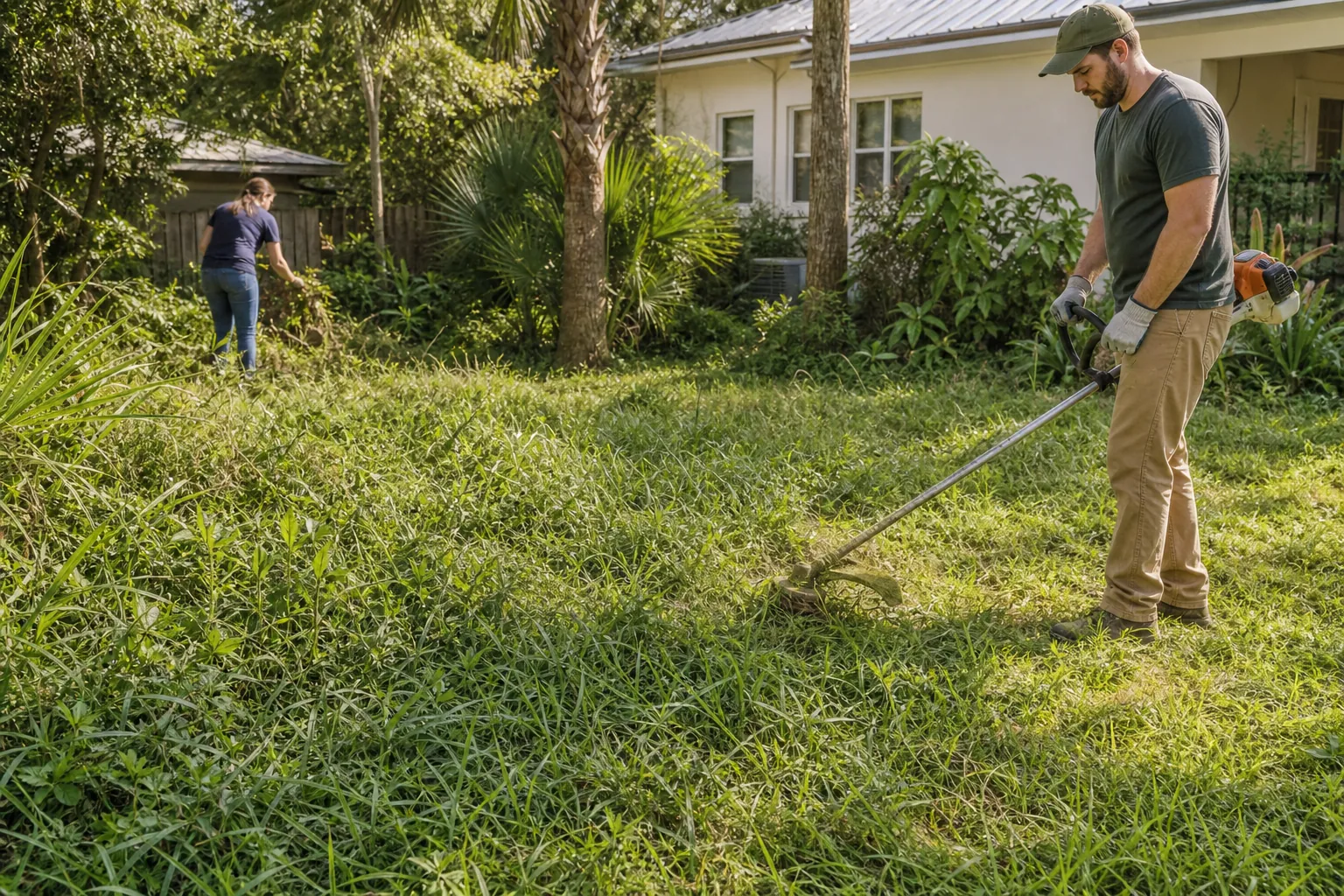
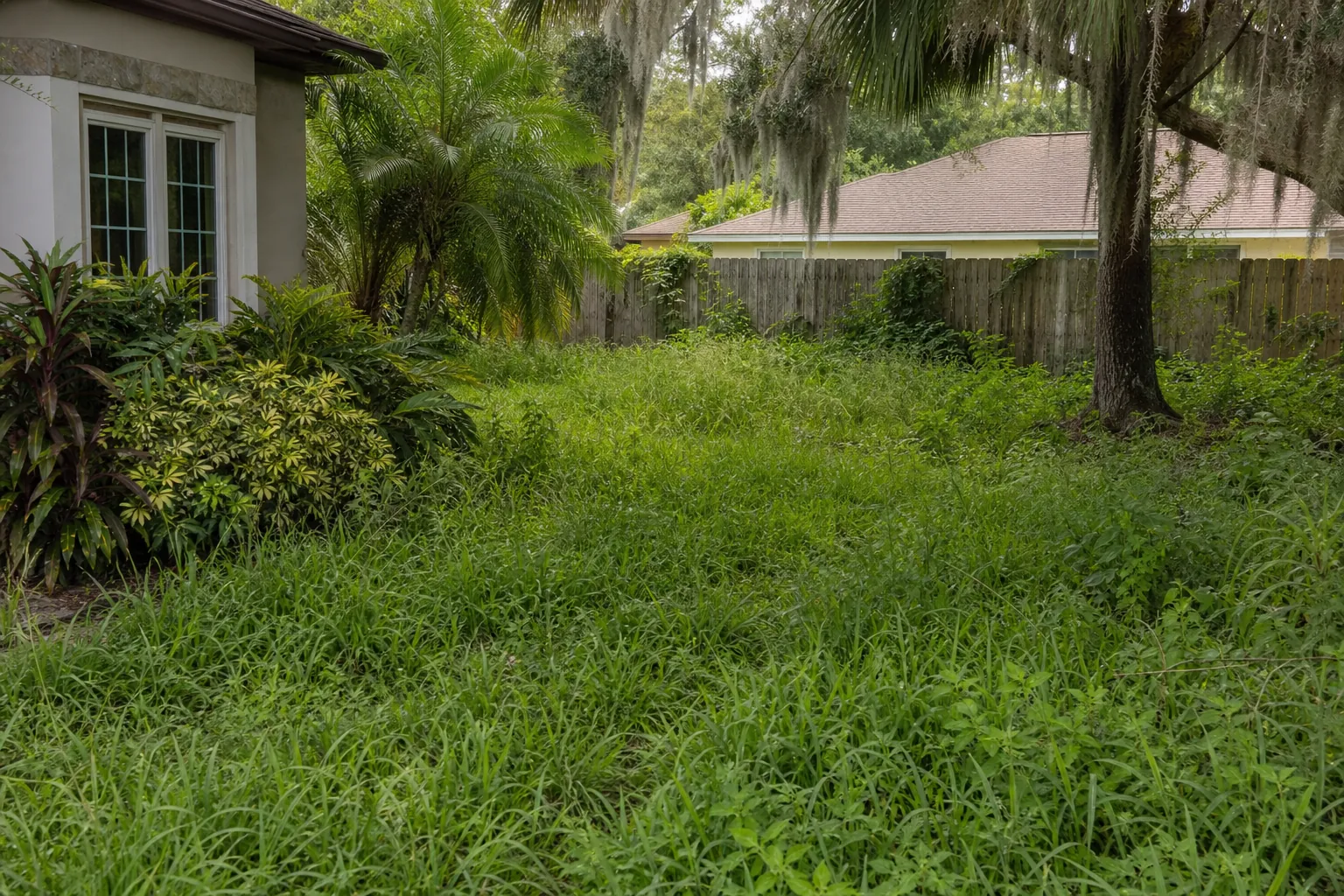
In Northeast Florida, a yard can shift from lush to unmanageable surprisingly quickly. Warm temperatures, seasonal rain, aggressive vines, and fast-growing tropical plants create ideal conditions for dense vegetation. When routine maintenance falls behind, shrubs may cover windows, weeds can take over planting beds, and fallen limbs can make outdoor areas difficult to use.
Professional overgrown yard cleanup in St. Augustine is about more than cutting everything down. A thoughtful cleanup identifies plants worth preserving, removes unwanted growth safely, and creates a practical foundation for ongoing care. Tropical Yards helps local property owners regain usable, attractive landscapes while respecting the character of Florida plants.
Why St. Augustine Yards Become Overgrown
St. Augustine's humid subtropical climate supports nearly year-round plant growth. Summer rain can produce sudden growth spurts, while mild winters allow many weeds and vines to remain active. Vacant homes, rental turnovers, busy schedules, storm debris, or a few missed maintenance visits can quickly lead to a larger project.
Some plants are especially difficult to control once established. Vines can weave through hedges and fences. Volunteer trees may sprout next to foundations or air-conditioning equipment. Palms can collect dead fronds and seed pods, while ornamental shrubs may grow into each other until their individual shapes disappear.
Overgrowth can also hide drainage problems, damaged edging, irrigation components, pests, and uneven ground. Clearing vegetation methodically makes these conditions easier to see without causing unnecessary damage to the landscape.
What A Thorough Yard Cleanup Includes
Every property requires a different approach. A small courtyard near downtown may need detailed hand pruning, while a larger residential lot may require extensive brush cutting and debris hauling. Before work begins, it helps to identify access points, desirable plants, utility areas, fences, and any vegetation that needs special handling.
A comprehensive cleanup may include:
- Brush and weed removal: Clearing dense unwanted growth from beds, fence lines, walkways, and open yard areas.
- Shrub reduction: Pruning oversized shrubs to improve clearance, airflow, visibility, and natural form.
- Vine control: Separating invasive or unwanted vines from trees, hedges, structures, and ornamental plants.
- Small volunteer growth removal: Addressing young trees and saplings before they become more difficult to manage.
- Palm and plant cleanup: Removing accessible dead material, spent blooms, and accumulated plant litter where appropriate.
- Bed definition: Revealing planting bed edges and separating ornamental areas from turf or walkways.
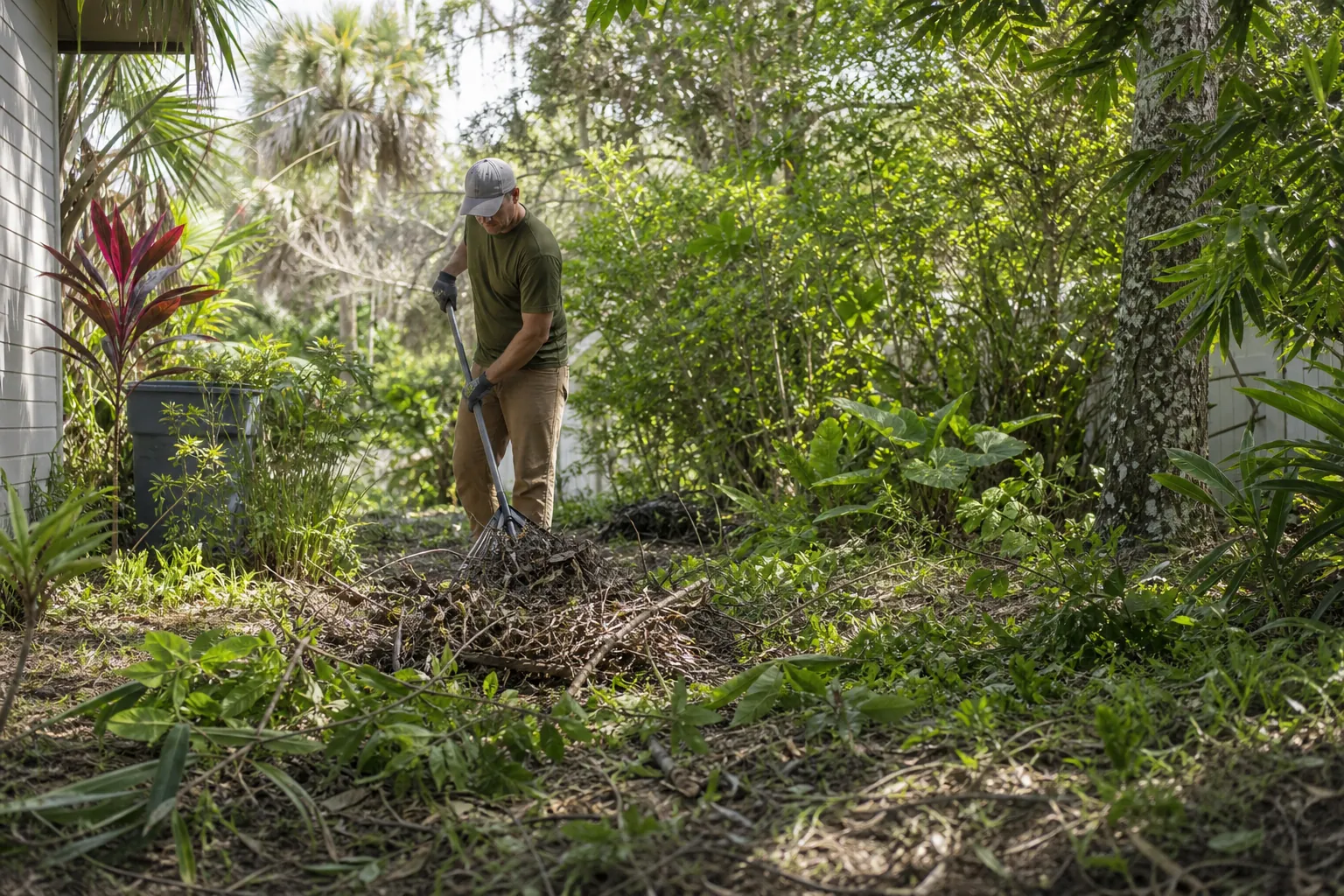
- Debris collection: Gathering cut vegetation, branches, leaves, and loose organic material generated during the work.
- Final detailing: Blowing hard surfaces and checking corners, gates, and narrow spaces for remaining debris.
The objective is not to strip the property bare. Selective work often produces a better result because mature, healthy plants can provide shade, privacy, and established tropical structure that would take years to replace.
How Selective Clearing Protects The Landscape
Fast, indiscriminate cutting can create new problems. Removing too much canopy at once may expose shade-adapted plants to intense Florida sun. Severe pruning can weaken certain shrubs, encourage unattractive regrowth, or leave large gaps in screening. Heavy equipment used without care may also damage irrigation lines or compact wet soil.
A selective plan starts by separating desirable landscape plants from weeds, vines, and volunteer growth. Crews can then work in stages, opening access before addressing interior areas. This makes it easier to assess plant health and decide whether a shrub should be reduced, rejuvenated, relocated later, or removed.
Good pruning matters as well. Cuts should support the plant's natural growth habit rather than forcing every shrub into the same shape. Clearance around siding, windows, paths, utility equipment, and rooflines should be practical, but healthy plants should retain enough foliage to recover.
Special Considerations For Florida Properties
Local landscapes face conditions that may not be obvious until cleanup begins. Sandy soils can erode when bare areas are exposed, particularly near downspouts or slopes. Low areas may remain wet after rain, making them vulnerable to rutting and soil compaction. Salt exposure can also influence plant health on properties closer to the coast.
Wildlife deserves attention during dense vegetation removal. Crews should look carefully for active bird nests, beneficial animals, and stinging insects before disturbing thick shrubs or ground cover. Suspected protected wildlife or hazardous trees may require guidance from an appropriate specialist.
Cleanup is also an opportunity to inspect how vegetation interacts with the home. Plants touching walls can limit airflow and conceal moisture or pest activity. Growth around outdoor HVAC units can reduce service access. Blocked pathways, low branches, and hidden landscape borders may create avoidable safety concerns.
What To Do After The Initial Cleanup
Once the excess growth is gone, the property may need a recovery plan. Previously hidden soil can look sparse at first, and some plants may require time to fill out after corrective pruning. Rather than rushing to install many new plants, observe sunlight, drainage, and existing plant performance.
Fresh mulch can help suppress weeds, moderate soil temperature, and give planting beds a finished appearance. It should be applied at a sensible depth and kept away from trunks, stems, and the home's exterior. Irrigation should also be checked for blocked heads, leaks, and coverage problems that were concealed by vegetation.
A manageable maintenance schedule is the best defense against another major cleanup. Frequency depends on the season, plant selection, rainfall, and the desired appearance. Light, regular pruning and weed control are generally less disruptive than repeated severe cutbacks.
Planning A Cleanup With Tropical Yards
Before requesting service, consider which areas matter most. You may want to restore access to a side yard, uncover a fence, improve the view from the street, or prepare the property for routine landscaping. Mention locked gates, pets, irrigation equipment, recent storm damage, and any plants you definitely want to keep.
Clear priorities help the work stay focused and allow the cleanup to reflect how you use the property. Tropical Yards approaches overgrown landscapes with an emphasis on careful clearing, practical results, and the tropical character that suits St. Augustine.
If your yard has become difficult to navigate or maintain, call Tropical Yards at 772-267-1611. A calm, well-planned cleanup can turn dense growth into a safer and more usable outdoor space.
Call 772-267-1611 to talk through next steps.