Create a patio landscape that feels at home in St. Augustine
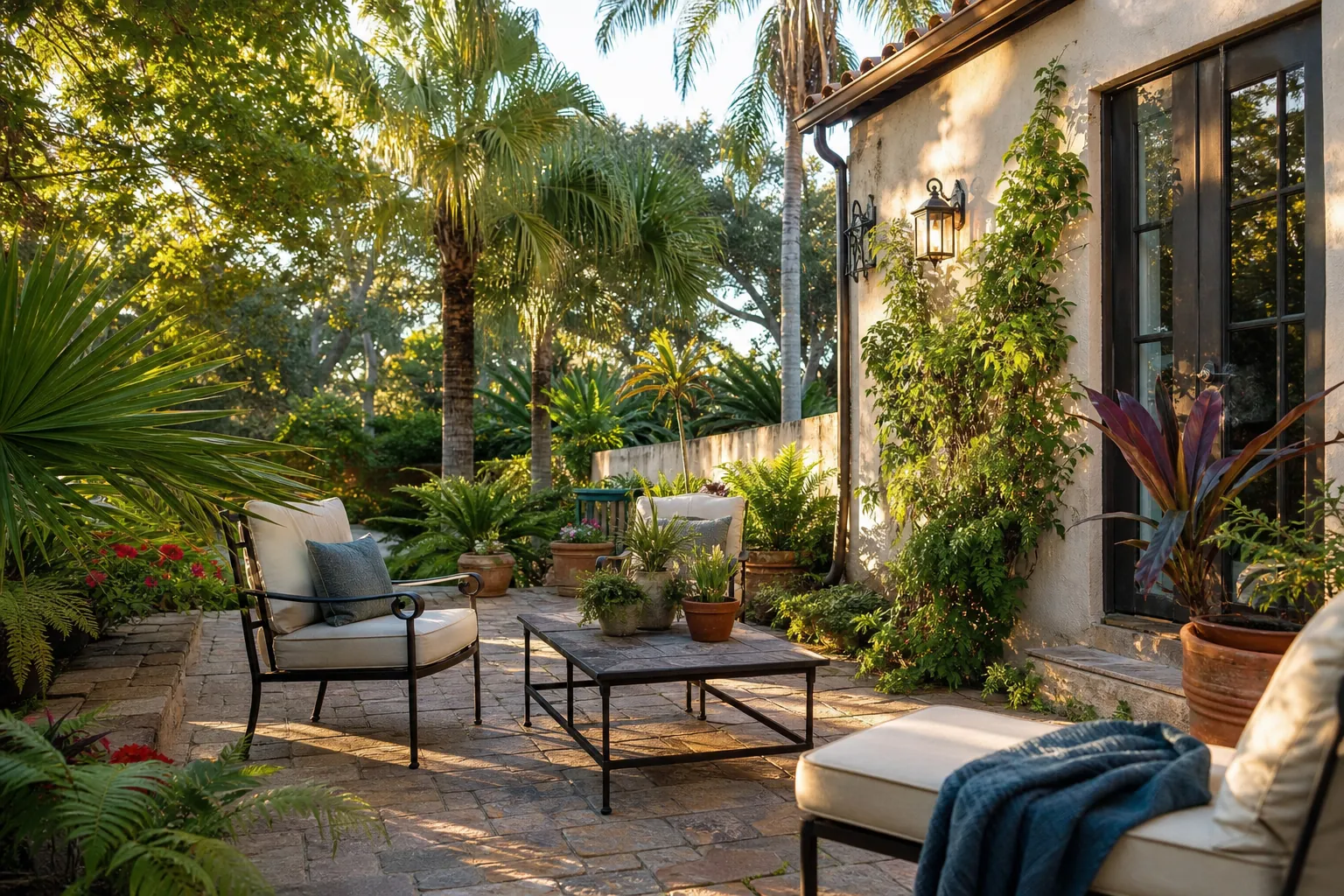
A well-designed patio should feel like a natural extension of your home. In Northeast Florida, that means creating an outdoor space that stays inviting through bright sun, humid afternoons, salty breezes, and seasonal rain. Thoughtful patio landscaping in St. Augustine can soften hard surfaces, improve privacy, provide shade, and make everyday outdoor living more comfortable.
Tropical Yards designs patio surroundings that reflect the relaxed character of Florida while addressing practical needs. The right plan brings together plants, drainage, lighting, containers, and durable materials without making the area feel crowded or difficult to maintain.
Begin With How You Want to Use the Patio
Before choosing palms or colorful flowers, consider what the patio needs to support. A family dining area requires different spacing than a quiet reading corner. Poolside patios may need plants that tolerate splashing, while an outdoor kitchen benefits from clear walkways and foliage placed safely away from cooking surfaces.
Sun patterns also shape the design. A west-facing patio can become intensely warm late in the day, so layered shade may be a priority. A covered patio may need plants that perform well in bright, indirect light. Tracking sunlight for several hours helps prevent attractive plants from being installed in unsuitable locations.
Views from inside the home matter too. Framing a window with greenery or placing a specimen plant where it can be seen from the living room allows the landscape to provide value even when nobody is outdoors.
Choose Plants Suited to Coastal Florida
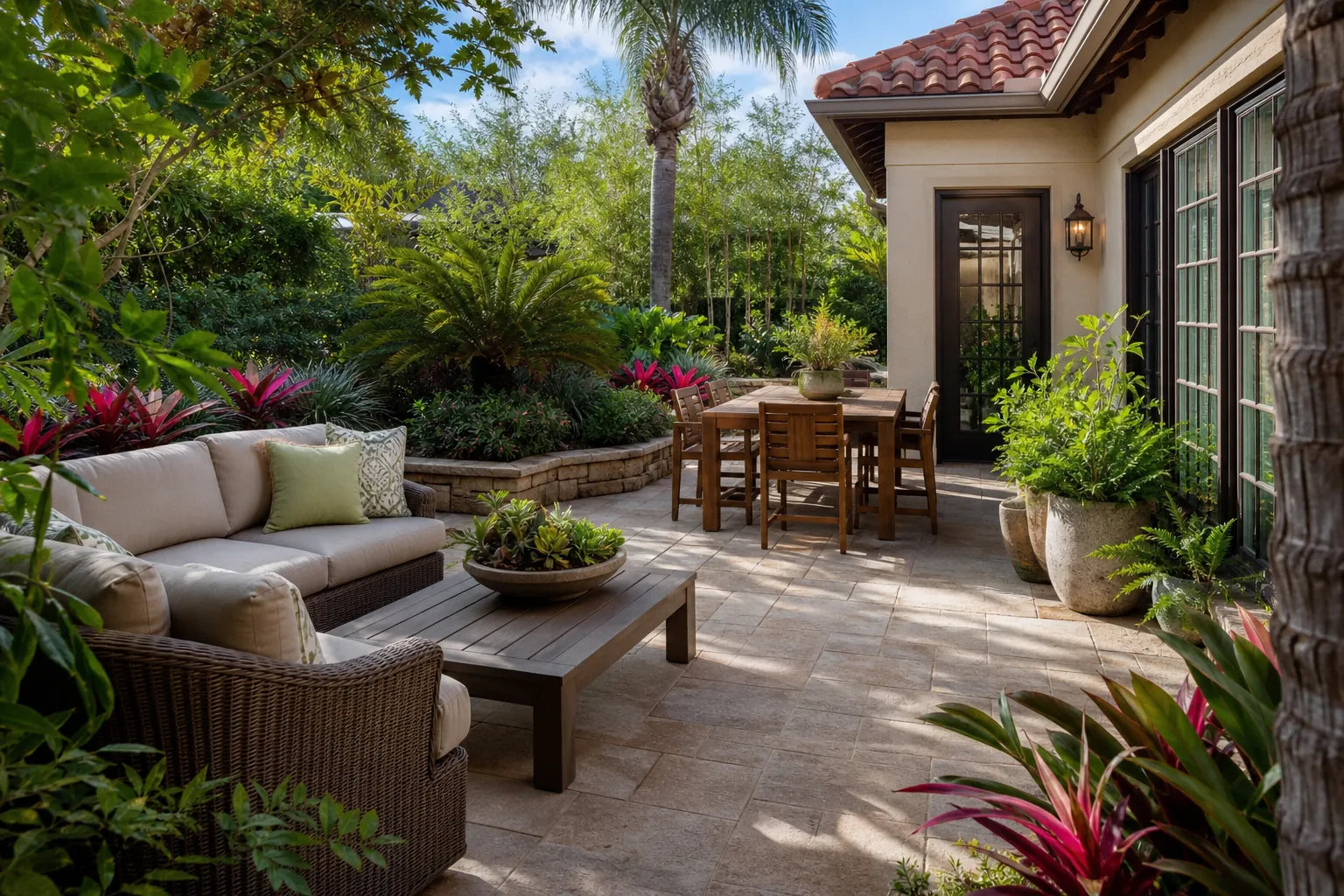
St. Augustine landscapes face heat, sandy soils, heavy downpours, occasional cold snaps, and varying levels of salt exposure. Plants selected for local conditions are more likely to establish successfully and require less corrective care. Site-specific selection is especially important around patios, where overgrown foliage can quickly reduce usable space.
A balanced tropical planting plan often combines upright plants, medium-height shrubs, and low groundcovers. This layered approach creates depth without relying on a single dense hedge. Palms can establish height and movement, while broad-leaved plants bring a lush appearance closer to eye level. Flowering accents can add seasonal color in targeted areas.
Depending on the property's exposure, soil, and light, suitable choices may include:
- Windmill or sabal palms for vertical structure and a distinctly Florida character.
- Coontie for durable, low-growing texture in sun or partial shade.
- Dwarf yaupon holly for compact evergreen form and manageable growth.
- Bird of paradise for bold foliage in protected, appropriately lit locations.
- Flax lily for neat borders and color contrast near walkways.
- Society garlic for grassy texture and soft purple blooms in sunny beds.
- Native muhly grass for movement, airy seasonal color, and visual softness.
- Star jasmine for fragrant coverage on a well-placed trellis or screen.
Plant size at maturity should guide spacing. Installing too many young plants may create instant fullness, but it can lead to crowding, frequent pruning, poor airflow, and blocked pathways later. A professional plan allows room for healthy growth while using mulch, stone, or groundcover to finish open areas.
Build Shade and Privacy Without Closing In the Space
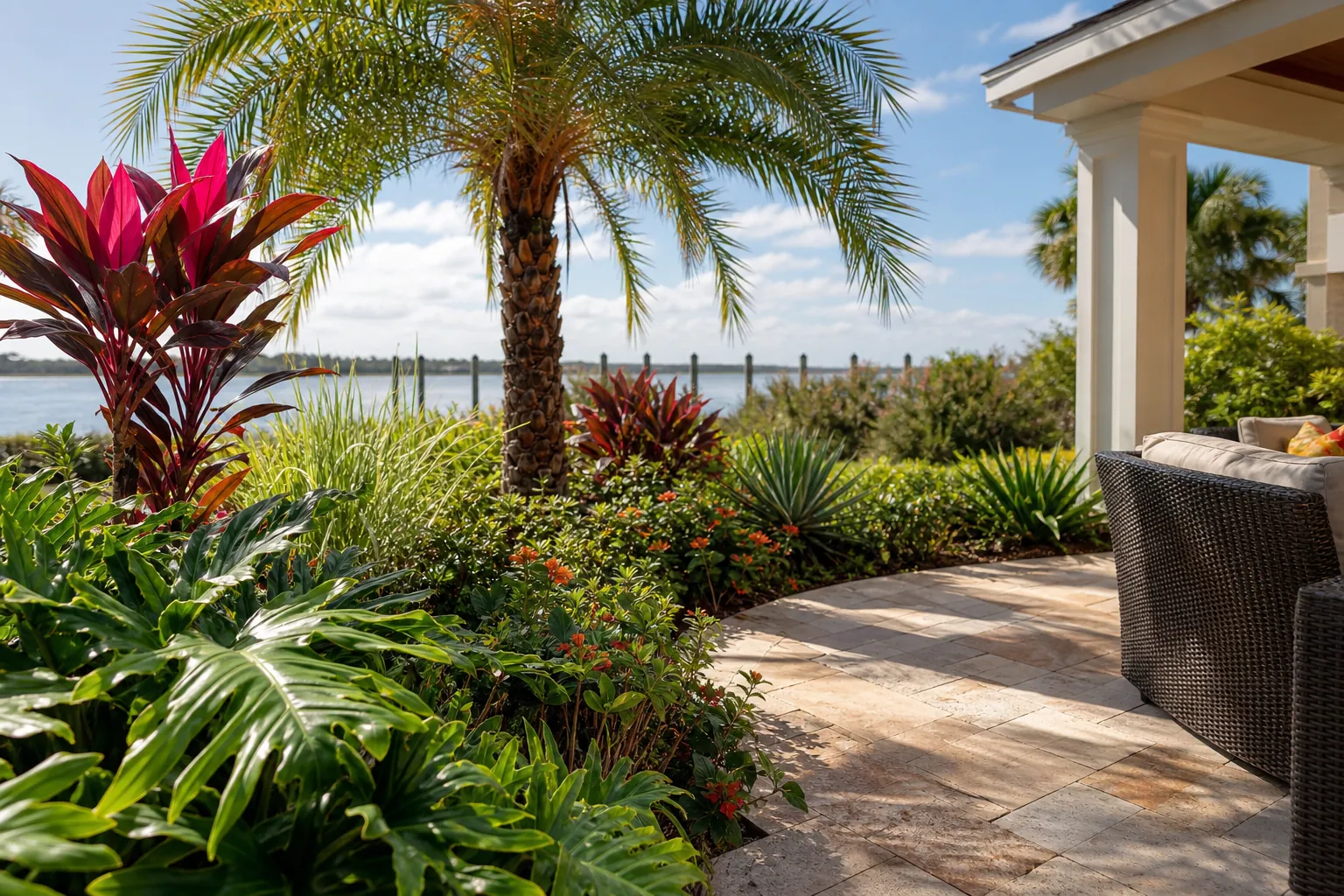
Shade can turn an exposed patio into a more usable retreat. Existing trees may provide part of the solution, but their roots, leaf litter, and distance from the patio need consideration. Strategic palms, small ornamental trees, pergolas, and shade structures can help reduce direct sunlight while maintaining airflow.
Privacy is often best achieved through layers rather than a solid wall of plants. Narrow upright varieties can screen neighboring windows, while lower plantings preserve desirable views. Decorative panels or trellises may provide immediate coverage as vines mature. This approach feels lighter and allows each element to serve a clear purpose.
For smaller patios, containers offer flexibility. Large pots can define corners, mark transitions, or add greenery where an in-ground bed is not possible. Selecting fewer substantial containers usually creates a calmer result than scattering many small pots across the surface.
Plan for Drainage, Irrigation, and Clean Edges
Water management is essential in Florida patio design. Runoff should move away from the home's foundation and should not collect on paved surfaces. Plant beds can help absorb rainfall, but their grade and soil composition must support drainage. Downspouts, roof lines, low areas, and existing irrigation should be evaluated before installation.
Drip irrigation or carefully placed low-volume emitters can deliver water to root zones without routinely soaking furniture and pavement. Irrigation zones should reflect plant needs. Grouping plants with similar moisture requirements reduces waste and makes maintenance more predictable.
Defined bed lines give the finished landscape a polished appearance. They also keep mulch and soil from migrating onto the patio. Depending on the home's style, edging may be created with natural stone, compatible pavers, metal edging, or a crisp trench line. Materials should complement the existing patio rather than compete with it.
Add Comfort With Lighting and Practical Details
Landscape lighting extends patio use after sunset and improves visibility along steps and walkways. Soft illumination is generally more comfortable than bright fixtures aimed toward seating areas. Path lights, shielded uplights, and subtle lighting beneath plant canopies can create depth while reducing glare.
Maintenance access is another important detail. Beds should be reachable for pruning, fertilizing, and irrigation repairs. Thorny or messy plants are rarely ideal beside chairs, doors, or narrow paths. Plants that attract pollinators can be placed where they are easy to enjoy without concentrating activity immediately beside dining areas.
Finishing touches might include a focal planter, a small water feature, fragrant plants near an entry, or foliage that echoes the home's exterior colors. Each addition should contribute to the overall layout. Leaving some visual breathing room often makes a patio feel larger and more restful.
Create a Patio Landscape With Lasting Appeal
Successful patio landscaping blends beauty with everyday function. A design suited to St. Augustine should account for coastal conditions, mature plant sizes, sun exposure, drainage, privacy, and the amount of maintenance you prefer. Careful planning at the beginning helps protect both the plants and the patio investment.
Tropical Yards can help shape an outdoor setting that looks lush, feels comfortable, and fits your Florida property. To discuss patio landscaping in St. Augustine, call 772-267-1611 for a calm, practical conversation about your space.
Call 772-267-1611 to talk through next steps.