Professional plant removal for healthier St. Augustine landscapes
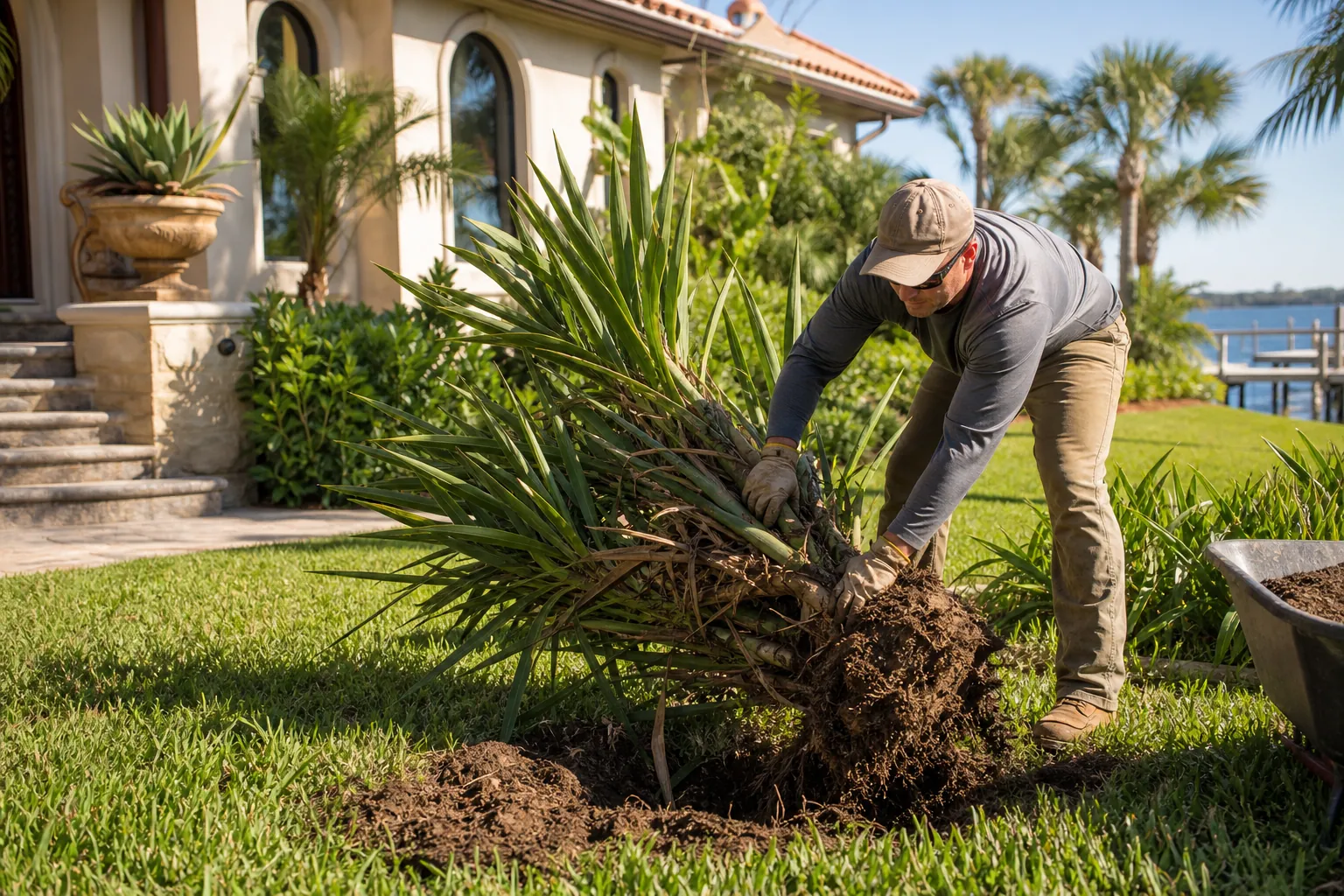
Florida plants can grow quickly, especially through St. Augustine’s warm, humid months. A shrub that once fit neatly beside the porch may block a walkway, while ornamental grasses, vines, or tropical plants can spread into nearby beds. When unwanted growth becomes difficult to manage, professional removal can restore space without turning the entire landscape into a construction zone.
Tropical Yards provides plant removal service in St. Augustine for homeowners who want a cleaner, safer, and more manageable property. Each project begins with a practical review of the plants, access points, surrounding features, and the client’s plans for the cleared area. The goal is not simply to cut vegetation down. It is to remove unwanted material carefully and prepare the space for its next use.
When Plant Removal Is The Right Choice
Pruning can often preserve a healthy plant, but it is not always the best long-term solution. Some plants have outgrown their location so severely that repeated trimming creates more maintenance without correcting the underlying issue. Others may be declining, crowding desirable specimens, or growing too close to structures.
Removal may be appropriate when plants obstruct windows, gates, air-conditioning equipment, utility access, or pedestrian routes. It can also help when dense growth traps moisture against walls, conceals pests, or prevents light and airflow from reaching the rest of a planting bed.
Common reasons St. Augustine property owners request plant removal include:
- Overgrown shrubs narrowing driveways, sidewalks, or entry paths
- Vines spreading across fences, trees, walls, or neighboring plants
- Dead, damaged, diseased, or consistently declining vegetation
- Invasive or aggressive plants taking over established beds
- Large tropical specimens planted too close to a home or pool enclosure
- Old foundation plantings that no longer suit the property
- Landscape renovation plans that require a clean, usable starting point
- Plants with thorns, irritating sap, or sharp foliage near active areas
Why Florida Plant Removal Requires Planning
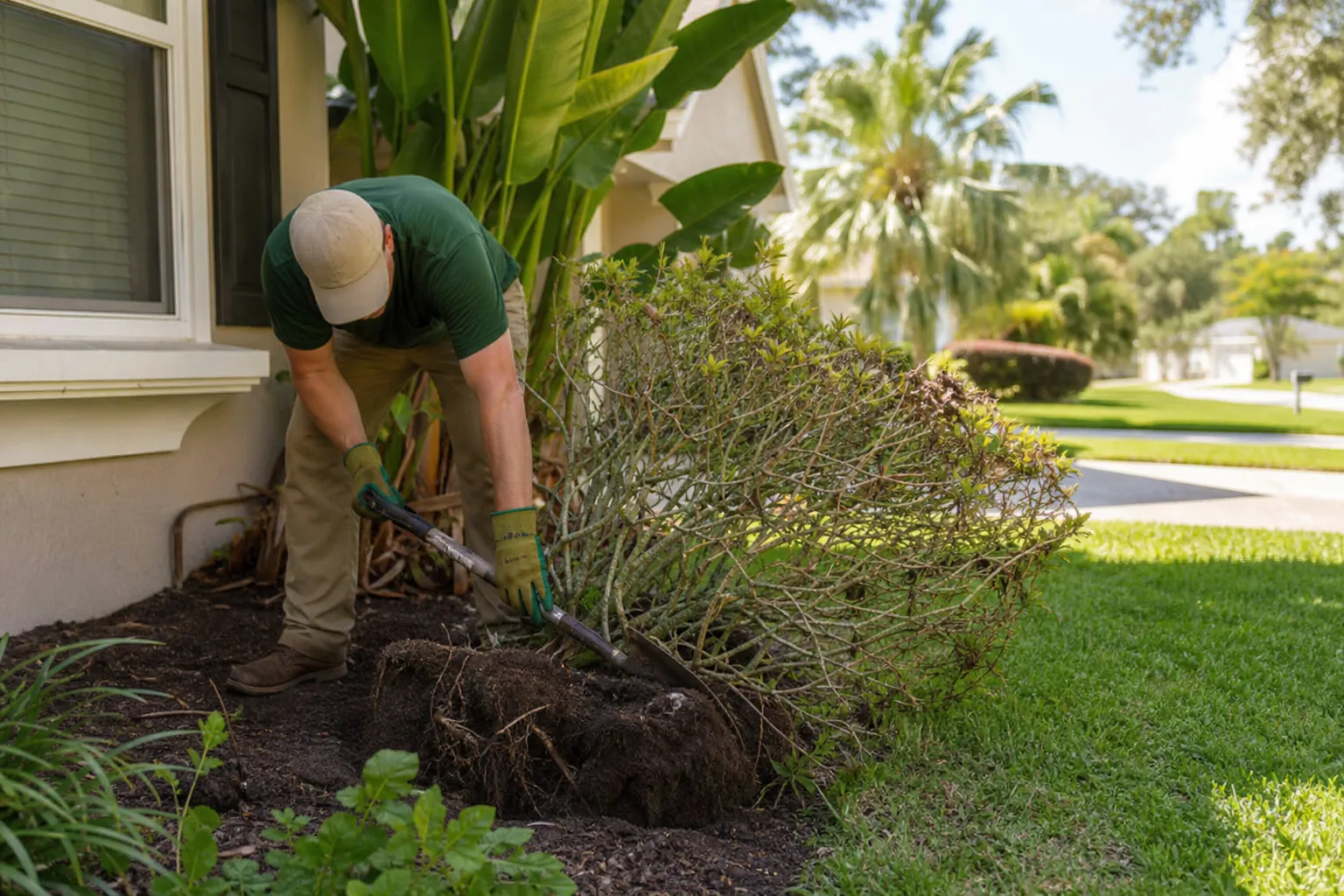
Removing a plant in Florida often involves more than pulling visible stems. Many tropical and subtropical species produce dense root systems, underground runners, bulbs, rhizomes, or new shoots from remaining material. If those growth points are left in place, the plant may return and compete with future landscaping.
Soil conditions also matter. St. Augustine properties may have sandy ground, compacted areas, shell, irrigation lines, landscape lighting, edging, or roots from valuable nearby trees. A careful approach reduces unnecessary disruption around these features. Before work begins, the removal area should be checked for obstacles and for plants the owner wants to preserve.
Season and recent weather can affect the work as well. Saturated soil may increase rutting and compaction, while dry soil can make mature root masses harder to separate. Tropical Yards considers site conditions when planning equipment access, debris handling, and cleanup.
What The Removal Process Can Include
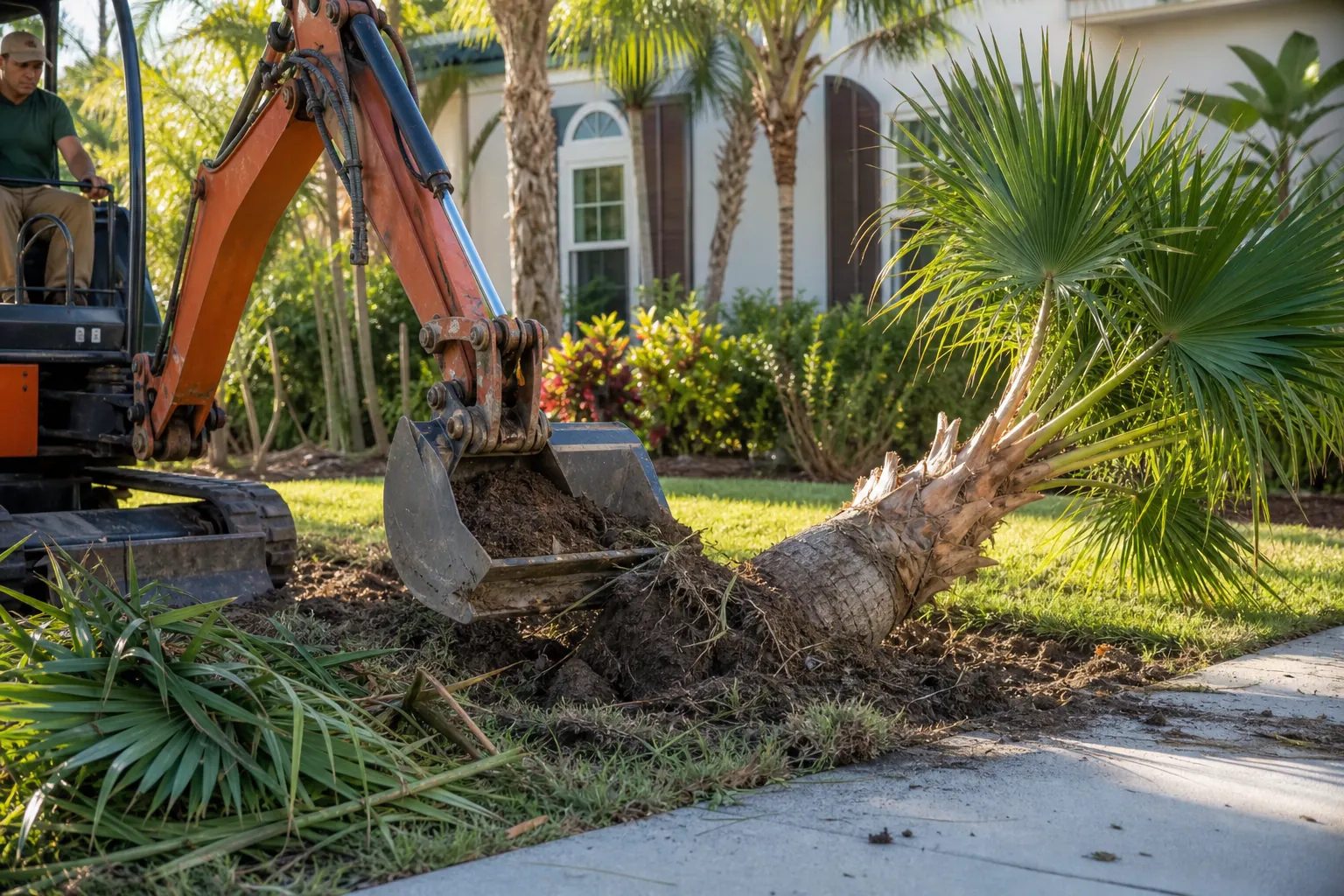
The scope depends on the plant type, size, location, and desired finish. Small ornamentals may be removed with hand tools, while mature shrubs or tightly rooted plant clusters may require more involved digging and cutting. Limited access can also influence how debris is broken down and transported out of the yard.
A typical service starts by identifying the vegetation marked for removal. Nearby décor, irrigation components, and desirable plants are noted before cutting begins. Above-ground growth is reduced in controlled sections, then the accessible root crown or other regenerative material is addressed according to the project plan.
Once removal is complete, loose debris is gathered and the disturbed area is left orderly. Depending on the agreed scope, the space may be leveled for mulch, prepared for replacement plants, or kept open for a future landscape improvement. Because every site is different, it is helpful to discuss expectations for roots, hauling, soil, and bed preparation before scheduling.
Protecting The Rest Of Your Landscape
Selective plant removal should improve a yard without sacrificing healthy features nearby. That requires attention to root overlap, irrigation placement, hardscape edges, and the growth habits of neighboring plants. Removing one specimen can also change shade, wind exposure, and moisture levels in a bed.
After dense vegetation is cleared, previously shaded plants may receive stronger sun. Soil can dry more quickly, and gaps may expose bare areas to weeds. A simple follow-up plan can help stabilize the bed. This may include fresh mulch, irrigation adjustments, light pruning, or new plants suited to the available space.
Homeowners should also consider visibility and drainage. Clearing foundation beds may reveal low spots, blocked downspouts, damaged edging, or irrigation issues that were hidden by foliage. Addressing those conditions before replanting can make the next landscape design easier to maintain.
Choosing Better Replacements For A Florida Yard
Plant removal creates an opportunity to rethink the area rather than repeating the same problem. Replacement plants should match their mature space, not just look appropriately sized in a nursery container. Consider eventual height, width, root behavior, sun exposure, salt tolerance, and access for routine pruning.
For coastal or salt-exposed locations, resilient species are especially important. In shaded areas, plants adapted to lower light will usually perform better than sun-loving varieties that become thin or weak. Near walkways and entrances, compact plants with soft foliage may be more practical than thorny or rapidly spreading choices.
A layered tropical design can still feel lush without becoming overcrowded. Leaving proper spacing between plants improves airflow and makes routine maintenance easier. Mulched open space also gives specimens room to mature naturally, reducing the need for constant shearing.
Preparing For Your Plant Removal Appointment
A few simple steps can make the service more efficient. Clearly identify every plant that should stay or go, particularly when similar plants grow close together. Move lightweight furniture, toys, hoses, and decorations away from the work zone. Make sure gates are accessible and mention any known irrigation lines, electrical cables, septic components, or pet containment systems.
If the removal is part of a larger redesign, explain how the area will be used afterward. Preparing for sod, a new planting bed, a wider path, or a patio may require different levels of root removal and grading. Sharing that information early helps align the cleanup with the next phase.
Schedule Plant Removal With Tropical Yards
An overgrown landscape can make a property feel smaller and harder to care for. Thoughtful removal opens views, improves access, and gives healthy plants more room to thrive. It can also provide a clean foundation for updated tropical landscaping that better fits your home and maintenance preferences.
For plant removal service in St. Augustine, contact Tropical Yards to discuss the vegetation, site access, and your plans for the cleared space. Call 772-267-1611 to arrange a straightforward assessment and take the next step toward a more usable Florida yard.
Call 772-267-1611 to talk through next steps.