What Plants Fit Narrow Beds Inside a St. Augustine Pool Cage?
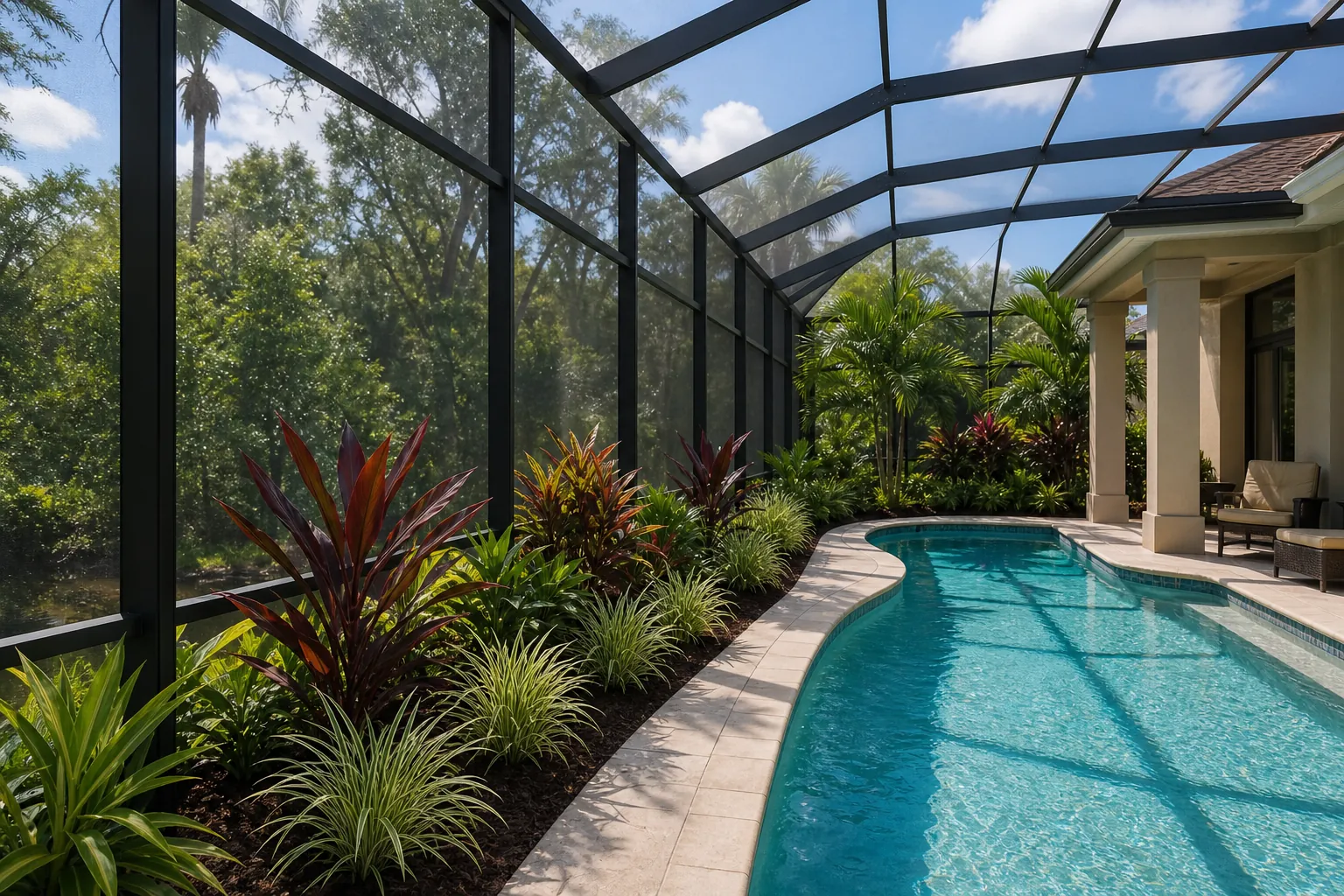
Narrow planting beds inside a pool cage require careful choices. A plant may look compact at purchase but soon crowd the walkway, press against screening, or drop debris near the pool. Before selecting plants for a St. Augustine pool area, measure the bed, observe its conditions, and judge every candidate by its mature form rather than its nursery size. The goal is a planting that fits the available space and remains practical to maintain.
Measure the Bed and Its Required Clearances
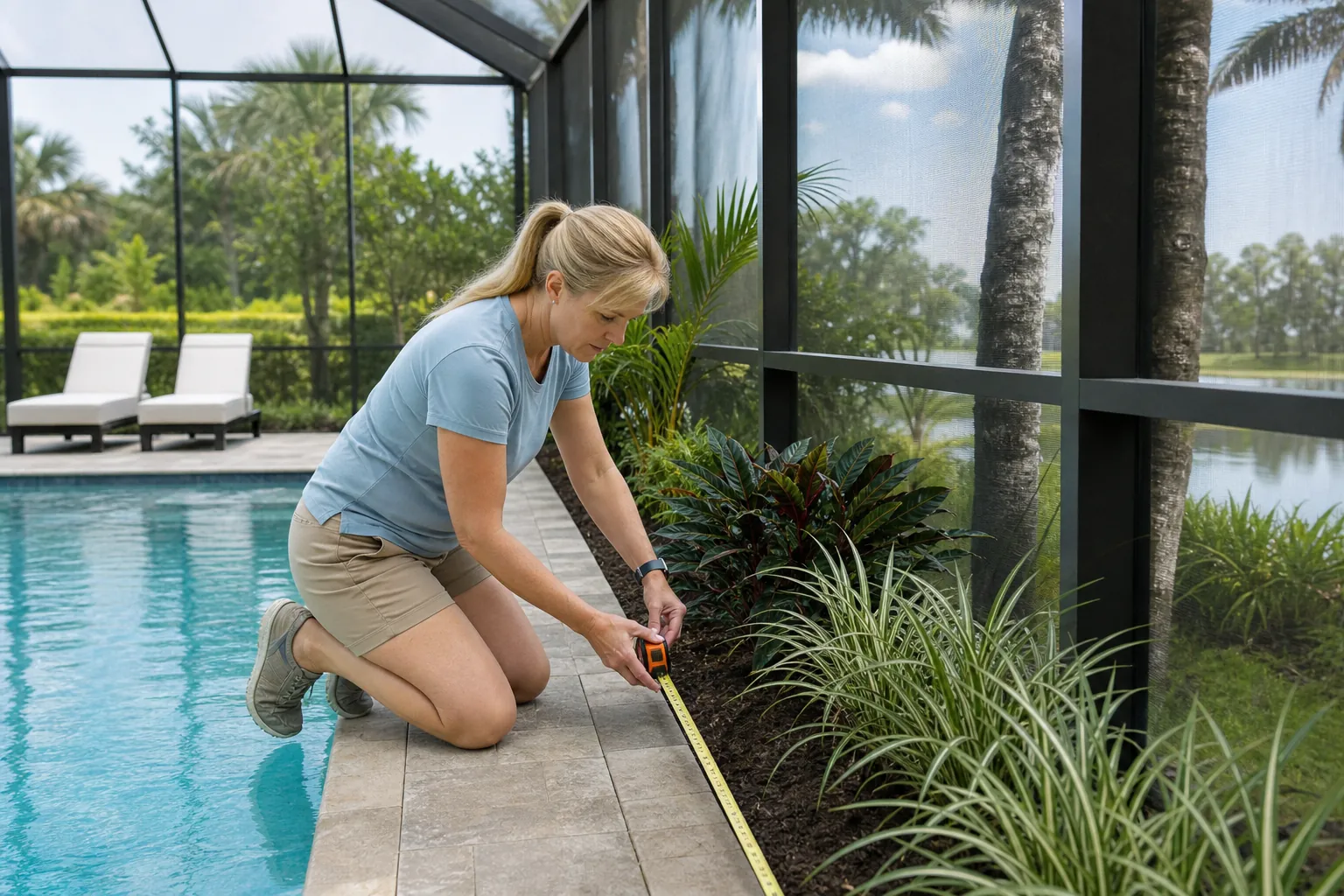
Begin with exact measurements of each bed. Record its length and width, then measure the distance from the soil to the nearest screen panel, door, walkway, pool edge, and overhead cage support. These clearances are more useful than the bed dimensions alone because foliage can extend beyond the soil line.
Mark any space that must remain open for walking, cleaning, opening doors, or reaching pool equipment. Next, decide how much width a plant can occupy without regular cutting. Compare that figure with the plant's expected mature spread. If the label provides a range, use the larger number when evaluating the fit.
Also consider plant shape. An upright plant can use a narrow footprint more efficiently than a broad, arching one. A low groundcover may fit beneath a window or cage brace, while a taller specimen needs room above and around it. Sketching the bed to scale can reveal crowding before any purchase is made.
Observe Light, Water, Heat, and Airflow
Conditions inside one pool cage can vary from bed to bed. Watch the site at several points during the day and note whether each area receives direct sun, filtered light through the screen, or shade from the house. Screening reduces and diffuses light, while walls and paved surfaces can influence heat around the planting area.
Check the soil after rain and routine pool use. Determine whether water drains promptly or remains in low spots. Notice whether roof runoff, deck washing, or splashing reaches the bed. A plant that fits physically may still be unsuitable if its moisture needs do not match the site.
Air movement matters as well. Cage corners, walls, and dense plantings can limit circulation. Leave enough space between plants and nearby structures for foliage to dry and for routine inspection. If a bed contains young palms or sits near them, seasonal planning may also help. Review this guide to protecting young palms from frost in St. Augustine.
Choose Plants by Mature Habit, Not Appearance
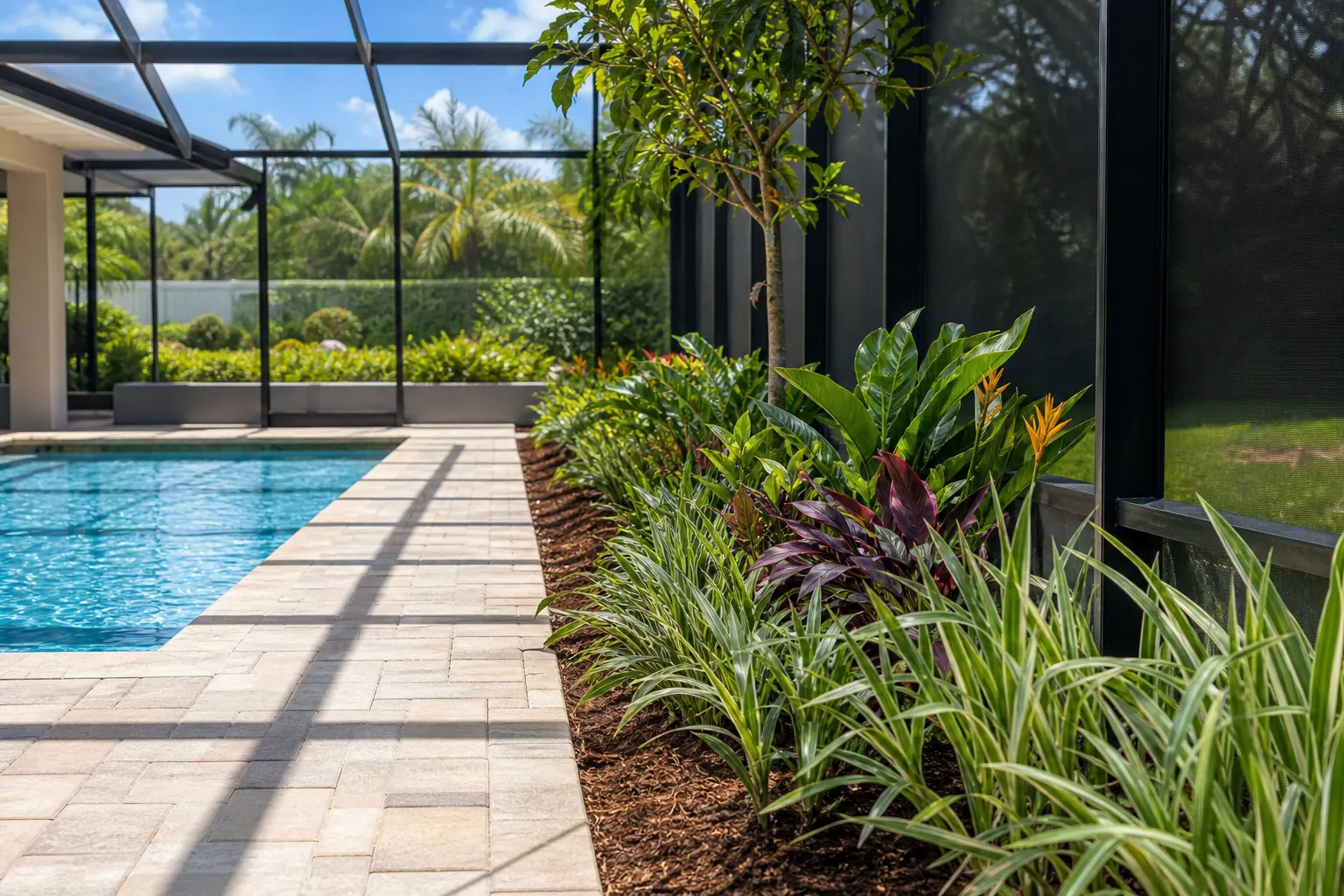
Use mature height and spread as the first screening criteria. For the narrowest beds, focus on plants described as compact, upright, clumping, or slow spreading. Avoid assuming that pruning can permanently make a naturally wide plant suitable for a tight space. Repeated hard cutting can create extra work and may leave an awkward form.
Examine how the plant grows from the base. Clumping plants generally stay more predictable than plants that travel through underground stems or root wherever branches touch soil. Ask how frequently the plant needs division, shaping, or removal of old foliage. Consider roots too, especially beside paving and structural elements. The available soil volume must support the mature plant without forcing it into surrounding areas.
Before buying, verify these points on a reliable plant label or reference:
- Mature height, spread, and overall growth habit
- Light and soil-moisture requirements
- Cold sensitivity and seasonal appearance
- Flower, fruit, leaf, or seed drop
- Presence of thorns, spines, or irritating sap
- Pruning, division, and cleanup needs
Account for Poolside Cleanup and Daily Use
A poolside plant should work with the way the enclosure is used. Plants that continually shed small leaves, petals, berries, or seeds may increase cleanup on the deck and in the water. Large leaves can also become noticeable debris after wind or cold weather. Compare this maintenance with your willingness to sweep, skim, and remove spent growth.
Keep thorny or sharply pointed foliage away from doors, chairs, and walking routes. Even a compact plant can be inconvenient if people regularly brush against it. Fragrant flowers may be welcome near seating, but placement should reflect personal preference and how often the space is occupied.
Plan access before filling the bed. Leave a route for reaching the back of the planting area so that weeds, fallen material, and irrigation components can be handled without stepping on plants. Mulch depth and edging should not create loose material on the deck. A simpler planting with repeated forms is often easier to inspect and maintain than many unrelated plants packed into limited soil.
Build a Shortlist and Test the Layout
Once you know the limits, create a shortlist rather than buying plants one at a time. Remove any candidate that exceeds the available mature width, conflicts with the measured light, or demands more cleanup than you want. Then compare the remaining choices by growth rate, seasonal appearance, and maintenance.
Test the arrangement on site. Use empty nursery pots, buckets, or cardboard circles sized to each plant's mature spread. Place them at the intended spacing and walk around the pool. Open nearby doors, sit in the usual chairs, and check views from inside the house. Confirm that foliage will not block access when it reaches full size.
For layered planting, keep the design restrained. Place taller upright forms where vertical clearance allows, medium plants where they will not spill into circulation space, and low plants along visible edges. Avoid stacking several layers if the bed lacks sufficient depth. Finally, write down the selected spacing and quantities. This simple plan reduces impulse purchases and helps the finished bed remain proportional.
Talk Through Your Narrow Pool-Cage Beds
If you are deciding what can fit inside a St. Augustine pool cage, gather your measurements, light notes, and photos first. Then call Tropical Yards at 772-267-1611 for a calm conversation about your space.
Call 772-267-1611 to talk through next steps.