Which St. Augustine Pool-Cage Plants Produce the Least Messy Debris?
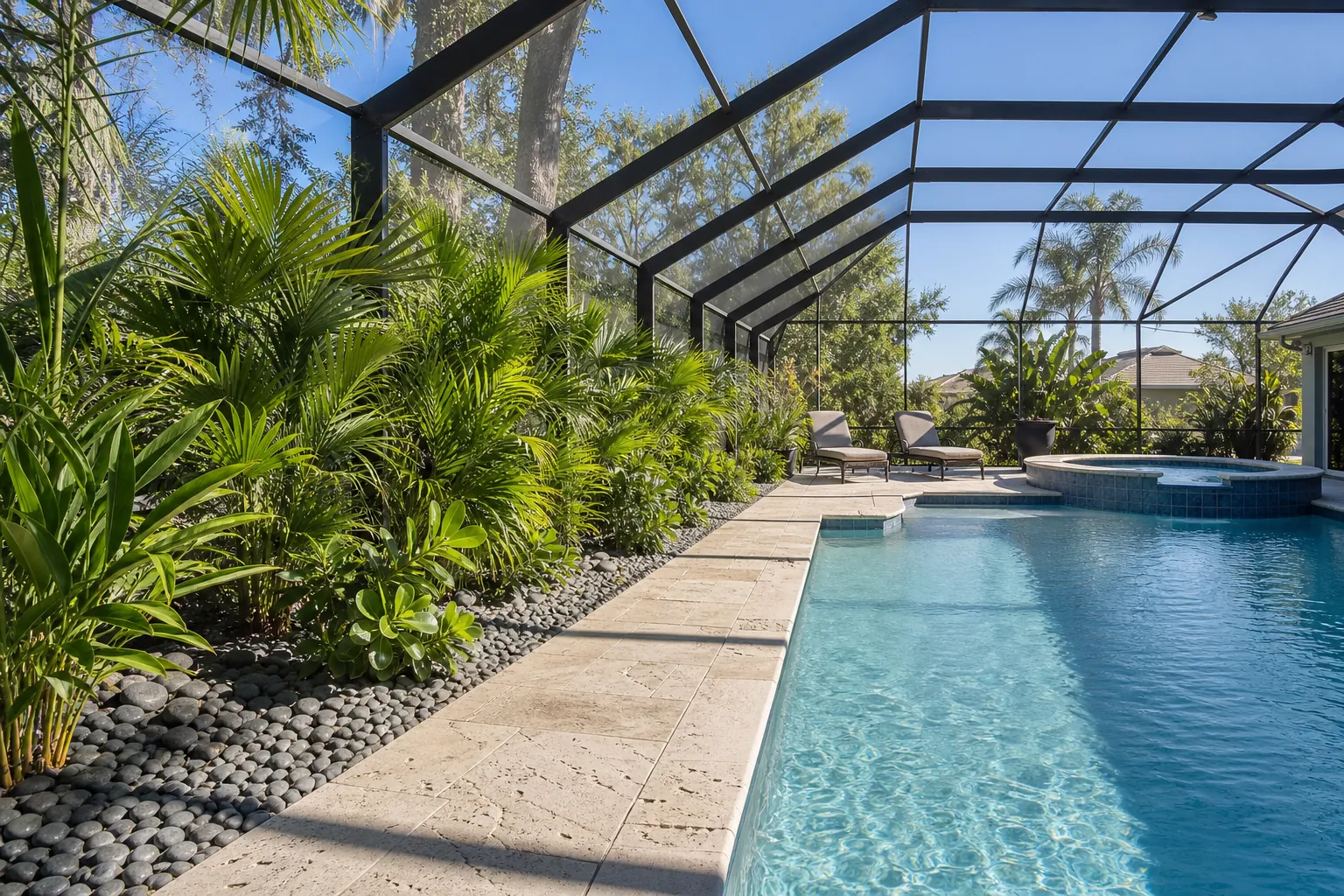
Plants around a pool cage should make the space more enjoyable, not create a steady cleanup project. In St. Augustine, the best choices depend less on a catchy plant list and more on how each plant grows, sheds, and responds to the conditions beside your enclosure. Before buying, evaluate leaves, flowers, fruit, mature size, root space, wind exposure, and access for pruning. A plant that looks tidy at the nursery may behave differently once mature. The following decision process helps you narrow the options without assuming that any living plant will remain completely debris-free.
Define What “Low Debris” Means for Your Pool Area
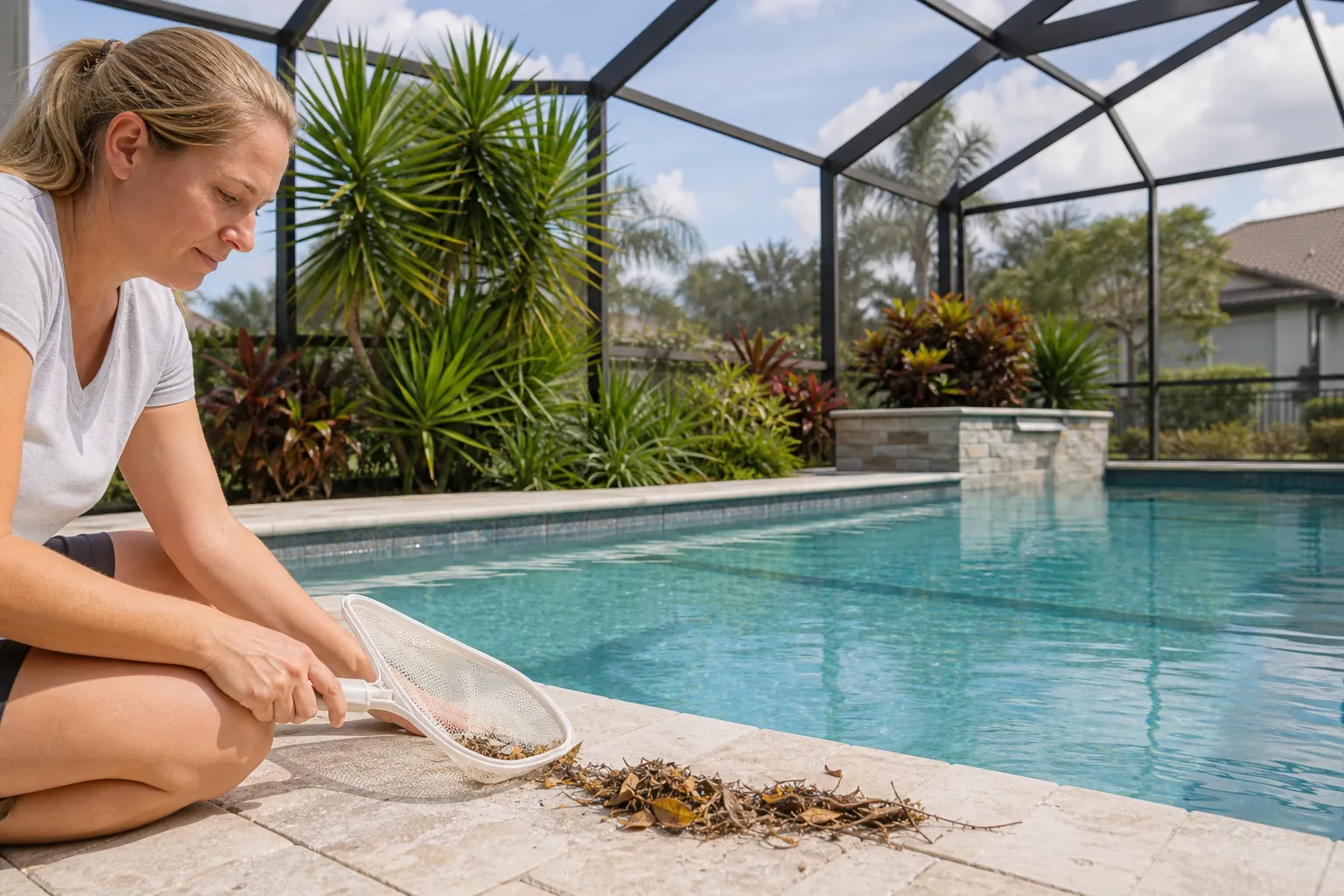
Start by identifying the debris that causes the most trouble in your specific space. Tiny leaves may pass through cage screening and collect near the water, while large leaves may be easier to pick up by hand. Flower petals can stick to wet decking. Berries, seedpods, or fruit can stain surfaces or attract unwanted attention from wildlife. Bark and dry fronds can also add to cleanup, especially when plants are placed close to the enclosure.
Watch the area for several days before choosing plants. Note where wind pushes loose material, where rainwater gathers, and which parts of the cage are difficult to reach. Then decide how much routine sweeping, skimming, and pruning you are willing to do. “Low debris” usually means manageable shedding, not zero shedding. This distinction prevents disappointment and helps you compare plants based on practical maintenance rather than appearance alone. Your preferred plant should produce debris that is infrequent, visible, and easy to remove from the surfaces around it.
Use Plant Traits to Screen Out Messy Choices
You can eliminate many poor candidates by checking a few physical traits before purchase. Look beyond the plant’s current nursery size and ask how it behaves through flowering, fruiting, and seasonal leaf replacement. A compact plant with sturdy foliage and limited flowering is often easier to manage than a fast-growing specimen that needs repeated trimming.
- Favor firm, larger leaves that are easy to see and collect.
- Avoid plants known for abundant petals, berries, fruit, seedpods, or fine leaflets.
- Check whether old leaves stay attached until pruning or drop individually.
- Choose growth habits that fit the available width and height at maturity.
- Consider whether pruning will create frequent clippings beside the cage.
- Inspect stems, thorns, or sharp leaf edges that could complicate cleanup.
Ask for the plant’s mature dimensions and shedding pattern, not simply whether it is described as clean. If those details are unavailable, observe mature examples locally before deciding. The goal is predictable maintenance. A slower-growing plant may reduce pruning debris, but only if it also fits the site without crowding screens, walkways, or equipment access.
Match Plants to Light, Wind, Water, and Space
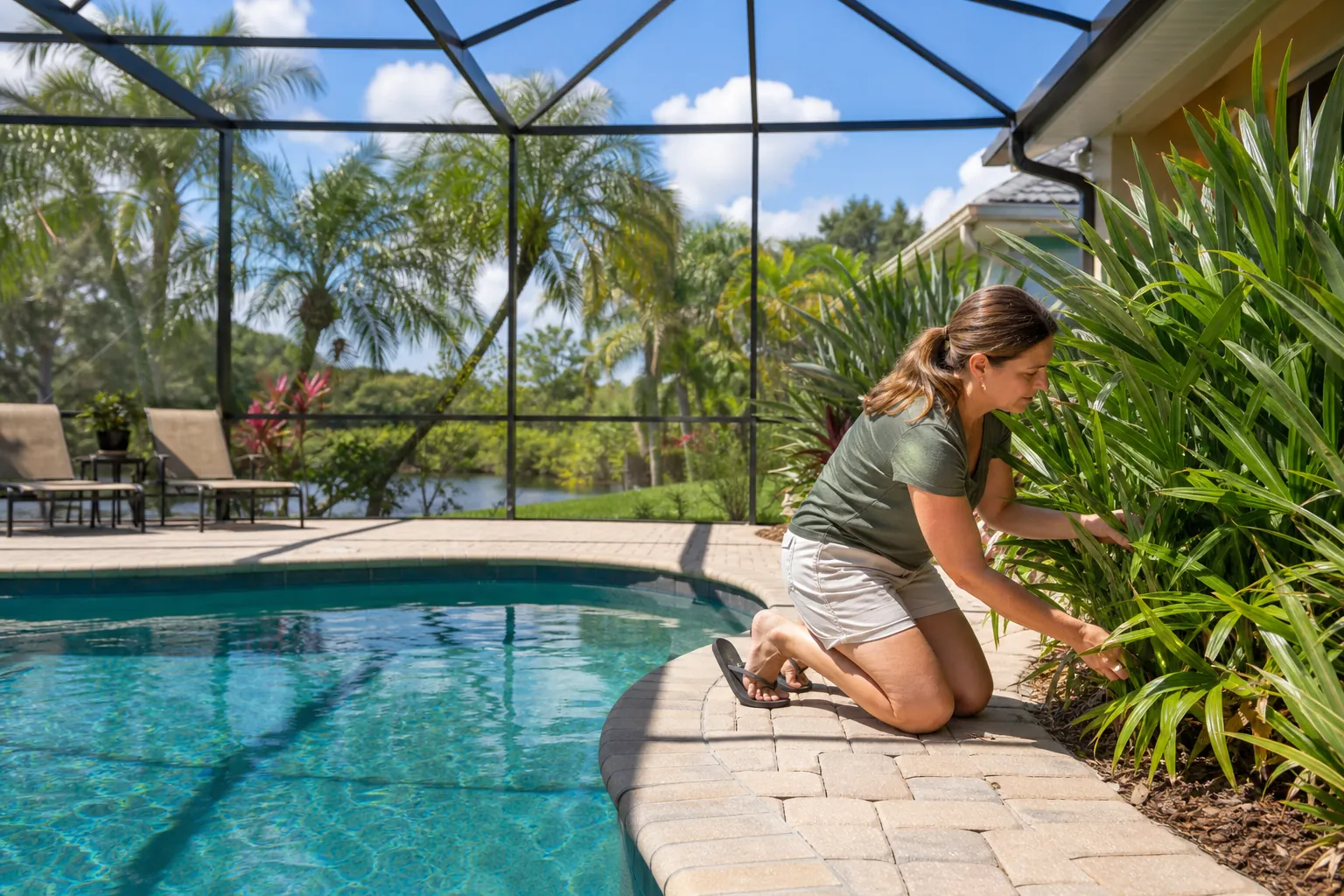
A naturally tidy plant can become messy when placed in unsuitable conditions. Too little light may produce thin, weak growth. Excess water or poor drainage may stress roots, while inadequate water can lead to dry foliage and premature leaf drop. Wind can rub branches against screening or carry flowers and leaves toward the pool. Evaluate the entire planting zone rather than selecting a plant solely because it tolerates Florida conditions in general.
Record how many hours of direct light the bed receives, including seasonal changes. Check whether roof runoff or irrigation keeps one section wetter than another. Measure the distance from the planting area to the cage, deck, gates, and nearby utilities. Leave enough room for the mature plant so routine pruning does not become necessary simply to preserve access.
Also consider cold exposure in open or low-lying areas. If palms are part of your plan, review this guide on how to protect young palms from frost in St. Augustine. A plant suited to its exact position is more likely to maintain stable, manageable growth.
Decide Whether Plants Belong Inside or Outside the Cage
Placement determines how much debris reaches the pool. Plants inside a screened enclosure need especially careful selection because every dropped leaf, flower, or seed remains within the usable area. Containers can offer more control over soil and spacing, but they still require drainage planning and enough room for mature roots. Water should not repeatedly run across walking surfaces or pool equipment.
Plants outside the cage may provide greenery while keeping some debris beyond the screen, but distance and prevailing wind matter. Branches should not press against panels or grow over the roof. Avoid placing plants where maintenance requires leaning ladders, tools, or cut stems against screening. Keep gates, paths, drains, and equipment areas accessible.
Use a tape measure and mark the projected mature width on the ground. This simple step reveals whether a plant will eventually narrow a walkway or demand constant shaping. If the space is tight, fewer well-placed plants may be a cleaner choice than filling every available bed. Good spacing supports air movement, visual order, and easier cleanup.
Compare Finalists and Plan Maintenance Before Buying
Once you have several candidates, compare them in a simple decision table. Include mature height and width, leaf size, flowering period, fruit or seed production, pruning frequency, light needs, water needs, and distance from the cage. Give extra weight to the traits that affect your pool most. For example, abundant fine flowers may be unacceptable beside water even if the plant needs little pruning.
Visit mature specimens when possible. Look beneath the canopy and around the base, because that is where the real maintenance pattern appears. Check whether old foliage falls cleanly, becomes trapped among stems, or requires hand removal. Ask how the plant changes across the year rather than judging it during one attractive season.
Finally, plan for routine observation. Remove declining leaves before wind carries them toward the cage, collect clippings immediately after pruning, and adjust irrigation if stress is causing avoidable shedding. Reassess plants that repeatedly touch screens or block access. A thoughtful selection can reduce work, but consistent care keeps the pool area orderly as plants mature and weather conditions change.
Talk Through Your Pool-Cage Plant Decision
If you want to discuss your St. Augustine pool-cage planting priorities with Tropical Yards, call 772-267-1611. Share your light, spacing, wind exposure, and cleanup concerns so the conversation can stay focused on practical choices.
Call 772-267-1611 to talk through next steps.