Create a rain garden that works with your St. Augustine landscape
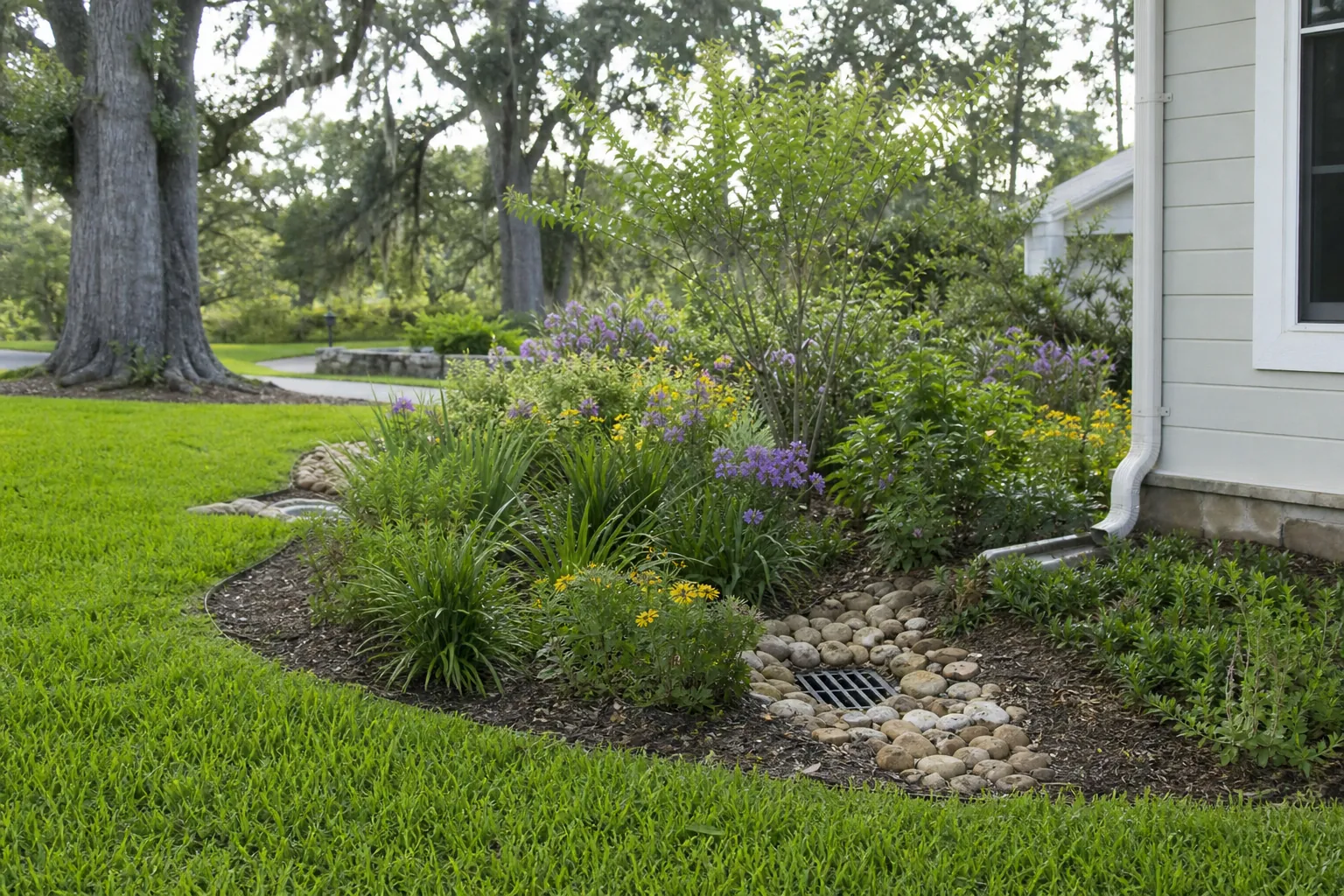
Heavy Florida rain can expose every drainage weakness in a landscape. Water may rush off the roof, collect beside a patio, wash mulch into the lawn, or remain in low spots long after a storm. A thoughtfully designed rain garden can help manage that runoff while adding tropical color and habitat to the yard.
Tropical Yards provides rain garden installation in St. Augustine for homeowners who want drainage features to look like intentional parts of the landscape. The goal is not simply to dig a depression and fill it with plants. A successful rain garden must fit the property's grading, soil, architecture, sunlight, and typical flow of stormwater.
How a Rain Garden Manages Stormwater
A rain garden is a shallow planted basin positioned to receive runoff from a roof, driveway, patio, or other hard surface. It briefly holds water and allows it to soak into the soil rather than immediately moving toward a street, neighboring lot, or vulnerable planting bed.
Unlike a pond, a properly functioning rain garden is not intended to stay wet continuously. Water should infiltrate after a storm, leaving plants that can tolerate both temporary saturation and periods of typical Florida heat. This changing moisture level makes plant selection and soil preparation especially important.
Rain gardens can also slow moving water. Reduced flow helps limit erosion, keeps mulch and soil in place, and gives sediment an opportunity to settle. While one garden cannot solve every site drainage issue, it may become a practical component of a broader water-management plan.
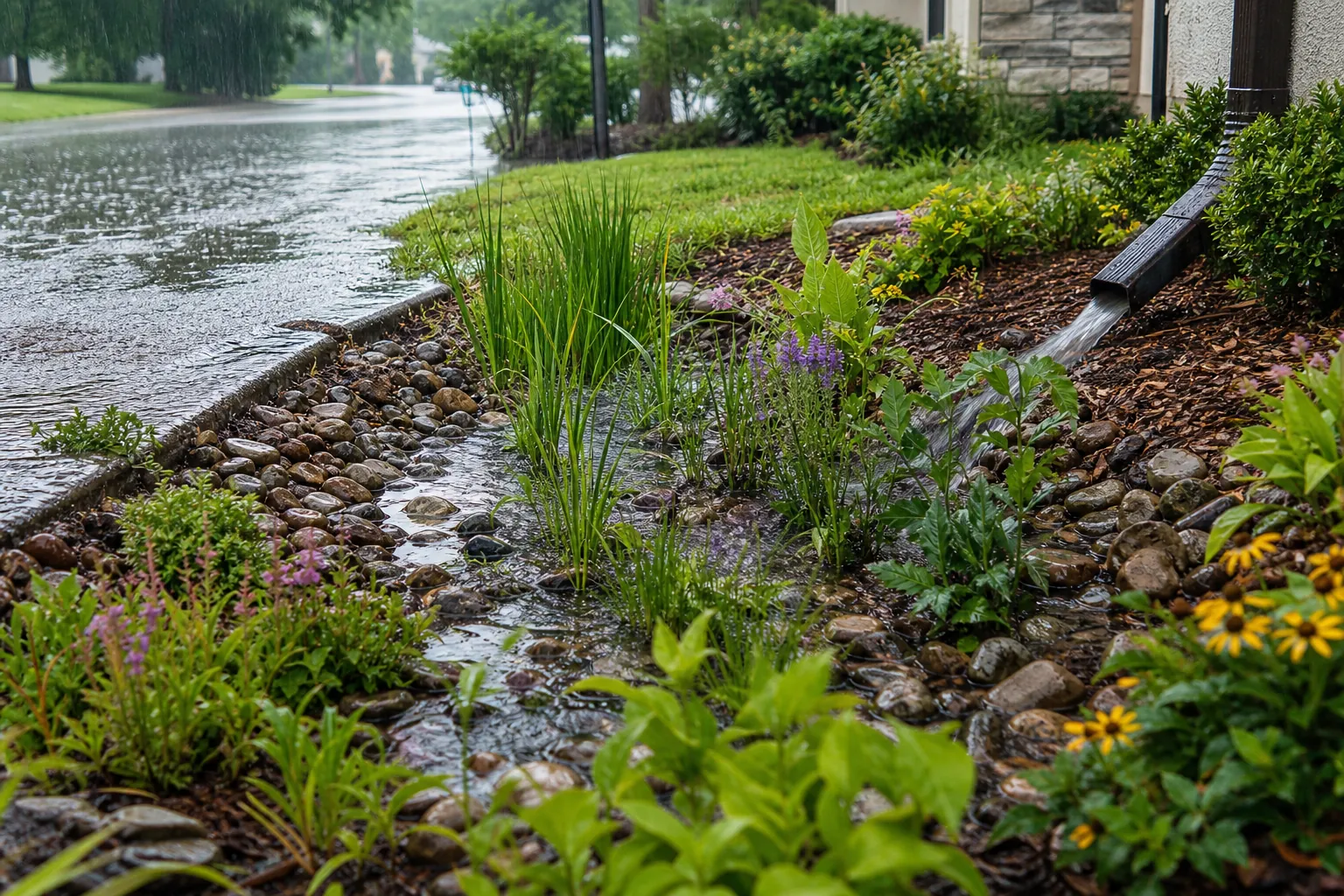
Why Site Evaluation Comes First
Rain garden placement affects both performance and safety. Before installation, the landscape should be reviewed during dry conditions and, when possible, after rainfall. Downspout locations, roof area, existing swales, compacted soil, irrigation, utilities, septic components, and nearby structures can all influence the design.
The ideal location is usually a natural low area that can receive runoff without directing water toward the foundation. However, the lowest point is not automatically the right choice. A basin installed in poorly draining soil may hold water too long, while one placed on a steep slope may erode or require more extensive grading.
An infiltration assessment helps determine how readily the soil accepts water. St. Augustine properties can vary considerably, from sandy soils that drain quickly to compacted or altered areas around newer construction. Soil conditions influence basin depth, footprint, amendments, and overflow planning.
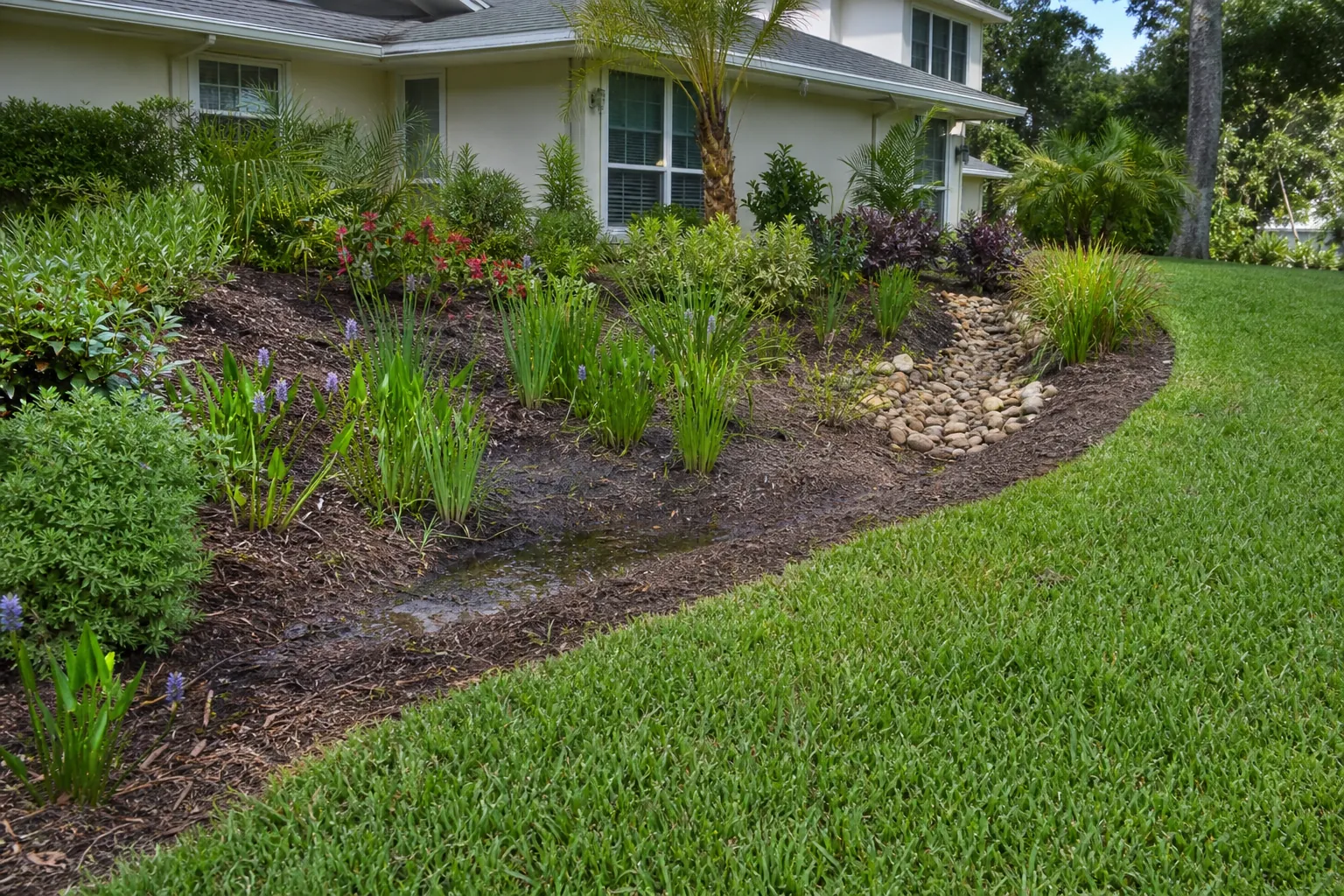
Elements of an Effective Florida Rain Garden
Good rain garden design balances appearance with hydraulic function. The feature should capture an appropriate volume of water, spread it across the basin, and provide a safe route for excess runoff during unusually intense storms.
Important installation details may include:
- A defined inlet: A stabilized entry point receives water from a downspout extension, swale, or surface flow without allowing the incoming water to scour the soil.
- A shallow basin: Gentle contours hold runoff temporarily while remaining easy to integrate with surrounding lawn and planting beds.
- Prepared soil: Appropriate soil preparation supports infiltration and healthy root growth. The correct approach depends on existing site conditions.
- A level berm: Where needed, a modest berm retains water without creating an abrupt mound or blocking necessary drainage elsewhere.
- Erosion protection: Stone, dense groundcover, or other stabilization can reduce washout at high-flow locations.
- A controlled overflow: Excess water needs a planned exit that directs it away from buildings and sensitive areas.
- Suitable mulch: Mulch helps moderate soil temperature and suppress weeds, but it must be selected and placed to resist floating away.
- Layered planting: Plants are arranged according to moisture tolerance, with adaptable species in the basin and drier-condition plants near the upper edges.
These elements should work together rather than being treated as separate decorative additions. Even attractive plants may struggle if water enters too forcefully, the soil stays saturated, or the overflow path is overlooked.
Choosing Plants for Coastal North Florida
St. Augustine landscapes face summer heat, humidity, seasonal dry spells, heavy downpours, and occasional winter cold. Coastal exposure may also introduce salt spray and wind. Plants should be chosen for the specific property rather than selected from a generic rain garden list.
The basin's wettest zone needs species that tolerate short periods of standing water but do not require permanently wet soil. The side slopes often support plants suited to moderate moisture, while the upper rim typically needs drought-tolerant selections. This zoning creates a more resilient garden and reduces replacement needs.
Depending on site conditions, Florida-friendly options may include native grasses, sedges, flowering perennials, and compact shrubs. Color, mature size, root behavior, wildlife value, and maintenance requirements should all guide the final palette. On smaller lots, restrained groupings often look cleaner and allow easier access for weeding and inspection.
Installation Details That Protect the Landscape
Installation usually begins with careful layout and elevation checks. Existing turf or unwanted vegetation is removed, then the basin is shaped with gradual transitions. Excavated soil may be used to form a berm if suitable, but it should not be piled where it obstructs established drainage.
Any inlet is stabilized before routine runoff begins entering the garden. Plants are then installed according to their moisture zones, followed by mulch and a thorough watering. The finished grade should be checked to confirm that water reaches the basin and that overflow moves toward the intended safe area.
A rain garden should not be used to conceal a serious structural drainage problem. Persistent water against a foundation, sewage odors, septic concerns, major erosion, or runoff entering from another property may require evaluation by an engineer, drainage specialist, or other qualified professional. Landscape design is most effective when underlying issues are identified first.
Maintaining Performance Through the Seasons
New plants require consistent establishment care even when the garden is designed for stormwater. During the first several months, watering should respond to rainfall and plant needs rather than follow an inflexible schedule. Weeds are easiest to manage when removed before they seed.
After major storms, check the inlet for debris, displaced mulch, channels, or exposed roots. Confirm that water is not remaining for an unexpectedly long period. Plants may need selective pruning, division, or replacement as the garden matures, but aggressive shearing can reduce the natural form and ecological value of the planting.
Periodic maintenance keeps the basin attractive and preserves its storage capacity. Adding excessive soil or mulch year after year can gradually make the depression shallower, so materials should be replenished with care.
Plan a Rain Garden for Your Property
A rain garden can transform a recurring runoff area into a useful landscape feature, but the strongest results begin with site-specific planning. Tropical Yards considers water movement, soil, planting conditions, and the visual character of your St. Augustine home before recommending an approach.
If you are exploring a Florida rain garden or a broader tropical landscape improvement, call Tropical Yards at 772-267-1611. We can discuss your goals and determine whether a rain garden installation is appropriate for your property.
Call 772-267-1611 to talk through next steps.