Raking coquina shell after heavy rain: a practical Florida guide
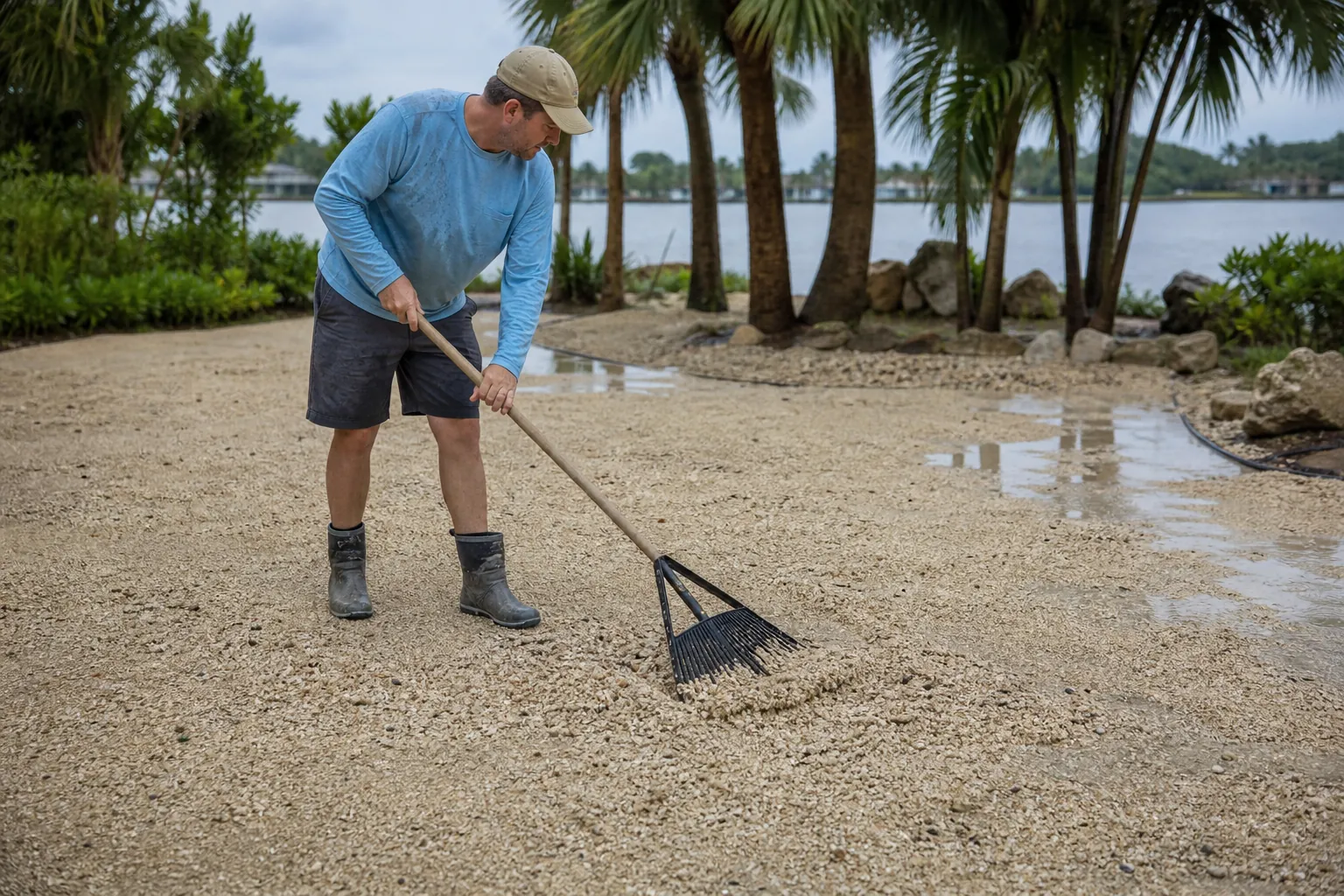
Heavy Florida rain can leave a coquina shell path or landscape bed looking uneven. Shell may collect along an edge, shallow depressions may hold water, and leaves can hide the surface. The first instinct is often to grab a rake, but working wet material too soon can mix soil into the shell and make the problem harder to correct.
Raking coquina shell after heavy rain works best when you separate surface grooming from drainage troubleshooting. A light rake can redistribute loose material. It cannot correct a low spot in the underlying ground, stop concentrated runoff, or replace shell that has washed away.
This guide explains how to inspect your shell, choose a workable time, rake gently, and decide whether to buy additional material. Tropical Yards supplies coquina shell and tropical plants, with dump trailer delivery from St. Augustine to Daytona Beach. The inspection, preparation, and raking described here are DIY tasks, not services offered by Tropical Yards.
Inspect The Shell Before You Start Raking
Walk around the affected area once the rain has stopped and conditions are safe. Look from the edges first rather than immediately stepping onto a saturated path. Notice where shell has moved, where water remains, and whether exposed soil appears in the lowest areas.
A thin line of shell at the downhill edge usually points to surface movement. A channel running across the path suggests flowing water carried material along a concentrated route. A muddy depression may indicate a problem beneath the shell rather than a simple need for grooming.
Compare the affected section with an undisturbed section nearby. Coquina shell naturally has an irregular appearance, so not every change in texture needs correction. Your goal is a usable, reasonably even surface, not a perfectly smooth finish that requires repeatedly disturbing the material.
- Check whether runoff from a roof, downspout, driveway, or neighboring surface enters the shell area.
- Look for shell pushed against borders, gathered around plant stems, or scattered outside the intended footprint.
- Identify exposed soil, soft footing, and depressions before you move any material.
- Photograph recurring washouts so you can compare their location after the next storm.
If moving water is still crossing the area, leave the rake aside. Wait until active runoff stops. Avoid standing water when you cannot see the footing, and do not work near storm-damaged trees, electrical hazards, or unstable edges.
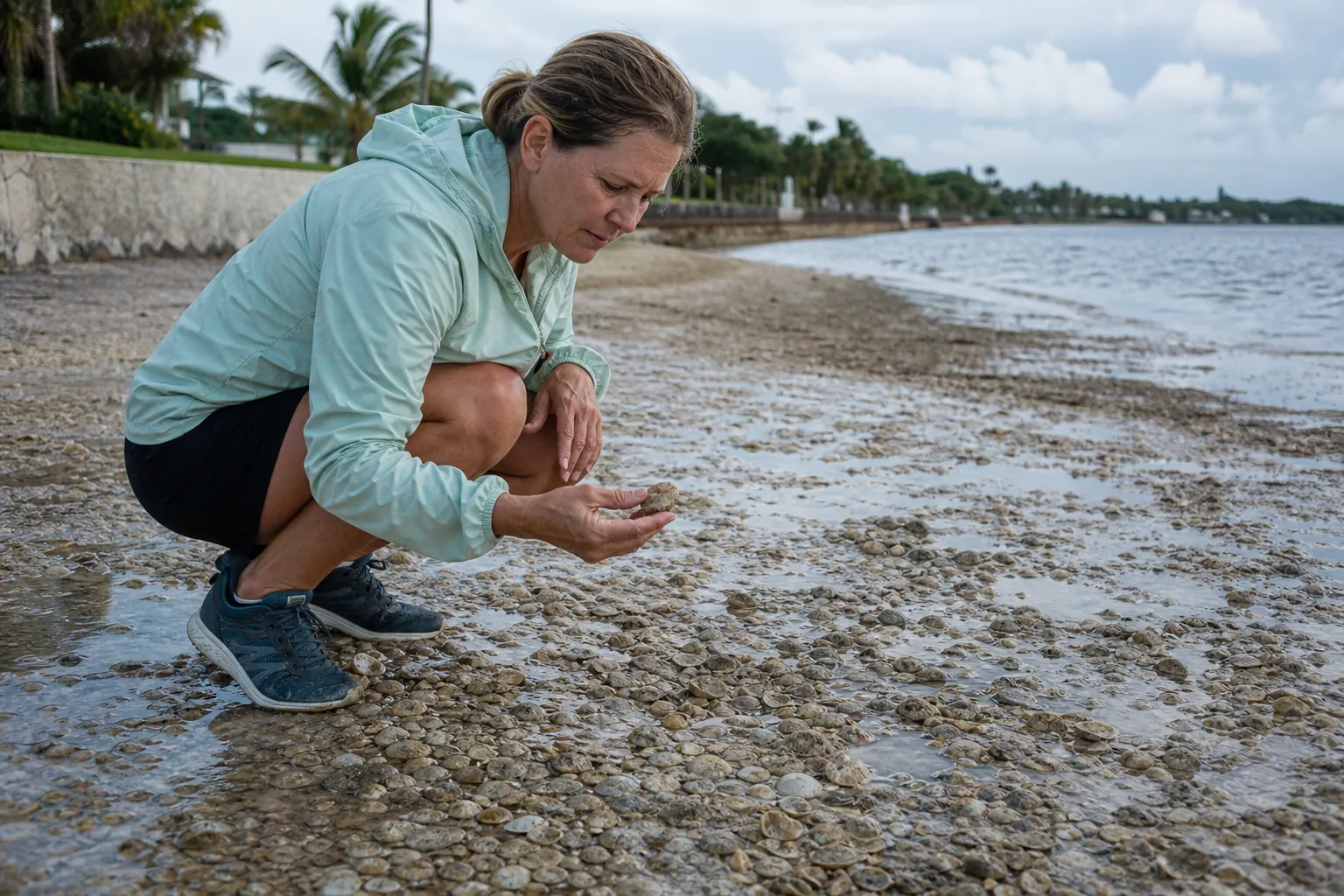
Wait For Workable Conditions, Not A Fixed Number Of Hours
There is no single waiting period that fits every Florida yard. Sandy ground, compacted soil, shade, recent rainfall, and drainage all influence how quickly a shell surface becomes workable. A sunny stretch of path may be ready while a shaded bed beside it remains soft.
Test a small section from a firm edge. Press gently with your shoe and make one light rake pass. If your foot sinks, muddy water rises, or the rake pulls wet soil through the shell, stop. Those signs mean the underlying surface is still too soft for routine grooming.
The shell does not have to be completely dry. Slightly damp material can be manageable, provided it separates under the rake and the ground supports your weight. The important distinction is between damp shell resting on stable ground and saturated shell sitting over soft soil.
Waiting also makes debris easier to handle. Wet leaves can cling to shell and conceal muddy patches. Once the surface drains, you can lift leaves more cleanly and see how much redistribution is actually needed. Avoid repeated test passes that turn a small damp spot into a mixed patch of mud and shell.
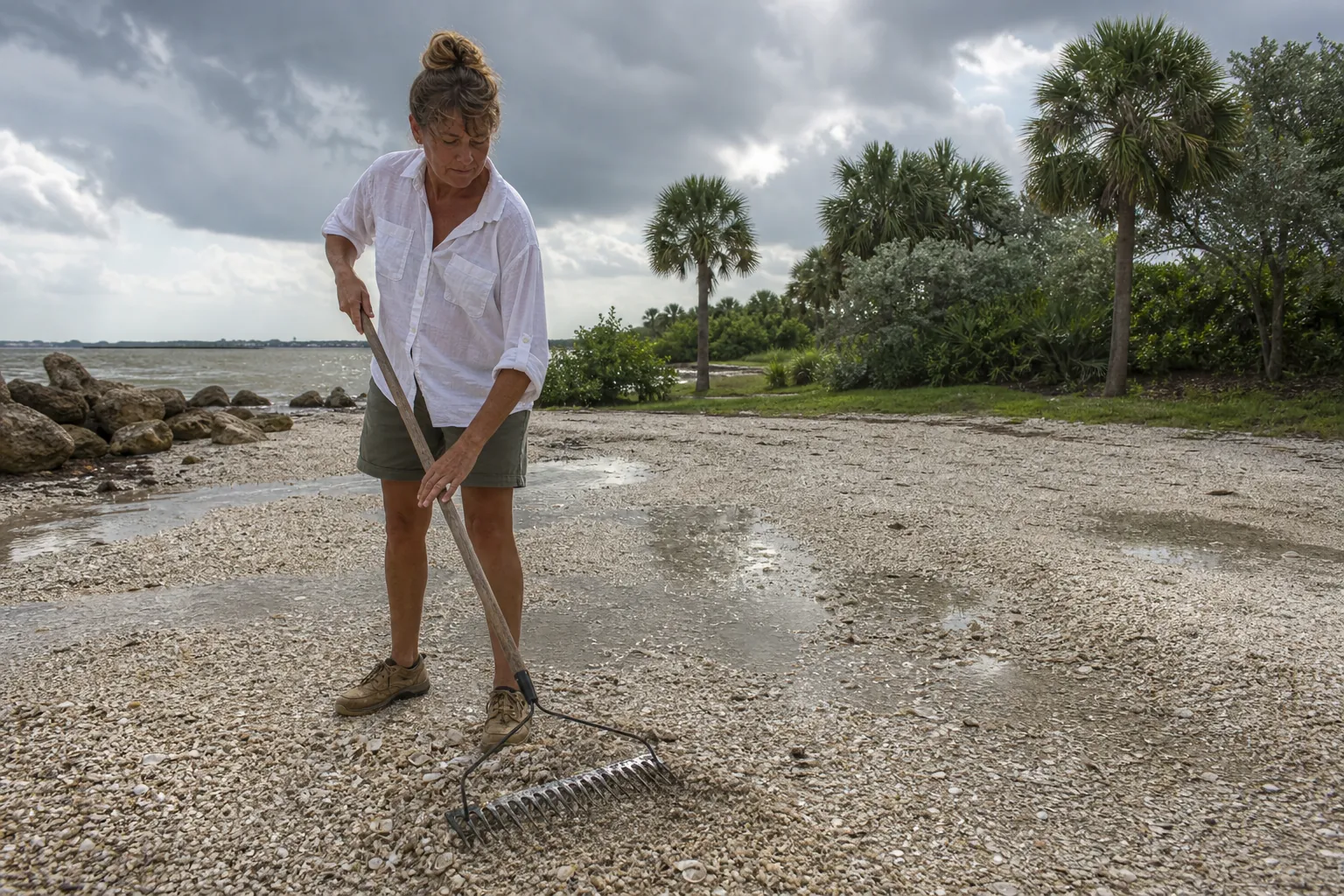
Choose Tools That Move Shell Without Digging Up Soil
A lightweight landscape rake or garden rake can help redistribute loose shell, but the way you use it matters more than the label. Heavy downward pressure drives the teeth into the underlying ground. Start with a shallow angle and let the rake skim the upper material.
For leaves and small twigs, a flexible leaf rake may be useful. Test it first because the teeth can catch shell pieces or pull them into debris piles. In small planted areas, picking up larger debris by hand often gives you better control.
Wear gloves and closed-toe shoes. Shell edges can be sharp, especially when you are handling accumulated material. Keep a bucket or wheelbarrow nearby for displaced shell that remains clean enough to reuse. Use a shovel for careful transfer, not for scraping blindly into the soil.
- Choose a rake you can control with light pressure rather than one that encourages deep digging.
- Keep separate containers for reusable shell and muddy debris so you do not mix them together.
- Use small tools near plants, irrigation lines, and narrow borders where a wide rake could cause damage.
- Stop if your tool catches buried fabric or edging rather than pulling harder.
If landscape fabric is already present, avoid hooking it with rake teeth. Exposed fabric may indicate that the shell cover has shifted or thinned. Gently uncover the extent of the problem before deciding whether redistribution alone will restore coverage.
Rake In Small Sections And Preserve The Existing Surface
Begin at a stable section and work toward the disturbed area. Remove branches and larger debris first. This keeps them from dragging shell along as you rake and makes it easier to judge the surface beneath them.
Use short, light strokes to pull shell from nearby high spots into shallow gaps. Move across the area in manageable sections instead of making long, forceful passes. Check your progress frequently from more than one direction because a surface can look level from one angle while still having a noticeable dip.
Work with the intended slope of the area. Do not build a ridge across a route where water needs to move. Likewise, avoid piling shell against a house, drain opening, gate track, or border simply to make the center look tidy.
- Lift loose debris before redistributing the shell so you can see the actual coverage.
- Pull small amounts from accumulated areas rather than stripping an unaffected section bare.
- Keep the rake teeth near the surface and stop when soil begins appearing in your strokes.
- Finish with a gentle visual check for exposed ground, abrupt ridges, and blocked drainage openings.
Do not try to rake a deep depression flat by filling it with whatever shell happens to be nearby. That can conceal a soft spot while leaving surrounding areas too thin. Mark the location and reassess it after drainage improves.
Leave a slightly textured finish. Coquina shell is not a poured pavement, and aggressive grooming can create more disturbance than benefit. Once the material is reasonably distributed and the path is usable, additional passes are usually unnecessary.
Separate Muddy Shell From Material You Can Reuse
Rain sometimes leaves clean shell outside an edge and muddy shell inside a washout. Treat those materials differently. Clean, displaced shell may be returned to the area after you remove leaves, sticks, and other obvious debris.
Shell heavily mixed with soil will not become clean simply because you spread it thinly. Raking that mixture through the rest of the bed can change the appearance and introduce finer material into previously cleaner sections. Keep the affected patch separate while you decide how to address it.
For a small amount, hand sorting may be practical. For a large muddy area, repeated sorting can become time-consuming without solving the underlying cause. Evaluate the condition of the base and the runoff source before purchasing replacement shell.
Avoid using a strong hose stream to push mud out of the shell. That can carry material into the lawn, across a driveway, or toward a storm drain. Any handling of runoff or debris should respect local requirements and keep sediment out of drainage systems.
If the shell has an unusual odor, oily residue, or contamination from an unknown source, do not redistribute it around plants. Seek appropriate local guidance on handling the material rather than treating every post-storm deposit as ordinary garden soil.
Recognize When Raking Will Not Fix A Washout
A recurring washout is a water-management issue first and a shell-supply issue second. If the same channel forms after each heavy storm, adding shell without addressing the flow may simply provide more material for the next storm to move.
Observe the area during a later rain from a safe, sheltered location. Look for concentrated roof discharge, runoff from hard surfaces, or a border that traps water. Do not enter flowing water or stand outside during lightning to investigate.
Check visible drain openings for obstruction, but do not assume a hidden drainage system is functioning just because its surface inlet looks clear. Persistent ponding, ground settlement, or runoff affecting buildings deserves assessment by an appropriately qualified professional.
- Pause routine raking if the ground remains soft after nearby areas have become firm.
- Investigate repeated channels before ordering shell to refill them.
- Avoid changing grades or redirecting water toward neighboring property without proper guidance.
- Keep shell away from drainage openings so surface grooming does not create a blockage.
Tropical Yards supplies materials rather than drainage design or repair. Use the observations in this section to understand what needs attention before arranging a shell order, not as a substitute for site-specific drainage advice.
Decide Whether You Need Additional Coquina Shell
After the surface has drained and you have redistributed reusable material, inspect the coverage again. Additional shell may be useful where material has genuinely left the area, where the existing layer has become thin, or where clean shell is needed after removing a contaminated patch.
Do not automatically cover every discolored section. Damp shell, leaf residue, and exposed fines can make the surface look different temporarily. Evaluate the actual amount and condition of material rather than ordering solely from its appearance immediately after a storm.
Measure the affected footprint instead of guessing from the size of the entire yard. For a rectangular section, record its length and width. Divide irregular sections into simpler shapes and keep a sketch of each measurement. Then determine the additional depth you intend to apply.
For an initial volume estimate, multiply length by width by additional depth, with all measurements expressed in feet. Divide cubic feet by 27 to convert to cubic yards. This estimates volume only; confirm the supplier's ordering unit and discuss your measurements before placing an order.
Use the coquina shell buying hub for general material information. Keep this rain-recovery decision focused on replacement needs rather than redesigning the whole area. When contacting Tropical Yards, ask about the current material's size range, appearance, and ordering options because natural shell can vary between loads.
Plan Dump Trailer Delivery Before Ordering
A post-storm shell order needs a practical unloading plan. The affected bed may still be too soft for equipment or a material pile, even when another part of the property is firm. Identify a suitable delivery location before scheduling.
Tropical Yards offers dump trailer delivery of plants and coquina shell from St. Augustine to Daytona Beach. Confirm your address, access conditions, and proposed unloading spot when you call. Delivery supplies the material; it does not include spreading, raking, installation, or yard cleanup.
- Describe driveway access, gate openings, tight turns, overhead obstructions, and any parking restrictions.
- Choose a firm unloading location that does not block drains, sidewalks, doors, or required access.
- Ask what space and surface conditions are needed for the dump trailer before assuming a location will work.
- Plan how you will move the shell from the delivery pile to the project area using your own tools.
Keep your replacement measurements and site photographs available for the conversation. If the intended unloading area is still saturated, discuss timing rather than assuming delivery should proceed immediately. A convenient pile location should also leave room for safe wheelbarrow movement and staged DIY work.
Protect Nearby Plants While Restoring The Shell
Shell displaced by rain can accumulate around plants. Pull it back gently if it has piled against stems, trunks, or crowns. Do not bury exposed plant parts just to create a uniform-looking bed, and avoid scraping roots while retrieving shell from planted areas.
Keep rakes clear of irrigation tubing and small emitters. After moving material, check that visible irrigation components have not shifted or become buried. A lightly groomed surface should not come at the expense of damaged watering equipment.
Tropical Yards also sells palm trees, hibiscus, bougainvillea, ferns, and other tropical plants. If you are buying plants for a separate DIY project, choose them according to sunlight, mature size, moisture conditions, and your ability to care for them. Shell appearance alone is not a reason to choose a particular plant.
A Simple Post-Rain Routine For Future Storms
After future heavy rains, follow the same sequence: observe, wait for firm footing, remove loose debris, redistribute clean shell, and reassess coverage. This keeps a small surface issue from turning into unnecessary digging or an oversized replacement order.
Save notes about persistent low spots and use the washout checks, replacement measurements, and delivery planning checklist as needed. Each addresses a separate decision, so you can focus on the problem you actually have.
If you need coquina shell for a DIY refresh, call Tropical Yards at 772-267-1611 to discuss shell sales and dump trailer delivery from St. Augustine to Daytona Beach. Have your measurements and access details ready so you can plan the material order and your own work calmly.
Call 772-267-1611 to talk through next steps.