Removing leaves from coquina shell without disturbing your beds
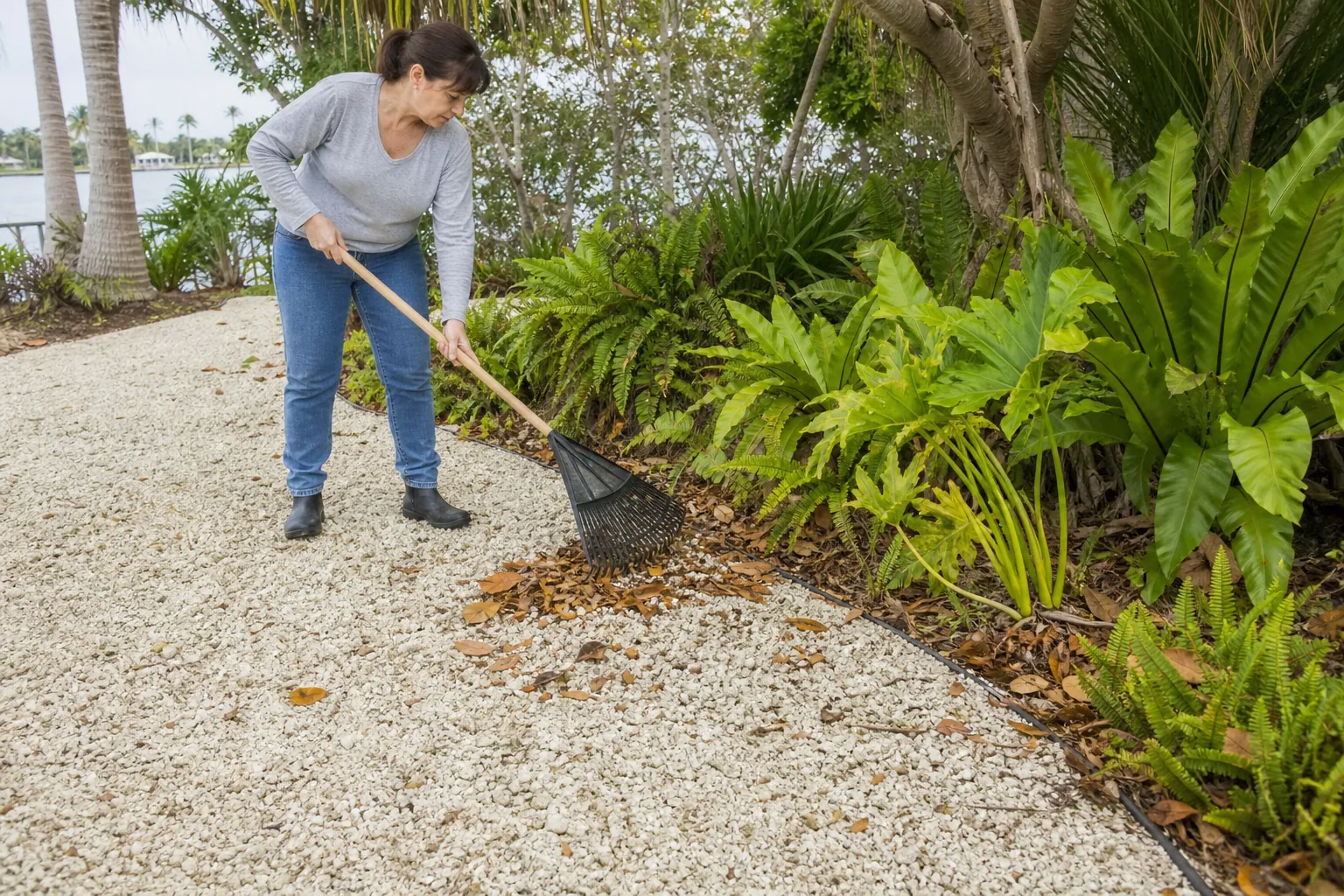
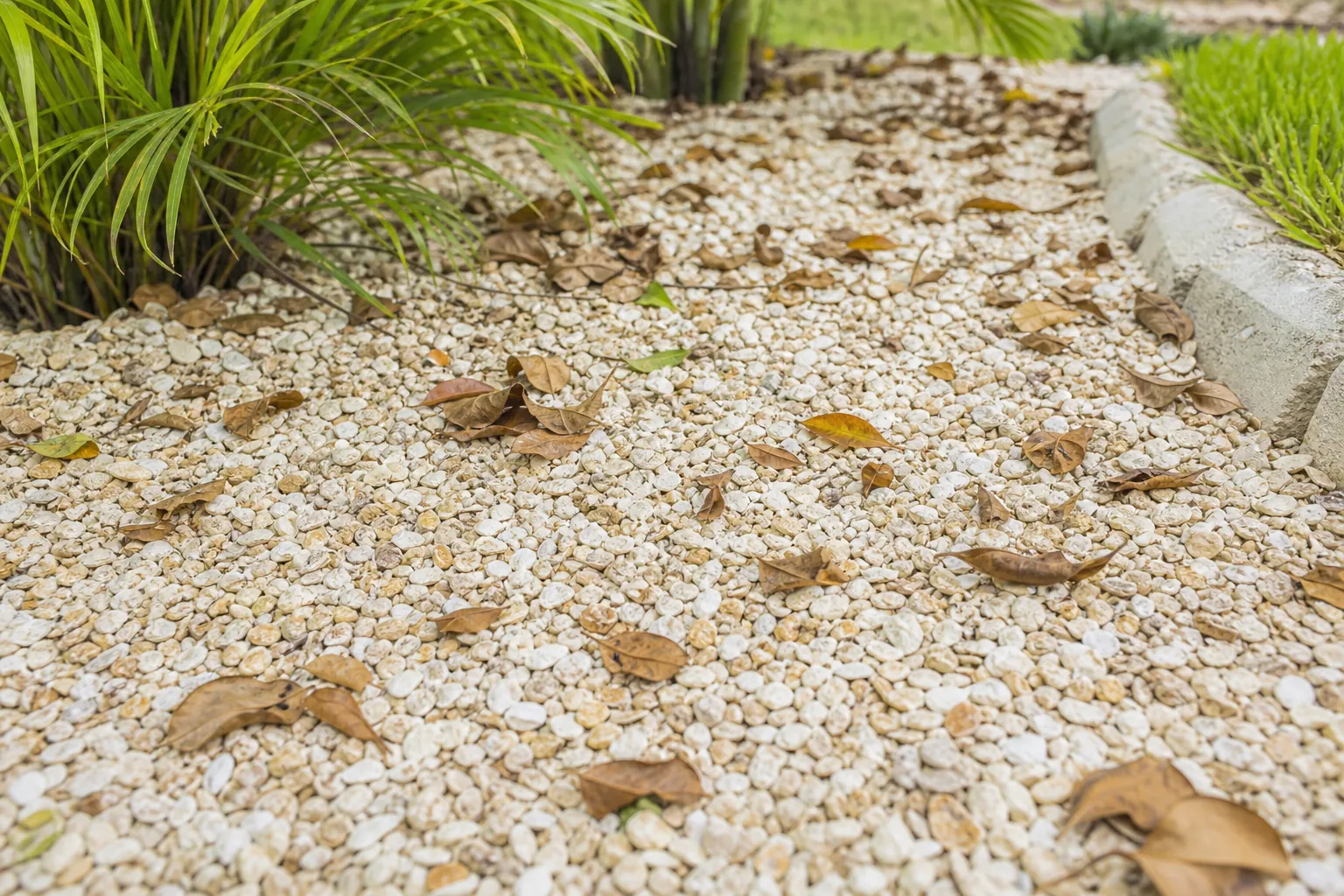
Coquina shell gives Florida garden beds a coastal character, but fallen leaves can collect between the irregular pieces. Removing them takes a different approach than clearing a lawn or a smooth patio. Too much force can scatter shell, expose the material underneath, or push debris deeper into the bed.
The best method for removing leaves from coquina shell depends on whether the leaves are dry or wet, how tightly they are trapped, and what plants surround them. Start gently, work in small areas, and aim to lift the leaves rather than move the shell.
This guide is for homeowners handling their own shell beds. Tropical Yards supplies coquina shell and tropical plants, with dump trailer delivery from St. Augustine to Daytona Beach. The company does not provide installation, yard cleanup, or maintenance labor.
Understand What You Are Trying To Remove
A few freshly fallen leaves usually need only a light pass with a blower or careful hand picking. A damp layer that has settled into the shell requires more patience. Before choosing a tool, look at both the debris and the condition of the surface.
Dry leaves are relatively easy to move because they are lightweight and have not bonded into a mat. Wet leaves cling to one another and may stick to shell fragments. Partly decomposed leaves break apart when disturbed, making them harder to separate cleanly.
Shell size and shape matter, too. A surface with larger, heavier fragments generally tolerates gentle airflow better than one containing many small pieces. Fine material can move with the leaves, so test an inconspicuous corner first.
- Check whether the leaves are loose on top or caught between shell pieces before selecting a removal method.
- Look for exposed soil, fabric, irrigation tubing, or shallow roots that could be disturbed by a rake.
- Identify a clear collection area so you do not simply move leaves into another planted bed.
- Check the surrounding plants for delicate foliage or stems before directing air toward them.
Also consider the day's conditions. Strong wind makes controlled collection difficult. Damp leaves often become easier to handle after they have dried, provided waiting will not allow a thick mat to remain against plant stems.
Use A Leaf Blower With Control, Not Force
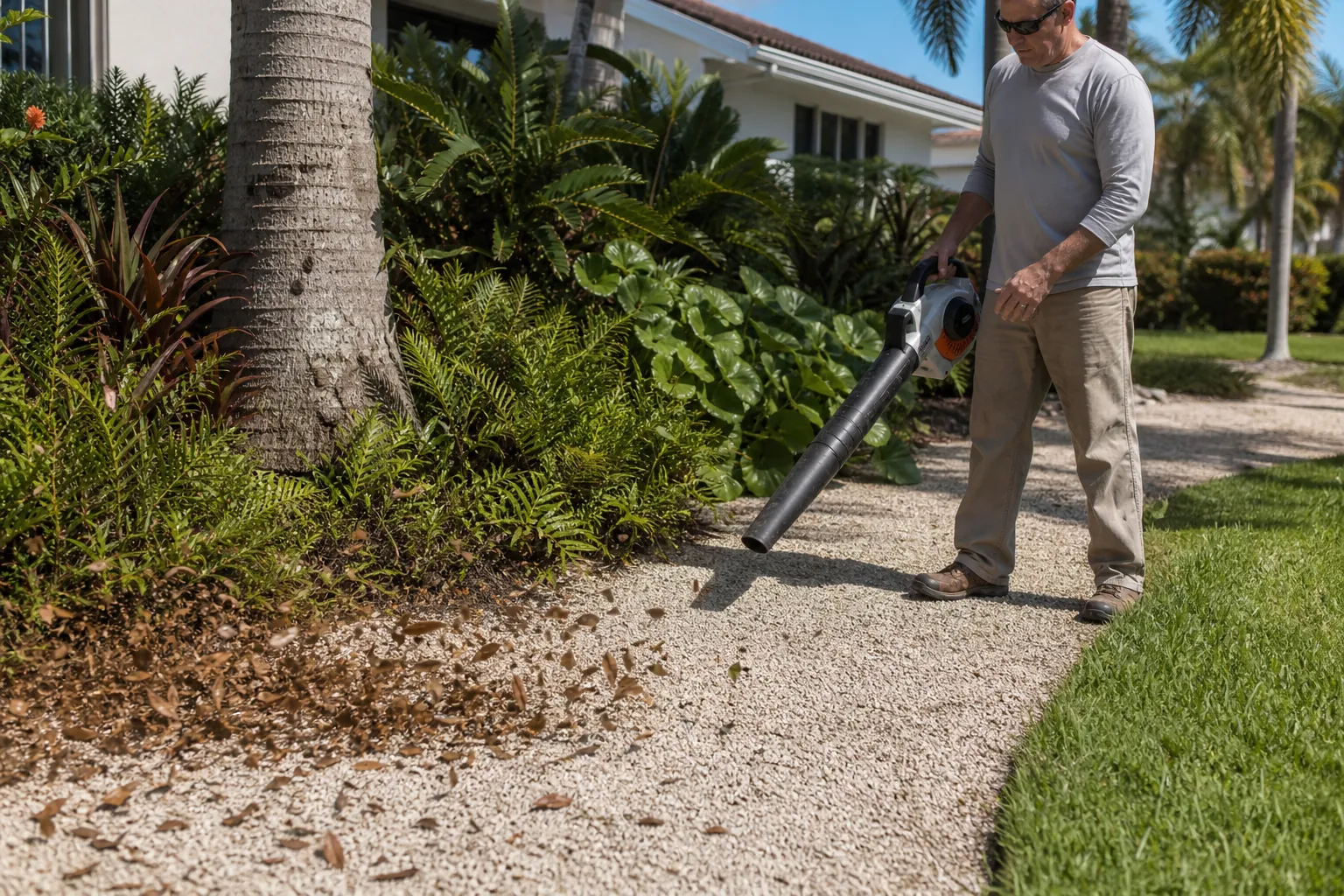
A variable-speed blower can be useful for dry leaves sitting on the surface. The goal is enough airflow to move the leaves while leaving the coquina shell in place. Begin at the lowest useful setting rather than the maximum.
Hold the nozzle well above the shell and angle the airflow across the bed instead of directly downward. A downward blast can create a hollow, uncover the base, and send small fragments into nearby grass. Adjust the distance and angle before increasing power.
Start at the far side of a small section and guide leaves toward a collection point. If the bed borders a paved surface, that surface may provide a convenient place to gather debris, as long as you keep leaves away from drains and public walkways.
Watch the shell as closely as the leaves. If fragments begin rolling or skipping, reduce the airflow or raise the nozzle. Some leaves will remain trapped. It is better to pick those out afterward than to increase power until the whole bed shifts.
- Test the blower on a small patch where any displaced shell can be easily returned.
- Use short, controlled passes rather than holding the airflow over one spot.
- Keep the airflow away from people, pets, windows, vehicles, and loose objects.
- Follow the tool manufacturer's directions for eye, hearing, and dust protection.
Coquina shell can contain fine particles. If visible dust rises, stop and reconsider the technique rather than continuing through a cloud. Hand removal may be the better choice for a dusty patch or a confined area.
Hand Picking And Light Raking For Stubborn Leaves
Hand picking is often the most precise option around plant bases, borders, and irrigation components. It is slower than blowing, but it prevents unnecessary disturbance where leaves are wedged tightly between shell fragments.
Wear suitable gloves because shell edges can be rough. Lift whole leaves gently and place them directly into a bucket or bag. If a leaf tears apart, collect the larger pieces first rather than digging into the surface to retrieve every speck.
A flexible leaf rake can help with loose surface debris, but a heavy garden rake is usually too aggressive for this task. Stiff metal tines can drag shell out of position or catch underlying fabric. Choose light pressure and shallow strokes.
Let the rake skim the top instead of combing through the entire layer. If it pulls more shell than leaves, stop and switch to hand picking or gentle airflow. Raking is not automatically the right method simply because the debris consists of leaves.
For a small bed, a practical sequence is to remove the largest leaves by hand, lightly gather loose surface leaves, and finish by collecting trapped pieces. This reduces repeated passes and helps preserve the bed's existing contours.
Avoid using sharp tools to pry leaves from around roots or stems. When debris is tightly caught, separate it carefully with gloved fingers. Protecting the plants and irrigation is more important than making the surface perfectly uniform.
Handle Wet Leaves And Decomposed Debris Differently
Florida showers can turn a light covering of leaves into a damp mat. Trying to blow that mat away often requires more force than the shell surface can tolerate. Unless the debris is creating an immediate problem, allow it to dry before trying again.
If waiting is not practical, lift wet clusters by hand. Work from the edges of the mat so you can remove manageable sections without dragging shell along with them. Shake loose fragments gently over the bed before putting the leaves into your container.
Partly decomposed leaves are more challenging. Some material may have already become fine organic debris between the shell pieces. Removing every particle would require disturbing the surface and may accomplish little.
Focus first on thick accumulations, blocked edges, and material resting against plant stems. A few small fragments do not necessarily justify stripping the bed. If the shell has become heavily mixed with soil and organic material, assess a small area before deciding whether a larger DIY refresh is worthwhile.
- Remove wet leaves in small handfuls so you can separate shell fragments without excessive handling.
- Keep collected debris out of storm drains and follow local rules for yard-waste disposal.
- Use composting only when the material is appropriate for your compost system and free of unwanted contamination.
- Avoid burying a thick leaf layer under fresh shell simply to hide it.
Adding shell over accumulated leaves does not remove the underlying debris. Clear the substantial material first so you can judge the condition and depth of the remaining shell.
Tools And Shortcuts That Can Create More Work
Some tools seem efficient until they remove shell along with the leaves. Lawn equipment designed for grass does not necessarily suit a loose mineral surface. Check the equipment instructions and consider the risk of thrown fragments before using powered tools nearby.
Do not run a mower over a coquina shell bed to collect or shred leaves. Shell fragments can become projectiles and may damage the equipment. Keep mowing activity separated from loose shell along bed edges.
Leaf vacuums also deserve caution. They may pull in small shell pieces, and models with shredding mechanisms can be damaged by hard material. Unless the manufacturer specifically permits that use, choose another collection method.
A pressure washer is not a sensible default for removing leaves from coquina shell. The water can displace shell, erode the base, splash debris onto plants, and carry fine material toward drains. Gentle manual methods give you more control.
A hose can sometimes help separate a small amount of debris, but it can also push leaves deeper into the layer. Do not use water as a substitute for collecting a thick covering. Consider drainage and avoid creating runoff that carries shell or debris off the property.
Chemical cleaners are unnecessary for ordinary fallen leaves. They do not solve the collection problem and may affect nearby plants or runoff quality. Match the tool to the debris rather than looking for a product to dissolve it.
Protect Plants While Clearing The Shell Surface
Shell beds often surround palms, hibiscus, bougainvillea, ferns, and other tropical plants. Each plant's structure changes how you should approach nearby leaves. Dense foliage may trap debris, while exposed roots or tender new growth require a lighter touch.
Clear around plant bases by hand before using a blower across the open areas. Avoid blasting leaves into the center of a fern or through low branches. That may hide the debris rather than remove it and can damage delicate foliage.
Keep shell and collected debris from piling against trunks or stems. The appropriate clearance depends on the plant and planting conditions, but neither a leaf mound nor a shell mound should be used to bury the base.
Bougainvillea may have thorny stems, so avoid reaching blindly into dense growth. Wear protective clothing and use a collection approach that lets you see where your hands are going. Check for insects or other wildlife before disturbing hidden pockets of leaves.
If you are buying plants for a new DIY bed, consider their mature form and natural leaf drop, not just their appearance at purchase. Ask about the specific plant's light, moisture, and spacing needs. Shell is a surface material, not a replacement for suitable soil or plant-specific care.
Reduce Future Leaf Buildup Without Redesigning Everything
Leaf fall cannot be eliminated from an outdoor Florida bed, but a few practical adjustments can make future clearing easier. Begin by noticing where debris repeatedly gathers. Corners, dense foliage, and raised edging often create collection pockets.
Clear those pockets before they become compacted. Small, timely sessions are usually easier than tackling a thick layer after repeated rain. Base your timing on actual buildup rather than a rigid schedule.
If shell regularly spills into the lawn while you work, inspect the edging and your technique. A secure boundary can help contain the surface material, but it does not make high-powered blowing harmless. Repairing an existing edge may be more useful than repeatedly replacing lost shell.
- Collect leaves before they become a dense mat whenever conditions allow.
- Keep access to irrigation components clear so leaf removal does not involve digging through the bed.
- Move lightweight outdoor items that trap leaves, provided doing so will not damage plants.
- Use the same collection direction each time if it consistently keeps debris away from adjoining beds.
For future DIY planting, leave enough working room between mature plants to reach the shell surface. Avoid crowding plants solely to cover visible shell. Appropriate spacing supports plant care and makes debris removal less awkward.
Decide Whether Your Shell Bed Needs A Top-Up
After removing the leaves, assess the shell itself. A bed that looked bare under debris may only need gentle redistribution. Move existing shell from small high spots into adjacent low spots without scraping the base or covering plant stems.
A top-up may be worth considering when there are genuinely thin areas, repeated losses along edges, or exposed sections that cannot be covered with the remaining material. Identify why the shell was lost before ordering more, especially if runoff or an aggressive cleaning method caused the problem.
Review coquina shell information when comparing material for a DIY refresh. Ask about the current product's appearance and size characteristics rather than assuming a new load will look identical to older shell that has weathered outdoors.
Measure the areas you intend to refresh and note the additional depth you are considering. Keep irregular sections separate so your estimate reflects the actual bed shape. Discuss those measurements with the supplier before finalizing an order.
Do not choose an arbitrary deep layer simply to reduce future leaf work. Greater depth will not prevent leaves from falling, and adding material can change grades around plants and edging. Order for the bed's actual needs, not as a shortcut around debris removal.
Plan A Coquina Shell Delivery For Your DIY Project
Tropical Yards offers coquina shell sales and dump trailer delivery of plants and coquina shell from St. Augustine to Daytona Beach. Delivery brings the material to the property, but you are responsible for arranging your own spreading, planting, and ongoing care.
Before ordering, choose a drop location that lets you move the shell to the bed without blocking essential access. Discuss driveway width, overhead clearance, turning space, surface conditions, and any gate restrictions with the supplier. Do not assume a dump trailer can reach every spot a passenger vehicle can.
If you plan to protect the unloading area with a tarp or another covering, confirm that arrangement beforehand. Keep vehicles, pets, and people away from the agreed drop area. Have suitable tools ready for your own material handling after delivery.
For a combined purchase, Tropical Yards also sells palm trees, hibiscus, bougainvillea, ferns, and other tropical plants. Confirm plant selection and delivery arrangements separately from decisions about shell quantity and where each item should be placed.
Once the bed is clear, you can make a more informed buying decision. Call Tropical Yards at 772-267-1611 to discuss coquina shell availability, tropical plant purchases, and dump trailer delivery. For the leaf removal itself, gentle tools and a patient DIY approach will help you keep more shell where it belongs.
Call 772-267-1611 to talk through next steps.