How to replace an asphalt driveway with coquina shell
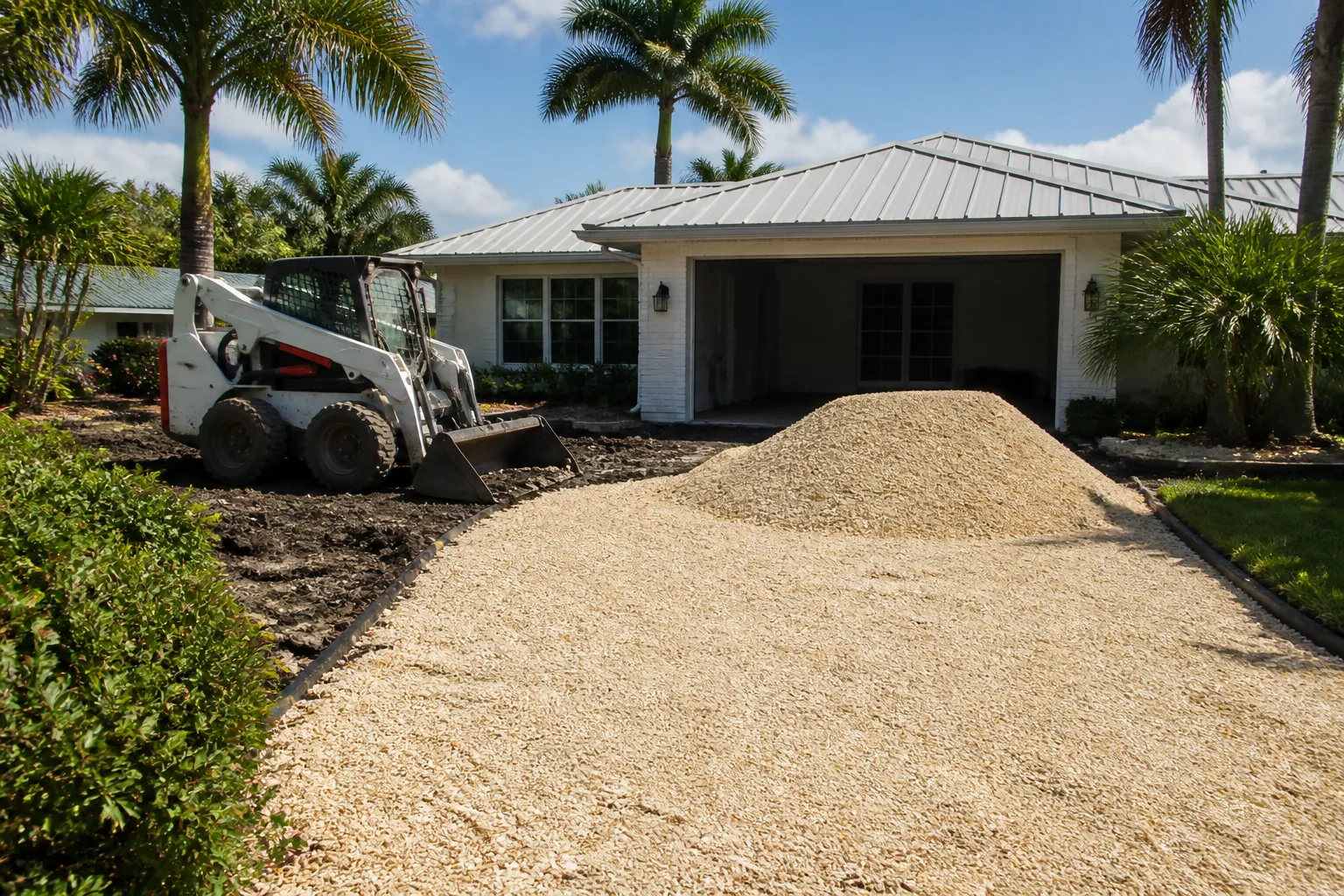
An asphalt driveway can feel visually heavy beside a Florida home, especially when the surrounding landscape features palms, flowering shrubs, and sandy coastal colors. Coquina shell offers a lighter, textured alternative. However, converting a paved driveway into a loose-material surface requires more planning than simply covering the asphalt with shell.
If you want to replace asphalt driveway with coquina shell, start by evaluating the existing pavement, drainage, underlying soil, and everyday vehicle use. Those conditions determine whether the conversion makes sense and what preparation will be necessary.
Tropical Yards supplies coquina shell and tropical plants, with dump trailer delivery from St. Augustine to Daytona Beach. The company does not remove asphalt, prepare driveways, or install materials. This guide explains the decisions buyers should make before ordering shell and completing the project themselves or hiring a separate contractor.
Decide Whether Coquina Shell Fits Your Driveway
Coquina shell is a natural aggregate with shell fragments and a coastal appearance. Its texture, color, and particle distribution can vary by source and load. Ask about the current material rather than assuming that every product called coquina shell will behave or look the same.
A shell driveway is not a direct performance substitute for asphalt. Asphalt provides a continuous paved surface. Shell remains an aggregate surface, even when properly compacted, and can shift under turning tires, develop uneven areas, or require replenishment over time.
Consider the way you actually use the driveway. A relatively straight approach serving passenger vehicles presents different demands from a narrow driveway where trucks turn sharply every day. Frequent braking, tight steering, and concentrated runoff can move loose material.
- Consider whether you are comfortable periodically redistributing displaced shell and addressing low spots yourself.
- Check whether motorcycles, bicycles, mobility aids, or frequent foot traffic need a smoother, firmer route.
- Identify areas where vehicles turn sharply, because those locations may need additional attention to containment and surface stability.
- Think about where tracked shell could travel, including garage floors, sidewalks, and public roads.
Shell may suit the look you want, but appearance should not outweigh function. If an accessible route is essential, obtain advice specific to accessibility requirements before changing that route from pavement to loose aggregate.
Check Local Rules Before Removing Asphalt
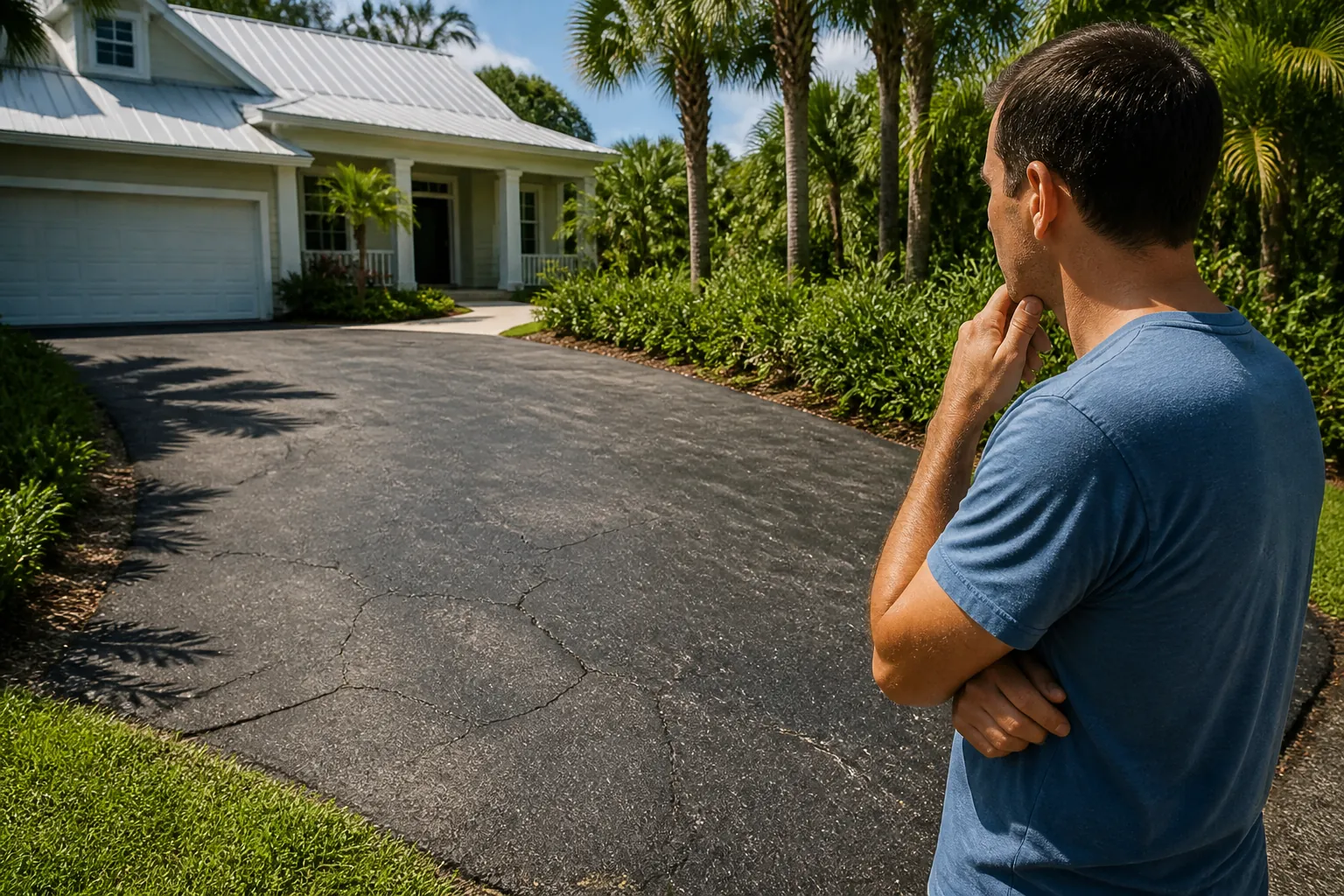
Florida driveway requirements are not uniform. Counties, municipalities, homeowners associations, and special districts may have different rules for driveway materials, drainage, access connections, and work near a public right-of-way.
Contact the appropriate local building or engineering office before demolition. Ask whether a permit is required for changing the driveway surface and whether the existing apron must remain paved. An apron is the transition between the private driveway and the road, and it may be subject to separate requirements.
Do not assume a shell surface automatically satisfies stormwater rules. Whether water infiltrates depends on the soil, compaction, grading, base, and groundwater conditions. A compacted shell driveway can still produce runoff, particularly during intense rainfall.
- Ask whether loose aggregate is allowed for your driveway and its connection to the street.
- Confirm whether changes to driveway width, grade, or drainage require review.
- Check association restrictions before purchasing material or scheduling removal.
- Arrange the required utility locating process before digging, and separately identify private irrigation lines or other privately owned utilities.
If your property has a culvert, roadside swale, or drainage easement, keep those features in the planning conversation. Filling a low area without understanding its purpose can obstruct drainage that serves more than your driveway.
Inspect The Existing Driveway And Plan Removal
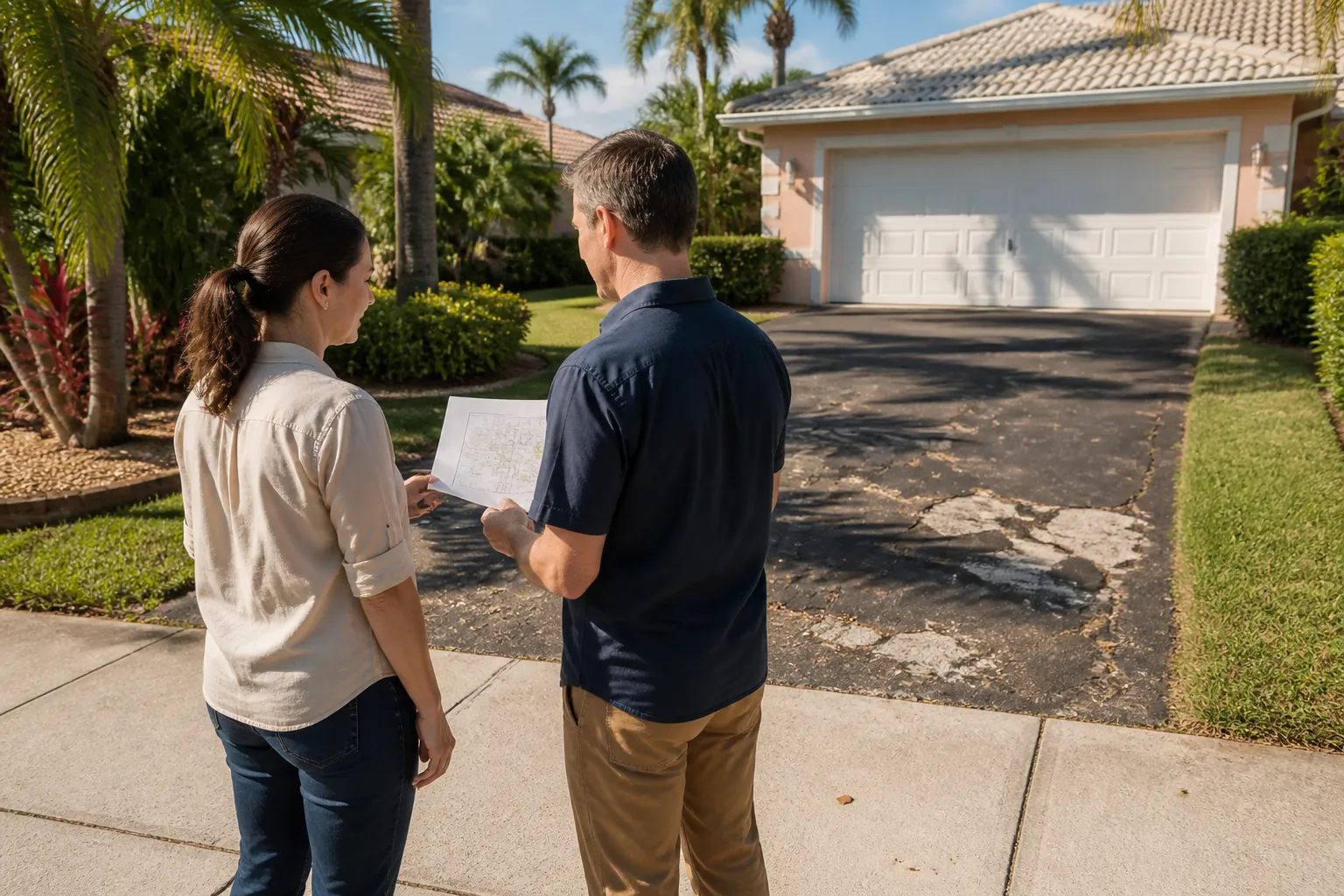
Look beyond the condition of the asphalt surface. Cracks, depressions, standing water, and crumbling edges can reveal problems below it. A replacement shell surface will not correct a weak foundation merely because the finish material changes.
After rainfall, note where water collects and where it exits. Photograph these areas and measure important elevations where practical. The garage entrance, sidewalk, road apron, and nearby buildings establish limits for the finished driveway height.
Covering old asphalt with shell is usually a poor shortcut for a genuine conversion. The pavement remains underneath, limiting infiltration, while the added shell can migrate across a hard surface. It also raises the driveway, potentially creating problems at thresholds and adjoining walkways.
Plan to remove the asphalt where the conversion will occur, while preserving any paved sections required by local rules. Asphalt demolition may involve heavy equipment, sharp debris, and material handling beyond a manageable DIY project. Hire a separate qualified contractor if the scope exceeds your tools or experience.
Arrange lawful disposal or recycling before removal starts. Keep demolition debris separate from clean aggregate and avoid mixing broken asphalt into the shell surface. Tropical Yards supplies materials but does not provide asphalt removal, hauling of demolition debris, or site cleanup.
Build The Plan Around Soil, Base, And Drainage
The supporting layers matter more than the decorative finish. Once asphalt is removed, inspect the exposed base and underlying ground. Existing aggregate may be reusable if it is suitable, clean, stable, and at the right elevation, but it should not be accepted without inspection.
Soft areas, organic material, buried roots, or poorly compacted fill can cause settlement. Address these conditions before adding shell. For uncertain soil conditions or significant drainage issues, seek site-specific guidance from a qualified professional.
A driveway needs a graded surface that directs water toward an appropriate discharge area without sending it into the garage, toward foundations, or onto neighboring property. Avoid choosing a slope from a generic online diagram without considering the actual site and local requirements.
Some projects benefit from a separation geotextile between soil and aggregate. This is not the same as selecting thin garden weed fabric. The appropriate product depends on soil conditions, drainage needs, and the intended aggregate structure.
Likewise, there is no single shell depth or base thickness that suits every Florida driveway. Vehicle loads, soil strength, existing base, and material characteristics all influence the section. Obtain a practical recommendation for your conditions before calculating the order.
- Confirm that the supporting ground is firm before covering it with new material.
- Maintain drainage paths rather than filling them simply to create a flatter-looking driveway.
- Account for the finished surface height at doors, sidewalks, and the road connection.
- Choose any separation fabric for its engineering purpose rather than treating it as a universal weed solution.
Choose Shell Material And Edge Containment
Before buying, ask what the available coquina shell contains and how its particle sizes are distributed. The amount of smaller material can affect how the surface binds and compacts, while larger fragments influence texture. Suitability should be discussed in relation to driveway use, not color alone.
Ask to see representative material when possible. Natural shell may include color variations and irregular pieces. A photograph can help establish expectations, but lighting and moisture can change its appearance. Compare it with your home, existing paving, and landscape while recognizing that loads can vary.
For broader material questions, review the coquina shell information before finalizing your purchase. This driveway guide focuses on conversion planning rather than repeating general decorative shell uses.
Containment deserves equal attention. An unconfined edge can spread into lawn or planting areas, especially where tires cross it. An appropriate border can help keep the driveway footprint defined, but the border must suit vehicle loads and must not obstruct drainage.
Do not place lightweight decorative edging where a vehicle is likely to drive over it. Consider the turning path, parking habits, and space required to open doors. Any edge solution should be chosen for the location, not simply because it matches the shell visually.
Measure The Driveway And Calculate Your Order
Measure the actual area that will receive shell. Break irregular driveways into rectangles, triangles, or other simple shapes, then add their areas. Exclude any apron or walkway that will remain paved and include parking extensions only if they are part of the approved project.
Once the appropriate shell depth is established, convert that depth to feet. Multiply square footage by depth in feet to obtain cubic feet. Divide cubic feet by 27 to obtain cubic yards.
For example, a hypothetical 600-square-foot area covered to a loose depth of 3 inches requires about 5.6 cubic yards before accounting for compaction or project-specific adjustments. This example explains the arithmetic; it is not a recommended driveway depth.
Confirm how the supplier sells the material. Volume and weight are not interchangeable without an appropriate material-specific conversion. Moisture, particle distribution, and handling can affect bulk density, so avoid using an unrelated gravel conversion to place a shell order.
- Provide the measured area and your planned loose placement depth when discussing quantities.
- Distinguish the shell finish layer from any separate base material required underneath.
- Ask how compaction and irregular ground should be handled in the order calculation.
- Confirm whether delivery requires more than one load and plan where each load will be deposited.
A modest contingency may be appropriate, but it should be based on the project rather than an arbitrary percentage. Unmeasured widening, low areas, and changes in depth are common reasons a preliminary estimate becomes inaccurate.
Prepare For Dump Trailer Delivery
Tropical Yards offers dump trailer delivery of coquina shell and plants from St. Augustine to Daytona Beach. Delivery brings the purchased materials to an agreed location; it does not include spreading, grading, compaction, or installation.
Discuss access before scheduling. The delivery setup needs sufficient maneuvering space, a suitable approach, and a safe unloading location. Mention narrow gates, sharp bends, steep slopes, overhead wires, tree limbs, and any restrictions on entry.
A dump trailer must be raised to unload, so overhead clearance is particularly important. Ground conditions also matter. Saturated soil, unsupported edges, and uncertain underground structures may make a proposed dumping area unsuitable.
Choose a staging location that keeps shell out of the roadway and away from drainage openings. If the driveway is the only access to the home, plan how people and vehicles will get around the pile until the material is spread.
- Keep the agreed access route clear of parked cars and movable obstacles.
- Identify septic components, irrigation equipment, and other areas that should not carry delivery traffic.
- Confirm who will be present to identify the unloading location.
- Have your tools and labor arrangements ready before material arrives.
Describe the site accurately rather than assuming the driver can unload anywhere on the property. Confirm access and unloading expectations directly with Tropical Yards before committing to a delivery date.
Place And Compact Shell With Realistic Expectations
For a DIY project, organize the work in stages. Complete removal and supporting-layer preparation first. Then establish the intended grade, containment, and finished elevations before spreading the shell.
Distribute the material evenly rather than building deep piles and relying on vehicle traffic to flatten them. Follow material-specific guidance for layer thickness and compaction equipment. An overly thick lift can conceal loose material beneath a surface that appears firm.
Compaction should not be treated as a substitute for correcting wet or unstable ground. If the surface pumps, ruts, or visibly moves during work, stop and investigate the underlying condition before adding more shell.
Use appropriate protective equipment when handling aggregate and operating machinery. Shell fragments can have sharp edges, and dry material may produce dust. Follow equipment instructions and any supplier handling guidance, particularly regarding safe dust management.
After placement, check transitions and drainage before regular use. Watch the driveway during the next rainfall and look for ponding, erosion, or material collecting at the apron. Address the cause of a problem rather than repeatedly covering it with additional shell.
Care For The Surface And Nearby Plantings
A shell driveway remains a surface you will need to monitor. Turning tires can displace material, and concentrated water can create channels. Periodically check edges, low spots, and the transition to public pavement.
Rake displaced shell back where appropriate, correct drainage problems, and replenish material when the surface genuinely needs it. Avoid repeatedly adding shell without checking elevations, because accumulated material can eventually interfere with drainage or adjoining surfaces.
Shell is not a permanent weed barrier. Seeds can establish in accumulated debris, and vegetation may enter from the edges. If you manage weeds yourself, choose methods appropriate to the site and follow product labels where applicable. Tropical Yards does not provide driveway maintenance or weed-control labor.
Keep shell and planting soil distinct. Shell-rich material can influence nearby soil chemistry, so do not assume it is suitable mulch for every tropical plant. Choose plants according to sunlight, drainage, mature size, and soil conditions rather than using the driveway material as the deciding factor.
Tropical Yards sells palm trees, hibiscus, bougainvillea, ferns, and other tropical plants. If you buy plants for nearby beds, leave adequate room for mature growth and vehicle visibility. Plant them yourself or arrange separate installation, and keep irrigation from repeatedly soaking the driveway edge.
Order After The Site Plan Is Ready
The best time to order coquina shell is after you have confirmed local requirements, evaluated drainage, selected the supporting layers, measured the area, and planned delivery access. Those decisions make the quantity discussion more useful and reduce last-minute changes.
Have your property location, dimensions, intended use, planned depth, and unloading details ready. Be clear about which work you will do yourself and which tasks a separate contractor will handle.
For coquina shell sales and dump trailer delivery from St. Augustine to Daytona Beach, call Tropical Yards at 772-267-1611. You can discuss available material and delivery arrangements, then complete your driveway preparation and installation through your own DIY plan or independent contractor.
Call 772-267-1611 to talk through next steps.