What Salt-Tolerant Plants Can Grow Near a St. Augustine Beach Home?
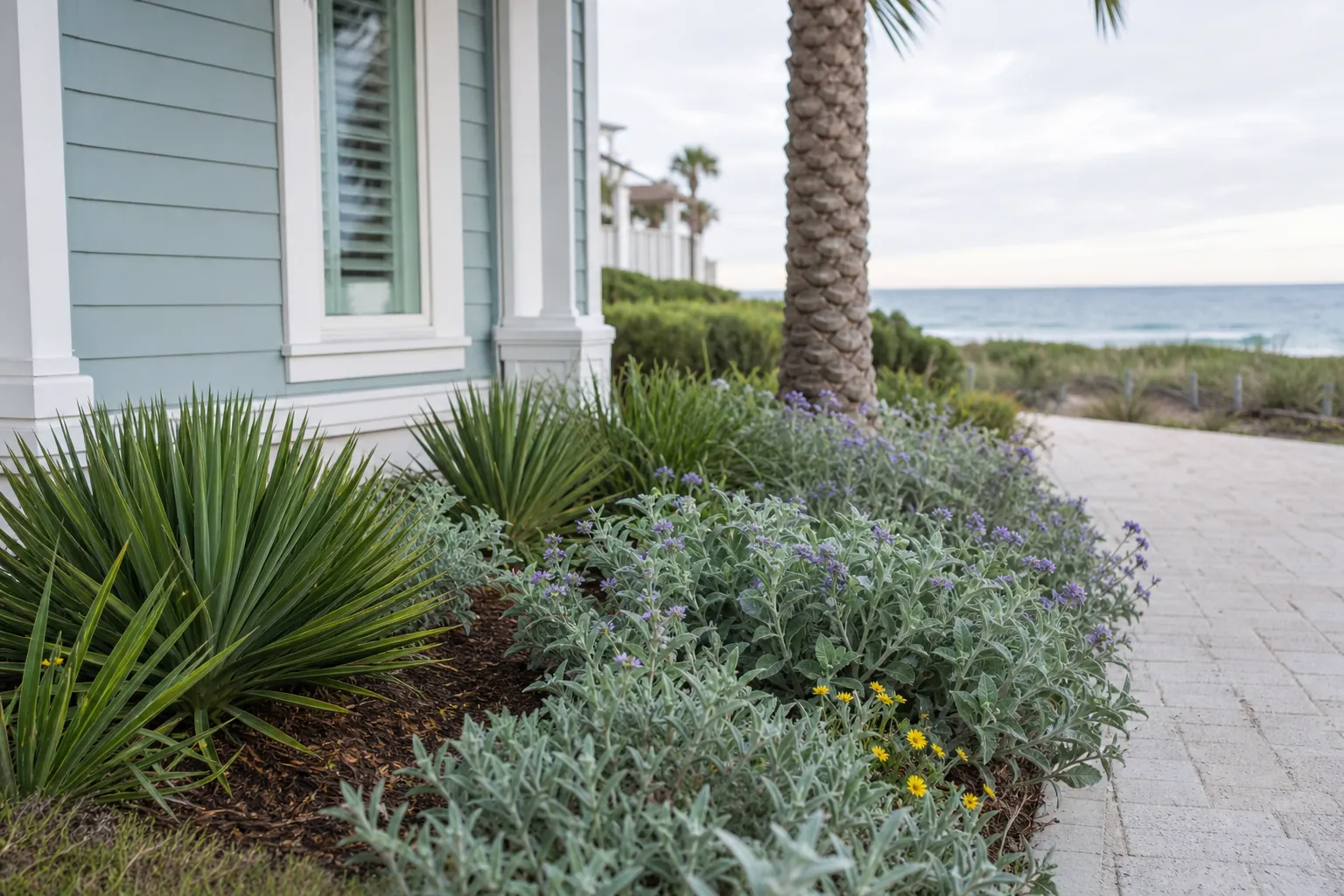
Choosing foundation plants near a St. Augustine Beach home requires more than finding varieties that look attractive. Salt carried by wind, sandy soil, reflected heat, drainage, mature plant size, and cold exposure can all affect whether a planting succeeds. The practical approach is to evaluate each bed separately, choose plants for its actual conditions, and avoid assuming that every spot around the house has the same exposure.
Start by Measuring the Property’s Salt Exposure
Before choosing plants, determine how salt reaches the property. A home directly exposed to ocean winds generally needs tougher plants than one protected by neighboring buildings, fences, dunes, or established vegetation. Even on one property, the ocean-facing side may receive significantly more salt spray than a sheltered courtyard or entry.
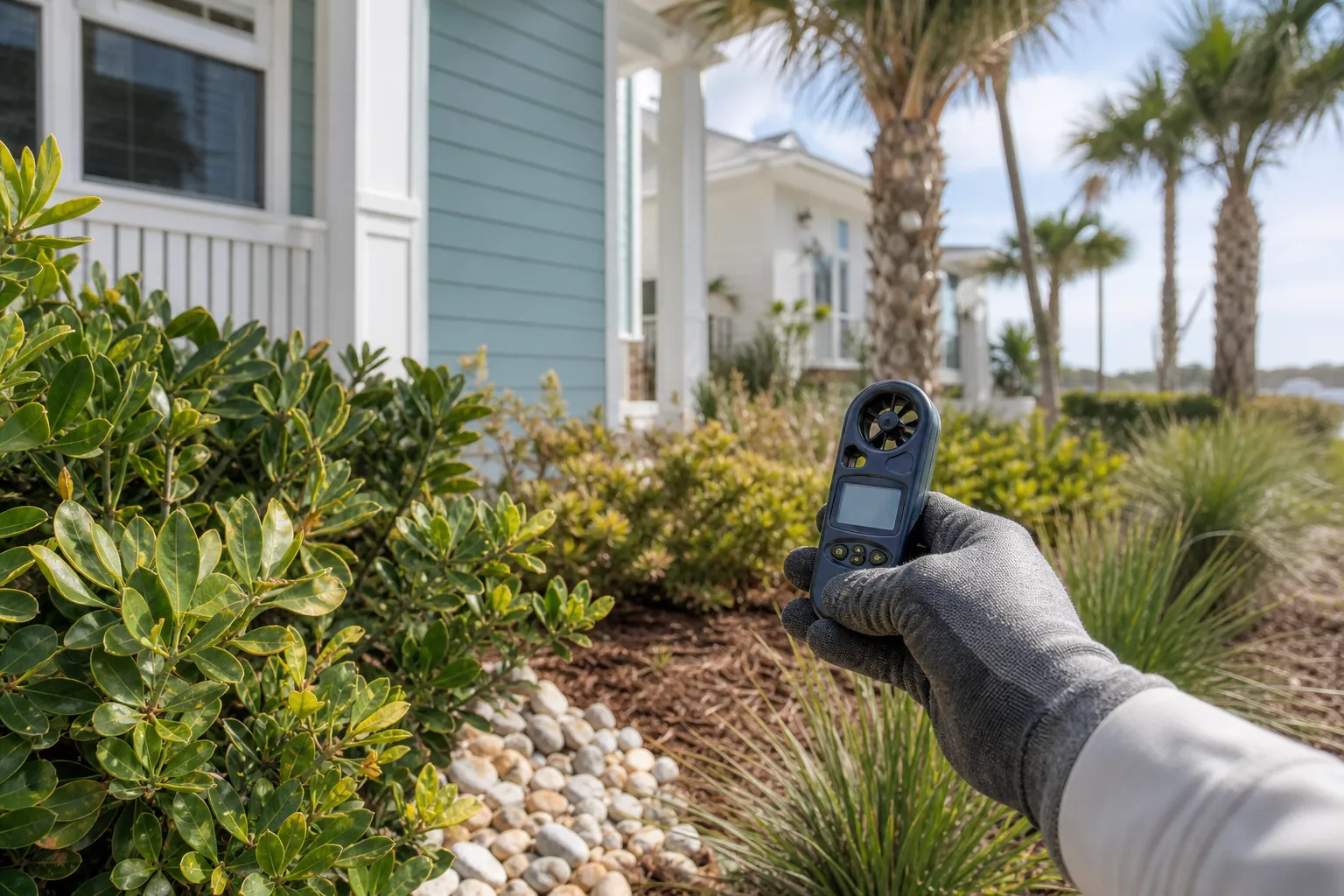
Look for evidence rather than relying only on distance from the water. Browning on the windward side of existing plants, salt residue on windows, and repeated damage after windy weather can identify the most exposed areas. Observe where wind funnels between structures and where roof runoff may concentrate salt washed from surfaces.
Sort planting areas into high, moderate, and sheltered exposure zones. Reserve the most salt-tolerant candidates for the outer edge and windward side. In protected beds, you may have more choices, but salt tolerance should still be considered. This simple zoning step prevents one broad plant list from being applied to locations with very different conditions.
Match Plant Qualities to Foundation Conditions
For foundation beds, salt tolerance is only one requirement. Plants also need to fit the available sunlight, soil drainage, irrigation pattern, and physical space. A salt-tolerant plant placed in unsuitable shade or persistently wet soil can still decline. Likewise, a vigorous plant may create unnecessary pruning work if its mature width is too large for the bed.
Instead of selecting by appearance first, compare candidates using practical traits:
- Documented tolerance for the bed’s expected level of salt spray
- Sun or shade needs that match the exact planting location
- Mature height and width that fit below windows and away from walkways
- Drainage needs compatible with the existing soil and grade
- Wind resistance and a growth habit suited to exposed conditions
- Maintenance needs that match the amount of pruning and cleanup you want
Ask for the botanical name when shopping so you can verify the specific plant rather than relying on a broad common name. Confirm mature dimensions and salt tolerance before purchasing multiples.
Use Layering Without Crowding the House
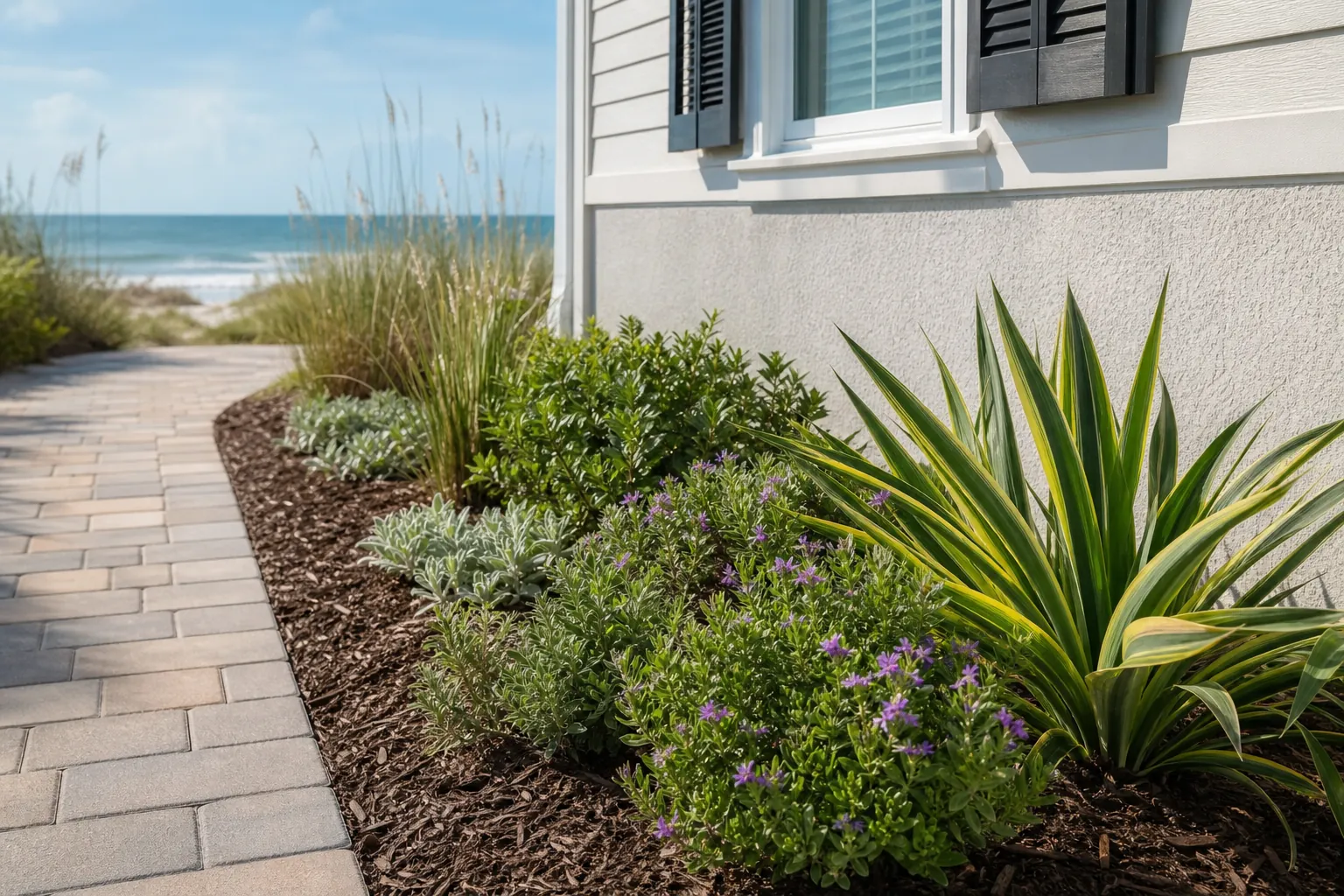
A useful foundation plan usually has a clear structure. Place lower plants near windows and paths, use medium-height plants where the wall needs visual balance, and reserve larger accents for locations with enough room. On a salt-exposed property, the outer layer can also help intercept some wind before it reaches more sheltered plants, although no planting completely eliminates salt exposure.
Plan with mature size in mind. Small nursery plants can tempt homeowners to install too many, but crowded plants compete for light and airflow as they grow. Overplanting also increases pruning and can trap moisture against walls. Measure the bed, note utility access, and mark the intended center of each plant before digging.
Keep growth away from siding, vents, outdoor equipment, steps, and narrow walkways. Consider sightlines near driveways and entrances. A simple sketch with mature plant circles can reveal spacing problems early. Repeating a limited group of compatible plants often produces a calmer result than filling the foundation with many unrelated varieties.
Prepare the Bed for Drainage and Establishment
Successful planting begins below the surface. Check whether water drains away from the foundation or collects after rain. Do not solve a wet location by automatically adding a plant labeled salt tolerant. Salt tolerance and tolerance for saturated soil are separate characteristics, and the plant must match both conditions.
Before planting, identify irrigation coverage and note whether spray reaches walls, windows, or paved surfaces. Install each plant at an appropriate depth for its root system, avoiding a deeply buried crown or trunk base. Leave enough open space for future growth and apply mulch without piling it against stems or the house.
New plants require careful establishment even when they are suited to coastal conditions. Monitor the root area rather than watering on a fixed assumption. Sandy soil may drain quickly, while compacted or amended pockets may hold water differently. Watch for wilting, persistent wetness, leaf scorch, or movement in strong wind. Correcting irrigation, drainage, or staking issues early is usually easier than replacing an entire foundation planting.
Plan for Seasonal Stress and Long-Term Care
Salt is not the only source of stress near the coast. Wind, heat reflected by walls and paving, irregular rainfall, and occasional cold can affect foundation plants. A candidate that tolerates salt may still be sensitive to cold, so consider how protected the location is during cooler weather. For related seasonal preparation, read how to protect young palms from frost in St. Augustine.
Inspect foundation beds after notable wind, salt exposure, heavy rain, or cold. Compare damage patterns across the property. If only windward foliage is affected, exposure may be the main issue. If decline appears near a downspout or low spot, drainage deserves attention. Avoid responding to every symptom with extra water or fertilizer before identifying the likely cause.
Keep pruning selective and tied to plant health, access, and the intended form. Reassess spacing as plants mature. If a plant repeatedly struggles despite appropriate care, reconsider whether its location meets its needs rather than continuing the same routine.
Discuss Your Foundation Planting Decision
Use exposure, drainage, mature size, and seasonal conditions to narrow your choices before buying. To discuss your St. Augustine Beach foundation planting needs with Tropical Yards, call 772-267-1611.
Call 772-267-1611 to talk through next steps.