Which Salt-Tolerant Plants Grow in Shaded St. Augustine Beach Yards?
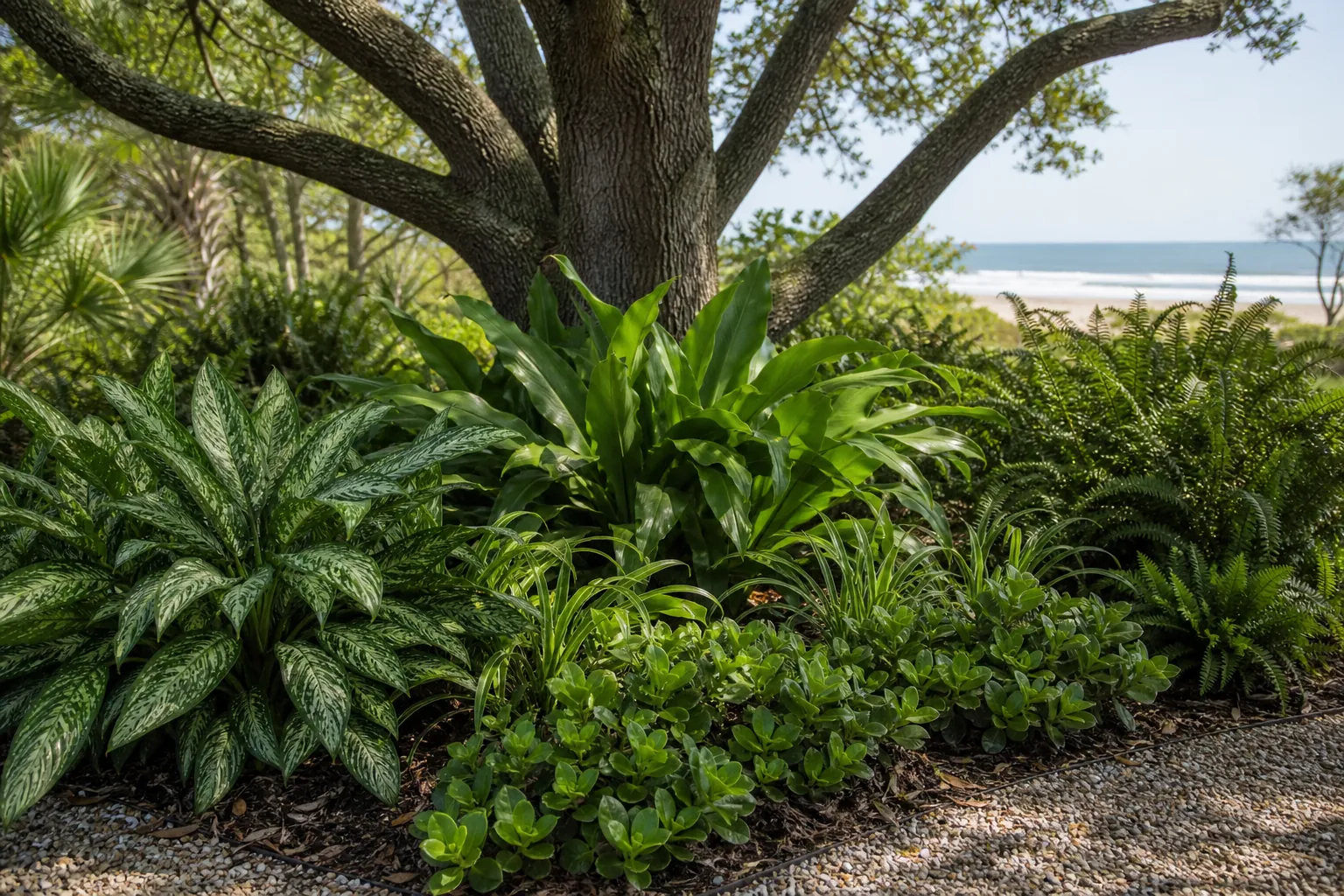
Choosing plants for a shaded coastal yard requires more than finding species labeled for shade. In St. Augustine Beach, a plant may also face salt carried by wind, sandy or fast-draining soil, reflected heat, and changing light beneath trees or buildings. Start by evaluating the exact planting area, then match plants to the conditions they will experience. The goal is not to find one plant that works everywhere. It is to build a practical palette for each exposure zone in the yard.
Start With the Type and Intensity of Salt Exposure
Salt exposure varies significantly within a single coastal property. A bed facing open water or prevailing wind can receive more salt spray than a protected courtyard, even if the two areas are only a short distance apart. Before selecting plants, note which walls, fences, hedges, and structures interrupt wind. Look for places where leaves regularly show scorched edges or where exposed plants struggle while sheltered plants remain healthy.
Separate the yard into high, moderate, and protected exposure zones. Reserve the most salt-tolerant choices for open edges and windward beds. Use moderately tolerant plants farther behind barriers, where airborne salt is reduced. Avoid assuming that every plant described as salt tolerant can withstand direct spray. Tolerance is relative, and young plants may be more vulnerable while establishing.
Also consider salt in irrigation water and runoff patterns. If you do not know the water quality, avoid making conclusions based only on leaf damage. Drought, excess fertilizer, poor drainage, and root disturbance can produce similar symptoms.
Measure Shade Instead of Relying on a Label
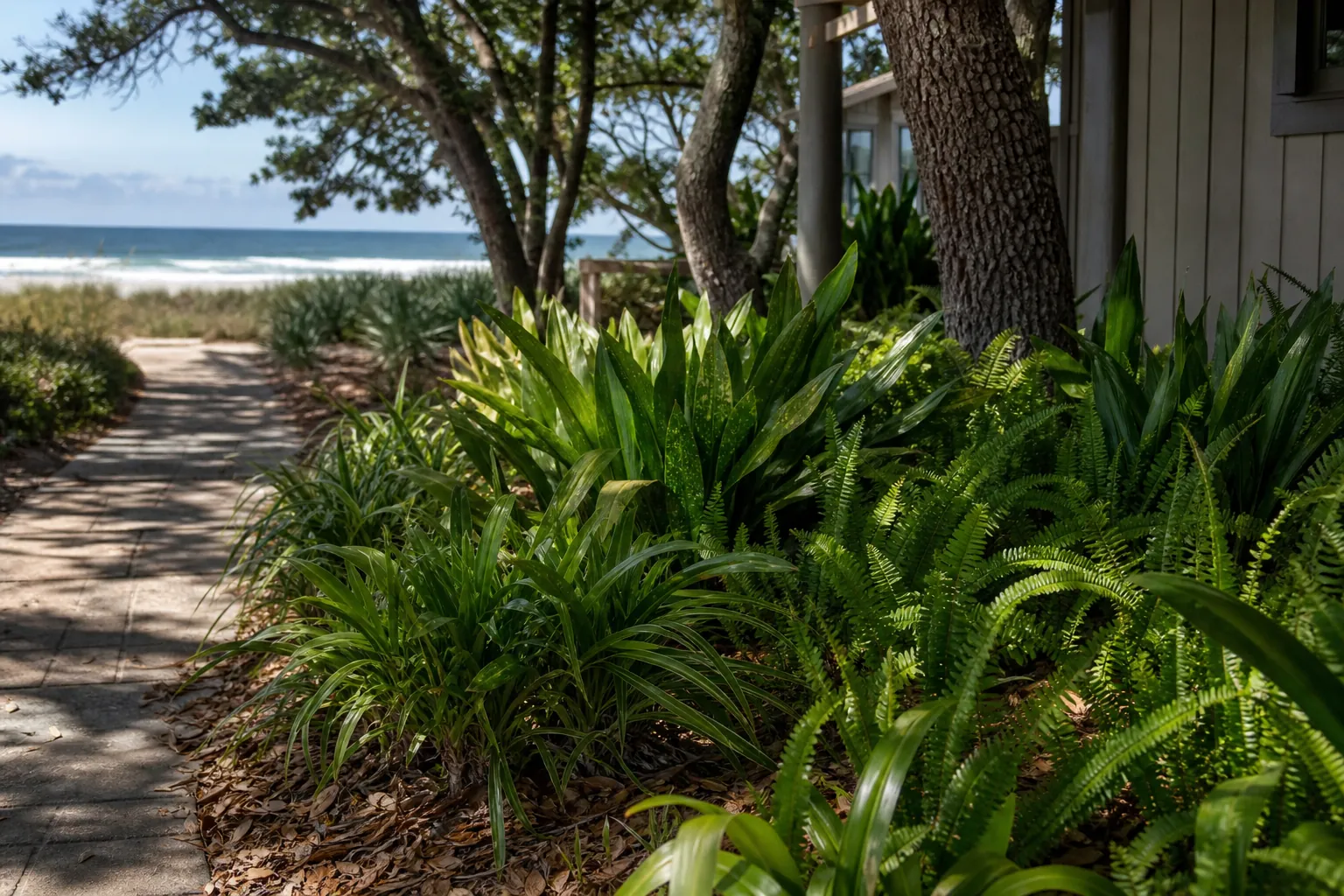
“Shade” can describe several different environments. Bright shade beneath a high tree canopy is not the same as deep shade beside a north-facing wall. A location may also receive direct sun for part of the day, with afternoon exposure creating more heat stress than morning light. Observe each bed at several times before deciding what belongs there.
Record the approximate hours of direct sun and note whether that sun arrives in the morning or afternoon. Watch how the pattern changes as tree leaves move, nearby structures cast shadows, and seasons shift. Plants that need bright filtered light may become thin or sparse in deep shade, while plants suited to lower light may scorch in an unexpected period of strong afternoon sun.
Do not overlook reflected light from pale walls, pavement, or windows. A bed that appears shaded can still be hot and bright. Use the actual conditions at plant height, not just the overall impression of the yard, when comparing possible choices.
Build a Shortlist Using Reliable Plant Traits
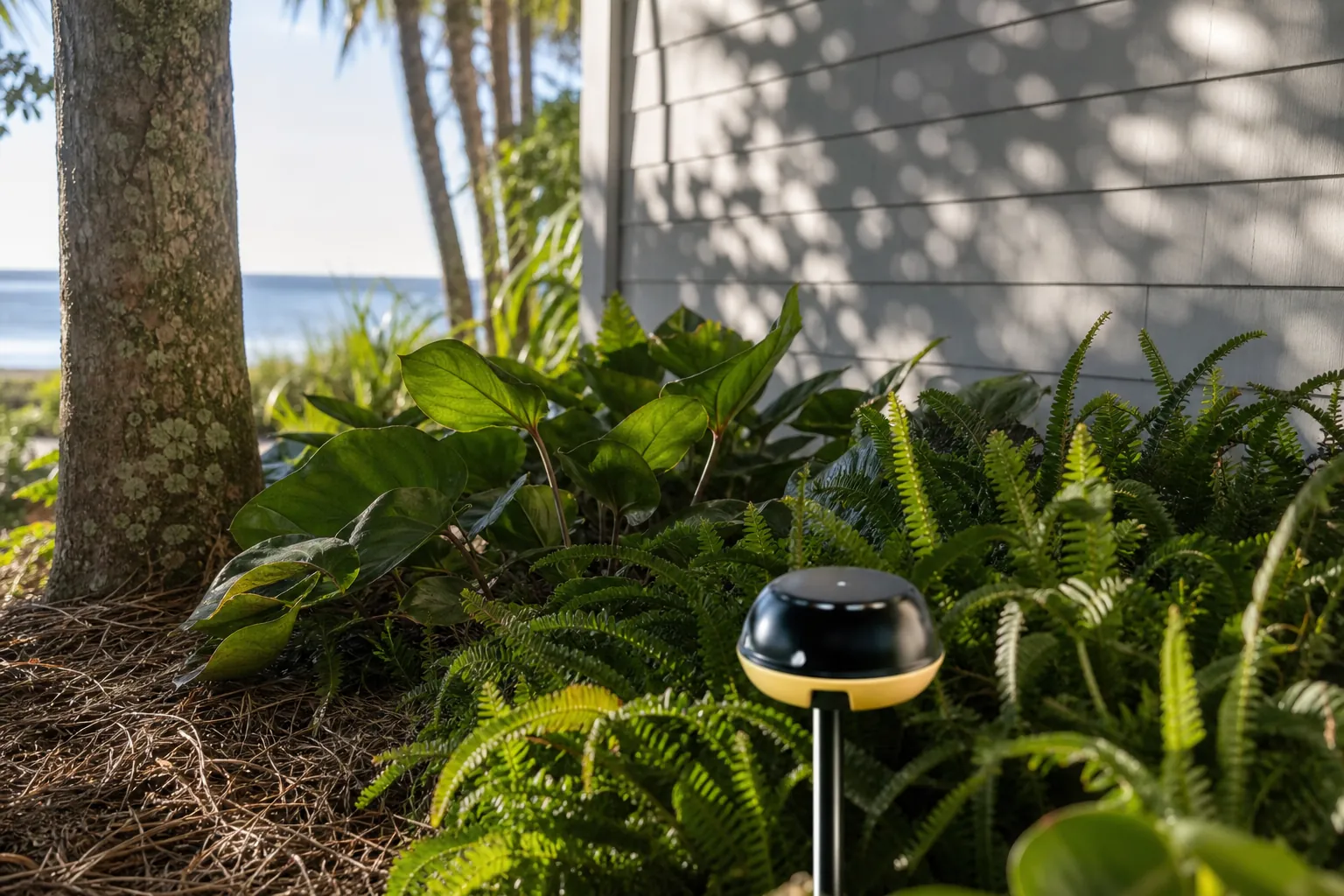
Once exposure and light are documented, compare plants by traits rather than appearance alone. Look for options described as suitable for Florida conditions, the available light, and the specific level of coastal exposure. Confirm mature height and width so plants will not crowd paths, windows, utilities, or one another. Check whether their water needs fit the surrounding bed and irrigation pattern.
A useful shortlist should answer these questions:
- Can the plant handle the bed’s measured light level?
- Is its salt tolerance appropriate for direct, moderate, or sheltered exposure?
- Will its mature size fit without frequent cutting back?
- Does it need consistently moist soil, or does it prefer good drainage?
- Will its growth habit work as a groundcover, accent, screen, or understory plant?
- Can the entire bed be maintained with compatible watering and care?
Purchase decisions should follow this review, not precede it. Availability can encourage substitutions, but a visually similar plant may have different light, moisture, or salt requirements. Verify the botanical identity and expected mature dimensions before bringing it home.
Prepare the Bed for Establishment and Long-Term Fit
Even a well-matched plant can fail if roots sit in an unsuitable site. Check drainage after rainfall or irrigation. Water that remains around the planting area may indicate compaction, a low spot, or another drainage issue. Conversely, very fast drainage can leave new roots dry before they expand into surrounding soil. Match watering to the root zone and current weather rather than following an inflexible calendar.
Plant at the proper depth, keeping the top of the root ball level with the surrounding grade unless reliable guidance for that plant indicates otherwise. Leave enough space for mature growth and keep mulch from touching stems or trunks. Mulch can help moderate moisture and reduce competition, but piling it against plant tissue may create avoidable problems.
For larger beds, establish a durable canopy or structural layer first, then fill gaps with lower plants. If palms are part of the plan, seasonal care matters too. This guide on protecting young palms from frost in St. Augustine explains another condition to consider when placing and caring for young specimens.
Test the Plan, Monitor Results, and Adjust Carefully
A small trial is often more useful than filling an entire bed immediately. Install a limited number of plants in representative locations, then observe how they respond to salt events, shade, irrigation, and seasonal weather. Keep simple notes about where each plant is located and what changed before symptoms appeared. This makes it easier to distinguish a poor site match from a temporary establishment issue.
Inspect both exposed and sheltered sides of the plant. Damage concentrated on the windward side may suggest salt or drying wind, while uniform yellowing may point toward a different concern. Avoid reacting to every damaged leaf with extra water or fertilizer. First check soil moisture, drainage, recent weather, irrigation coverage, and signs of physical injury.
If a trial plant repeatedly declines in one zone but performs well elsewhere, move future selections toward traits that match the successful site. A coastal planting plan should remain flexible. Careful observation helps refine the palette without repeatedly replacing large areas or forcing plants to survive where conditions do not suit them.
Discuss Your Coastal Yard
If you are weighing options for a shaded St. Augustine Beach yard, call Tropical Yards at 772-267-1611. A calm conversation can help you organize the site details and next steps before making planting decisions.
Call 772-267-1611 to talk through next steps.