What Are the Signs of Overwatering Tropical Plants in Northeast Florida?
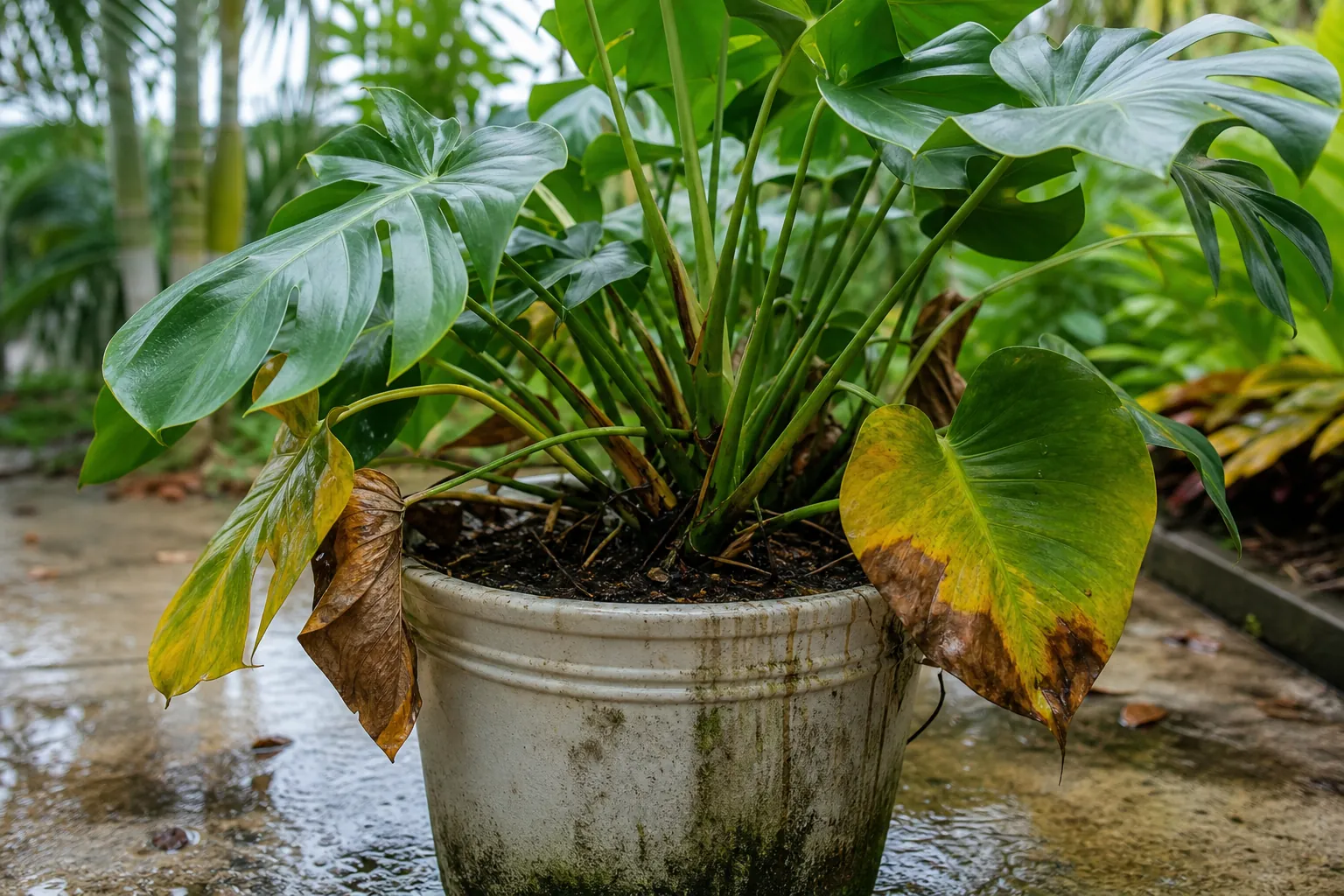
Overwatering a tropical plant is not simply a matter of giving it too much water at one time. The larger problem is soil that stays saturated long enough to limit oxygen around the roots. In Northeast Florida, rainfall, humidity, irrigation, drainage, containers, and seasonal changes can all affect how quickly soil dries. If a plant is declining, use the signs below to distinguish excess moisture from other possible problems before changing your routine.
Recognize the Most Common Signs Above the Soil
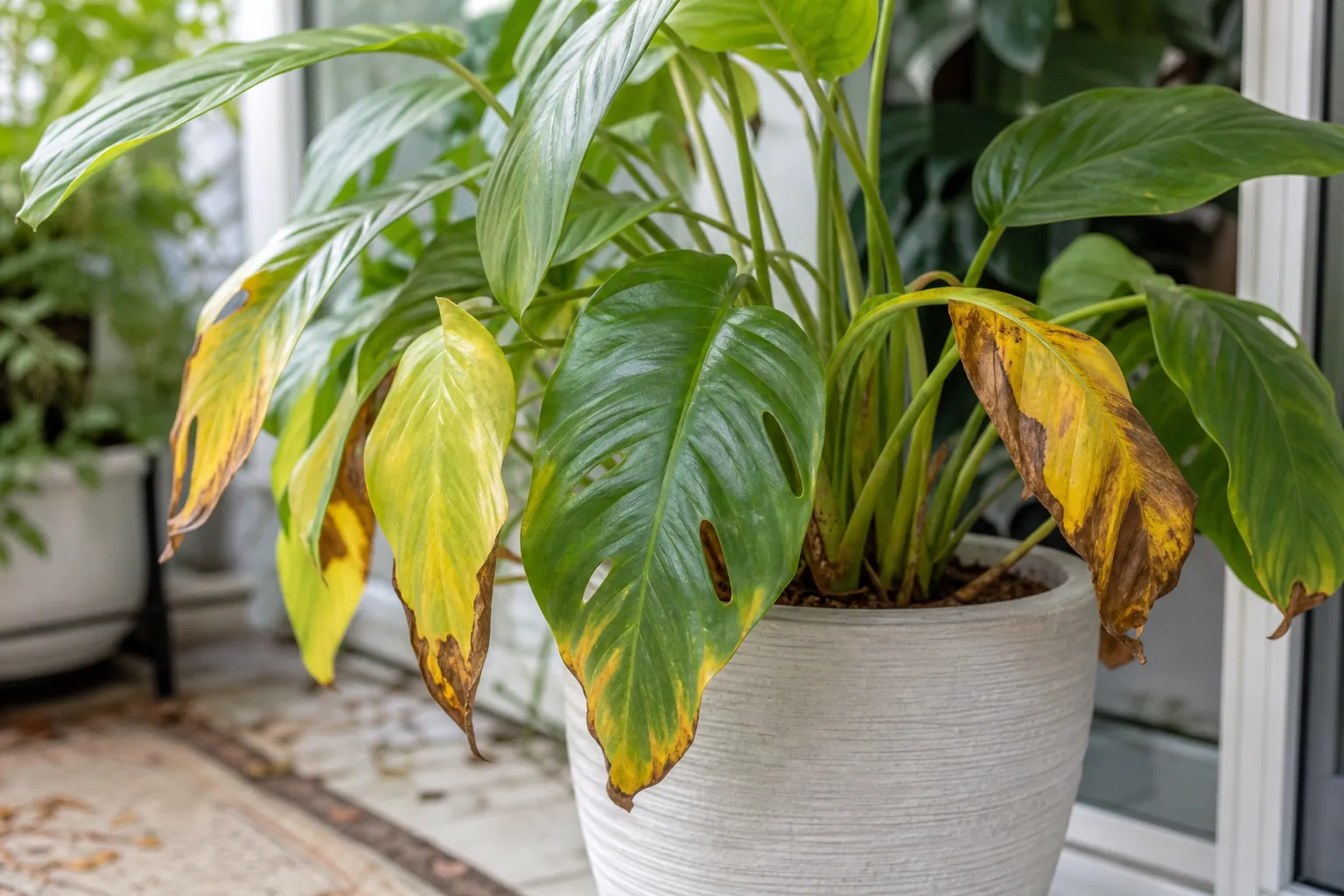
Start with the plant’s leaves and stems, but do not rely on one symptom alone. Yellowing leaves can occur when roots remain wet, yet yellow leaves may also result from normal aging, nutrient issues, cold exposure, or other stress. Overwatering becomes more likely when yellowing appears alongside persistently damp soil and continued decline.
Leaves may look limp even though the soil is wet. This can be confusing because wilting is often associated with drought. Saturated roots, however, may struggle to function normally, leaving the plant unable to respond as expected. Watch for soft growth, widespread leaf drop, stalled new growth, or darkened areas near the base of stems.
Note the timing and pattern. A single older leaf turning yellow is less informative than several leaves changing after frequent irrigation or heavy rain. Photograph the plant, record when it was watered, and compare conditions over several days. A short record helps you make decisions based on a pattern rather than reacting to one leaf.
Check Soil Moisture Before Adding More Water
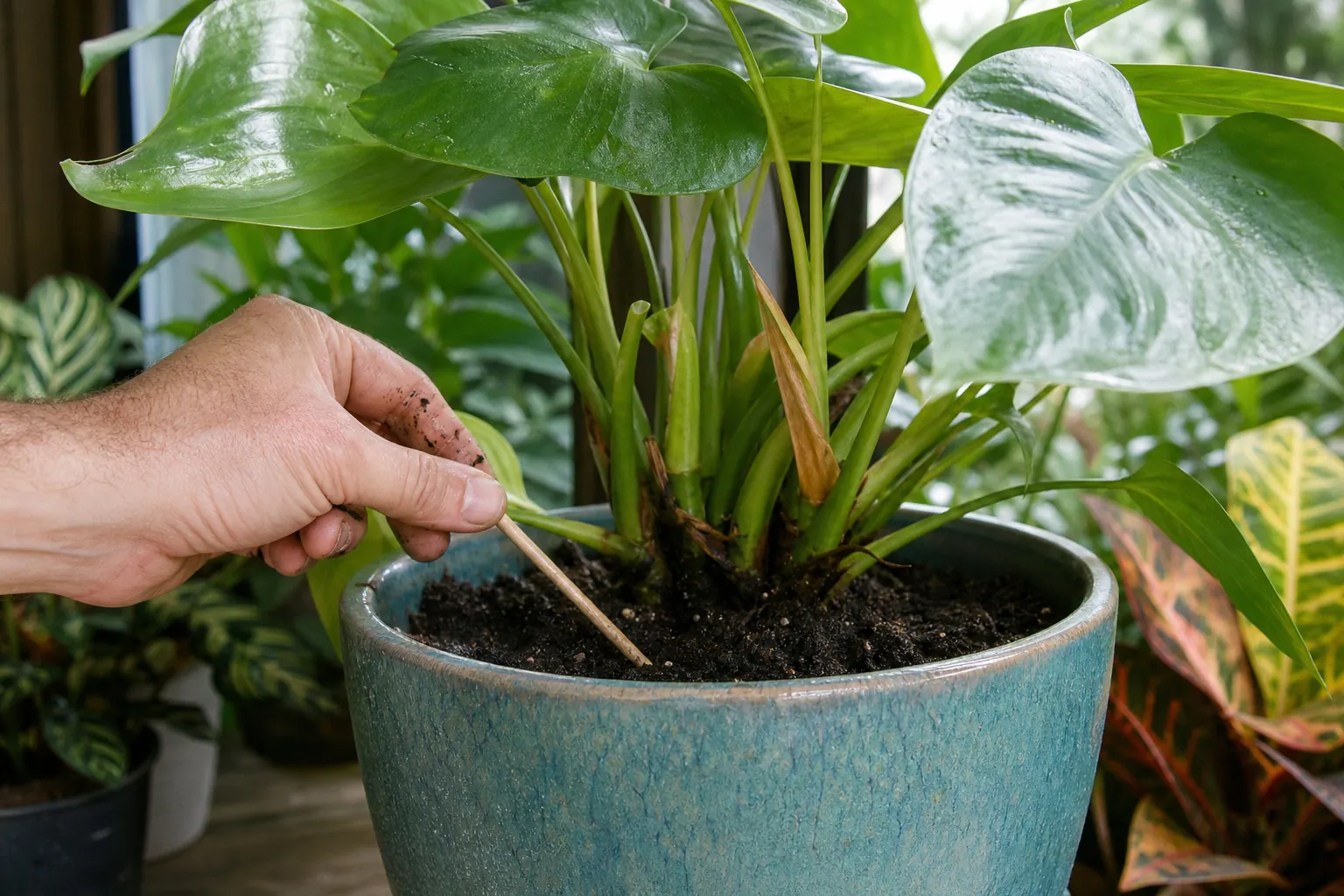
Appearance alone cannot confirm overwatering. Check the soil several inches below the surface, where moisture may remain after the top looks dry. Use a finger, a clean wooden stick, or a small hand tool, taking care not to damage major roots. If soil below the surface feels cool, wet, or sticky, delay additional watering and check again later.
Test more than one location around an in-ground plant. Roof runoff, low spots, compacted soil, and uneven irrigation can create saturated pockets. For a container, compare its weight after watering with its weight as it dries. A pot that remains unusually heavy is retaining moisture.
- Pause automatic irrigation after substantial rainfall and reassess the soil.
- Check whether water collects around the plant or drains away.
- Confirm that container drainage holes are open and unobstructed.
- Empty standing water from saucers or decorative outer pots.
- Record how long the root zone stays wet after watering.
Water according to current soil conditions, not simply because a calendar says it is time.
Inspect Drainage, Containers, and the Root Zone
If wet conditions persist, look for the reason. In containers, water should be able to leave through drainage openings. Roots, compacted potting material, or debris can block those openings. A decorative pot without drainage can also hold water around an inner nursery pot. Lift the inner container and remove any collected water.
For plants in the ground, observe the area during and after rain or irrigation. Standing water, runoff flowing toward the plant, or a planting area lower than the surrounding grade may keep the root zone saturated. Repeatedly adding water before that area drains compounds the problem.
If a container plant can be removed safely, examine accessible roots without tearing the root ball apart. Healthy roots are generally firm. Roots that are soft, dark, or easily broken, especially with an unpleasant odor, suggest that prolonged wetness has caused serious stress. Avoid aggressive root disturbance when the plant is already weakened. Focus first on stopping unnecessary irrigation, restoring drainage, and keeping the container stable while conditions improve.
Adjust Watering Without Creating New Stress
Once overwatering appears likely, do not respond with another extreme. The goal is to let excess moisture leave the root zone while continuing to monitor the plant. Turn off or reduce irrigation that reaches the affected area, especially when rain is supplying water. Resume watering only after checking moisture below the surface.
Do not assume that a fixed interval works throughout the year. Heat, wind, cloud cover, plant size, container material, soil structure, and recent rainfall influence drying time. A container in a sheltered location may stay wet much longer than one exposed to sun and moving air. Likewise, neighboring plants can have different needs.
Avoid fertilizing simply because leaves are yellow. Fertilizer does not correct saturated soil and can add stress to compromised roots. Also avoid repeatedly moving, pruning, or repotting the plant unless a specific condition requires it. Make one practical change, observe the response, and document what happens. New growth and improved firmness are more useful indicators than expecting damaged leaves to return to their previous appearance.
Separate Watering Problems From Cold and Other Causes
Not every declining tropical plant is overwatered. Northeast Florida plants may experience abrupt weather changes, cool soil, wind, transplant stress, pests, or physical damage. Cold injury can produce discolored, limp, or collapsed foliage that resembles moisture-related decline. Consider what happened before symptoms appeared. Damage following a cold night points to a different trigger than gradual yellowing during a rainy period.
Check whether symptoms affect one plant, one irrigation zone, or many unrelated plants. If only plants in a low area are declining, drainage deserves attention. If exposed foliage changed immediately after cold weather, review guidance on protecting young palms from frost in St. Augustine. Multiple causes can occur together, so continue checking soil rather than assuming weather explains everything.
Make a decision from combined evidence: moisture below the surface, drainage behavior, recent watering and rainfall, root condition when visible, and the timing of symptoms. If the cause remains unclear or decline continues, avoid adding more water by default.
Talk Through What You Are Seeing
If you are concerned about a tropical plant and want to discuss the signs you have observed, call Tropical Yards calmly at 772-267-1611. Before calling, note the plant’s symptoms, recent watering, rainfall, drainage conditions, and how long the soil stays wet.
Call 772-267-1611 to talk through next steps.