Single trunk vs multi trunk palms: choosing for a Florida yard
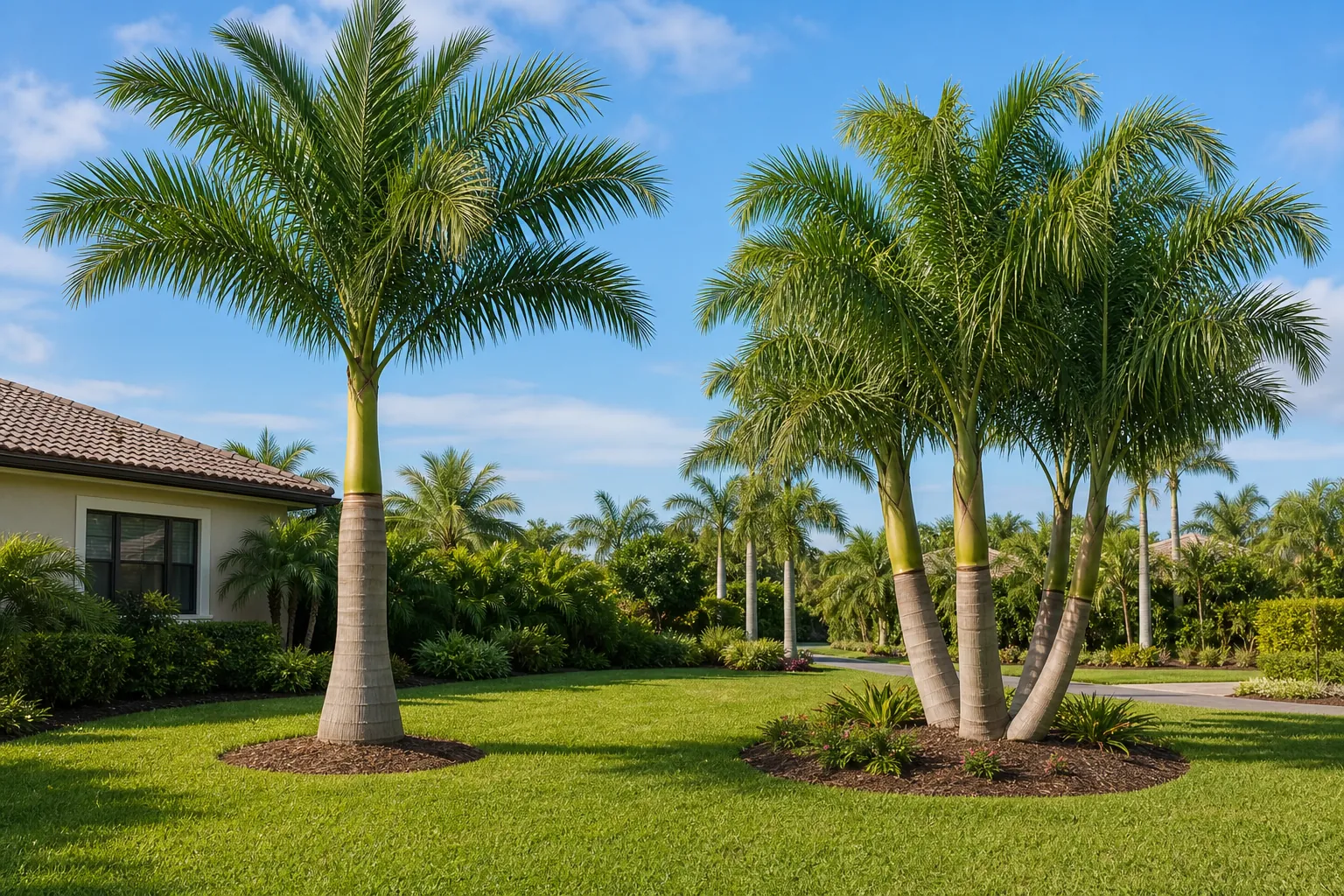
A palm can look perfectly sized at the nursery and feel very different after several years in a Florida yard. Some develop one tall, defined trunk with a crown overhead. Others form a cluster of stems that fills space closer to eye level. Understanding that difference helps you choose a plant for its mature shape rather than its appearance on delivery day.
When comparing single trunk vs multi trunk palms, start with the space you have, the amount of screening you want, and the growing conditions at your property. Trunk count matters, but species, mature spread, cold tolerance, and drainage usually matter more.
Tropical Yards supplies palm trees and other tropical plants, sells coquina shell, and offers dump trailer delivery of plants and coquina shell from St. Augustine to Daytona Beach. This guide is for buyers and homeowners planning their own planting and plant care.
What Makes A Palm Single Trunk Or Multi Trunk?
A single trunk palm normally grows from one main stem topped by a crown of leaves. That stem has a growing point near the top. Unlike many broadleaf trees, most palms cannot replace a destroyed terminal growing point by producing a new branch along the trunk.
A multi trunk palm may naturally produce additional stems, often called offsets or suckers, from its base. Each stem has its own crown and growing point. Together, those stems create a clumping form that may continue to widen as new growth develops.
There is also a third situation: several individual single trunk palms planted together in one container. These are sometimes sold as doubles or triples. They can look like a naturally clustering palm, but each plant remains a separate individual.
- A naturally single trunk species generally stays single trunk unless several plants are grouped together.
- A naturally clustering species can produce additional stems, so its footprint may change over time.
- A grouped planting needs room for the mature crowns and root systems of multiple individual palms.
- You should ask whether a nursery specimen is one clustering plant or several separate plants growing together.
Do not assume you can turn any palm into a different form later. Removing stems from a clustering palm does not change its genetics, and cutting the top off a single trunk palm is not a safe way to control its height.
How Palm Shape Changes The Use Of Your Space
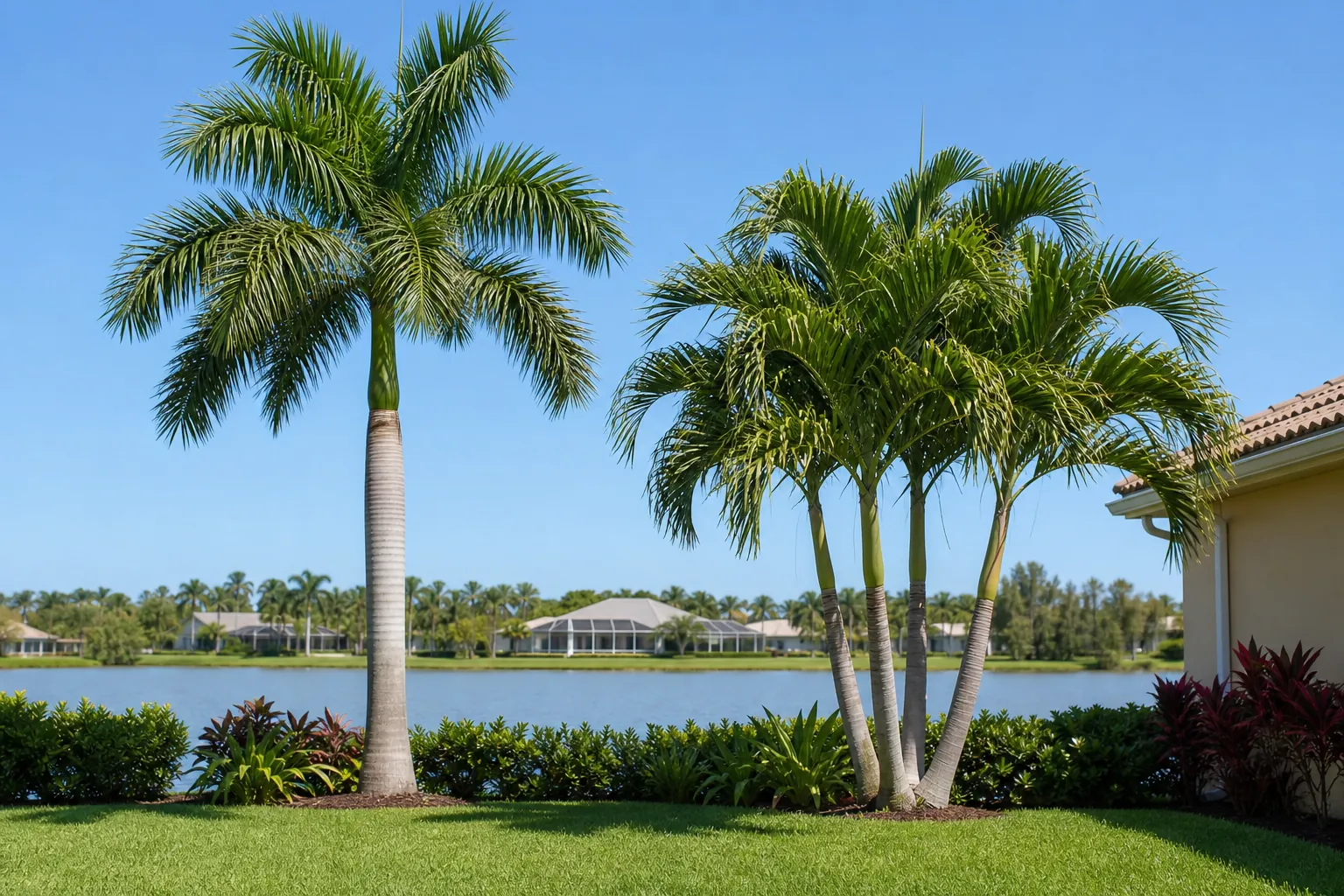
Single trunk palms often suit places where you want a clear vertical accent. Once a suitable species develops enough trunk height, the crown may sit above nearby lower plants, leaving a more open view at ground level. The exact effect depends on its growth habit and size.
Multi trunk palms tend to create a fuller presence. Their overlapping stems and foliage can provide a layered tropical look and help soften views. However, a clump is not automatically a dense privacy screen, especially as older stems gain height.
Consider how you actually use the area. A palm beside a walkway has different requirements from one near a property boundary. Leaves that look graceful in an open bed can become inconvenient if they extend into a gate, driveway, or seating area.
- Choose an open trunk form when you want to preserve views between the street, front door, and driveway.
- Consider a clustering form when a broader planting area can accommodate foliage and additional stems.
- Check mature crown width before placing either form beside walls, roof edges, or narrow paths.
- Keep palms out of locations where future height could conflict with overhead utility lines.
- Account for fruit, falling leaves, and any spines when evaluating spaces near pools or frequently used paths.
Mark the expected mature footprint on the ground before buying. Viewing that outline from several directions makes it easier to judge whether the palm will frame a space or overwhelm it.
Florida Conditions Matter More Than Trunk Count
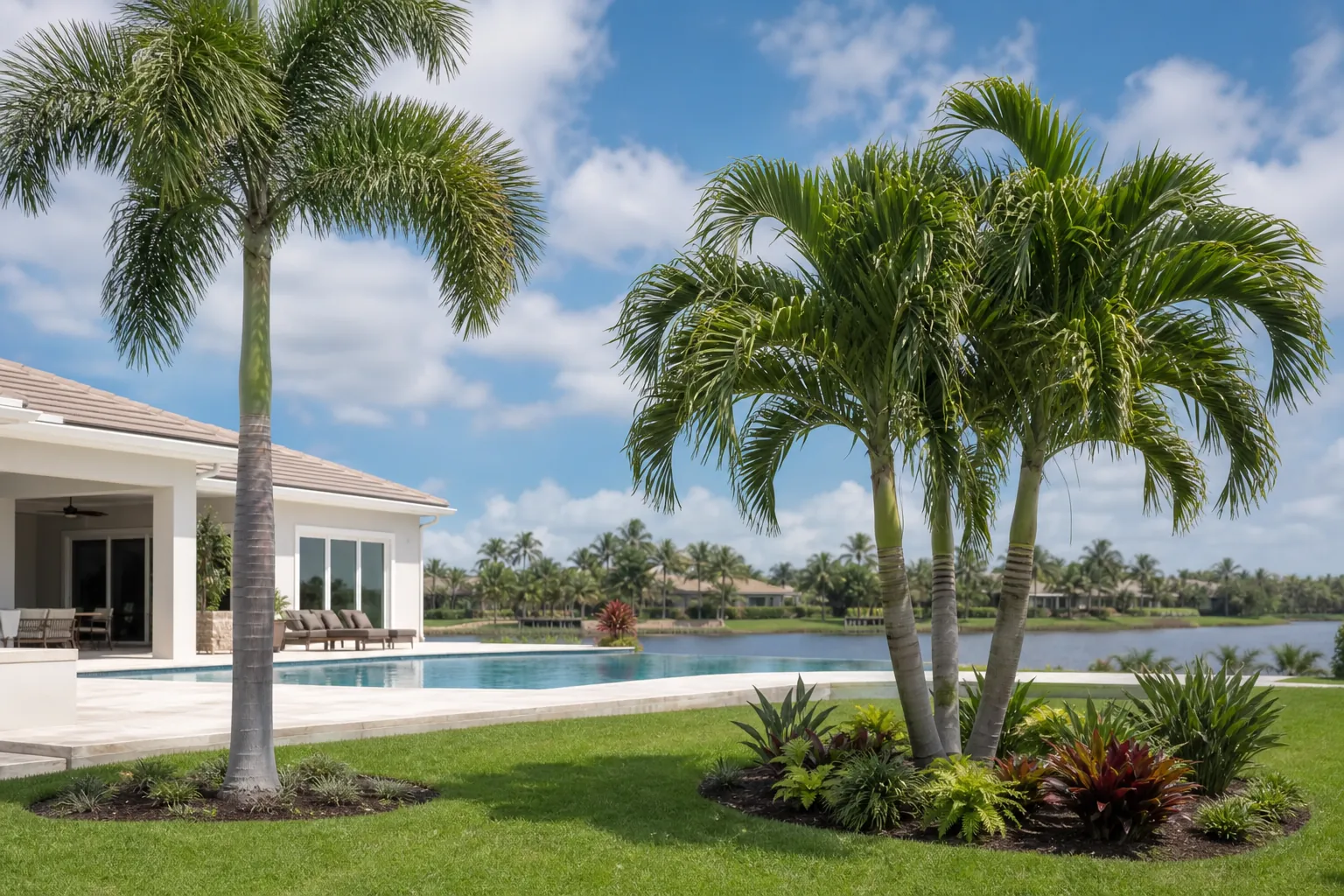
Florida is not one uniform growing environment. Coastal exposure, inland cold pockets, soil texture, and drainage can vary substantially, even within the same general region. A sheltered courtyard may support a palm that struggles in an exposed lawn nearby.
For buyers between St. Augustine and Daytona Beach, cold tolerance deserves particular attention. Some palms associated with a tropical appearance are more vulnerable to freezes than others. A multi trunk form is not inherently more cold tolerant than a single trunk form.
Match the species to the location instead of relying on trunk count as a shortcut. Ask about the plant's sunlight requirements, expected mature dimensions, and suitability for your area's winter conditions. Local extension guidance can help you evaluate species before purchasing.
- Confirm how many hours of direct sun the planting area receives during different seasons.
- Observe whether water remains after heavy rain, because many palms need well-drained soil.
- Distinguish salt spray tolerance from tolerance of salty soil or irrigation water.
- Consider whether nearby buildings provide shelter or reflect additional heat onto the planting area.
- Check irrigation coverage so that establishment watering can reach the root ball rather than only surrounding turf.
Palms also differ in tolerance of wind and drought. Those traits depend on species, establishment, root conditions, and exposure. Neither a thick single trunk nor a dense cluster alone tells you how a palm will perform.
Examples To Research Before Buying
Species examples help explain the choices, but they are not a current inventory list. Ask Tropical Yards about available plants and verify the botanical identity of any palm you are considering.
Sabal palmetto, commonly called cabbage palm, is a single trunk species associated with Florida landscapes. Its eventual height and crown still require adequate room. Nursery-grown material and field-dug specimens can have different handling and establishment needs.
Pygmy date palms are frequently sold with multiple individuals together, even though the species is normally single stemmed. Their attractive grouped appearance should not obscure their cold sensitivity or the sharp spines near the bases of the leaves.
Clustering palms include species such as lady palm and areca palm. Their sunlight preferences, mature size, and cold tolerance are not interchangeable. Areca palms, in particular, need careful site evaluation in areas that experience freezing weather.
Mediterranean fan palm commonly develops a clustering habit and is another option to research for suitable Florida sites. Its spiny leaf stalks are an important consideration around narrow passages and children's play areas.
These examples illustrate why the species name should come first in your decision. Two palms described as multi trunk can have very different care needs, dimensions, and suitability for a Northeast or East Central Florida property.
What To Check When Buying A Palm
Start by confirming the species, the growing form, and the size being sold. Ask whether measurements refer to overall height, trunk height, or container size. Those terms describe different things and can affect how you plan transport and planting.
Look for a stable plant with a sound growing point and an appropriate root ball. Foliage should be evaluated in context: a few older leaves may show wear, but widespread discoloration, damaged emerging growth, or obvious pest activity deserves questions.
With multi trunk specimens, inspect the entire group rather than only its tallest stem. The stems do not need to match perfectly, but each living crown should be assessed. Also consider whether tightly packed stems will suit your intended space as they grow.
- Ask what light conditions the palm has been growing in so you can plan any needed transition.
- Inspect the base for damage, unusual softness, or signs that the plant is loose in its container.
- Look for crowded or circling roots when they can be examined without unnecessarily disturbing the plant.
- Confirm the palm's likely mature height and width rather than relying on its current dimensions.
- Discuss the plant's size and weight before deciding whether DIY handling is practical.
A larger palm is not always the better purchase. A manageable plant that suits the site can be a more sensible choice than a specimen requiring equipment or handling beyond your capabilities.
Planning Delivery And DIY Planting
Have the destination and your handling plan ready before arranging delivery. Tropical Yards offers dump trailer delivery of plants and coquina shell from St. Augustine to Daytona Beach. Confirm access, delivery details, and how the selected plants will be handled when ordering.
Delivery does not replace a planting plan. Tropical Yards is a supplier, not an installation service. You are responsible for arranging appropriate help or equipment when a palm is too heavy or awkward to move safely yourself.
Identify a suitable delivery location with enough access for the vehicle and trailer. Mention narrow entrances, low branches, overhead wires, soft ground, or other obstacles. Do not assume the delivery vehicle can reach the final planting location.
- Arrange utility marking through the appropriate local process before digging, and identify private irrigation or other unmarked lines.
- Prepare tools, water access, and a safe route from the delivery location to the planting area.
- Measure gates and pathways against the plant's container and foliage dimensions.
- Keep children and pets away from unloading and plant-moving activities.
- Never lift or drag a palm by its leaves or growing point.
For typical container-grown palms, dig a hole wider than the root ball and no deeper than needed to preserve the existing planting depth. Avoid burying the trunk base. Special circumstances, including field-dug palms, may require additional species-specific guidance.
Handle the root ball carefully, set the plant upright, and backfill with the excavated soil unless reliable site-specific advice calls for a different approach. Water to settle soil around the roots. Avoid packing soil so aggressively that drainage and air movement are restricted.
Caring For Your Palm After Planting
New palms need attention while their roots establish in surrounding soil. Watering should reflect soil drainage, weather, root-ball size, and the needs of the species. A fixed schedule without checking moisture can lead to either drought stress or prolonged saturation.
Check the root ball as well as the adjacent soil. Container material can dry at a different rate from the soil around it. Water thoroughly when needed, then allow conditions appropriate to the species rather than keeping the planting hole constantly wet.
Use fertilizer cautiously and follow palm-specific guidance for Florida soils. Nutrient deficiencies can resemble other problems, and extra fertilizer is not a universal solution for a stressed palm. Local extension resources can help with timing, product selection, and diagnosis.
- Keep mulch away from direct contact with the trunk or clustered stem bases.
- Avoid removing healthy green leaves simply to create a tidier or more upright crown.
- Do not cut the central spear or growing point to reduce a palm's height.
- Check clustering palms for new offsets so you can monitor their expanding footprint.
- Use suitable protection and tools around species with sharp leaf stalks or spines.
If you choose to manage offsets yourself, first confirm that the species tolerates the intended approach. Removing a stem permanently removes that stem's crown, and careless cuts can damage nearby growth. Seek qualified guidance for dangerous or difficult work.
Using Coquina Shell Around Palm Plantings
Coquina shell can complement a tropical planting with a light-colored ground surface and distinctive texture. Tropical Yards sells coquina shell and offers dump trailer delivery within the St. Augustine to Daytona Beach service corridor.
Shell is a surface material, not a substitute for suitable soil, drainage, or correct planting depth. Keep it away from direct contact with palm trunks and stem bases, and leave access for checking soil moisture during establishment.
Because shell contains calcium carbonate, it can influence soil chemistry over time. Consider existing soil pH and the needs of nearby plants before spreading it broadly. This is especially relevant when combining palms with other tropical plants that may have different soil preferences.
- Measure the area's length and width and decide on the intended depth before requesting an order quantity.
- Discuss material characteristics and intended use rather than assuming every shell product behaves identically.
- Plan a delivery drop location that avoids blocking drainage routes, sidewalks, or vehicle access.
- Keep shell from spilling into lawns or areas where it could interfere with mowing.
If you are planting hibiscus, bougainvillea, ferns, or other tropical plants nearby, evaluate each plant's light, moisture, and soil needs separately. A shared tropical appearance does not mean every plant belongs in the same conditions.
Make The Choice Around The Mature Plant
The best answer to single trunk vs multi trunk palms depends on your site. A single trunk palm often provides a defined vertical feature and a more open lower profile. A multi trunk palm can create layered foliage and a broader visual presence, but it needs room for that form.
Before ordering, confirm the species, mature dimensions, cold tolerance, and whether the specimen is naturally clustering or a group of separate plants. Then check your delivery access and make a realistic DIY planting plan.
For palm trees, hibiscus, bougainvillea, ferns, other tropical plants, or coquina shell, call Tropical Yards at 772-267-1611. Ask about current availability and dump trailer delivery from St. Augustine to Daytona Beach so you can prepare your materials and planting area before they arrive.
Call 772-267-1611 to talk through next steps.