Choosing tropical plants for Florida rooftop terraces
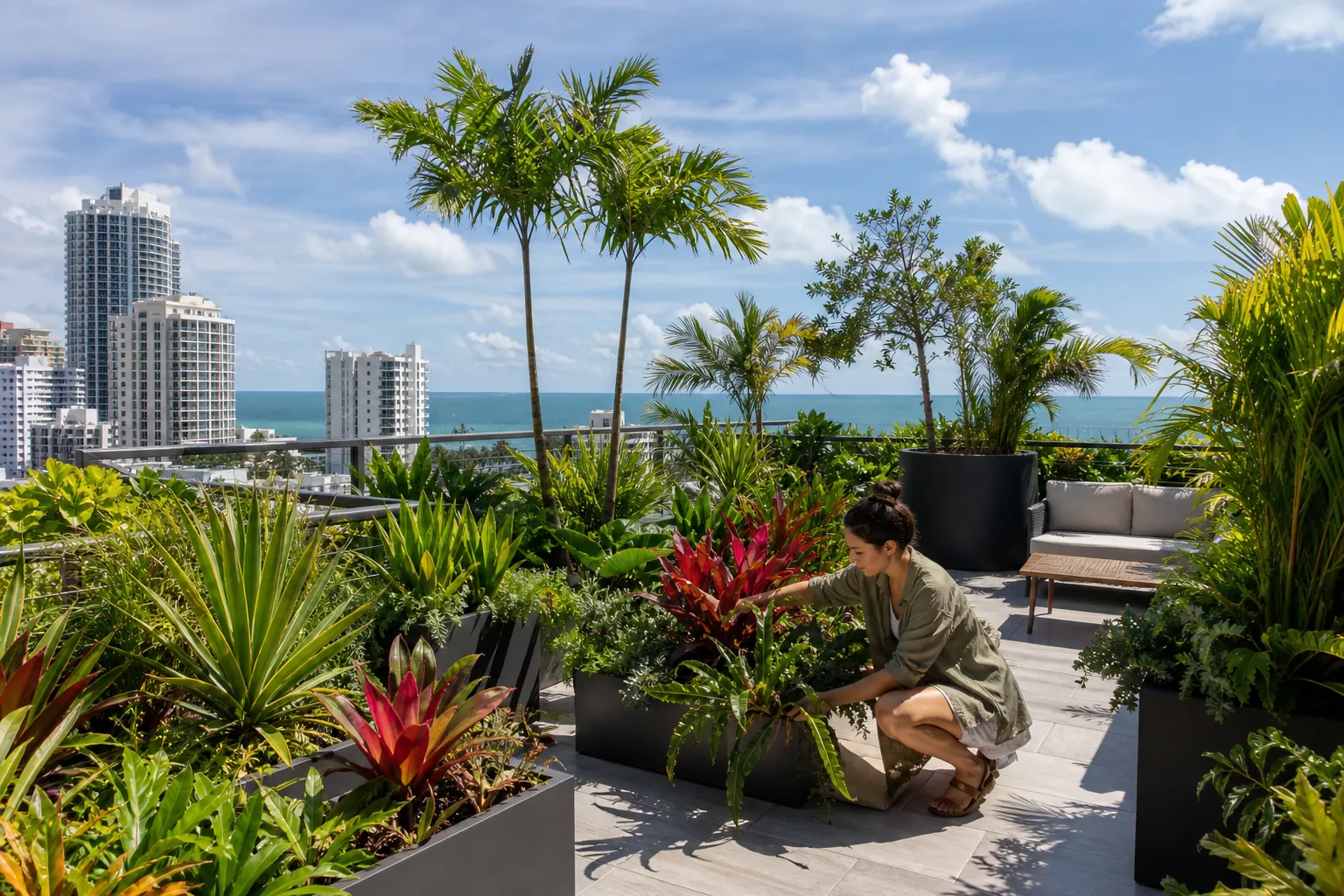
A rooftop terrace can become one of the most inviting spaces on a Florida property. Lush foliage, colorful flowers, and thoughtfully placed containers soften hard surfaces while creating shade and privacy. Yet a rooftop is not the same as a ground-level garden. Heat, reflected sunlight, wind, limited soil volume, and weight restrictions all influence which plants will thrive.
Selecting tropical plants for rooftop terraces in Florida requires more than choosing attractive varieties. A successful design matches each plant to the terrace's exposure, structural limits, maintenance schedule, and desired appearance. With the right plan, a rooftop can feel like a private tropical retreat without becoming difficult to manage.
Understand the rooftop growing environment
Florida rooftops can be significantly hotter and windier than gardens at ground level. Pavers, walls, glass, and roof membranes absorb and reflect heat. Containers also dry faster because their root zones are exposed above ground. During summer, a planter that stayed moist for several days in spring may need much more frequent attention.
Wind is equally important. Tall plants with broad leaves may act like sails, especially on an exposed terrace or upper floor. Persistent wind can tear foliage, tip containers, and increase water loss. Coastal properties may also experience salt spray, which can damage sensitive leaves and accumulate in potting soil.
Before selecting plants, observe the terrace throughout the day. Note where direct sun falls, which corners remain shaded, how rainwater drains, and where wind is strongest. Nearby buildings may create unexpected shade or funnel gusts through narrow areas. These small site differences often determine whether a plant struggles or flourishes.
Choose tropical plants suited to containers
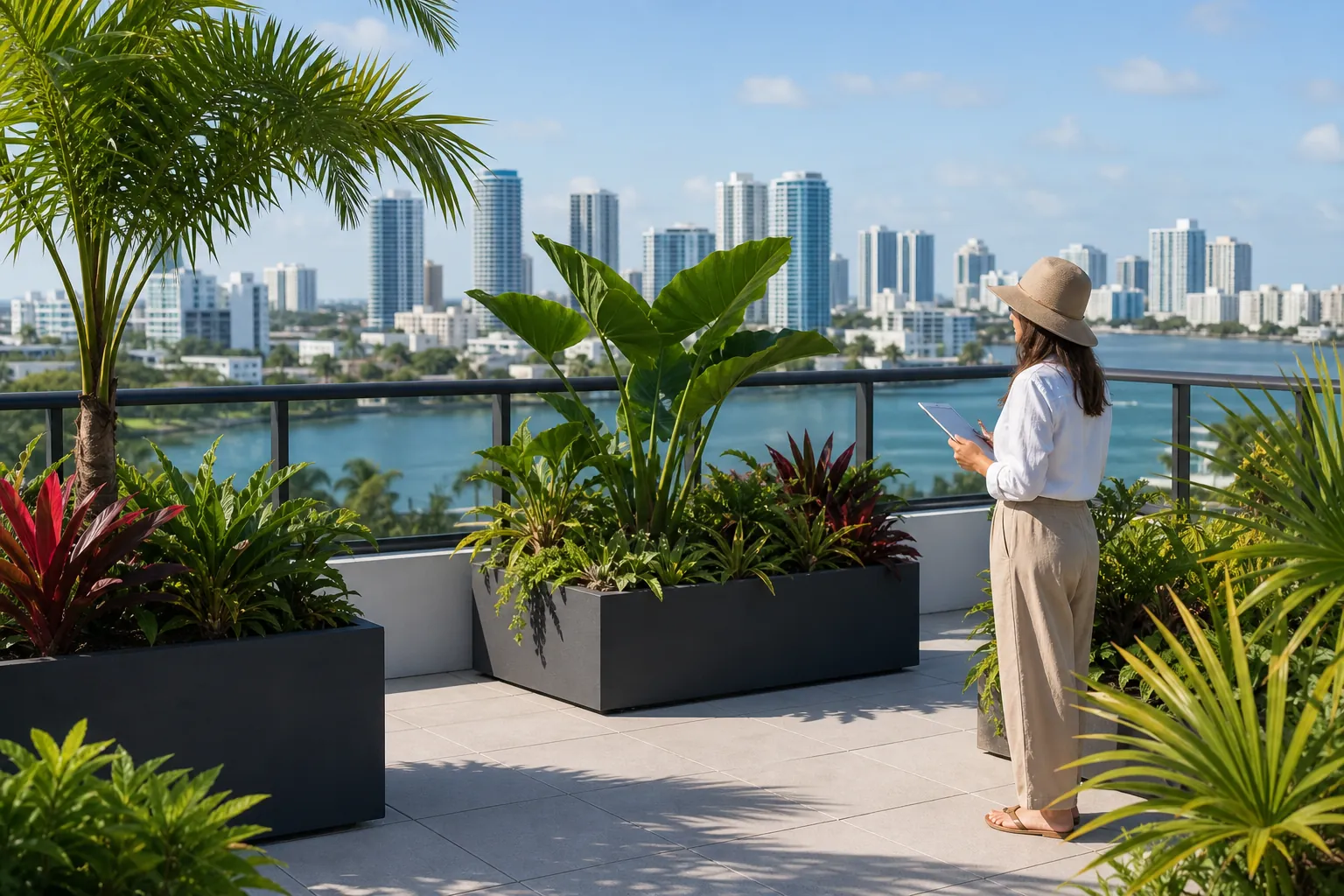
Many tropical species grow well in large planters, but compact or moderate-growing selections are usually better for rooftops. They offer visual impact while reducing frequent pruning and root congestion. Plants should also tolerate the terrace's specific combination of sunlight, wind, and moisture.
Depending on the property and local conditions, useful candidates may include:
- Clumping palms: Certain compact palms provide height and movement without the scale of large landscape palms. Choose species appropriate for the available space and wind exposure.
- Clusia: Its thick foliage can tolerate sun, heat, and coastal conditions. It can be maintained as a privacy screen when containers provide adequate root space.
- Sea grape: This Florida-friendly coastal plant offers bold, rounded leaves and good salt tolerance. Regular pruning helps maintain a rooftop-appropriate size.
- Crotons: Their colorful foliage supplies year-round interest in bright locations. Protect them from harsh exposure when conditions are unusually windy.
- Ti plants: Red, burgundy, pink, and green cultivars add layered color. They generally perform best with suitable moisture and some shelter from extreme wind.
- Bird of paradise: This architectural plant creates a strong tropical focal point. It needs enough container volume and placement that accounts for its mature spread.
- Dwarf schefflera: A versatile foliage plant that can be shaped into compact forms or low screens. Variegated cultivars can brighten partially shaded areas.
- Bromeliads: These plants bring sculptural form and vivid color to smaller planters. Different varieties suit different light levels, making careful selection essential.
- Coontie: A durable Florida native with a tropical appearance, coontie works well in structured container designs and does not require constant trimming.
- Trailing plants: Suitable trailing varieties can soften planter edges and retaining walls. They should be positioned where growth will not block drains or create trip hazards.
Plant lists should be treated as a starting point, not a universal prescription. Florida includes several climate zones, and a plant that performs well in South Florida may need cold protection farther north. Rooftop microclimates can also be warmer or more exposed than surrounding landscapes.
Use containers that support healthy growth
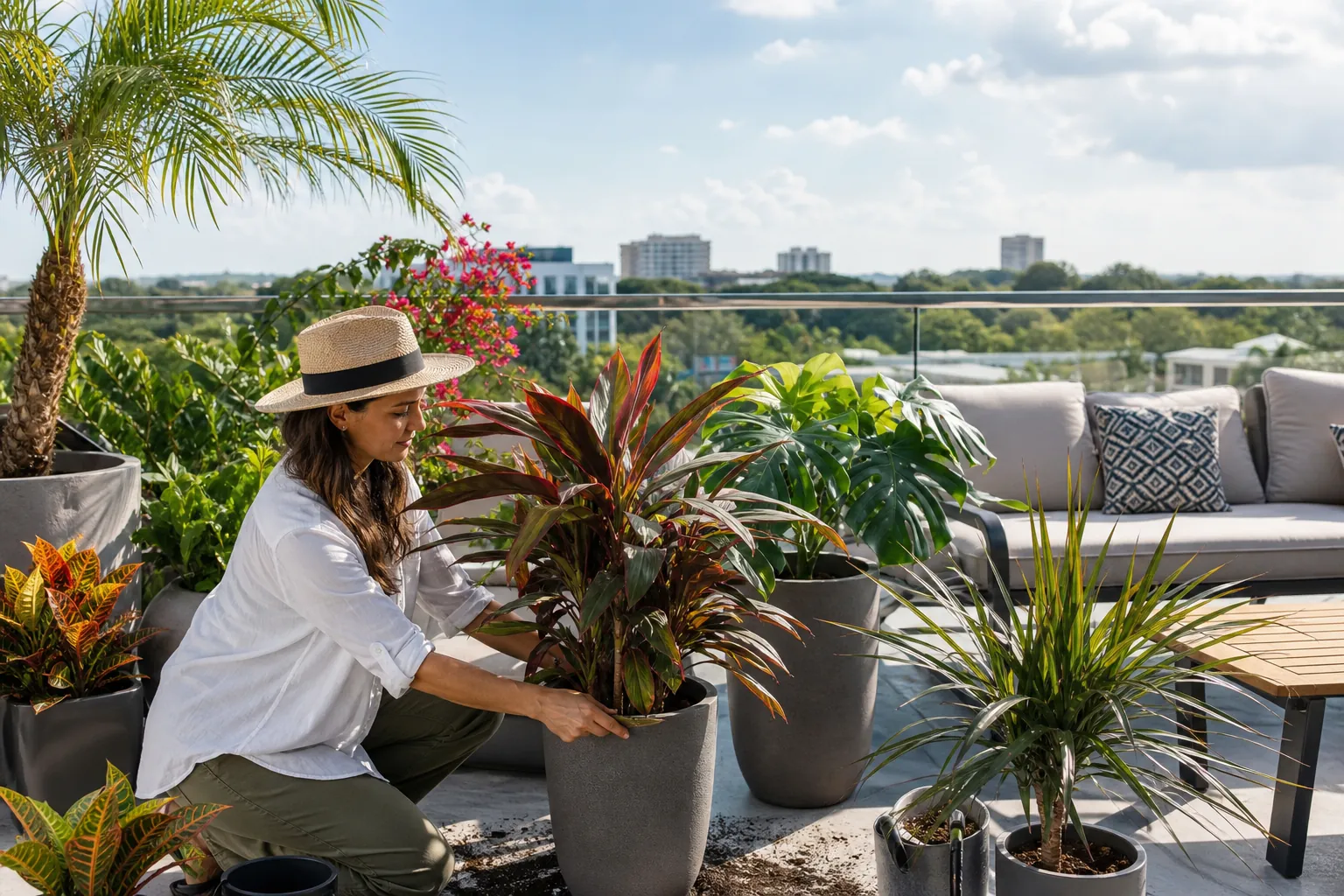
Container choice affects plant health, safety, and long-term maintenance. Large planters hold moisture more consistently and offer better root insulation than small pots. However, planter weight must be evaluated carefully. Soil, plants, water, decorative stone, and the container itself contribute to the total load.
Property owners should confirm structural load limits with a qualified professional before installing heavy containers or raised beds. Lightweight planter materials and engineered growing media may help reduce weight, but they do not eliminate the need for appropriate planning.
Every planter needs dependable drainage. Standing water can cause root decline, attract pests, stain surfaces, and create unnecessary weight. Drainage outlets should remain accessible and should direct water without damaging the roof assembly or inconveniencing neighboring areas. Planters should never obstruct roof drains.
A high-quality container mix should drain freely while retaining enough moisture for tropical plants. Ordinary garden soil is generally too dense for rooftop pots. Mulch can reduce evaporation, but it should be applied lightly and kept away from stems and crowns.
Design for shade, privacy, and balanced scale
A polished rooftop garden uses plants in layers. Taller specimens establish structure, medium foliage plants add density, and low or trailing plants finish the composition. Repeating a limited palette creates a calmer, more intentional appearance than filling every container with a different species.
For privacy, place screening plants where they block specific views rather than forming a continuous wall around the terrace. This approach preserves airflow and reduces the visual weight of the design. If shade is a priority, plants can complement umbrellas, pergolas, or other approved structures, but they should not be expected to provide immediate overhead coverage.
Keep mature size in mind. A young tropical plant may fit neatly beside seating but eventually crowd walkways or doors. Maintain clear paths, protect sightlines, and leave access to utilities, drains, railings, and building equipment. Secure or stabilize containers in accordance with site requirements, particularly in exposed locations.
Plan irrigation and seasonal maintenance
Consistent irrigation is one of the most important parts of rooftop landscaping. Drip irrigation can deliver water directly to individual planters while limiting overspray on windows and walking surfaces. Separate zones may be needed because sunny, windy areas dry faster than sheltered corners.
Check emitters regularly for clogs, leaks, or displacement. Irrigation schedules should change with rainfall, temperature, and plant maturity rather than remaining fixed all year. Periodic deep watering may also help flush accumulated salts from containers when drainage and site rules allow.
Routine care should include pruning, nutrition, pest monitoring, and storm preparation. Avoid pushing excessive growth with too much fertilizer. Compact, healthy plants are usually easier to manage in windy rooftop conditions. Before severe weather, follow building policies and professional guidance for movable furnishings, containers, and loose materials.
Create a rooftop landscape suited to your property
The best rooftop gardens balance tropical character with practical demands. Plant selection, container weight, drainage, irrigation, wind exposure, and maintenance all need to work together. A site-specific plan can reduce plant replacement, water waste, and crowded growth while improving comfort and curb appeal.
Tropical Yards designs tropical landscaping with Florida conditions in mind. To discuss plant choices and a practical rooftop terrace plan for your property, call 772-267-1611.
Call 772-267-1611 to talk through next steps.