Tropical vs hardy hibiscus in Florida: a practical buyer’s guide
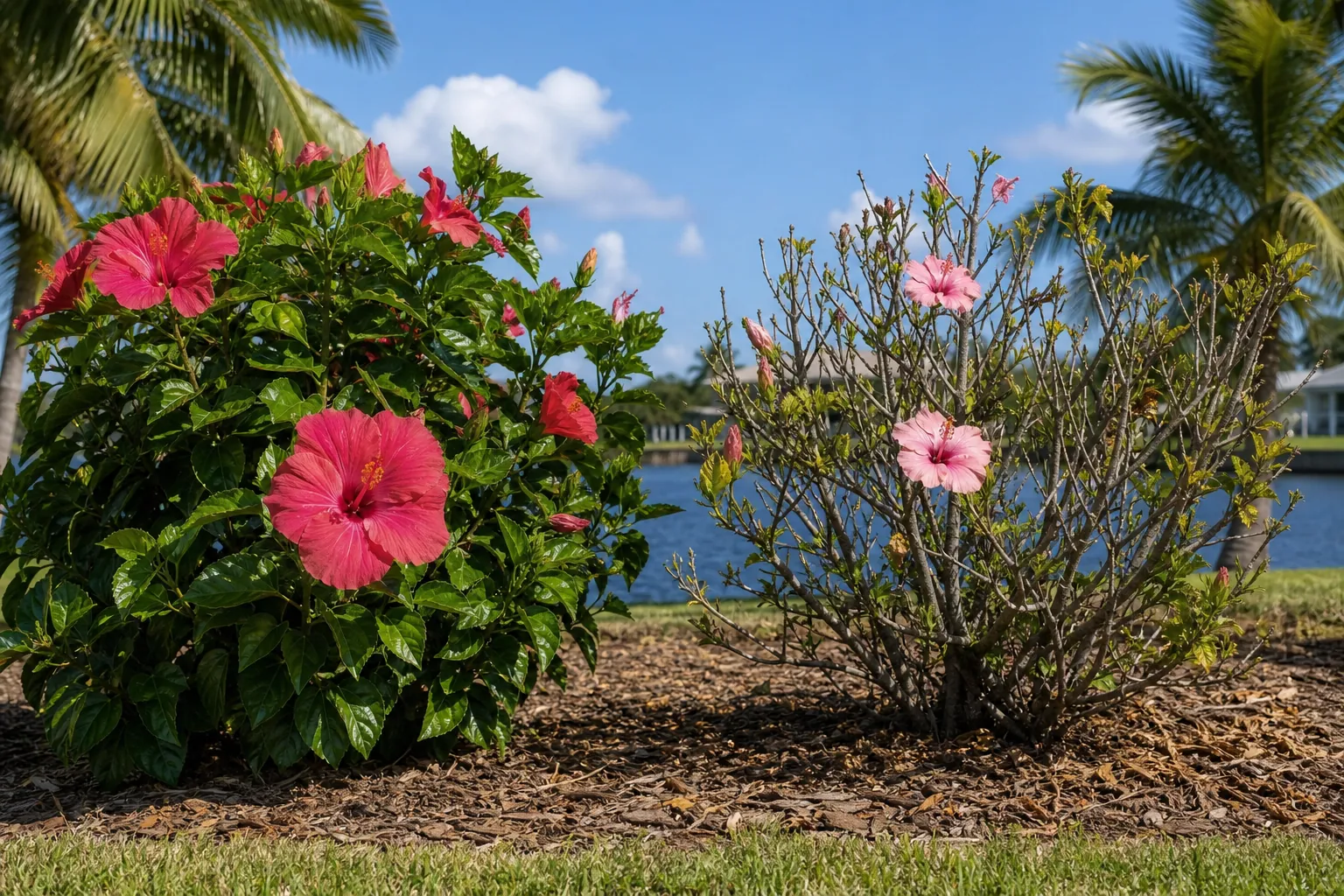
A hibiscus label can make two very different plants sound interchangeable. Both tropical and hardy hibiscus produce showy flowers, but their growth habits, winter behavior and water needs can differ substantially. In Florida, choosing the right one starts with your location and the conditions in your own yard.
If you are comparing tropical vs hardy hibiscus in Florida, look beyond flower color. Think about winter lows, drainage, available sunlight and whether you want an evergreen-looking shrub or a perennial that may disappear above ground during winter.
Tropical Yards supplies tropical plants and coquina shell, with dump trailer delivery from St. Augustine to Daytona Beach. This guide explains what to check before buying hibiscus, how to plant it yourself and how to plan a delivery without confusing material supply with landscaping labor.
What Is The Difference Between Tropical And Hardy Hibiscus?
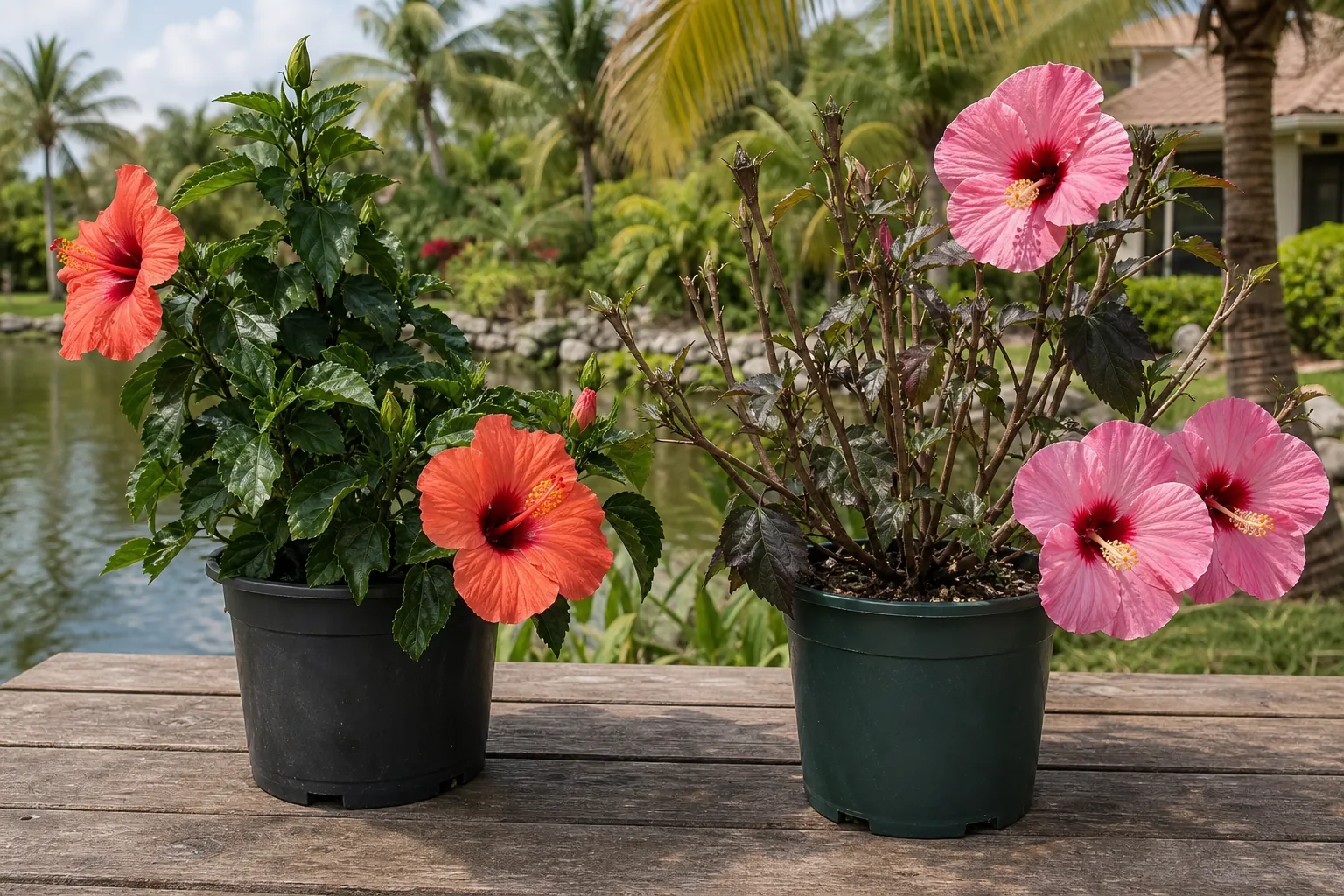
Tropical hibiscus usually refers to Hibiscus rosa-sinensis and its cultivars. These plants commonly have glossy leaves and flowers in red, pink, orange, yellow, white or mixed colors. In sufficiently warm conditions, they develop into woody shrubs and can flower repeatedly during active growth.
Hardy hibiscus is a broader retail term. It often refers to herbaceous perennial hibiscus, including Hibiscus moscheutos and related hybrids. These plants typically have large summer flowers and stems that die back as weather cools, then regrow from the crown when conditions warm.
Some sellers also use the word hardy for rose of Sharon, Hibiscus syriacus, which is a deciduous woody shrub. It is not the same plant as perennial swamp hibiscus, and its suitability for Florida conditions should be evaluated separately.
That distinction matters at purchase time. A tag that says only “hardy hibiscus” does not tell you enough about mature size, preferred soil moisture or seasonal appearance.
- Ask for the botanical name and cultivar so you can evaluate the specific plant rather than relying on a broad common name.
- Check whether the plant keeps woody stems through winter or dies back to a perennial crown.
- Read the mature height and width before choosing a position near a walkway, window or fence.
- Confirm the recommended growing conditions because hibiscus species do not all need the same soil moisture.
Which Hibiscus Makes Sense In Your Part Of Florida?
Florida is not one uniform growing zone. A protected coastal courtyard can experience different winter conditions from an open inland property only a short drive away. Low spots, wind exposure and nearby buildings also affect cold risk.
Tropical hibiscus generally makes the most sense where freezing weather is uncommon or where you can protect the plant. It is widely used in warmer parts of Florida, but it can suffer leaf, branch or more serious damage when temperatures fall below freezing.
In North Florida and freeze-prone inland locations, a tropical hibiscus planted in the ground needs a realistic cold-weather plan. A container that can be moved into shelter may be more practical than a large shrub in an exposed bed.
Herbaceous hardy hibiscus can suit gardeners who accept seasonal dormancy. Many types tolerate winter cold much better than tropical hibiscus, but cold tolerance alone does not establish that a particular cultivar will perform well in Florida heat, humidity and soil.
In the St. Augustine-to-Daytona Beach delivery corridor, site conditions deserve particular attention. Coastal exposure, sandy soil and occasional winter cold can all influence the choice. Do not assume an ocean-adjacent site is automatically protected from every freeze.
Use your location’s recent winter experience, the plant label and local horticultural guidance together. A hardiness-zone designation is useful, but it does not describe drainage, salt exposure or the temperature beside your house.
Compare Flowering, Foliage And Seasonal Appearance
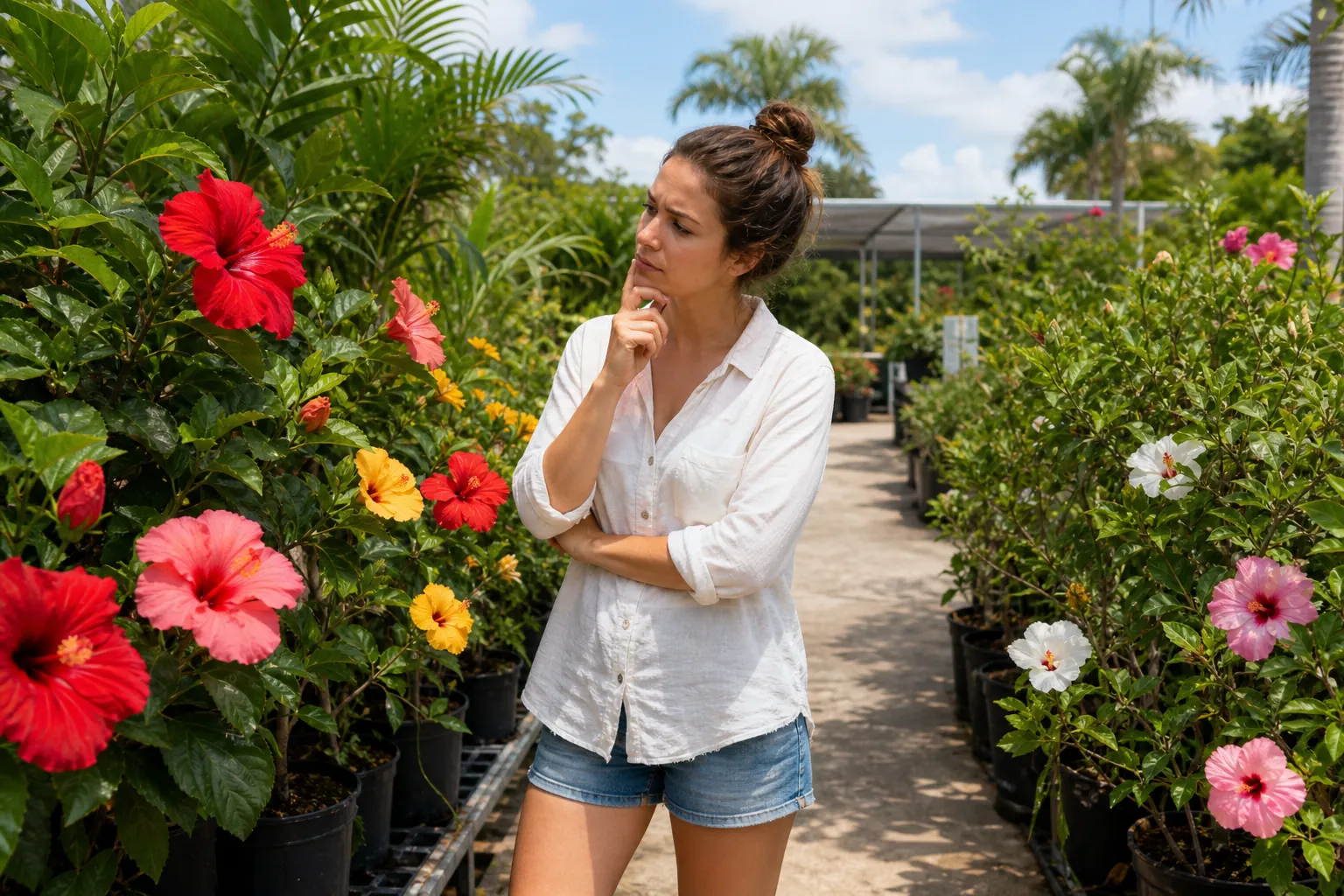
Tropical hibiscus appeals to buyers who want a leafy shrub with repeated flowers during warm growing weather. Flowering can slow with cooler temperatures, insufficient light, drought stress or other unfavorable conditions. It is better to expect changing performance than uninterrupted blooms.
Individual hibiscus flowers are short-lived. A well-grown plant can continue opening new buds, but buying a plant with one spectacular bloom does not tell you how it will flower over an entire season.
Hardy herbaceous hibiscus usually delivers a more concentrated seasonal display. Its large flowers can be striking in summer, while its winter appearance may consist of dormant stems or an apparently empty planting space.
That dormant period is normal for many perennial types. Mark the plant’s location so you do not accidentally dig into the crown while adding other plants. Spring emergence can be later than that of nearby perennials.
- Choose tropical hibiscus if a woody shrub and a longer warm-season flowering pattern fit your expectations.
- Consider herbaceous hardy hibiscus if you prefer a seasonal perennial and are comfortable with winter dieback.
- Judge foliage and branching as well as flowers because the plant will spend plenty of time between blooms.
- Check cultivar size rather than assuming every hibiscus stays compact or produces dinner-plate-sized flowers.
Match Sunlight, Soil And Water Before You Buy
Both groups generally need good light to flower well. Many hibiscus perform best with substantial direct sun, although tropical hibiscus may benefit from some afternoon relief in especially hot, exposed settings. Follow cultivar guidance and observe your actual site.
Count sunlight where the plant will sit, not elsewhere in the yard. A bed that looks bright at noon may be shaded by a roof or tree for most of the morning and afternoon.
For tropical hibiscus, aim for soil that holds some moisture while draining well. A low area that stays saturated after rain is a poor choice unless you address the underlying drainage problem. Constantly wet roots can lead to decline.
Many hardy perennial hibiscus associated with swamp or marsh habitats tolerate wetter conditions than tropical hibiscus. However, hybrids vary, and tolerance of moist soil does not mean every plant should be placed in stagnant water.
Florida’s sandy soils can dry quickly and hold nutrients poorly. Organic mulch and appropriate soil preparation can help manage the root environment, but adding a small pocket of rich material does not fix an unsuitable site.
Salt exposure is another consideration near the coast. Direct salt spray, saline irrigation water and salty soil are different problems. Do not assume hibiscus will tolerate them simply because it is sold as a tropical plant.
- Inspect the planting area after heavy rain to see whether water drains away or remains around the proposed root zone.
- Check soil moisture below the surface instead of watering only because the top looks dry.
- Keep irrigation emitters positioned to wet the developing root zone without continually soaking the trunk.
- Seek a soil test when persistent nutrient symptoms or uncertain soil chemistry make fertilizer decisions difficult.
How To Inspect A Hibiscus Before Purchasing
A good buying decision starts with the plant’s overall condition. Look for balanced growth, healthy stems and leaves that are reasonably consistent with the cultivar. A few imperfect leaves do not necessarily indicate a serious problem, but widespread decline deserves questions.
Check the underside of leaves and the tips of new growth. Hibiscus can attract aphids, whiteflies, mites and other pests. Sticky residue, clustered insects, fine webbing or extensive leaf distortion are reasons to inspect more closely before bringing a plant home.
If permitted, examine the root ball or ask the supplier about root condition. Dense circling roots, a loose unstable root ball or a sour odor from persistently wet media can complicate establishment.
Container size is not the same as mature plant size. A small hibiscus can become a substantial shrub, while a compact cultivar may remain much smaller. Make your spacing decision from the cultivar’s expected growth, not the current pot.
Tropical Yards sells hibiscus along with palm trees, bougainvillea, ferns and other tropical plants. Ask about current availability and plant identification before committing to a purchase. Do not assume a specific hardy species or cultivar is stocked without confirmation.
Planting Hibiscus Yourself In The Ground Or A Pot
Once you have chosen an appropriate plant, prepare its destination before arranging delivery. Identify underground utilities before digging, clear enough working space and have water available. Choose a planting window when you can monitor moisture afterward.
For an in-ground plant, dig a hole wider than the root ball but no deeper than needed to keep the top of the root ball at the appropriate finished soil level. Avoid burying the crown or placing a tropical hibiscus trunk below its previous soil line.
Remove the container carefully and inspect the roots. Gently address circling roots as appropriate without unnecessarily breaking apart a healthy root system. Set the plant upright, backfill with the excavated soil and water thoroughly to settle it.
Apply organic mulch around the plant while leaving space around the trunk or crown. Mulch should not be piled against stems. Check moisture regularly during establishment because the original potting medium and surrounding soil may dry at different rates.
For container growing, choose a pot with unobstructed drainage holes and use a suitable potting mix rather than dense yard soil. A pot only moderately larger than the existing root ball is often easier to manage than an oversized container that stays wet.
- Water a newly planted hibiscus according to root-zone moisture and weather rather than following an inflexible calendar.
- Allow room for mature growth so branches do not immediately crowd paths or neighboring plants.
- Place container plants where drainage water can escape without leaving the pot standing in a filled saucer.
- Use safe lifting methods and suitable equipment because wet containers and large root balls can be unexpectedly heavy.
Everyday Care And Florida Freeze Preparation
After establishment, adjust watering to rainfall, temperature, soil and plant size. Wilting can indicate dryness, but it can also occur when damaged roots cannot supply water. Check the soil before adding more water to a struggling plant.
Use fertilizer according to the product label and the needs of the specific hibiscus. More fertilizer does not necessarily create more flowers. Excess nutrients can encourage unbalanced growth or contribute to runoff, especially when applied before heavy rain.
Leaf yellowing has several possible causes, including changes in watering, nutrient availability, root problems and pests. Look for a pattern and inspect the plant before treating it. A diagnosis based on one yellow leaf is rarely useful.
For tropical hibiscus, plan freeze protection before a cold front arrives. Move portable containers into suitable shelter when possible. For plants in the ground, breathable frost cloth extending toward the ground can help retain soil warmth, but protection has limits.
Avoid resting plastic directly on leaves. Remove or ventilate coverings as temperatures rise, and do not use unsafe heating arrangements around plants or fabric. Wait until the extent of cold damage is clear before deciding what to prune yourself.
Hardy herbaceous hibiscus requires a different expectation. Seasonal dieback does not automatically mean the plant has died. Keep track of its location, avoid disturbing the crown and allow time for regrowth when spring conditions become favorable.
Using Coquina Shell Near Hibiscus
Coquina shell can provide a contrasting surface for paths and selected landscape areas. Tropical Yards supplies coquina shell, but decorative ground cover should be chosen with the plant’s root environment in mind.
Shell contains calcium carbonate and can influence surrounding soil chemistry over time. The effect depends on material, soil and site conditions. For hibiscus, avoid assuming that shell is a direct replacement for organic mulch immediately around every plant.
A practical DIY approach is to keep a defined organic-mulch area around the hibiscus root zone and use shell in an adjacent path or separate surface area. Maintain separation from the trunk or crown and preserve access for checking soil moisture.
Do not use shell to bury exposed stems, raise the grade against a plant or conceal a drainage problem. A decorative surface cannot correct water collecting underneath it.
Before ordering, measure the area and decide on the intended depth. Ask the supplier how the material is measured and describe the use you have in mind. Account for edging and nearby drainage so loose material does not migrate into unwanted areas.
Plan Your Plant And Coquina Shell Delivery
Tropical Yards offers dump trailer delivery of plants and coquina shell from St. Augustine to Daytona Beach. Confirm your address and the details of your order when discussing delivery, including whether your location and access are suitable.
Provide accurate information about driveway width, overhead clearance, gates, slopes and the proposed unloading area. Mention soft ground, septic components, irrigation equipment or other features that could affect access. Never assume a loaded vehicle can travel safely across a lawn.
For coquina shell, select an unloading location that keeps the material accessible for your own project without blocking vehicles or drainage. Discuss the unloading arrangement in advance rather than expecting material to be placed throughout the yard.
- Have the planting area, containers and necessary tools ready before plants arrive.
- Keep delivered plants upright and water them as needed while they wait for planting.
- Confirm the unloading location and access requirements before delivery day.
- Arrange your own help or equipment for moving material from the delivery point and completing the project.
Dump trailer delivery is a supply service, not installation or yard work. Tropical Yards does not design landscapes, plant or install materials, maintain plants, trim shrubs, remove plants or clean up yards.
Choose For Your Site, Then Order With Confidence
The best hibiscus choice is the one that fits your winter conditions, sunlight, soil moisture and preferred seasonal appearance. Tropical hibiscus suits buyers seeking a warm-climate flowering shrub. Hardy perennial hibiscus can suit gardeners who want a seasonal display and accept dormancy, provided the particular plant fits the site.
Before buying, confirm the botanical name, mature size and growing requirements. Before delivery, prepare a safe unloading area and a realistic plan for planting or moving materials yourself.
For current tropical plant availability, coquina shell orders and dump trailer delivery questions from St. Augustine to Daytona Beach, call Tropical Yards at 772-267-1611. Share your location and what you plan to buy so you can discuss the appropriate supply and delivery details.
Call 772-267-1611 to talk through next steps.