Walking barefoot on coquina shell: what Florida buyers should know
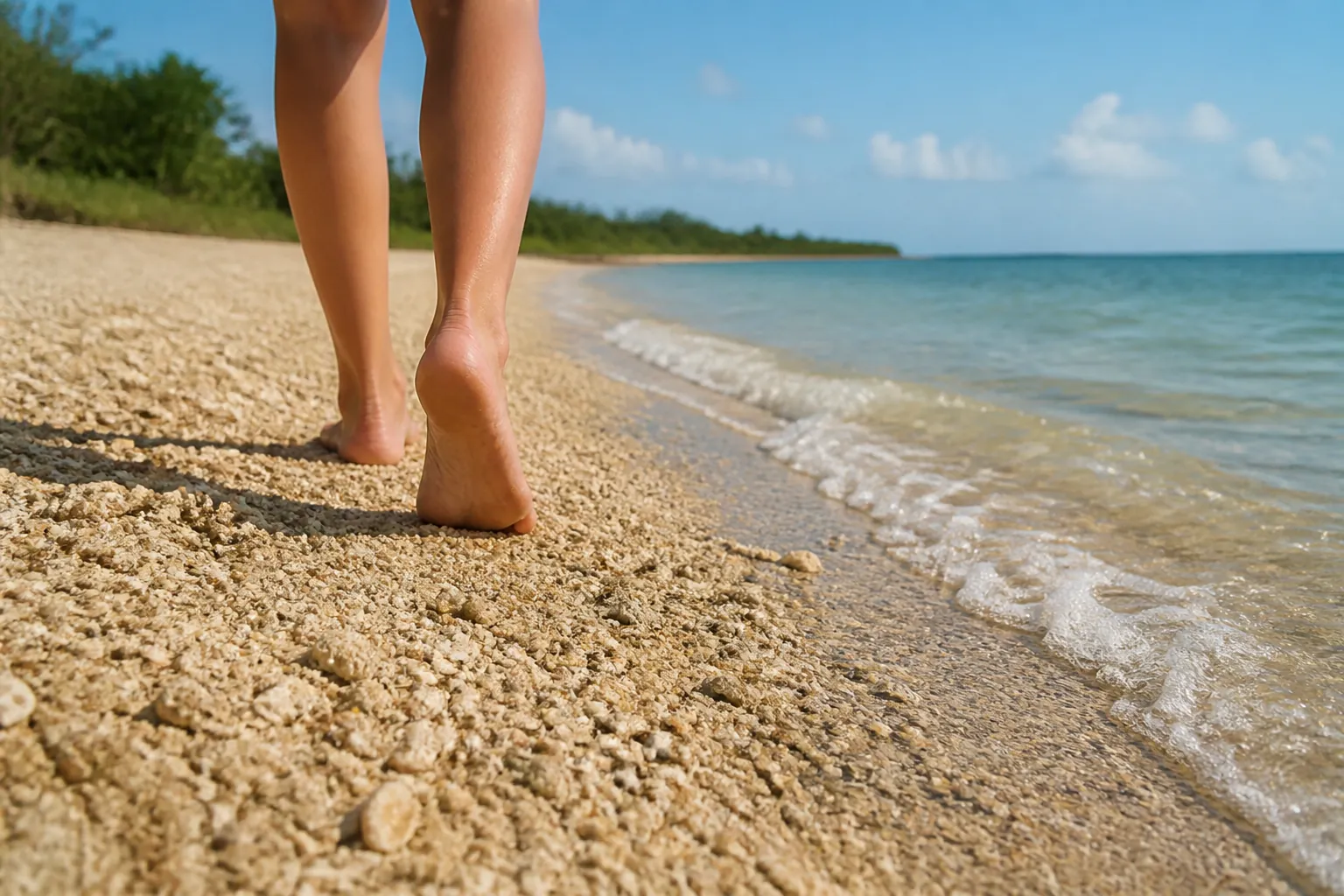
Coquina shell brings a natural coastal look to Florida yards, but appearance does not tell you how a surface will feel underfoot. If you picture stepping outside without shoes, walking barefoot on coquina shell deserves a closer look before you order material.
The practical answer is that loose coquina shell is not automatically barefoot-friendly. Comfort depends on the actual material, including fragment size, angular edges, fines, moisture and how the surface settles. Your sensitivity matters, too. A surface that feels acceptable to one person may feel unpleasant to another.
Tropical Yards supplies coquina shell and tropical plants, with dump trailer delivery from St. Augustine to Daytona Beach. This guide focuses on choosing shell for a DIY yard project, checking its feel and planning a walking route without assuming that shell behaves like sand.
What Coquina Shell Feels Like Under Bare Feet
Coquina shell landscape material can contain shell fragments, smaller particles and fines. Its makeup can vary by source and batch, so a photograph or product name cannot establish barefoot comfort. Ask about the material currently available rather than relying on a general description of coquina.
Unlike a continuous paved surface, loose shell places your weight on individual pieces. A raised fragment can press into your foot, and an angular edge can scratch or cut skin. Thin fragments may also shift when you turn or push off with your toes.
Smaller material is not necessarily soft material. Fine particles may fill spaces between larger fragments, but small sharp pieces can still be uncomfortable. Likewise, a settled surface may feel more stable without becoming smooth enough for routine barefoot use.
Consider how you actually move through the space. Taking a few careful steps to reach a garden bed is different from walking repeatedly between a back door and an outdoor seating area. Children running, people carrying items and anyone with sensitive feet need a more forgiving route.
- Look at individual fragments, not just the overall color or coastal appearance.
- Check whether the surface shifts when you place weight on it and turn.
- Notice protruding edges that could create pressure points underfoot.
- Choose footwear if the material feels sharp, unstable or uncomfortable.
For broader purchasing information, start with the coquina shell supply page. Barefoot comfort is a separate decision from whether shell suits the visual style of your yard.
Test The Actual Material Before Choosing A Barefoot Route
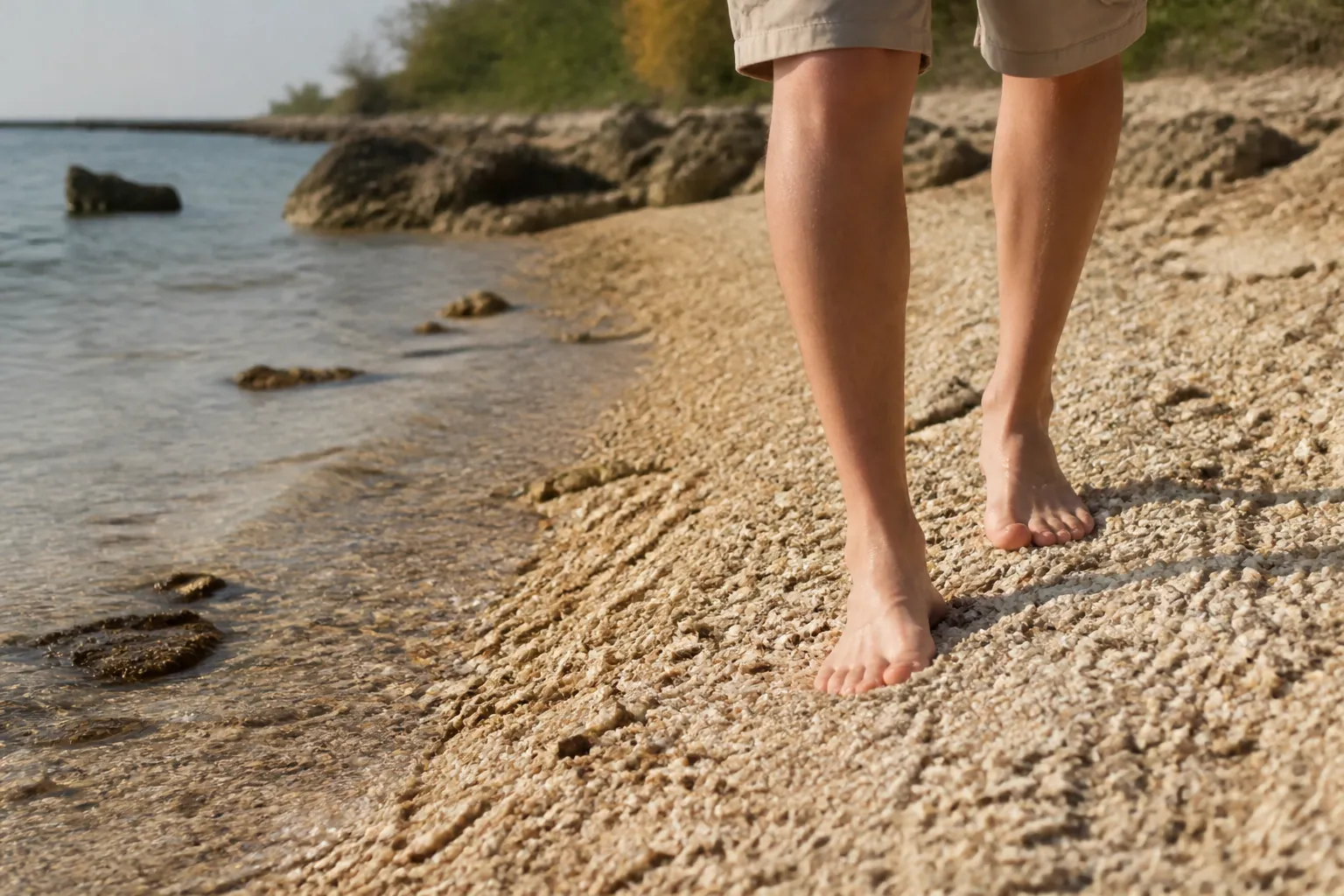
A representative sample is more useful than a promise that shell will soften over time. Ask whether you can inspect current material or obtain a sample before placing an order. Confirm whether the sample reflects the shell that would be delivered for your project.
First, inspect it while wearing shoes and handling it carefully. Spread some material in a shallow tray or contained test area. Look for sharp edges, larger fragments and uneven pieces. If you find obvious hazards, do not use your bare feet to confirm what you can already see.
If the material appears suitable for a cautious comfort check, make the test area stable and keep support nearby. Do not scatter loose shell over a hard floor and step onto it, because fragments can slide. Stop immediately if you feel a sharp point or discomfort.
A small test cannot reproduce every condition in a finished path, but it can identify a material you dislike before you commit to a larger order. Evaluate more than the first step. Pressure under the heel, ball of the foot and toes may feel different.
People with reduced foot sensation, circulation concerns or a history of foot wounds should avoid using a barefoot test as a safety assessment. Ask a qualified healthcare professional about suitable outdoor walking surfaces if those concerns apply.
- Ask what fragment sizes and fines are present in the available shell.
- Compare the material dry and damp, since moisture can change how it settles and feels.
- Wear shoes while checking for sharp fragments or foreign objects.
- Do not assume that a sample proves the entire delivery will feel identical.
If comfort is borderline during testing, treat that as a reason to select a different walking surface rather than a reason to hope your feet will adjust.
How Florida Sun And Rain Affect Barefoot Comfort
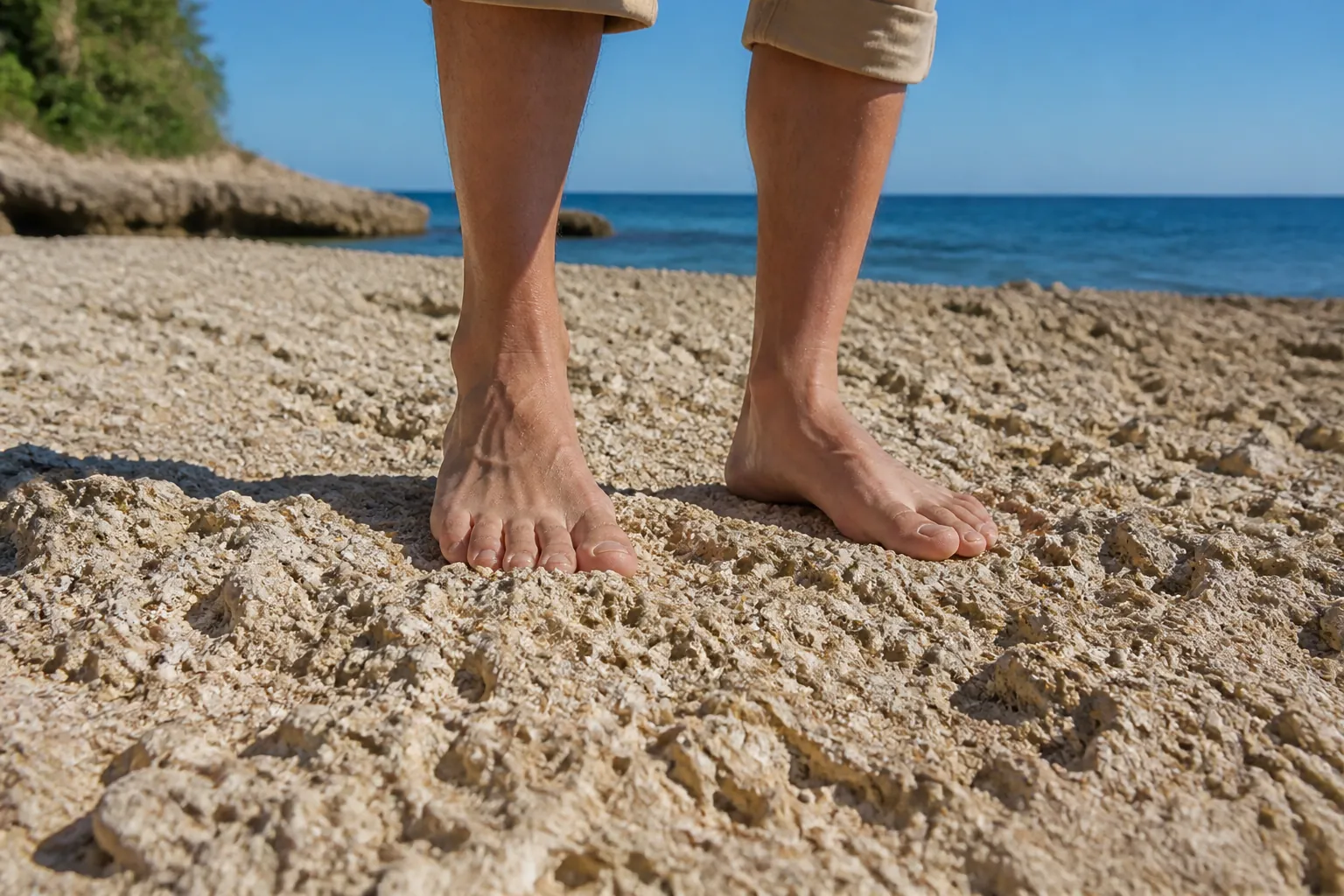
Texture is only part of the decision. Any outdoor ground surface exposed to Florida sun can become uncomfortable for bare feet. The temperature depends on sunlight, shade, weather, moisture and the material itself. A light-colored surface should not be assumed cool enough to walk on.
Check the area at the times you expect to use it. A route that feels comfortable in the morning may be unsuitable later in the day. Shade from nearby plants can change with the season and the position of the sun, so one shaded observation does not tell the whole story.
Rain introduces different concerns. Loose material may shift, runoff may move fines and shallow low spots may remain wet. A damp surface can feel cooler while still containing sharp fragments. Cooler does not mean safer or more comfortable.
Evaluate the ground beneath the shell as well. Shell alone does not correct poor drainage, unstable soil or a low area that collects water. Before a DIY project, observe the intended route after rainfall and identify where runoff enters or leaves the area.
- Assess sun exposure during the hours when you usually walk outdoors.
- Keep sandals or shoes available near doors that open onto shell areas.
- Watch for material movement after heavy rain before walking across the route.
- Resolve drainage questions before ordering rather than expecting a shell layer to solve them.
Near a pool, shell fragments tracked onto a hard deck can become uncomfortable underfoot. Keep the principal barefoot route separate from loose shell where practical, and follow the pool area's safety requirements when choosing surfaces.
Use Shell Beside A Walking Route Instead Of Under Every Step
You do not have to choose between a coastal-looking yard and a more comfortable barefoot route. One practical DIY approach is to use coquina shell beside a continuous walking surface rather than making loose shell the surface for every step.
For example, shell can occupy an adjacent decorative area while a separate route connects the door and seating space. This keeps the visual character of shell without relying on its fragments for barefoot comfort. Select the walking surface based on heat, traction, stability and your household's needs.
Stepping stones are another possibility, but gaps matter. If stones are too far apart or too small for a natural stride, people may still land on the shell. Loose fragments can also migrate onto stone tops, where they create pressure points or affect footing.
A continuous route may be more practical where people carry food, supervise children or use mobility aids. Loose shell can resist small wheels or shift under supports. Consider everyone who uses the yard before deciding that a decorative path will serve as the main access route.
Edging can help define a shell area, but it should not introduce exposed sharp edges or a raised trip point. Follow the edging manufacturer's instructions, and make sure your chosen approach suits the ground conditions.
- Connect frequently used destinations with a route that does not require stepping into loose shell.
- Set any stepping stones to suit a normal stride rather than only the desired appearance.
- Check transitions where shell meets patios, thresholds or other walking surfaces.
- Allow enough room for the people and equipment that regularly use the route.
This approach also helps limit tracking. A place to pause and put on shoes is often more useful than trying to make every shell-covered area comfortable for bare feet.
Buyer Questions That Matter More Than A Product Label
When comparing coquina shell, ask concrete questions about the current supply. Terms such as fine, crushed or screened can be helpful, but they are not universal comfort ratings. Find out what those descriptions mean for the material you are considering.
Ask about the range of fragment sizes, the presence of fines and the general appearance of the shell. If barefoot use is part of your plan, explain that clearly. A material selected for its decorative appearance may not meet your expectations for a daily walking surface.
Do not assume that washing, wetting or compacting shell will remove its sharpness. These steps may change dust, settlement or stability under certain conditions, but they do not reliably turn angular shell fragments into a soft surface.
Likewise, avoid choosing a greater depth simply because you hope it will feel cushioned. A deeper loose layer can shift more underfoot. Depth should be selected for the intended application and site conditions, not used as a substitute for a material comfort check.
- Ask to see current material so you can assess texture rather than relying only on older images.
- Explain whether the shell will be decorative, beside a path or directly under regular foot traffic.
- Confirm the ordering unit and how your area measurements should be converted into a quantity.
- Ask what delivery access is required for the dump trailer before finalizing the order.
Tropical Yards provides coquina shell sales and delivery, not installation or yard preparation. You will need to arrange your own preparation and placement, whether you do that work yourself or engage an independent provider.
Plan A DIY Test Area And Delivery Without Extra Handling
Before ordering, measure the area you intend to cover and decide which portions should remain a separate walking surface. Excluding those portions from your shell measurements helps prevent ordering for spaces where you later decide shell is unsuitable.
For a rectangular area, multiply length by width to find square footage. Divide irregular areas into simpler shapes and add their areas together. Your intended depth is also needed to estimate volume. Confirm the quantity with the supplier using the units in which the material is sold.
If uncertainty about comfort remains, start with a limited test area when practical. Live with it through normal yard use and changing weather before extending the same approach. A test area can reveal tracking, shifting and other issues that a handheld sample cannot.
Delivery planning is especially important because a dumped pile still needs to be moved and spread. Choose a drop location that reduces hauling distance without blocking doors, access routes, drainage features or vehicles. Confirm the proposed location with Tropical Yards before delivery.
Do not assume a loaded dump trailer can use every driveway or pass through every gate. Share access restrictions, slopes, overhead obstructions and concerns about the receiving surface. The supplier needs enough information to assess a practical delivery approach.
- Mark the intended receiving area clearly before the delivery arrives.
- Keep children and pets away from vehicle access and unloading areas.
- Have suitable tools, gloves and sturdy footwear ready for your own material handling.
- Plan where unused material will remain without obstructing normal access.
Dump trailer delivery is material delivery, not spreading or installation. Tropical Yards delivers plants and coquina shell from St. Augustine to Daytona Beach; call to discuss your location and access before placing an order.
Keep A Shell Area Predictable Underfoot
After your DIY project, continue checking how the surface behaves. Loose material can migrate onto neighboring walking surfaces, gather along edges or shift into low spots. A path that initially looks level may not stay that way under repeated traffic or runoff.
If you choose to walk barefoot nearby, inspect the route for displaced shell and other debris first. Wear shoes while moving fragments or working in the shell area. Never rely on barefoot contact to locate sharp pieces.
Periodically check any separate stepping surface for loose fragments on top. Also inspect transitions after rain and after moving outdoor furniture or garden equipment. These are common times for material to be displaced.
Weeds, fallen leaves and soil can change the appearance and footing of a shell area. For your own care routine, address problems according to the site and any products you use, following label directions. Do not assume shell prevents all weed growth or removes the need for occasional attention.
If the area repeatedly feels uncomfortable or unstable, reconsider its role. Keeping shell decorative and redirecting foot traffic may be more practical than repeatedly adding material in search of a softer feel.
Pair Tropical Plants With A Clear Walking Route
Tropical planting can frame a shell area without crowding the walking space. Tropical Yards sells palm trees, hibiscus, bougainvillea, ferns and other tropical plants. Choose plants for the site's light, drainage and available room, then handle planting and care yourself.
Think about mature size rather than the size of the plant at purchase. Leaves and stems that reach into a route can make people step off the intended surface and into loose shell. Bougainvillea has thorns, so position it well away from places where bare feet and exposed skin may contact it.
Keep shell from accumulating against trunks, plant stems or root crowns. Plan a suitable planting area and follow care guidance for the species rather than assuming all tropical plants tolerate the same moisture and soil conditions.
For barefoot use, the best choice is often a clear, predictable route with coquina shell used nearby for its coastal appearance. Inspect the actual material, consider heat and drainage, and choose shoes whenever the surface is uncomfortable.
Call Tropical Yards at 772-267-1611 to ask about coquina shell supply, tropical plant availability and dump trailer delivery from St. Augustine to Daytona Beach. Bring your measurements and access details so you can discuss the materials for your DIY project.
Call 772-267-1611 to talk through next steps.